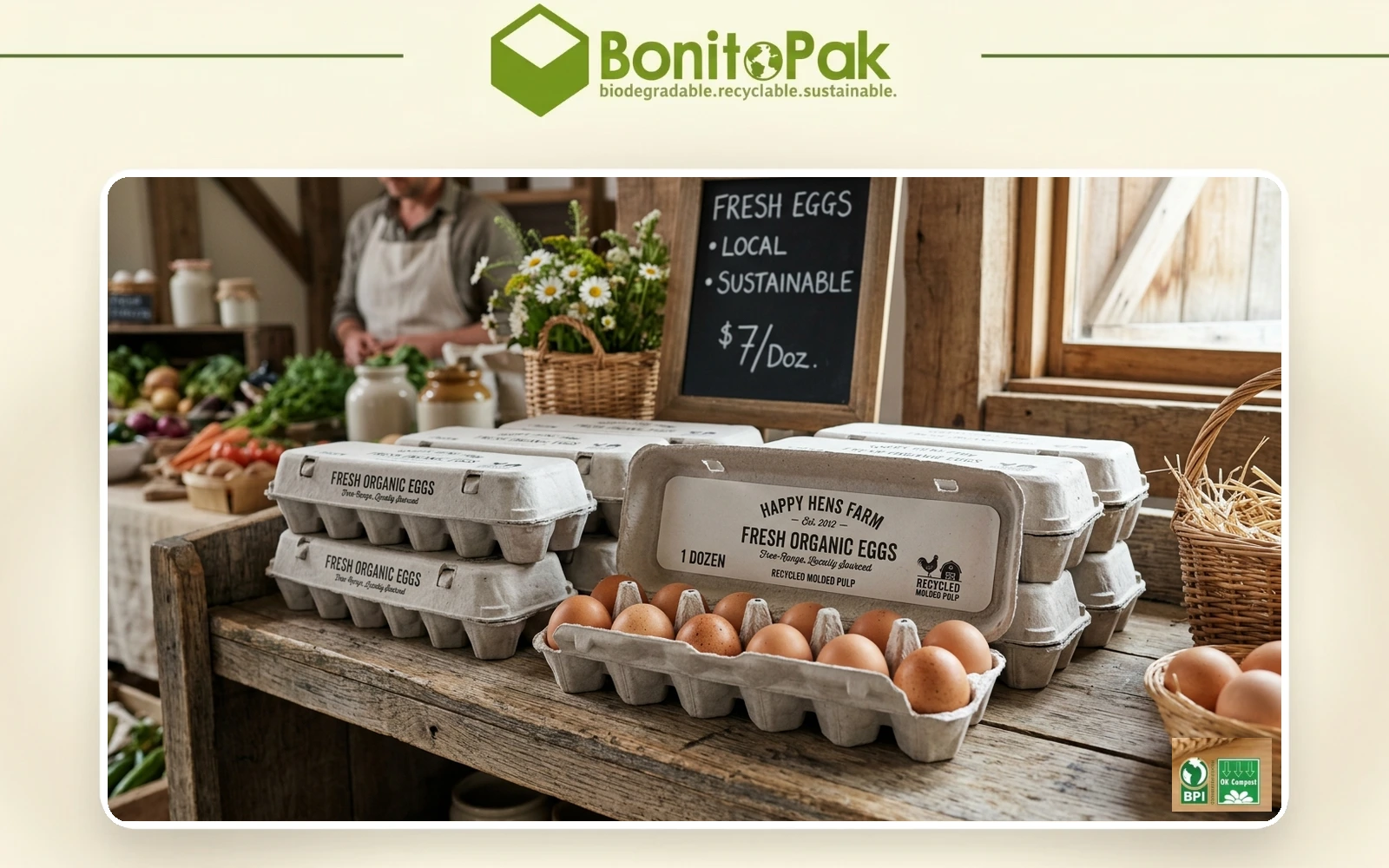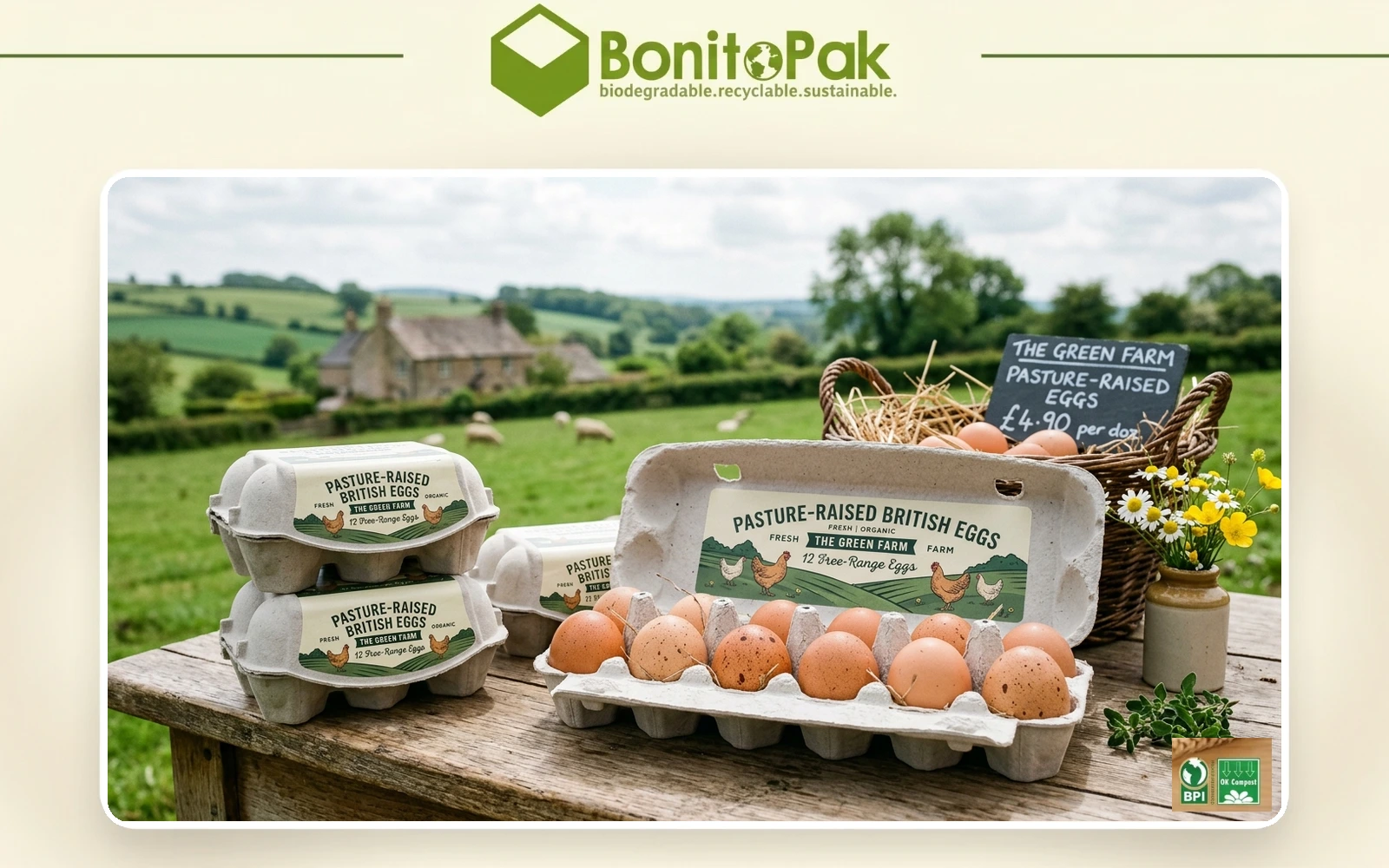

Honestly, it comes down to three routes: pressing the logo into the fiber, printing on the surface, or sticking on a label. Embossing lasts longest and leaves the carton compostable, printing is your way to add color, and labels are the cheap, flexible start that eventually peels. Most farms I know end up blending them rather than picking one.
Before you pick, it helps to know these aren’t really competing, they solve slightly different jobs. Embossing is for a permanent, textural mark. Printing is for color and detailed information. Labels are for flexibility and a low starting cost.
Plenty of producers combine them, an embossed farm name in the fiber, a printed panel for the nutrition and certification marks, maybe a label for a batch or a seasonal promo. If you’re still deciding on the carton itself before you brand it, our custom egg cartons guide covers what you can change at the tooling stage.
Embossing: Branding That’s Part of the Carton
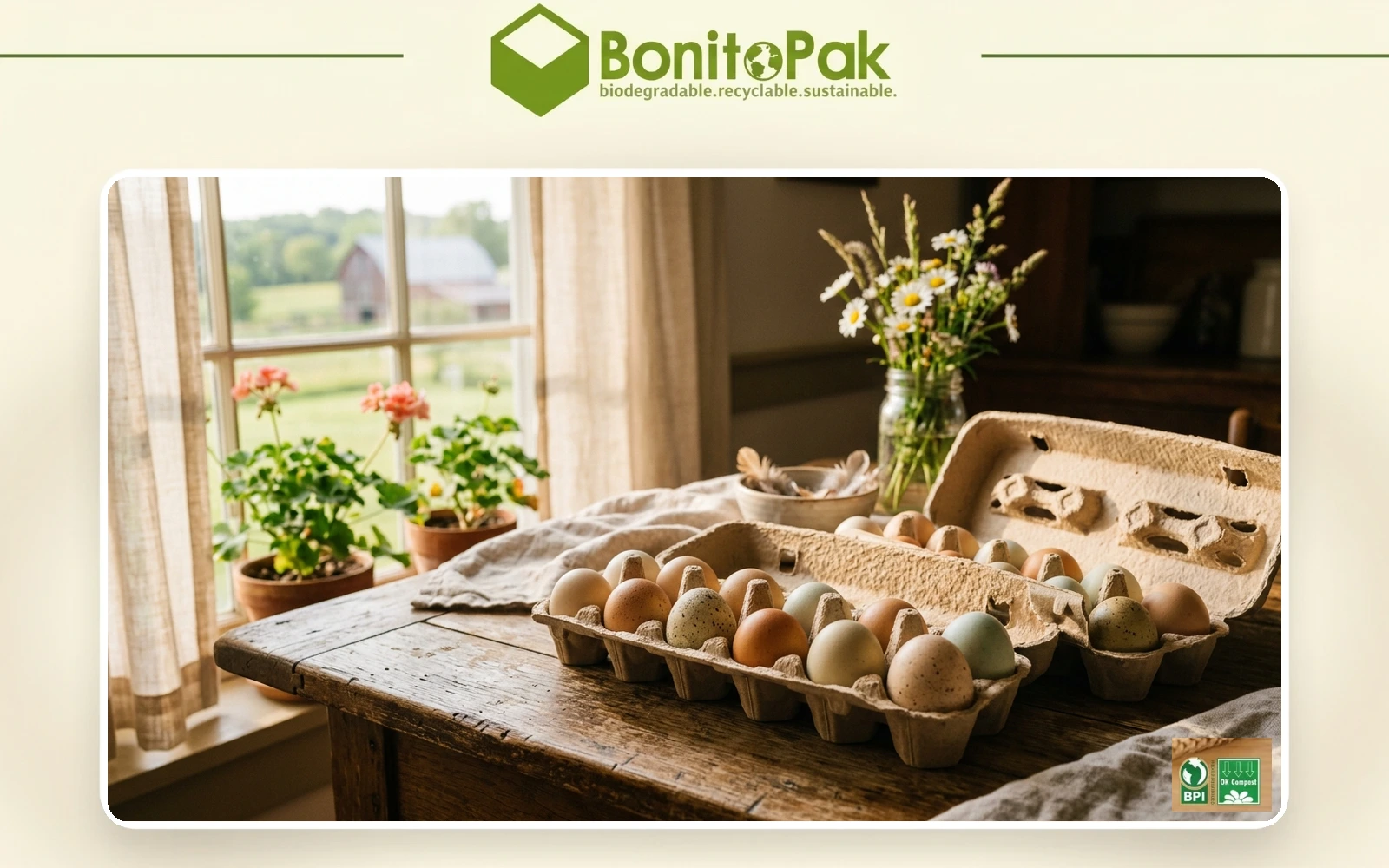
If you want a mark that outlasts everything, this is it. Because it’s cut straight into the mold, the logo ends up formed in the fiber, no ink, nothing stuck on, and it doesn’t touch the compostability at all. There’s nothing to peel, smear, or fade, and it doesn’t flinch at the damp of a fridge or a market stall.
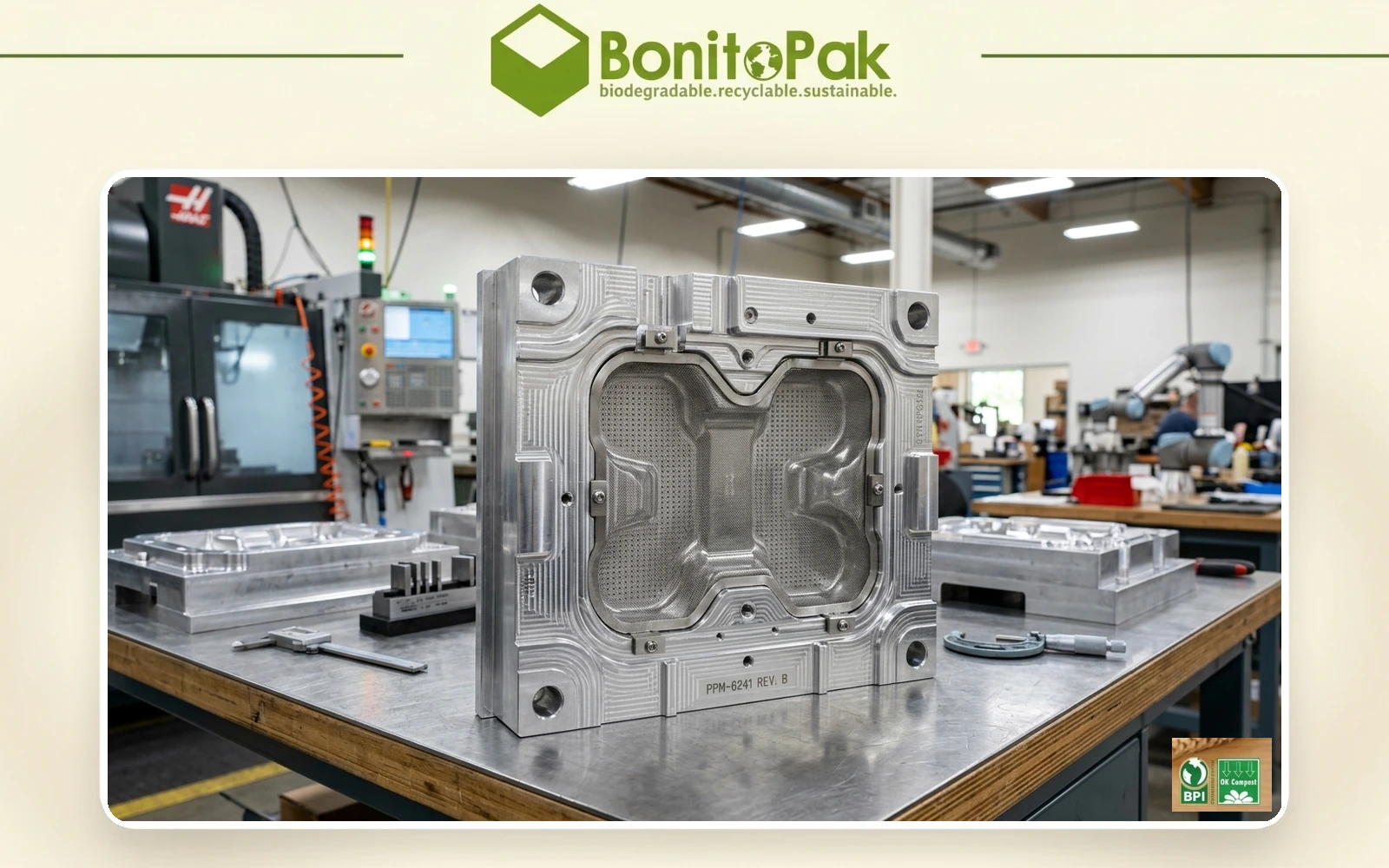
This is the one I’d reach for if the goal is a mark that lasts. Because the logo is cut into the tooling, every carton comes off the line with it already pressed into the fiber. There’s no ink to run out, no laminate to add, and nothing sitting on the surface to lift.
That matters more than it sounds. Egg cartons live in humid places, farm sheds, refrigerated cases, a cooler at a market, and that’s exactly where a printed label starts to curl. An embossed mark doesn’t care; it’s part of the carton.
It’s cleanest on a wet press surface, where the tooling presses sharply enough to hold fine text and detailed logos. On a natural or white carton it reads as a subtle relief; on a black one it turns into a soft shadow that a lot of producers really like. You can see that finish on our wet pressing trays ページ。.
Printing: When You Need Color and Detail
When you actually need color on the carton, a colored logo, a nutrition panel, a cert mark, that’s a job for print. The one thing to get right is the ink: water-based and soy both break down with the fiber, so the carton stays certifiable, whereas a plastic laminate or gloss coating quietly kills the compostability. Water-based looks sharpest on white and natural stock.
Embossing gives you texture, not color. When you need actual color on the carton, a printed logo, a colored panel, a QR code, an ingredients list, that’s where print comes in.
The thing to watch is what the ink is. Water-based print composts with the fiber and reads crisply on white and natural cartons. Soy ink is there when you need heavier pigment or you’re printing on a dark carton. What you want to avoid, if compostability is part of your pitch, is a plastic laminate or gloss coating, because that turns the carton into a composite that won’t break down cleanly.
A common and genuinely nice setup is in-pulp color for the carton body plus print for the information layer, which gives you full creative range while keeping the whole thing compostable. We get into the color side of that in カラー卵パック, and the base stock options live on our カラー成形パルプトレイ ページ。.
Egg carton branding methods compared:
| 方法 | Adds color? | 耐久性 | Keeps compostability? | こんな方に最適 |
| Emboss / deboss | No (texture) | Highest, in the fiber | はい | Logos, farm names, a permanent mark |
| Water-based print | はい | グッド | はい | Info panels, certs, light branding |
| Soy ink print | Yes (high opacity) | グッド | はい | Dark cartons, bold color |
| Plastic laminate | Yes (gloss) | High but peels at edges | いいえ | Not recommended for eco claims |
| Stick-on label | はい | Lowest, peels | Depends on label | Low volume, changing designs |
Labels: Cheap to Start, But Know the Trade-offs
For getting started, nothing beats labels on cost or flexibility, you print a sheet, stick them on blank cartons, and change the art whenever you like. The catch is they peel in a humid fridge or market cooler, they add a step to packing, and however nice they look they still read as stuck-on. Cutting a label flat into the tooling at least gets them sitting flush.
If you’re just starting out, or you run several designs, or you want to test a look before committing, labels make real sense. You buy blank cartons, print a run of labels, and apply them, and you can change the design tomorrow without touching any tooling.
The honest trade-offs: labels peel, especially in the damp of a refrigerated case, they add a hand-application step to your packing, and however good the artwork is, a stuck-on label reads as stuck-on. There’s also the curve problem, a flat label wrinkles at the edges when you press it onto a rounded carton.
That last one has a fix. A label flat is a recessed flat patch cut into the tooling, sized for your sticker or paper band, so the label sits flush and adheres cleanly instead of puckering. If labels are your route for now, it’s worth adding one. And if you’re weighing labels against in-pulp branding for the long run, we lay out that decision in custom egg cartons.
Custom Printed vs Labeled: Which Should You Pick?
Once you’re at volume with a settled look, in-pulp color plus embossing is hard to beat, there’s no per-unit ink cost, nothing to peel, and it stays compostable. Labels are the call when you’re small or your design keeps shifting. Printing sits between them, earning its place wherever a carton genuinely needs color or information. And most farms, in the end, land on some mix of all three.
Here’s how I’d actually decide it. If you’re running real volume and your branding is settled, embossing plus in-pulp color is the strongest and, per carton, the cheapest, because once the tooling’s cut there’s no ongoing ink or label cost and nothing degrades in storage. If you’re low-volume or still iterating on the look, labels keep you flexible and cheap.
Choosing a branding route by situation:
| あなたの状況 | Best route | なぜ |
| High volume, settled brand | Emboss + in-pulp color | No per-unit cost, durable, compostable |
| Need color + info | Water-based / soy print | Adds color while staying certifiable |
| Low volume or changing art | Stick-on labels (+ label flat) | Cheap to start, easy to update |
| Premium retail shelf | Wet press + emboss + print | Sharp finish that reads high-end |
None of this is all-or-nothing, and most producers I work with end up combining methods, embossed name, printed info, the occasional label for a promo. The point is to match the method to the job rather than forcing everything through one. When you’re ready to spec it, the tooling side is handled per project by our mold design and tooling team.
よくある質問
What’s the most durable way to brand an egg carton?
Embossing or debossing, because the logo is cut into the tooling and formed in the fiber itself. There’s no ink and nothing applied to the surface, so it can’t peel, smear, or fade, and it holds up in the damp of a fridge or a market stall. It also doesn’t affect the carton’s compostability.
Do custom printed egg cartons stay compostable?
They do if the ink is right. Water-based and soy inks compost along with the fiber, so a printed carton stays certifiable. What breaks compostability is a plastic laminate or a non-compostable gloss coating, which turns the carton into a composite that won’t break down cleanly.
Are egg carton labels or printing better?
It depends on volume. Labels are cheapest to start and easy to change, but they peel in humid conditions and read as applied. Printing (or embossing) is built into the carton, more durable and, at volume, cheaper per unit. Many farms use labels early and move to printing or embossing as they scale.
Why do labels peel off my egg cartons?
Two reasons, usually. Refrigerated cases and market coolers are humid, which lifts adhesive over time, and a flat label wrinkles when pressed onto a curved carton. A label flat, a recessed flat patch cut into the tooling, gives the label a clean, flush surface to stick to, which helps a lot.
Can I put my farm name and logo on the carton?
Yes. It can be embossed or debossed into the fiber at the tooling stage with no ink, printed on with water-based or soy ink for color, or applied as a label. Emboss is the most durable; print adds color and detail. Send your logo when you spec the carton.
What is the minimum order for custom printed egg cartons?
For custom tooling with embossing, it usually starts around 1,000 pieces per design, since each design needs its own mold. Printed and labeled runs on stock cartons can start lower. Send your artwork and volume and you’ll get a spec and a sample before the full run.
結論
Branding an egg carton isn’t really about picking a single method, it’s about matching each method to what it does best. Emboss the mark you want to last, print the color and information a shopper needs, and lean on labels while you’re small or still testing a look. Get that mix right and your carton looks the part and holds up all the way to the customer’s kitchen.
BonitoPak brands molded pulp egg cartons with embossing, water-based and soy print, label flats, and six in-pulp colors Pantone matched to better than 95%, all BPI and OK Compost certified, from 1,000 pieces. Start with the egg tray and carton range, or send your logo and we’ll show you the options on a sample.