 コンテンツにスキップ
Introduction: Why Tooling Determines Molded Fiber Quality
In molded fiber manufacturing, machines often receive the most attention. Production lines, forming systems, drying tunnels, and automation controls are visible and impressive pieces of equipment. Yet the true performance of any molded fiber production line depends on something less visible but far more fundamental: the tooling. Molded pulp tooling defines the shape, thickness, surface finish, and structural integrity of every product coming off the production line.
Without precise tooling, even the most advanced molding machines struggle to maintain consistent quality. Poor mold design can lead to uneven fiber distribution, weak structural areas, excessive drying times, or high rejection rates. On the other hand, well-engineered molds stabilize production and allow manufacturers to scale efficiently.
For companies producing trays, clamshell containers, industrial inserts, or eco-friendly packaging, molded pulp tooling is not just a supporting component. It is the foundation that determines whether production is reliable, efficient, and scalable.
What Molded Pulp Tooling Actually Is
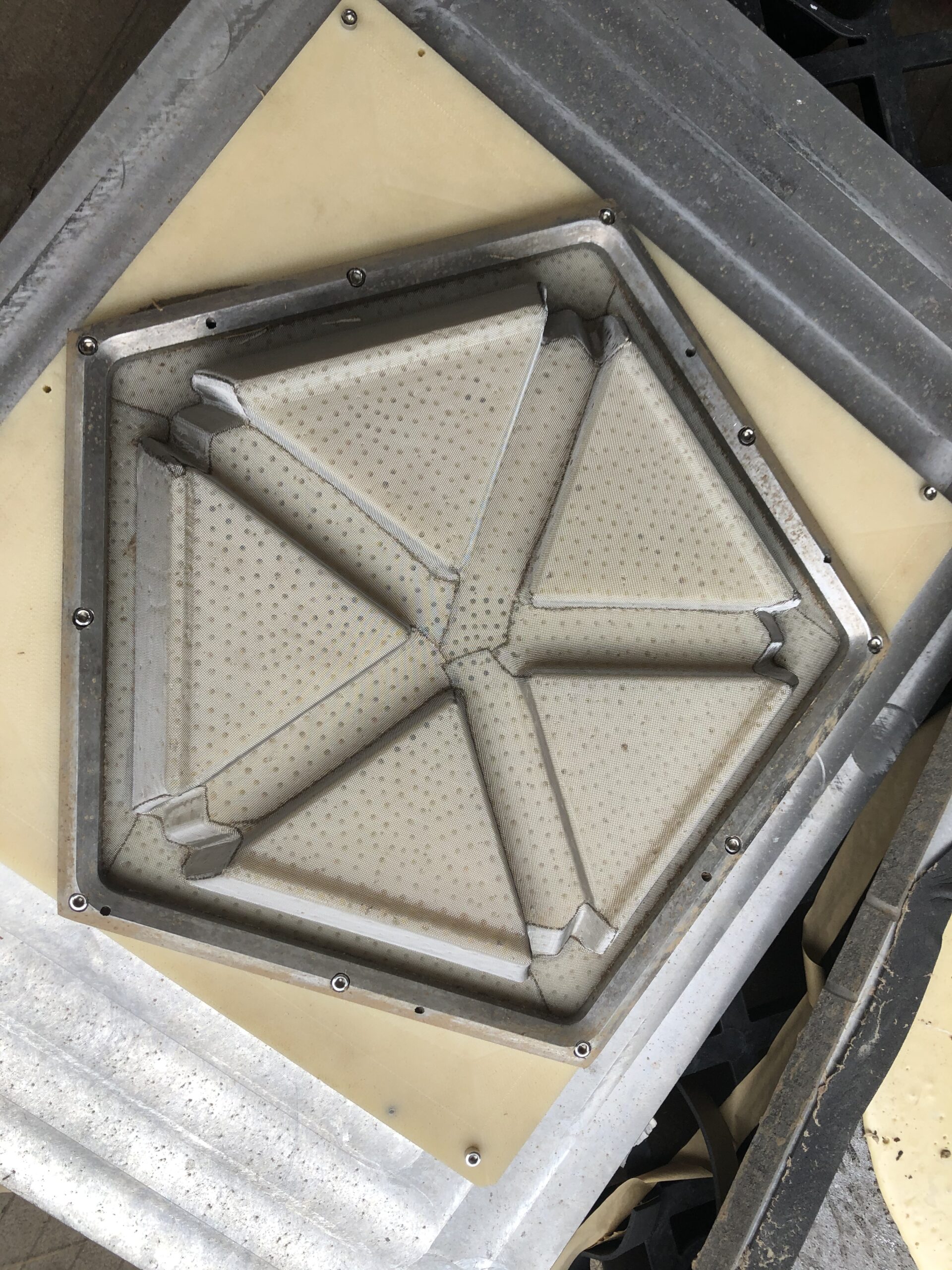
Molded pulp tooling refers to the molds used to form fiber-based products from pulp slurry. These molds are typically made from aluminum, brass, stainless steel, or specialized composite materials designed to withstand repeated forming cycles. Each mold cavity defines the exact geometry of the final product, from simple packaging trays to complex protective inserts.
During production, pulp slurry is deposited onto the mold surface using vacuum suction. Water is drawn through tiny vent holes while fibers settle across the mold surface to create the product shape. Once the fiber layer forms, the wet preform is transferred to a heated pressing mold where additional pressure and heat improve strength and surface quality.
Because the mold controls both fiber distribution and moisture drainage, its design directly affects production performance. This is why advanced molded fiber systems — such as those used for producing ドライプレス成形パルプトレイ rely heavily on precision tooling to maintain consistent wall thickness and structural integrity.
Tooling design therefore influences not only product appearance but also the entire forming process.
The Role of Venting and Drainage in Molded Fiber Tooling
One of the most important features of molded pulp tooling is the venting system. Tiny perforations across the mold surface allow water to escape during vacuum forming while retaining fiber material on the cavity surface. The size, spacing, and pattern of these vent holes determine how evenly fibers distribute across the mold.
If venting is poorly designed, several production problems can occur. Fiber accumulation may become uneven, leading to weak spots in the product. Moisture removal may slow down, increasing drying time and energy consumption. In some cases, insufficient venting can cause pulp to stick to molds, interrupting production flow.
Optimized venting patterns allow water to drain efficiently while maintaining uniform fiber layering. This balance is essential for achieving smooth surfaces and consistent product thickness.
Because venting design is closely tied to product geometry and fiber behavior, tooling customization becomes necessary for many molded fiber applications.
Materials Used in Molded Pulp Tooling
The material used to manufacture molded pulp tooling plays a major role in durability and heat transfer performance. Aluminum molds are commonly used because they are lightweight, corrosion-resistant, and provide good thermal conductivity. Aluminum tooling also allows precise machining of complex shapes.
Brass molds are sometimes used for fine-detail applications where high durability is required. Stainless steel molds may be used in environments where corrosion resistance is critical. In some cases, hybrid mold structures combine different materials to balance strength, heat transfer, and cost.
The choice of material also influences production speed. Materials with better heat conductivity help remove moisture more quickly during hot pressing, improving cycle times and reducing energy consumption.
Companies focused on sustainable packaging manufacturing, including integrated production systems developed by ボニートパック, often select tooling materials based on both durability and energy efficiency considerations.
Energy Impact of Mold Design
Although molded pulp tooling itself does not consume energy, its design directly influences the energy required during production. Poor mold design can increase drying time, which significantly raises energy consumption in molded fiber manufacturing.
Energy distribution in a typical molded pulp production system may resemble the following:
| システム領域 | 一次エネルギー種別 | 総エネルギーに占めるおおよその割合 |
|---|---|---|
| 乾燥セクション | 熱 | 45–55% |
| Vacuum Forming | 電気 | 20–25% |
| Pressing Systems | 電気 | 10–15% |
| 付属機器 | 電気 | 5–10% |
When tooling allows efficient drainage and uniform fiber layering, the wet preform entering the drying stage contains less moisture. This reduces thermal energy demand and improves overall production efficiency.
In contrast, poorly designed molds increase drying loads and may require longer cycle times to achieve the same product quality.
Standard Tooling vs Custom Mold Design
Many manufacturers initially use standard molds for molded fiber products. While this approach may reduce upfront tooling cost, it often introduces limitations when production scales. Custom-designed molded pulp tooling allows molds to be optimized for specific product shapes, fiber blends, and production speeds.
| メートル法 | 標準工具 | Custom Molded Pulp Tooling |
|---|---|---|
| Fiber Distribution Consistency | 中程度 | 高い |
| Product Surface Quality | 可変 | 一貫性のある |
| Production Cycle Stability | 中程度 | 強い |
| Rejection Rate | より高い | より低い |
| 工具の寿命 | 短縮版 | もっと長く |
Custom tooling enables engineers to adjust venting patterns, structural supports, and drainage paths according to the specific product design. This reduces variability and helps maintain consistent product quality across large production volumes.
Customization is especially important when producing branded or consumer-facing packaging. Discussions around packaging design flexibility, such as those highlighted in パルプ成型箱はカスタマイズ可能か?, show how tooling precision supports both structural performance and aesthetic quality.
Tooling Maintenance and Lifespan
Even the best-designed molded pulp tooling requires regular maintenance. Over time, pulp residue may accumulate within vent holes, reducing drainage efficiency. Cleaning processes must be performed periodically to maintain mold performance.
Surface wear can also occur during long production cycles, especially in high-volume operations. Regular inspection helps detect early signs of wear before product quality declines.
Proper maintenance extends tooling lifespan and protects production stability. Many manufacturers develop scheduled maintenance programs to ensure molds remain within design specifications.
Conclusion: Tooling Defines Molded Fiber Manufacturing Success
Molded pulp tooling is the invisible backbone of fiber packaging production. While machines provide the mechanical force required to form products, molds determine the shape, strength, and consistency of those products. Precision tooling enables stable fiber distribution, efficient moisture removal, and reliable product performance.
Manufacturers who invest in well-designed molds benefit from lower rejection rates, improved production efficiency, and better overall packaging quality. Those who overlook tooling often face recurring defects and higher operating costs.
As sustainable packaging continues to grow in importance, molded pulp tooling will remain a critical factor in scaling fiber-based manufacturing successfully.
よくある質問
What is molded pulp tooling?
Molded pulp tooling refers to the molds used to shape fiber-based products during molded pulp manufacturing.
Why is mold venting important in molded fiber production?
Venting holes allow water to drain from pulp slurry during forming, ensuring uniform fiber distribution and proper product thickness.
What materials are commonly used for molded pulp molds?
Aluminum, brass, and stainless steel are commonly used because they provide durability and effective heat transfer.
How long does molded pulp tooling last?
Tool lifespan depends on production volume and maintenance practices, but well-maintained molds can last for thousands of production cycles.
Can molded pulp tooling be customized?
Yes. Custom tooling allows manufacturers to optimize fiber distribution, product geometry, and production efficiency for specific packaging designs.

 Japanese
  English
  German
  Spanish
  French
  Russian
  Portuguese
  Arabic