 コンテンツにスキップ
Introduction: Why Molded Pulp Mold Tools Are the Core of Fiber Packaging
In molded fiber packaging production, the mold tool is the heart of the entire manufacturing process. Whether producing egg trays, cup carriers, industrial cushioning inserts, or premium electronic packaging, the molded pulp mold tool determines product shape, wall thickness, surface finish, drainage efficiency, and production speed.
As global industries transition away from plastic packaging, molded pulp solutions are rapidly expanding. However, the success of any molded pulp product depends heavily on tooling precision. Poorly designed mold tools can cause uneven thickness, slow cycle times, surface defects, and high rejection rates. On the other hand, high-quality tools enhance strength, consistency, and long-term production efficiency. Understanding molded pulp mold tools is essential for packaging manufacturers, machinery buyers, and product developers.
What Is a Molded Pulp Mold Tool?
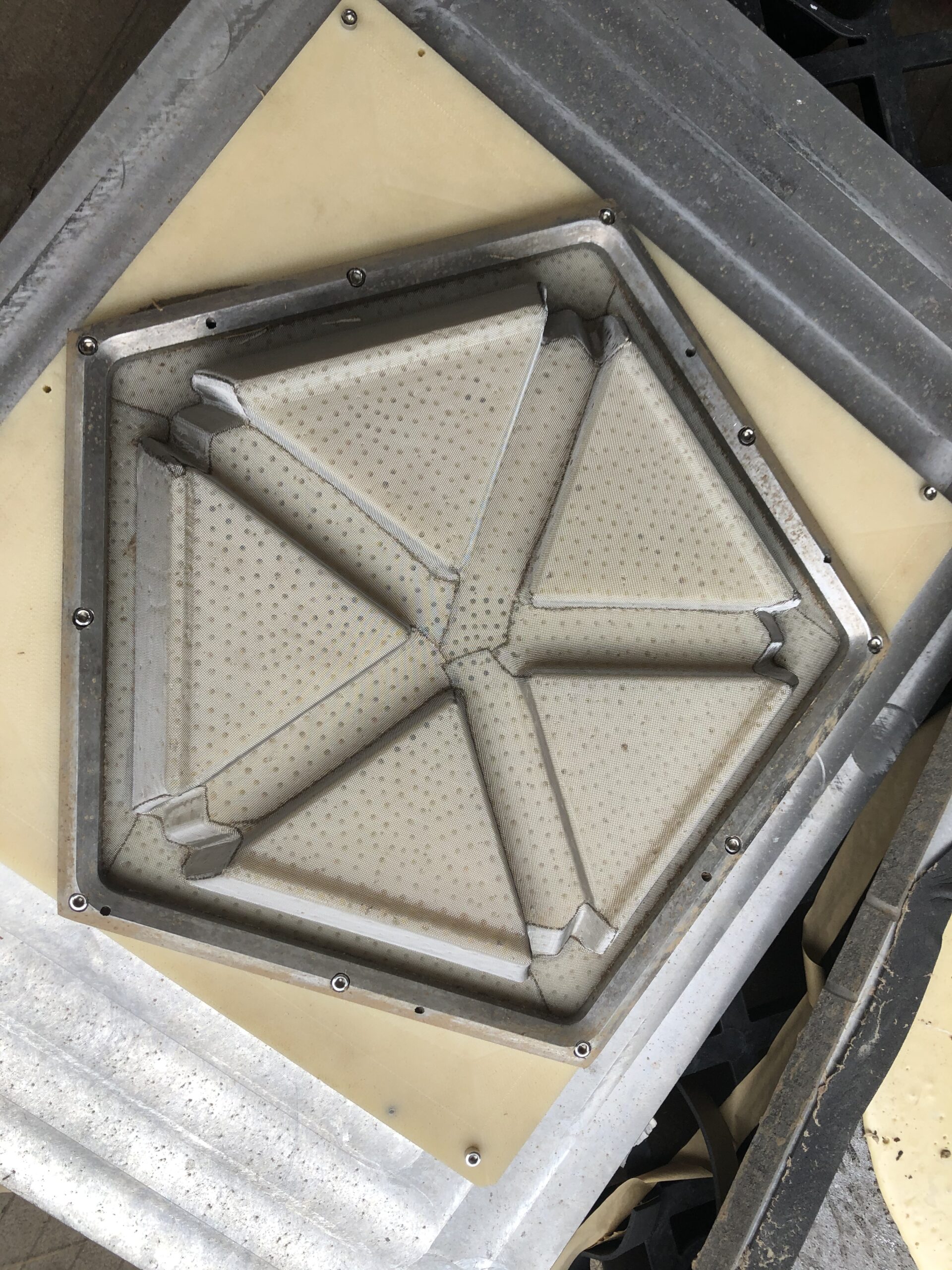
A molded pulp mold tool is a precision-engineered forming component used in pulp molding machines to shape wet fiber slurry into finished packaging products. The tool works by applying vacuum suction to draw pulp fibers onto a shaped mold surface while allowing water to drain through fine mesh screens and drainage holes.
The mold tool typically consists of a structural base, machined cavity surfaces, drainage channels, and stainless-steel or copper mesh coverings. These elements work together to control fiber deposition and ensure uniform thickness throughout the product.
Depending on the production system, mold tools may function as forming molds, transfer molds, hot press molds, or trimming molds. Each type plays a specific role in achieving dimensional accuracy and surface quality.
Types of Molded Pulp Mold Tools
Forming Mold Tools
Forming molds are the first stage in pulp shaping. They are submerged into pulp slurry tanks where vacuum pressure pulls fibers onto the mold surface. These molds are engineered for optimal drainage performance and balanced fiber distribution.
Proper drainage hole placement and mesh tension are critical in forming molds because they influence cycle time and product consistency.
Transfer Mold Tools
Transfer molds move the semi-formed wet product from the forming station to drying or hot pressing stages. These tools must align precisely with forming molds to prevent deformation. Transfer molds require smooth release surfaces to avoid damaging the wet pulp structure.
Hot Press Mold Tools
Hot press molds apply heat and pressure to densify and smooth the molded pulp product. These tools are typically made from high-grade aluminum or bronze to withstand repeated thermal cycles.
Hot pressing improves mechanical strength, dimensional stability, and surface smoothness, making it essential for premium molded fiber packaging.
Trimming Mold Tools
After drying, trimming molds remove excess edges and refine the product shape. These tools ensure precise final dimensions and prepare the product for stacking, labeling, or secondary processing.
Materials Used in Molded Pulp Mold Tools
The durability and performance of a mold tool depend on material selection. Manufacturers commonly use:
アルミニウムだ: Lightweight, corrosion-resistant, and easy to machine. Aluminum is widely used in thermoformed pulp tooling due to its precision capabilities and thermal conductivity.
ブロンズまたは真鍮: Ideal for high-wear applications where durability and strength are priorities.
ステンレススチール製部品: Used for structural reinforcement and drainage elements due to excellent corrosion resistance.
メッシュスクリーン(ステンレスまたは銅): Essential for vacuum forming. Mesh size directly affects fiber texture and surface finish quality.
Material selection impacts mold lifespan, maintenance frequency, and overall production efficiency.
Molded Pulp Mold Tool Design Process
The development of a molded pulp mold tool begins with product design analysis. Engineers evaluate draft angles, wall thickness, stacking features, load-bearing requirements, and drainage feasibility. Small design adjustments at this stage can significantly improve cycle time and product strength.
Next, 3D CAD modeling and digital simulations are conducted to optimize vacuum flow, fiber distribution, and drainage efficiency. Simulation helps reduce production errors and costly revisions.
Once approved, CNC machining creates precise cavity shapes. Drainage holes are drilled strategically to balance water removal and fiber deposition.
Mesh installation follows, requiring proper tensioning to avoid wrinkles or uneven surfaces. The mold tool then undergoes trial testing in real production conditions to verify forming speed, product release, and thickness consistency.
This systematic engineering approach ensures the tool performs reliably under industrial workloads.
How Molded Pulp Mold Tools Affect Production Quality
Mold tools directly influence several critical performance factors.
Wall thickness uniformity determines product strength and stacking stability. Uneven thickness can cause structural weakness or deformation during drying.
Drainage efficiency affects cycle time. Poor drainage increases forming time and reduces overall production output.
Surface finish quality impacts branding and consumer perception. Fine-finish molds used in thermoformed pulp packaging create smoother surfaces suitable for high-end retail products.
Proper tool alignment ensures consistent dimensional accuracy, which is essential for automated packaging lines.
メンテナンスと寿命
Regular maintenance extends mold tool life and ensures consistent performance. Fiber buildup must be cleaned periodically to prevent blockage of drainage holes. Mesh screens should be inspected for wear or deformation.
Routine inspection of vacuum channels and structural components prevents production interruptions.
With proper care, high-quality molded pulp mold tools can operate efficiently for several years, even in high-volume facilities.
コストに関する考察
The cost of a molded pulp mold tool depends on complexity, size, material choice, and production capacity. Simple tray molds are generally more affordable, while precision thermoformed tools for electronics or cosmetic packaging require higher investment due to tighter tolerances and advanced machining.
Although premium tooling requires greater upfront investment, it reduces long-term operational costs by minimizing rejects, improving cycle times, and increasing durability.
Innovations in Mold Tool Technology
Advancements in multi-axis CNC machining have improved cavity precision and surface finish quality.
Digital simulation software allows better prediction of fiber flow and drainage patterns before production begins.
Hybrid material combinations are being explored to balance durability and cost efficiency.
Automation integration enables faster mold changeovers and improved alignment accuracy.
As molded pulp packaging demand grows, tooling technology continues to evolve toward higher efficiency and greater sustainability.
結論
A molded pulp mold tool is more than just a forming component—it is the foundation of molded fiber packaging production. From shaping and drainage to hot pressing and trimming, each tool plays a critical role in determining product quality, structural strength, and production efficiency.
Investing in well-designed, precision-engineered mold tools ensures consistent output, reduced waste, and long-term operational success. As industries increasingly adopt sustainable packaging solutions, the importance of high-performance molded pulp mold tools will continue to expand.
If you would like, I can next create a technical comparison between aluminum and bronze mold tools, including lifespan analysis and ROI evaluation for manufacturers.





 Japanese
  English
  German
  Spanish
  French
  Russian
  Portuguese
  Arabic