 Skip to content

As industries move toward sustainability, packaging manufacturers are under increasing pressure to reduce plastic use and adopt environmentally responsible production methods. One of the most important technologies enabling this shift is the paper pulp molding machine, which plays a central role in producing fiber-based packaging solutions that are biodegradable, recyclable, and efficient.
From food packaging to industrial protective inserts, pulp molding technology supports eco-friendly packaging production by transforming natural fibers into durable, functional products. Understanding how this equipment works and why it matters helps brands and manufacturers align their operations with sustainability goals while maintaining performance and scalability.
The Growing Demand for Eco-Friendly Packaging
Environmental regulations, consumer awareness, and corporate sustainability commitments are reshaping the packaging industry. Traditional plastic and foam materials are increasingly viewed as harmful due to their long decomposition time and environmental impact.
Eco-friendly packaging alternatives made from renewable and recycled materials are now in high demand. Fiber-based solutions meet these expectations by offering reduced environmental footprint without sacrificing strength or usability. At the center of this production process is the paper pulp molding machine, which enables large-scale manufacturing of sustainable packaging products.
What Is a Paper Pulp Molding Machine?
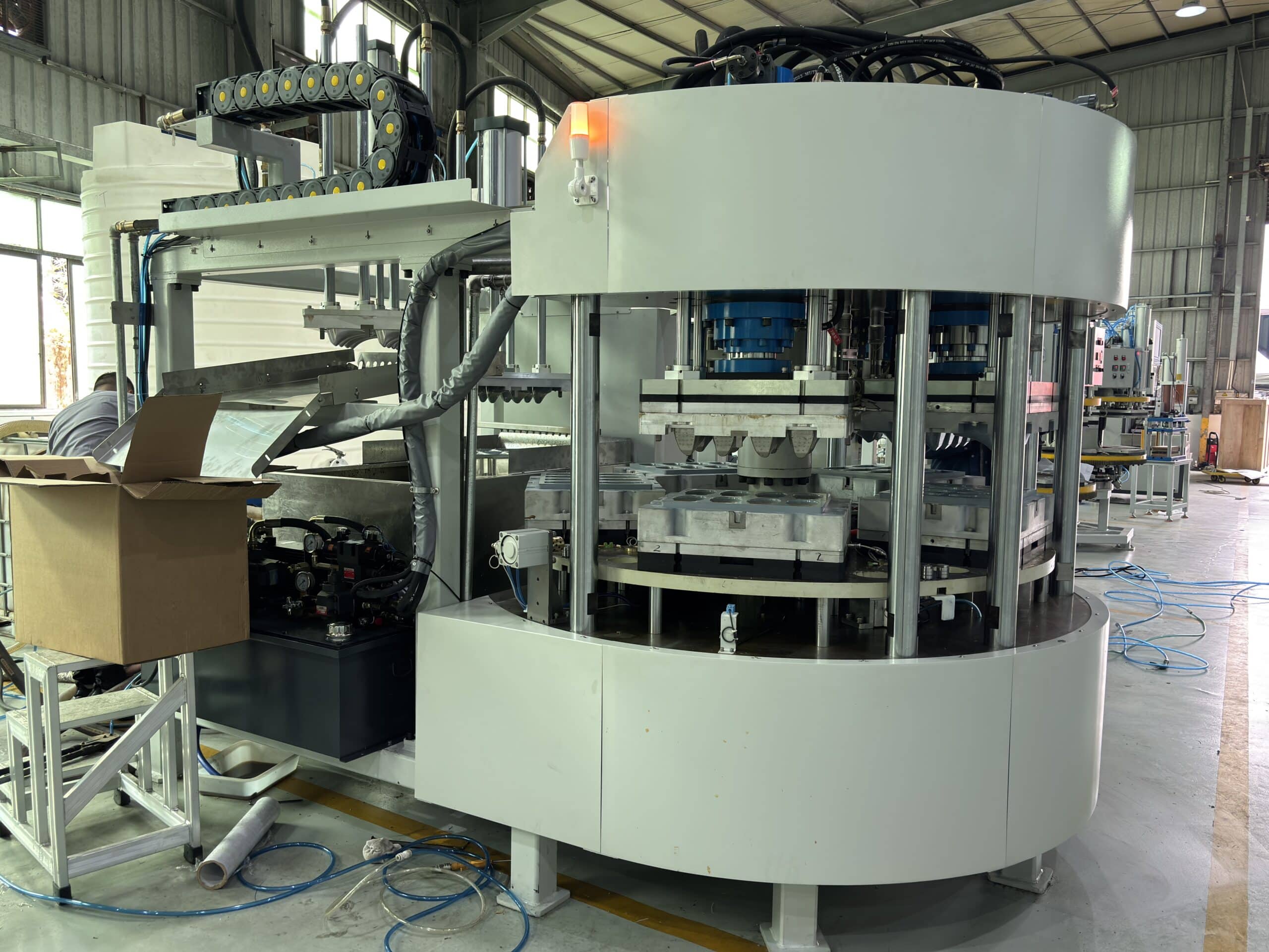
A paper pulp molding machine is specialized equipment used to form packaging products from paper pulp or plant-based fibers. These machines shape pulp slurry into trays, containers, and protective packaging through a controlled molding and drying process.
Unlike traditional packaging equipment, pulp molding technology relies on water-based fiber forming rather than plastic extrusion or foam expansion. This process significantly reduces reliance on fossil-fuel-based materials and supports environmentally responsible manufacturing practices.
How Pulp Molding Technology Supports Sustainability
Eco-friendly packaging production depends on minimizing waste, reducing emissions, and using renewable materials. A paper pulp molding machine supports these objectives in several key ways.
First, it uses recycled paper or agricultural fibers as raw materials, reducing dependence on virgin resources. Second, water used in the production process can be filtered and reused, lowering overall water consumption. Third, the finished products are biodegradable and recyclable, helping reduce landfill waste.
These benefits make pulp molding technology a cornerstone of sustainable packaging systems.
The Production Process and Environmental Efficiency
The production process begins by mixing recycled paper or plant fibers with water to create pulp slurry. This slurry is then shaped using molds inside the pulp machine, where vacuum pressure forms the desired structure.
After molding, products are dried using controlled heating methods to ensure strength and stability. Excess water is recovered and reused, making the process more resource-efficient compared to traditional packaging manufacturing.
This closed-loop approach supports eco-friendly packaging production by minimizing waste and energy consumption while maintaining consistent quality.
Reducing Plastic Dependence in Packaging
One of the most significant advantages of pulp molding equipment is its role in replacing plastic packaging. Plastic trays, foam inserts, and disposable containers contribute heavily to pollution and waste.
By enabling the production of fiber-based alternatives, pulp molding machines help brands transition away from plastic without compromising functionality. Fiber packaging provides cushioning, structure, and thermal resistance suitable for many applications, making it a practical replacement in both food and industrial packaging.
Supporting Custom and Scalable Production
Eco-friendly packaging must be adaptable to different product types and production volumes. A modern paper pulp molding machine supports customization by allowing manufacturers to design molds tailored to specific packaging needs.
This flexibility enables the production of custom shapes, sizes, and thicknesses while maintaining material efficiency. At the same time, automated systems support high-volume output, ensuring scalability for growing demand.
The ability to combine customization with scalable production makes pulp molding technology highly valuable for sustainable packaging operations.
Energy Efficiency and Lower Carbon Footprint
Compared to plastic molding equipment, pulp molding machines generally operate at lower temperatures and consume less energy. This contributes to reduced greenhouse gas emissions during production.
Additionally, many facilities integrate energy-efficient drying systems and automation to further optimize performance. By lowering energy usage and emissions, pulp molding equipment supports packaging manufacturers in meeting environmental targets and compliance standards.
Applications Across Eco-Friendly Packaging Markets
Pulp molding technology supports a wide range of eco-friendly packaging applications. These include food trays, takeaway containers, protective packaging for electronics, and cushioning for consumer goods.
Because fiber-based packaging is lightweight yet strong, it performs well across storage, transportation, and handling stages. This versatility allows manufacturers to serve multiple industries using a single production platform while maintaining sustainability standards.
The Role of Equipment Quality in Sustainable Production
The effectiveness of eco-friendly packaging production depends heavily on machine quality and reliability. High-performance equipment ensures consistent product thickness, structural integrity, and smooth surface finishes.
Working with experienced equipment providers helps manufacturers maintain production efficiency and reduce material waste. Advanced pulp molding machines also support process automation, improving quality control and reducing labor-related inefficiencies.
Long-Term Benefits for Packaging Manufacturers
Investing in pulp molding technology offers long-term advantages beyond sustainability. Fiber-based packaging aligns with global regulatory trends, helping businesses future-proof their operations.
It also enhances brand reputation, as consumers increasingly favor companies that demonstrate environmental responsibility. From cost savings to improved market positioning, pulp molding machines support both environmental and commercial success.
Conclusion
A paper pulp molding machine plays a vital role in supporting eco-friendly packaging production by enabling the use of renewable materials, reducing waste, and lowering environmental impact. Through efficient processes, scalable output, and versatile applications, pulp molding technology is helping reshape the future of sustainable packaging.
As demand for fiber-based solutions continues to grow, manufacturers must rely on reliable equipment to meet quality, efficiency, and sustainability expectations. For companies seeking advanced pulp molding solutions that support eco-conscious packaging production, BonitoPak offers paper pulp molding machines designed to deliver performance, consistency, and environmental responsibility.
FAQs
What is a paper pulp molding machine used for?
A paper pulp molding machine is used to manufacture fiber-based packaging products such as trays, containers, and protective inserts from recycled or renewable pulp materials.
How does a pulp machine support eco-friendly packaging?
A pulp machine supports eco-friendly packaging by using recyclable materials, minimizing waste, reducing energy consumption, and producing biodegradable packaging products.
Is paper pulp molding environmentally friendly?
Yes, the process uses renewable or recycled fibers, recycles water, and produces biodegradable products, making it environmentally responsible compared to plastic packaging methods.
What industries use paper pulp molding machines?
These machines are commonly used in food packaging, electronics protection, consumer goods packaging, and industrial cushioning applications.




 English
  German
  Spanish
  French
  Russian
  Japanese
  Portuguese
  Arabic