 Ir al contenido
Por Leo Chan | Redactor, BonitoPak | Más de 20 años de experiencia en embalajes de pulpa moldeada
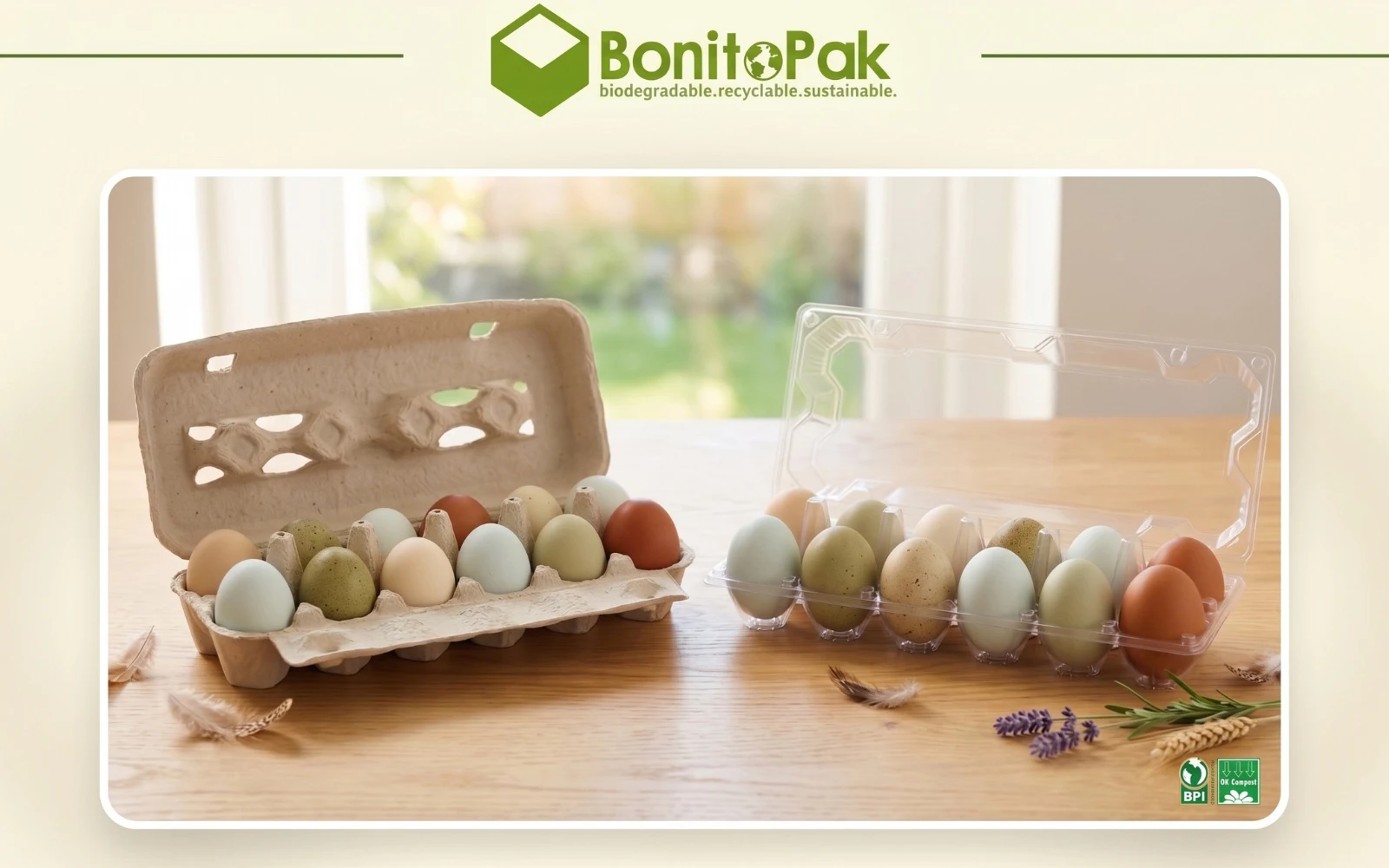
Choosing between pulp vs plastic egg cartons isn’t really about which material is better overall. It’s about which one fits how you sell. A farm stand, a grocery private label, and a specialty brand selling blue and green eggs can land on different answers, and all three can be right.
Here’s the short version. Molded fiber cushions better, breathes, and gives you more options once the eggs are gone. Clear PET shows off the eggs, shrugs off moisture, and holds a crisp shape. The price gap is smaller than most buyers expect. The sections below walk through each factor so you can choose with confidence.
Side-by-Side Comparison
This table sums up how pulp vs plastic egg cartons compare on the points buyers ask about most.
| Factor | Pulpa moldeada | PET plastic |
| Material | Recycled paper, bagasse, or bamboo fiber | Polyethylene terephthalate (resin code #1), often with recycled content |
| Impact protection | Fiber walls absorb and spread shock | Thin, rigid shell that relies on cell and rib design |
| Moisture | Breathes, but softens if soaked | Doesn’t absorb water, but can hold condensation around eggs |
| Visibility | Closed lids, or open view styles | Fully see-through |
| Marca | Pulp colors, embossing, printed lids, labels | Labels, bands, and inserts |
| Reciclado | Goes with paper in most programs | Accepted in some programs, with thermoform limits |
| Compostaje | Yes, if plain or certified | No |
| Storage and freight | Nests tightly | Nests tightly |
What Each Carton Is Made Of
PET egg cartons are thermoformed from polyethylene terephthalate, the same resin family used for water and soda bottles. A heated plastic sheet is pulled over a mold to form the cells and the lid. Many are made with recycled PET, often labeled RPET.
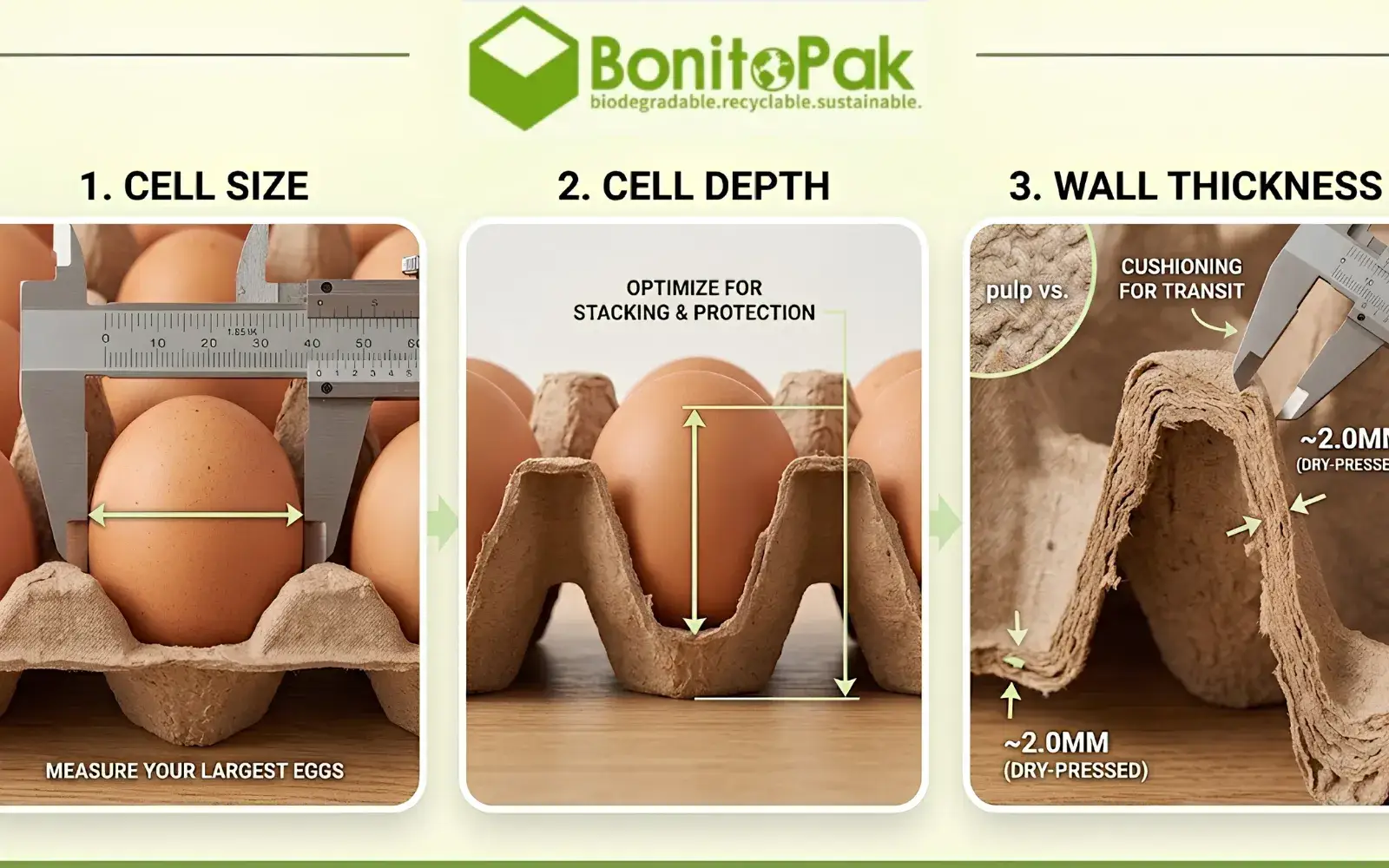
Molded fiber cartons start as a slurry of fiber and water. The slurry is formed on a mesh mold and then dried. Wall thickness depends on the process, and our guide to the 4 tipos de pasta moldeada explains why a thin, smooth wet-pressed wall behaves differently from a thicker transfer-molded one.
Protection: Which Carton Breaks Fewer Eggs?
Both materials protect eggs well when the cells fit the eggs. In fact, cell design matters about as much as the material. Still, the two behave differently under stress.
Impact and Vibration
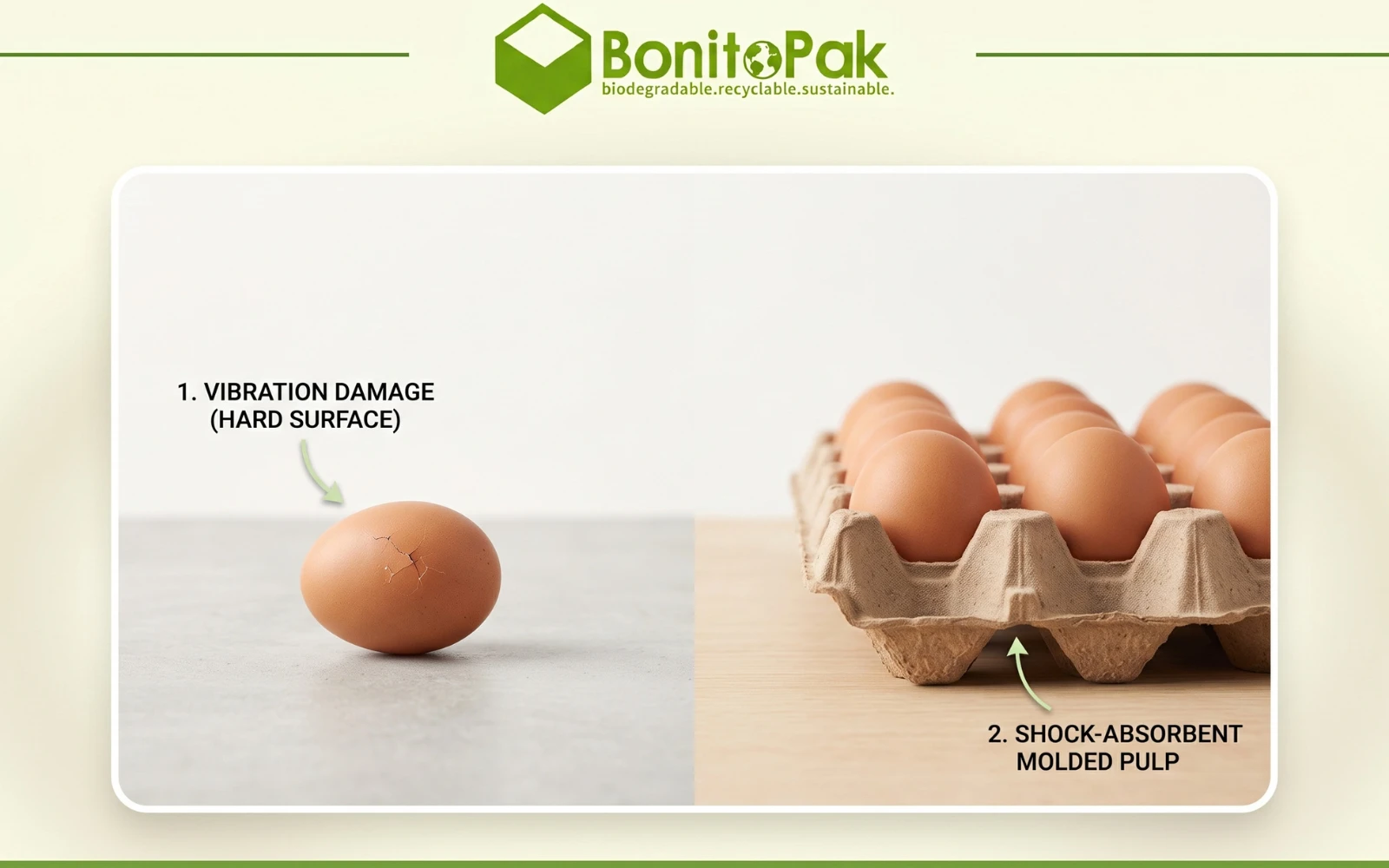
Fiber is a natural cushion. When a case gets bumped or rattles in a truck, the fiber walls give slightly and absorb some of the energy. PET is thinner and stiffer, so it relies more on ribs and cell shape to spread a hit. A well-designed PET carton holds eggs securely. It simply has less give.
Moisture and Condensation
Eggs move between cold storage and warmer air many times on the way to a shopper. Federal rules require shell eggs held for retail to stay at 45°F or below, so moisture often forms on the shells when they warm up.
Fiber breathes and can soak up a little of that surface moisture, which is one reason many producers prefer it. The tradeoff is that fiber loses strength if it gets truly wet. PET doesn’t absorb water at all. That makes it a good fit for humid storage or wash-down areas, but it also means moisture can sit on the eggs inside a closed clear shell.
Crush Strength in Stacked Cases
Stacked cases put steady weight on the bottom layers. The thicker walls of molded fiber handle that load well. PET resists crushing through its shape and ribbing. Both can work when the case and carton are matched, so test with your own pallet pattern before you commit.
Cost: Unit Price and What Sits Behind It
At small quantities, the two land closer than many buyers think. At the time of writing, Walmart.com listed a 40-pack of clear plastic egg cartons for a dozen eggs at $24.99, or about 62 cents each. A 250-pack of blank natural fiber dozen cartons was listed at $170.99, or about 68 cents each.
Factory pricing at volume is far lower for both materials. It depends on carton size, weight, and order quantity, so compare real quotes for your format.
Herramientas
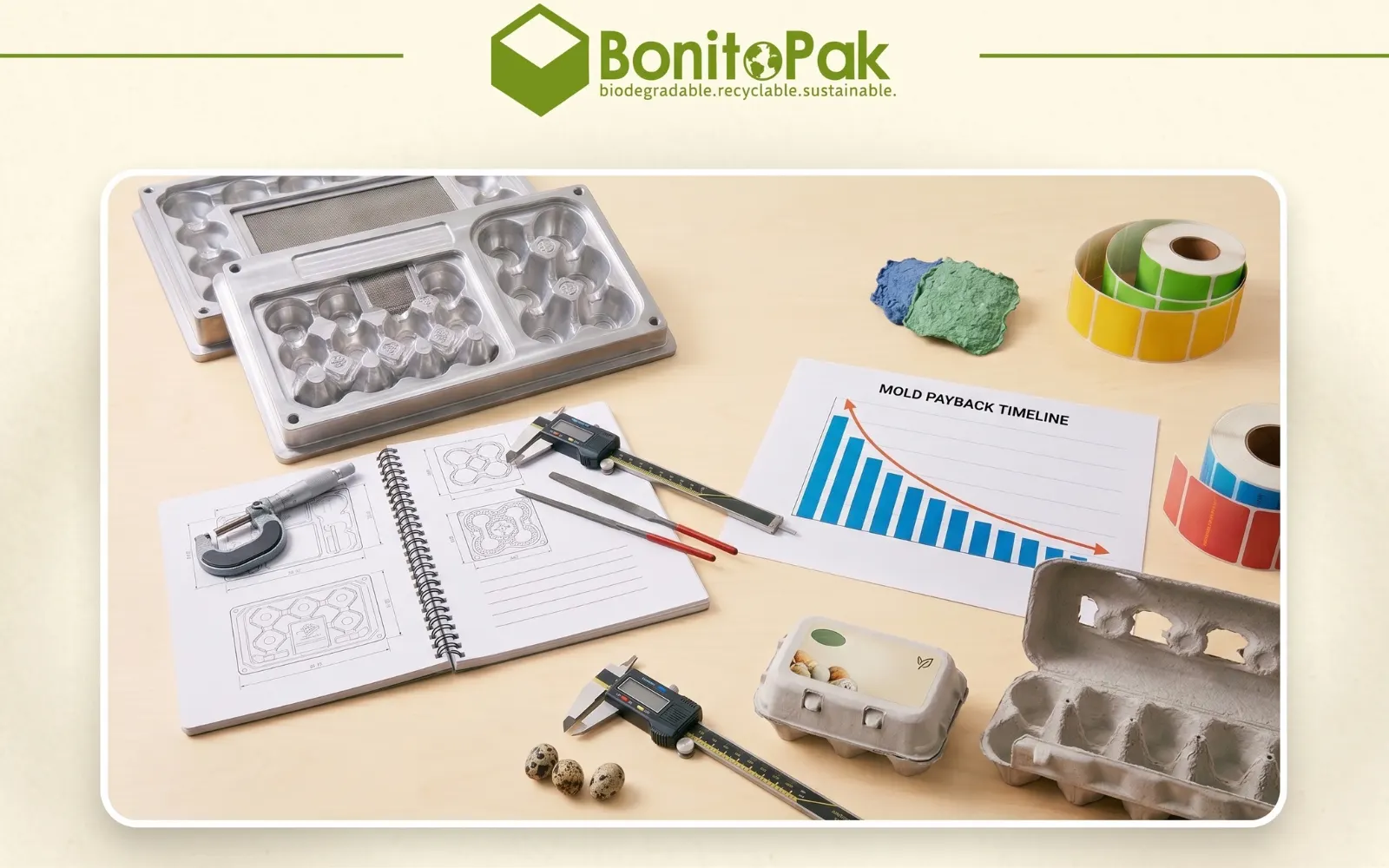
Custom shapes need custom tools either way. PET thermoforming molds and fiber forming molds are both one-time costs spread across your volume. If you plan a custom design, work out the payback before you commit.
Breakage and Returns
A cheaper carton that cracks more eggs isn’t really cheaper. If you’re testing a switch, track breakage per case on each option for a few weeks before you move a whole line.
Packaging Fees Under EPR Laws
Extended producer responsibility (EPR) laws are adding a new cost line for many brands. California’s SB 54 regulations took effect on May 1, 2026. By 2032, the law calls for a 25% cut in single-use plastic packaging, a 65% recycling rate for single-use plastic packaging, and 100% of covered packaging to be recyclable or compostable.
Producer fees under SB 54 are set by material category and adjusted for factors like recyclability. That means your carton material can change what you pay. Several other states have passed their own packaging EPR laws, so check the rules wherever you sell.
Shelf Appeal: How Each Carton Sells
Shelf appeal is where the choice gets personal, because it depends on the story your brand tells.
Where Clear Plastic Wins
Shoppers can check every egg without opening the lid. That matters most for specialty eggs with colorful shells, where the eggs are the selling point. PET also gives a clean, modern look that works well under bright store lighting.
Where Molded Pulp Wins
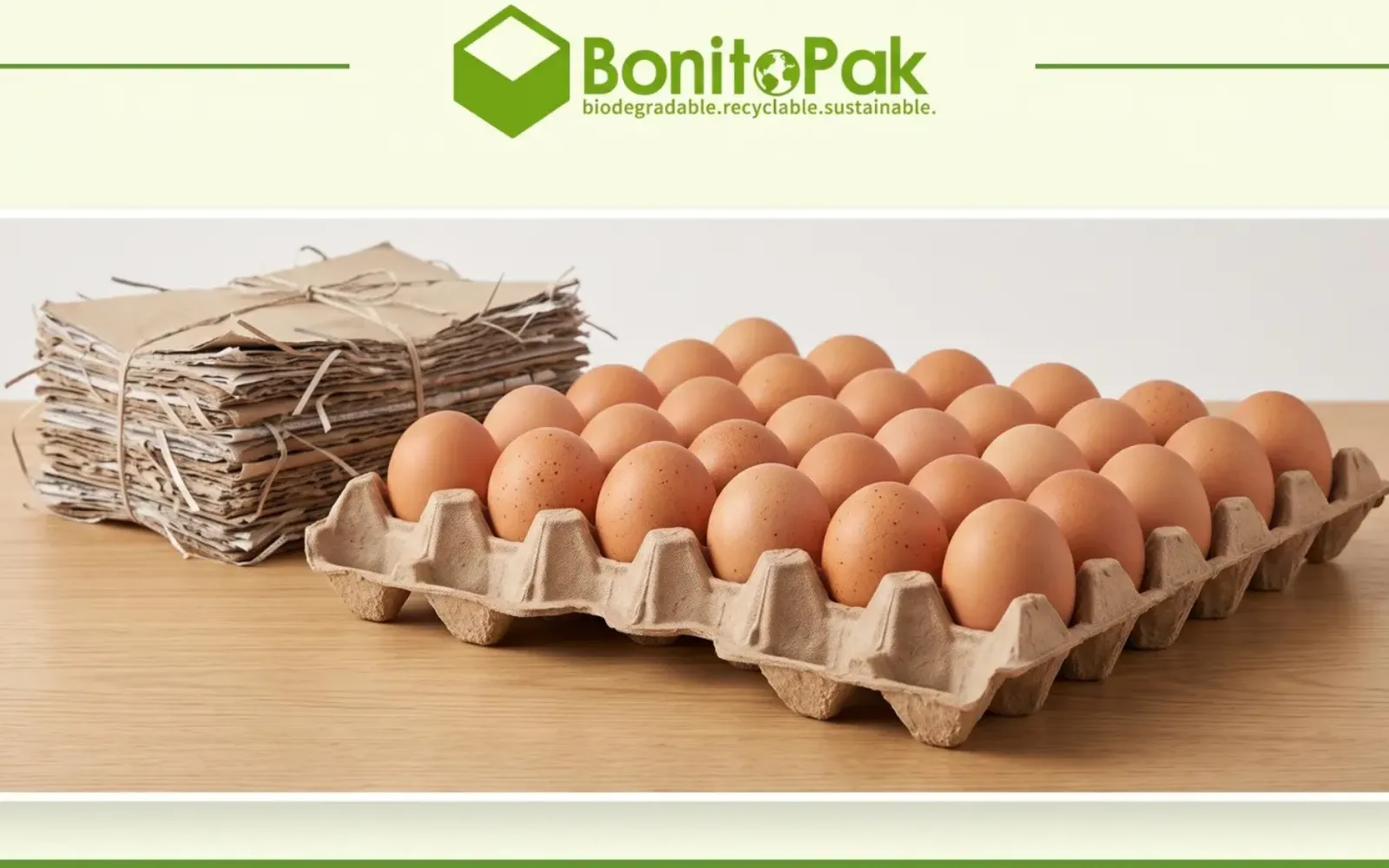
Fiber reads as natural and farm fresh to many shoppers. It also gives you more ways to brand the carton itself. Color can go straight into the pulp, so a pink egg carton or a custom brand shade becomes part of your identity. Logos can be embossed with no ink at all.
Our molded pulp egg cartons come in six pulp colors, matched to Pantone references with better than 95% accuracy. Printed lids and labels add even more detail. Our article on blank vs printed egg cartons explains when unbranded cartons are actually the smarter choice.
Open view styles also exist in fiber, so shoppers can still see the tops of the eggs.
End of Life: What Happens After the Eggs Are Gone
This is where the gap between the two is widest.
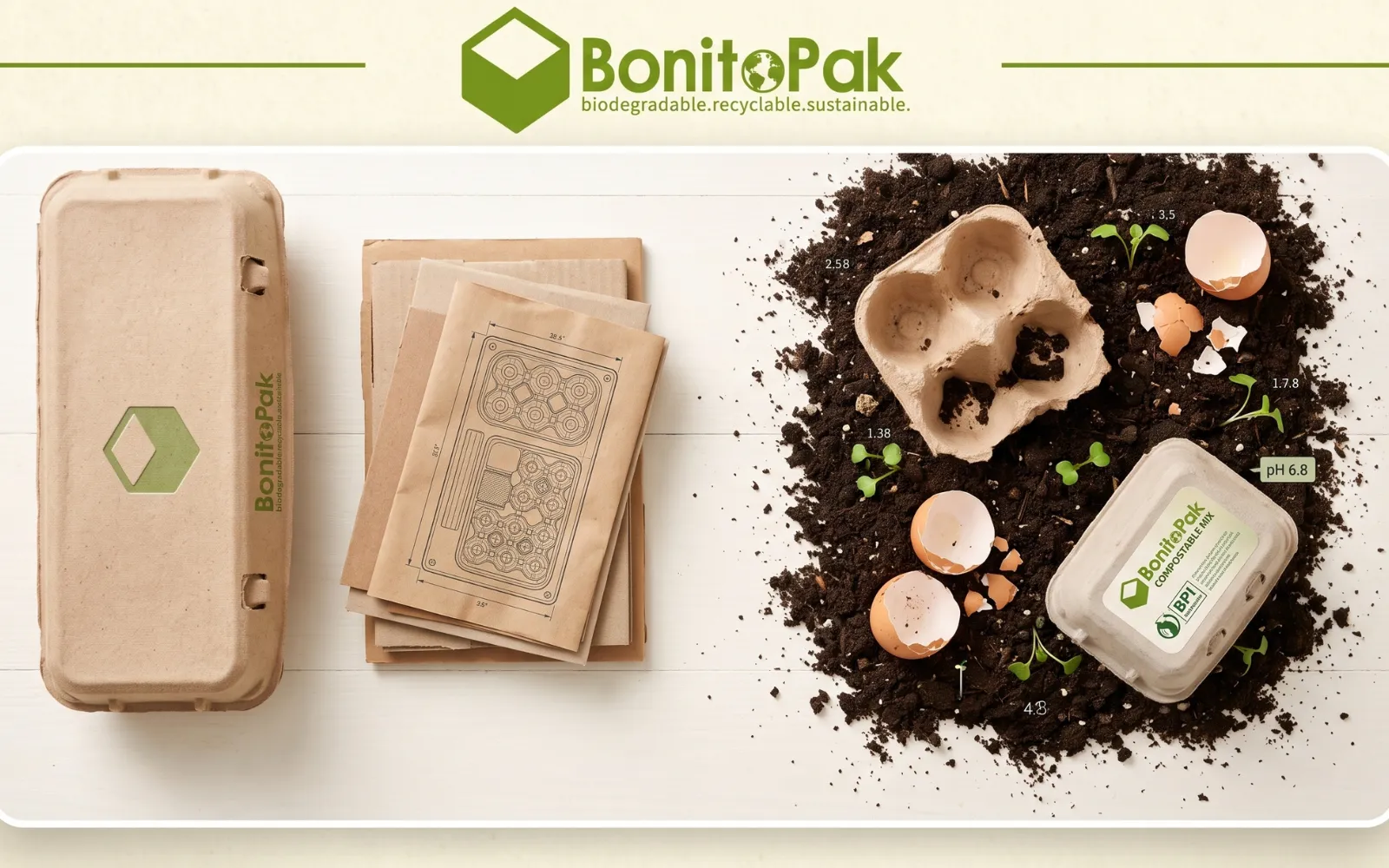
Molded fiber goes into paper recycling in most US programs. It can also be composted at home, and certified cartons can go to commercial compost facilities that accept them. Our article on why pulp egg cartons are the eco-friendly choice covers the environmental side in more depth.
PET is recyclable in principle, but thermoforms like egg cartons have lagged behind bottles. A NAPCOR white paper found that domestic recycling of PET thermoforms more than tripled from 2011 to 2023, reaching 130 million pounds in 2023. Even so, sorting facilities catch bottles more easily than thermoforms.
The Recycling Partnership’s PET Recycling Coalition has noted that only about 30% of North American reclaimers can process thermoforms mixed into bottle bales. The coalition is working toward 60% nationwide acceptance of PET thermoforms by 2027. So clear PET egg cartons can be recycled where a local program accepts thermoforms, but many shoppers will still find them on the “no” list. Composting isn’t an option for PET at all.
Which Carton Fits Your Operation?
| Your situation | Better fit | Why |
| Small farm or farmers market | Pulpa moldeada | Easy to source in small runs, natural look, simple disposal |
| Grocery private label | Pulpa moldeada | Strong in stacked cases and less exposure to plastic reduction targets |
| Specialty or colored eggs | PET, or open fiber styles | Shoppers want to see the shells |
| Humid storage or wash-down areas | PET | Doesn’t absorb moisture |
| Gift and premium packs | Colored or embossed pulp | Branding is built into the carton |
| Brands selling into California | Pulpa moldeada | Lines up with SB 54 plastic reduction goals |
If you’re also comparing suppliers, our buyer’s guide to egg tray manufacturers in the USA outlines who makes what and where each one fits.
Making the Call for Your Eggs
For most egg sellers, molded fiber is the stronger all-around choice. It cushions well, costs about the same at small quantities, gives you real branding options, and fits where packaging rules are heading. PET still earns its place when visibility or moisture resistance matters more than anything else. The pulp vs plastic egg cartons decision gets much easier once you’ve run both on your own line with your own eggs.
En BonitoPak, we make molded pulp egg cartons in standard and custom formats on dry and wet press lines. They’re BPI and OK Compost certified, with orders from 1,000 pieces. Send us your egg type and volume, and we’ll help you compare options side by side.
Preguntas frecuentes
Q: Do clear plastic egg cartons protect eggs better than fiber?
Not necessarily. PET holds its shape and resists moisture, but molded fiber absorbs more shock from bumps and vibration. In practice, a carton whose cells fit your eggs will outperform either material with a poor fit.
Q: Are PET egg cartons recyclable?
PET is recyclable, but thermoformed items like egg cartons are accepted in fewer programs than bottles. Check your local recycling guide. If thermoforms aren’t listed, the carton likely belongs in the trash, even if it shows a #1 resin code.
Q: Which costs less, molded fiber or PET cartons?
At small retail quantities, prices are close, often within a few cents per carton. At factory volume, cost depends on size, weight, and order quantity. Also factor in breakage, freight, and any EPR packaging fees where you sell.
Q: Can molded fiber cartons handle refrigerator moisture?
Yes, in normal cold storage. Fiber breathes and absorbs small amounts of surface moisture. It weakens only when it gets truly soaked, such as in wash-down areas or from leaks. For constantly wet conditions, PET is the safer choice.
Q: Can shoppers see the eggs in a fiber carton?
They can with open view styles, which leave the tops of the eggs visible. Closed fiber cartons hide the eggs but offer more room for branding, pulp color, and embossed logos, which many brands prefer for shelf impact.

 Spanish
  English
  German
  French
  Russian
  Japanese
  Portuguese
  Arabic