 Ir al contenido
Por Leo Chan | Redactor, BonitoPak | Más de 20 años de experiencia en embalajes de pulpa moldeada
Bagasse handles hot, greasy and heavy food and composts fastest. PLA holds liquid well because it forms a continuous film, but standard grades fail under heat. Paper is cheapest and has mature recycling, but usually carries a plastic lining that removes the composting route.
A disclosure first. BonitoPak manufactures molded pulp packaging, which puts us on the bagasse side of this comparison. So it is worth saying at the outset that PLA and paper each genuinely win in situations described below, and where they do we say so.
Most comparisons in this category are written to reach a predetermined answer. The useful version identifies what each material is actually good at, because the correct choice changes with the menu rather than with the marketing.
Bagasse vs PLA vs Paper at a Glance
| Bagazo | PLA | Paper or kraft | |
|---|---|---|---|
| Source | Sugarcane milling byproduct | Fermented plant starch | Pasta de madera |
| Hot food | Fuerte | Poor in standard grades | Moderado |
| Greasy food | Fuerte | Good, continuous film | Needs a lining |
| Liquid retention | Good, softens over long periods | Fuerte | Needs a lining |
| Apariencia | Natural, textured | Clear or translucent | Brown or bleached white |
| Compostaje | Fastest, widely accepted | Industrial facilities only | Only if uncoated |
| Relative cost | Middle | El más alto | Lowest |
Bagasse vs PLA: Where Bagasse Wins
Heat and grease, which together describe most hot foodservice.
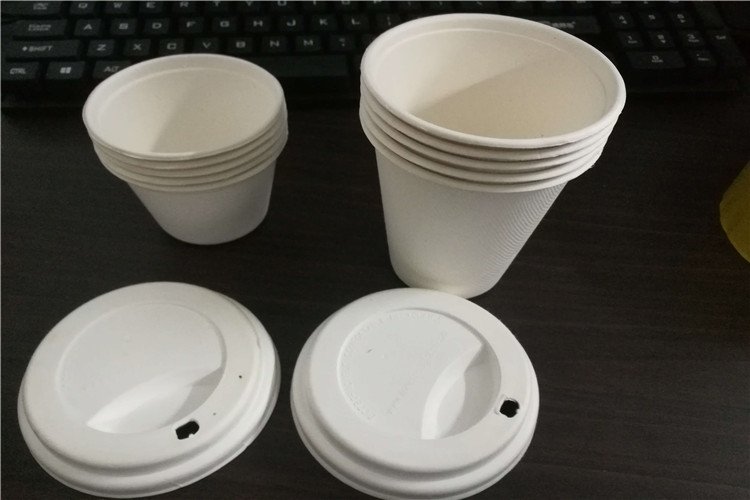
Sugarcane tableware is heat resistant and holds shape with hot and oily contents, commonly cited as tolerating service temperatures up to around 93 degrees Celsius, with properly manufactured product suitable for microwave use. Its fibrous structure resists bending under dense foods, which matters for anything substantial rather than a salad.
It also composts fastest. Comparative analysis indicates bagasse decomposes substantially faster than PLA, typically within 60 to 90 days, and it is accepted more widely because it does not depend on industrial conditions to break down at all.
The honest limitation of sugarcane tableware is liquid over time. Bagasse can soften with prolonged liquid storage, particularly beyond around 24 hours. For a takeaway meal eaten within the hour that is irrelevant. For soup held overnight, or a salad dressed and left in a fridge, it is a real constraint worth testing before committing.
Where PLA Tableware Wins
Cold liquids and visual clarity, and the reason is structural rather than cosmetic.
PLA forms a continuous film rather than a porous fibre mat, which makes it naturally oil resistant and genuinely good at holding liquid. Clamshells in PLA are often heat sealed at the hinge, which helps contain contents in a way a formed fibre part cannot match without an added barrier.
PLA tableware is also clear or translucent, which sells cold drinks, salads and layered items where the customer buys with their eyes. No fibre material offers that, and pretending otherwise misleads buyers.
Its weakness is the same property inverted. Standard PLA has a low heat threshold and is designed for cold beverages, warping or deforming with hot liquids, making it unsuitable for coffee, tea or soup. Crystallised PLA exists as the heat tolerant variant and costs more. PLA is also brittle, with cutlery prone to snapping and plates liable to crack under pressure.
The end of life position is weaker than the marketing suggests. PLA requires industrial composting with controlled temperature and microbial conditions. In landfill, home compost or marine environments it persists and behaves much like conventional plastic.
Bagasse vs Paper Tableware: Where Paper Wins
Cost and recycling infrastructure, and neither should be dismissed.
Kraft is produced from wood pulp by a process that creates a strong, tear resistant material, available unbleached brown or bleached white. It is the cheapest of the three and sits on the most mature recovery infrastructure, particularly across Europe and North America, where paper recycling is well established in a way composting is not.
The catch is the lining. Paper foodservice items generally need a coating to hold moisture, and conventional polyethylene linings both prevent composting in most facilities and can shed microplastics into the contents. Uncoated paper avoids that and is recyclable, but handles moisture poorly. Bio-based linings exist and resolve the microplastic issue, at a cost.
So paper is genuinely the right answer for dry items where cost dominates, and a compromised one for wet or greasy food unless you accept a lining and its consequences.
Choosing by Menu, Not by Material
| Aplicación | Best fit | Why |
|---|---|---|
| Hot main meals, curries, pasta | Bagazo | Heat and grease resistance, structural strength |
| Fried and oily food | Bagazo | Handles grease without a separate barrier |
| Cold drinks and iced beverages | PLA | Clarity, liquid retention, no heat exposure |
| Salads and layered cold items | PLA | Visual presentation sells the product |
| Hot beverages | Bagasse or lined paper | Standard PLA warps, crystallised PLA costs more |
| Dry items, pastries, sandwiches | Paper or kraft | Lowest cost, no moisture requirement |
| Soup held over hours | Lined paper or crystallised PLA | Bagasse softens with prolonged liquid contact |
A Note on Testing Before You Switch
Three tests settle most of this, and none need a laboratory.
Run your hottest and oiliest menu item in each candidate and leave it for the length of a realistic delivery. Twenty minutes in a bag reveals more than any specification sheet, and it is where PLA warping and bagasse softening both become visible.
Fill a liquid item and leave it overnight. This is unrealistic for most service but it shows the failure boundary, which is useful for understanding how much margin you have on a normal day rather than an exceptional one.
Stack and carry a full order. Structural failure under weight is the complaint customers remember, and brittle materials show it first. PLA plates and cutlery in particular are prone to cracking under pressure, which is a different failure mode from softening and often more visible to the customer.
The Compostable Tableware Claim Problem
All three compostable tableware materials are marketed as sustainable, and the differences sit in what can actually be evidenced.
Compostable is only meaningful with certification of the finished article rather than the base material, and industrial certification is not the same as home compostable. A PLA item certified for industrial composting is accurate and, for a consumer with no access to such a facility, largely irrelevant.
Paper carries a different trap. An uncoated paper item may be recyclable while the same item with a polyethylene lining is neither recyclable nor compostable, and both look identical on shelf. We work through what certification actually covers in our guide to compostable and recyclable claims. Sizing and format decisions interact with material too, as we cover in our guide to sizes and counts.
The practical rule is the same across all three. Claim what happens to the item in the markets you sell into, hold a certificate that names your specific product including any coating or print, and avoid unqualified language.
Cost Behaves Differently Across the Three
Unit price is only part of the picture, and each material moves for a different reason.
Kraft paper is the cheapest and the most stable, sitting on a mature commodity supply chain. PLA is the most expensive and the most volatile, because feedstock pricing fluctuates with agricultural markets and the polymer requires more processing. Bagasse sits between them, and its pricing has grown more stable as production volume has scaled.
Two secondary costs are worth adding. A lined paper item carries the cost of the lining and often a certification requirement to support any claim made about it. And a material that fails in service carries the cost of replacement, refunds and complaints, which regularly exceeds the unit price difference between all three.
The practical consequence is that the cheapest material for a dry sandwich is not the cheapest for a hot curry, and a business standardising on one material to simplify purchasing usually pays for it in one category or the other.
Lo que vemos en nuestra propia línea de producción
We manufacture molded pulp packaging in Chashan Town, Dongguan, and work in fibre rather than bioplastics, so these observations come from one side of the comparison.
Fibre choice matters more than the word bagasse
Bagasse is a short fibre and behaves differently from recycled paper or bamboo in forming and drying. Lines specified for waste paper cap alternative fibre at low proportions, so a supplier running bagasse properly has committed equipment to it rather than substituting feedstock. Our material options are set out on our envases de pulpa moldeados a medida page, and pasta de papel reciclado is a genuinely different starting point from bagasse.
Weight is the honest comparison
Across every fibre product we make, weight per piece reveals what a quote actually contains. Two items that look identical in a photograph can differ by a third in material content, and that shows up as softening under hot food. We specify wall thickness from roughly 0.8 to 3mm depending on application, with prensado en húmedo producing a denser 0.7 to 1.2mm wall and planchado en seco a bulkier 2.5 to 3.0mm section.
We do not make tableware
Worth stating plainly. Our production is packaging rather than plates and bowls, so we are not competing for a tableware order. That is part of why this comparison concedes so readily to PLA and paper where they perform better: we have no bagasse plate to sell you.
Poner esto en práctica
In bagasse vs paper tableware decisions, and in the wider comparison, start from the food rather than the material. Hot and greasy points to bagasse, cold and visual points to PLA, dry and cost sensitive points to paper. Most operators need two of the three rather than one, and trying to standardise on a single material usually means one category performs badly.
Then test against your actual conditions rather than a specification. Hold the item with your hottest and oiliest menu item for the length of a realistic delivery, and check what it looks like at the far end. Most failures in this category are predictable and almost none are discovered before ordering.
En BonitoPak we work in moulded fibre packaging rather than tableware, which means we have no commercial reason to push this comparison one way. If your requirement is cold drinks in clear cups, PLA is the answer and no amount of fibre engineering changes that.
Preguntas frecuentes
Q: Can PLA hold hot coffee?
A: Standard PLA cannot. It has a low heat threshold and is designed for cold drinks, warping or deforming with hot liquid. Crystallised PLA is the heat tolerant variant and costs more.
Q: Do bagasse containers leak?
A: Not usually with hot or greasy food, which is where they perform best. They can soften with prolonged liquid storage, particularly beyond around 24 hours, so they are not the right choice for long held soups.
Q: Is a paper plate compostable?
A: Only if uncoated. Most paper foodservice items carry a polyethylene lining to resist moisture, and that lining prevents composting in most facilities and can shed microplastics into the contents.
Q: Which breaks down fastest?
A: Bagasse by a wide margin. Research indicates it decomposes substantially faster than PLA, which requires industrial composting conditions and behaves much like conventional plastic in landfill or marine environments.
Q: Which is cheapest?
A: Uncoated kraft paper generally, with bagasse slightly above it and PLA highest, partly because PLA feedstock pricing fluctuates. Bagasse pricing has become more stable and competitive as volume has grown.

 Spanish
  English
  German
  French
  Russian
  Japanese
  Portuguese
  Arabic