 Ir al contenido
Por Leo Chan | Redactor, BonitoPak | Más de 20 años de experiencia en embalajes de pulpa moldeada
Pulp egg trays are made from two ingredients: paper and water. Recycled paper is broken down into a fiber slurry, vacuum-formed on a mesh mold shaped like the tray, and then dried until it holds its shape. That’s the whole recipe.
Search “how are pulp egg trays made” and you get that three-word answer: pulping, forming, drying. The details are where trays start to differ from each other. Fiber quality, forming time, drying method, and finishing all shape how stiff the tray feels, how well it stacks, and whether it protects eggs on a rough road. This article follows the material through the line and points out what each stage means for the tray that lands on your packing table.
The Short Version
The egg tray manufacturing process runs in six stages.
| Escenario | What happens | What it controls |
| 1. Sorting | Recycled paper is collected, sorted, and cleaned | Fiber quality and color |
| 2. Pulping | Paper is beaten with water into a slurry | Consistency and strength |
| 3. Forming | Vacuum pulls fiber onto a mesh mold | Shape, wall thickness, cell geometry |
| 4. Secado | Water is driven out with heat or air | Rigidity and dimensional stability |
| 5. Finishing | Hot pressing, trimming, and inspection | Surface, edges, and consistency |
| 6. Packing | Trays are nested, counted, and palletized | Freight efficiency |
Stage 1: Collecting and Sorting the Raw Material
Most recycled paper egg trays in the US market start as newsprint, cardboard, and office waste. Used egg trays go back in too, which is one reason this product recycles so cleanly into itself.
Not all waste paper is equal. Clean, dry paper with long fibers makes stronger trays. Paper contaminated with plastic film, wax coatings, or heavy adhesives causes problems that show up later as weak spots or specks in the finished tray. Sorting is unglamorous work, but it sets the ceiling for everything downstream.
Some producers use plant fiber instead of recycled paper. Sugarcane bagasse and bamboo are the common choices, and both behave like virgin fiber, which gives a lighter color and a cleaner surface. BonitoPak runs recycled paper, bagasse, and bamboo, and you can see the options on our materials page.
Stage 2: Pulping the Fiber
Sorted paper goes into a hydrapulper, which is essentially a large tank with an agitator. Paper and water are beaten together until the sheets break apart and the fibers separate. Equipment makers typically describe a paper-to-water ratio in the area of 1 to 3, with roughly 40 minutes of high-concentration stirring before the slurry moves on.
The slurry is then screened. Screening pulls out staples, sand, plastic scraps, and anything else that survived sorting. After that the pulp is diluted to the consistency the forming machine needs, because thin slurry and thick slurry produce very different wall thicknesses at the same forming time.
Additives can enter here. Pigment for colored trays goes into the pulp system rather than onto the surface. Water-resistance additives are also added at this stage when a job calls for them. For plain recycled paper egg trays, there’s usually nothing in the mix but fiber and water.
Stage 3: Forming the Tray
This is where a pool of gray slurry becomes something egg-shaped.
The forming mold is a metal tool covered in fine mesh, cut in the exact shape of the tray. It dips into the slurry while a vacuum pump draws water through the mesh from the inside. Fiber collects on the mesh surface in an even layer, and the tray takes shape in seconds.
Three things decide how thick that layer gets:
- Pulp consistency, meaning how much fiber is in the water
- Dwell time, meaning how long the mold stays in the slurry
- Vacuum strength
A transfer mold then lifts the wet tray off the forming mold and passes it to the drying line. The water pulled through the mesh is captured and cycled back into the system, which is why a well-run pulp line uses far less fresh water than people expect.
If you want to see how these tools are cut and what they control, our guide to the mold process for pulp products walks through it.
Stage 4: Drying
A freshly formed tray is soft and heavy with water. Drying is what turns it into a rigid product, and it’s the most energy-hungry stage on the line.
Producers use several approaches:
- Sun drying: Cheapest, weather-dependent, and slow. Still common in some regions.
- Brick kiln drying: Low cost, but harder to control.
- Single-layer metal dryer: Automated, consistent, and a common middle ground.
- Multi-layer metal dryer: Highest capacity and the most consistent moisture control.
Drying is also where quality problems appear. Dry a tray too fast and it can warp or crack at the corners. Dry it unevenly and the stack height drifts, which makes trays difficult to de-nest on an automated packing line.
Hot Pressing and the Two Process Types
Some trays go through a heated press after forming or drying. That flattens the surface, raises density, and gives a crisper edge.
This is the practical difference between the two main methods. In dry pressing, the tray is formed and then dried, which gives a thicker wall and a rougher texture. In wet pressing, or thermoforming, the tray is dried inside heated tools, which gives a thin, smooth wall. Our article on the 4 tipos de pasta moldeada covers where each one is used.
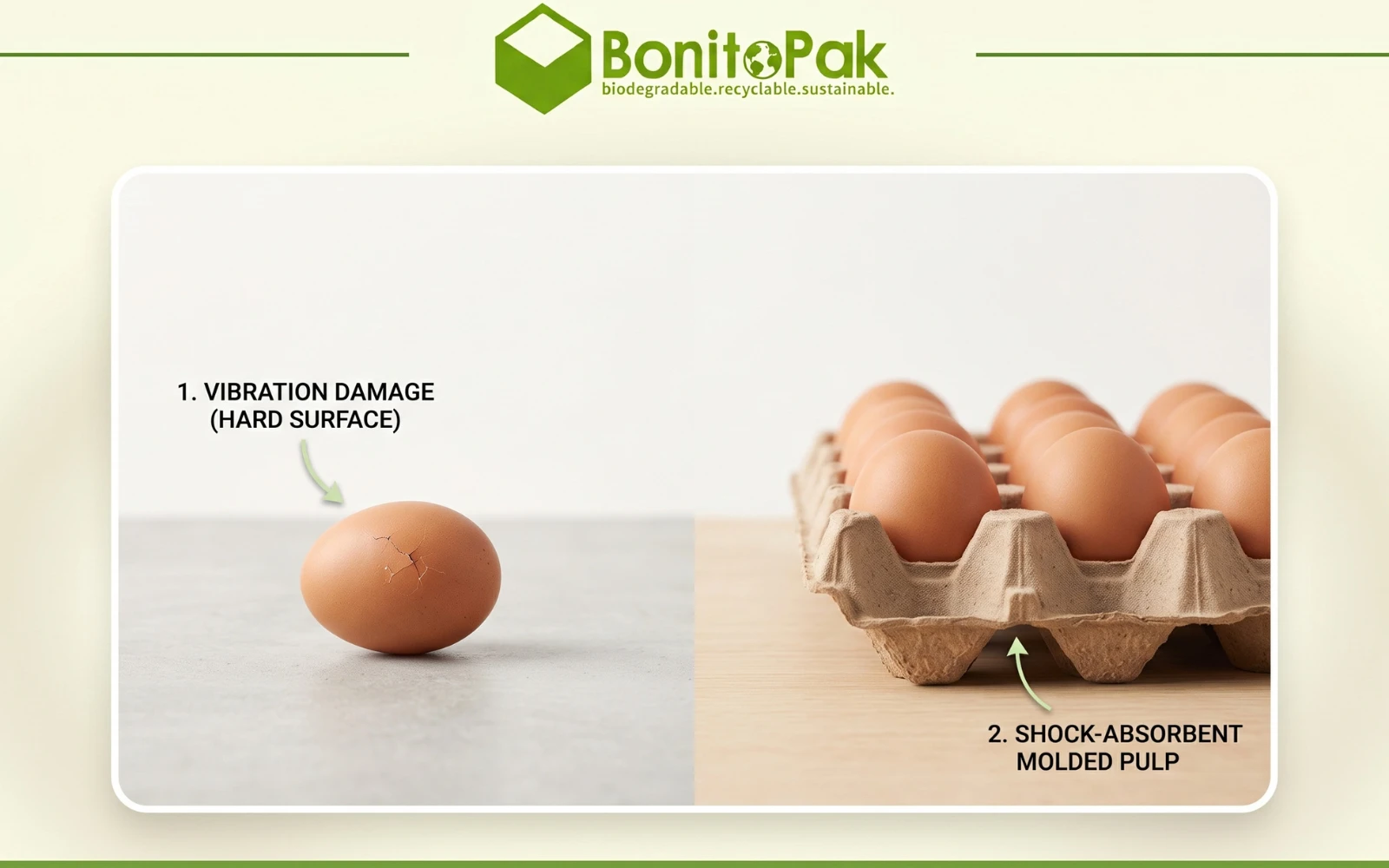
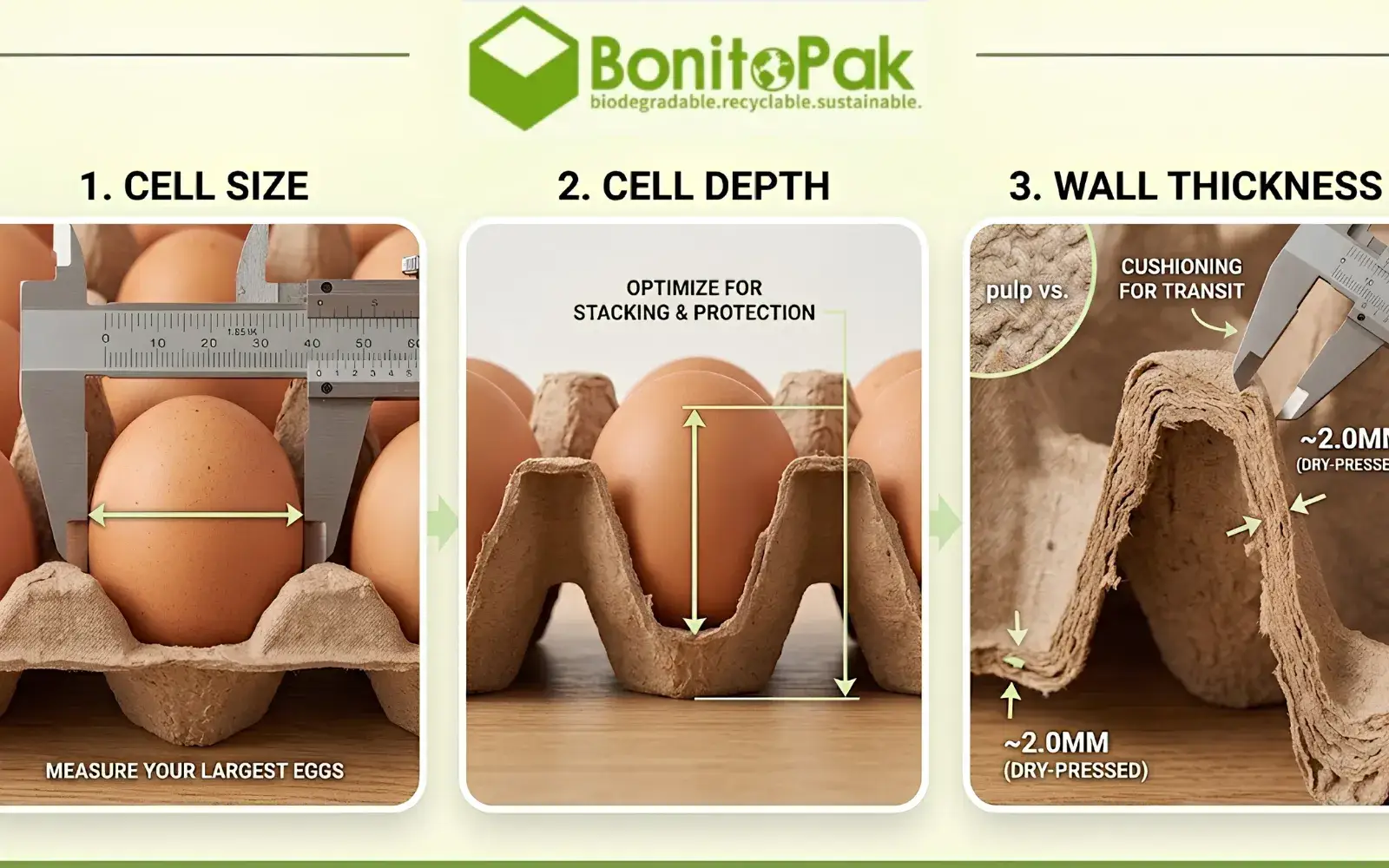
For egg trays, dry pressing is the usual choice. The extra wall thickness cushions eggs well, and nobody is judging a 30-cell flat on its surface finish.
Stage 5: Trimming, Inspection, and Quality Checks
After drying, edges are trimmed and trays are counted and stacked. Inspection is where a good factory separates itself, and the checks that matter most are simple:
- Weight per tray, which is a fast proxy for wall thickness
- Moisture content, since a damp tray loses strength and can develop odor
- Stack height across a bundle, which shows whether forming and drying stayed consistent
- Cell dimensions against the drawing
- Drop testing with real eggs
We run checks through forming, pressing, and packing rather than at the end alone, and you can see how that’s structured on our garantía de calidad página.
Stage 6: Packing and Shipping
Finished trays nest into each other, which is a quiet advantage of this product. A nested stack takes up a fraction of the space that rigid packaging would, so a single container holds tens of thousands of trays and freight cost per tray stays low.
Trays are usually bundled in set counts, wrapped, and palletized. If you’re importing, ask how bundles are counted and wrapped, because that detail decides how fast your team can unload and feed a packing line.
What the Process Means for the Tray You Get
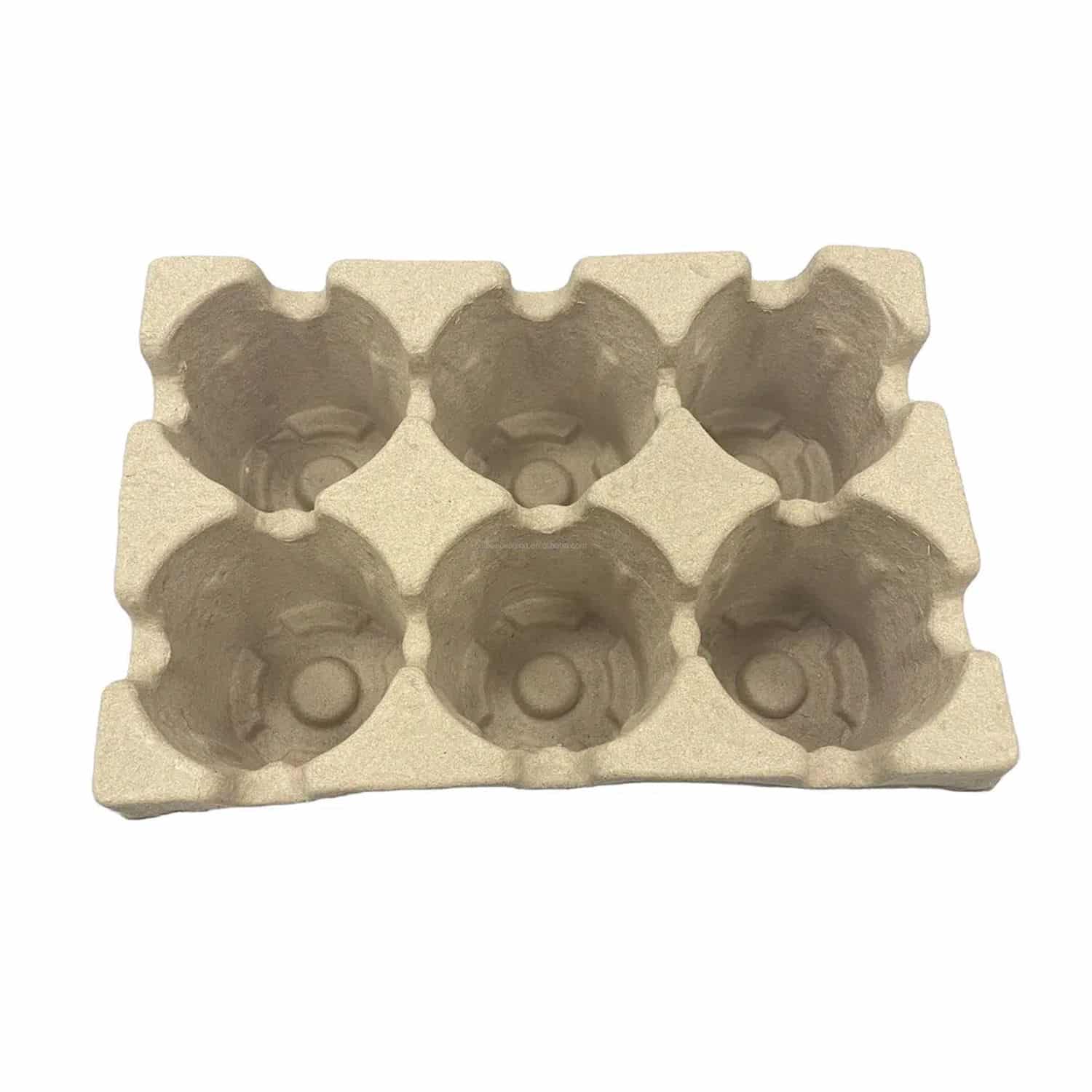
The real reason to ask “how are pulp egg trays made” is so you can read a sample. Once you’ve seen the line, the tray in your hand starts to explain itself.
| What you notice | Where it comes from |
| Gray or brown color | Recycled fiber, uncolored |
| Slightly rough texture | Dry pressing, with no heated finish tools |
| One smoother side | The side that faced the mold surface |
| Springy feel under pressure | Fiber walls that compress and recover |
| Slight absorbency | Cellulose with no coating |
| Consistent nesting height | Even forming and controlled drying |
That last one is worth a second look when a sample arrives. Stack 20 trays, measure the height, then compare it with another 20. A factory with tight process control will land within a few millimeters.
From Waste Paper to Your Packing Line
The process is old, simple, and hard to beat for eggs. Recycled fiber goes in, water gets recycled inside the plant, and the finished tray protects a fragile product before returning to the paper or compost stream.
The differences between suppliers sit in fiber sorting, forming consistency, drying control, and inspection. Those are the questions to ask, rather than price alone.
En BonitoPak, we make molded pulp egg trays and cartons on both dry and wet press lines at our Dongguan plant, with custom tooling from 1,000 pieces. Send us your format and volume and we’ll get a sample tray to you.
Preguntas frecuentes
Q: What are pulp egg trays made of?
Recycled paper, water, and nothing else in most cases. Some trays use sugarcane bagasse or bamboo fiber instead of recycled paper. Pigment is added to the pulp for colored trays, and water-resistance additives are used only when a job requires them.
Q: How long does the egg tray manufacturing process take?
Forming takes seconds per tray, but drying takes far longer and sets the pace of the whole line. Total time depends on the drying method, ranging from a fast multi-layer metal dryer to slow sun drying.
Q: Are pulp egg trays made with chemicals?
Plain trays need no binders, since the fibers lock together as they dry. Some producers use processing aids or additives for color and water resistance. Ask your supplier for the specification if your market requires a declaration.
Q: Why do molded pulp egg trays feel rough on one side?
The side against the mesh mold picks up its texture, while the other side dries in open air. Wet-pressed trays are dried inside heated tools instead, which gives both faces a smoother, denser finish.
Q: Can egg trays be made from used egg trays?
Yes. Used trays are a normal input for the pulping stage, along with newsprint and cardboard. The fibers get shorter with each cycle, so producers blend recovered material with other paper grades to keep strength consistent.

 Spanish
  English
  German
  French
  Russian
  Japanese
  Portuguese
  Arabic