 Zum Inhalt wechseln
Von Leo Chan | Autor, BonitoPak | Über 20 Jahre Erfahrung im Bereich Verpackungen aus Formzellstoff
Published: 19 August 2026 | Last reviewed: 19 August 2026
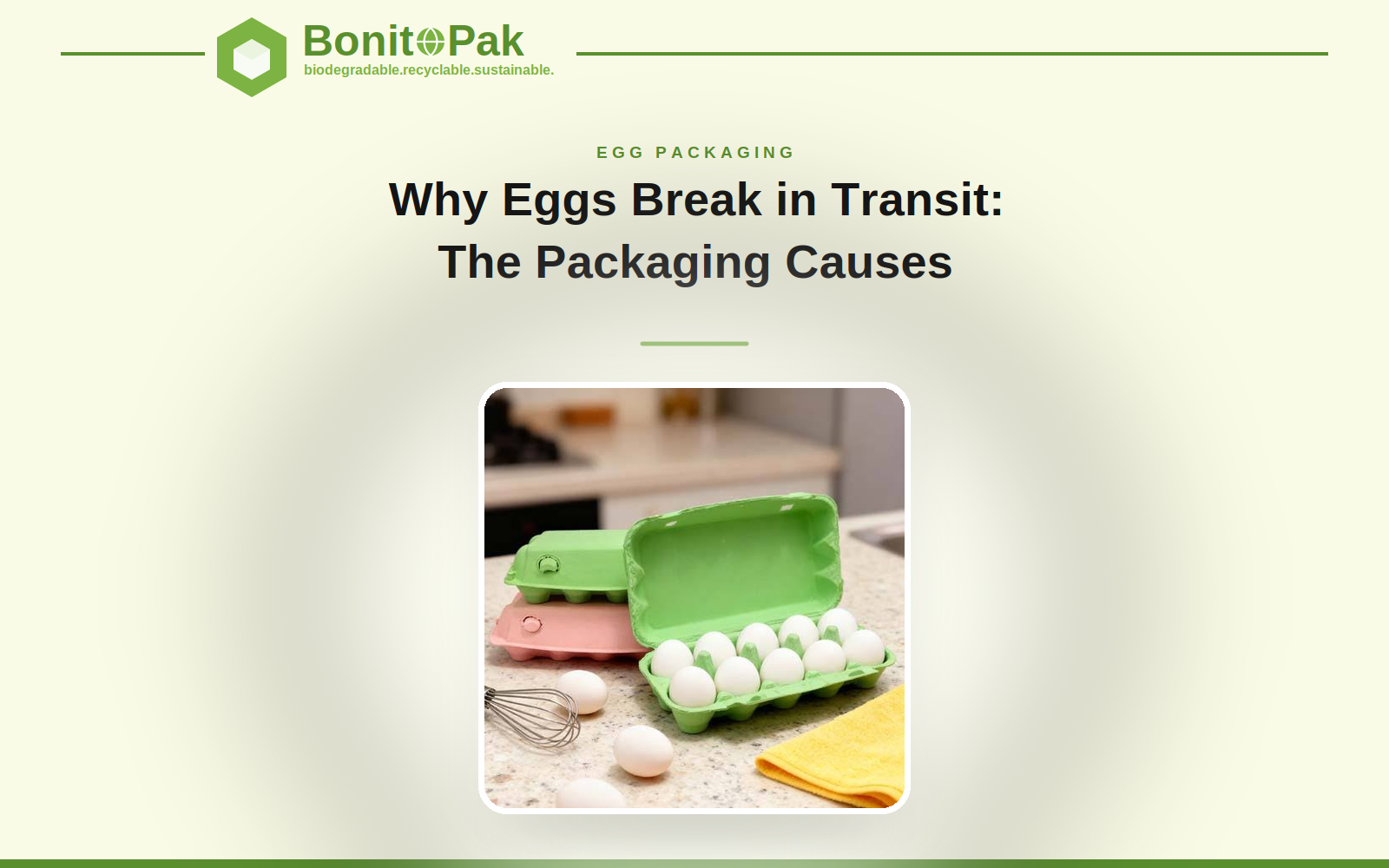
Most egg breakage in transit is not actually caused in transit. Grading and packing generate more damage than transport in several supply chains. When eggs do crack, research shows roughly 55 percent of the damage is at the bottom of the shell, meaning the cell base matters more than the lid.
Why do eggs break during shipping? When breakage shows up at the far end of a shipment, the carton gets blamed first. Sometimes that is correct. Often it is not, and changing carton supplier fixes nothing because the damage was done before the truck moved.
This article works through what the research actually shows about where eggs break, which packaging combinations perform worst, and how to diagnose your own losses rather than guessing.
Where Egg Breakage in Transit Actually Happens
A study monitoring four complete supply chains, sampling 1,500 eggs per chain and re-examining them at every critical point, produced a clear picture. Published via monitoring work on eggshell breakage across production chains, the figures were:
| Bühne | Breakage range | Hinweis |
|---|---|---|
| Point of lay | 1.94% to 10.72% | Highest overall. Varies enormously by housing system |
| Grading and packing | 1.50% to 2.65% | Second highest, and inside your own facility |
| Transportation | 0.16% to 2.65% | Often the smallest contributor |
Two things follow. Housing system matters more than anything downstream, with classic and furnished cage systems showing 6.73 and 10.72 percent breakage at lay against roughly 1.9 percent in aviary and free range systems. And packing, which happens on your own line, generates more damage than transport does in most of these chains.
That is worth sitting with before ordering different cartons. If your grading line is producing two percent and your truck is producing half a percent, packaging changes address the smaller number.
What Counts as Acceptable
Benchmarks give you something to measure against.
- Commercial buyers typically expect under one percent breakage on Grade A shell eggs.
- Well handled short hauls with good packaging can come in under half a percent.
- Long haul and export shipments commonly run in the one and a half to two percent range.
- Poor stacking, rough roads or temperature extremes push it higher again.
Define the tolerance and the remedy in the supply contract rather than arguing after a delivery. Both sides benefit from a number that was agreed in advance.
The Finding That Changes Egg Carton Protection
This is the most useful piece of research in the field, and it is largely absent from packaging discussions.
A controlled vibration study packed Grade A large eggs in either expanded polystyrene foam or molded paper pulp cartons, cased them in either polypropylene crates or corrugated boxes, and ran them on an electrohydraulic vibration machine for 15, 75 and 180 minutes. It then recorded not just how much breakage occurred but where on the shell. Published in Poultry Science, the result was that nearly 55 percent of breakage occurred in the bottom section of the eggshell, compared with the side and top.
The bottom. Not the top where the lid presses, and not the sides where cells touch. More than half the damage happens where the egg sits in the base of the cell.
That reframes what a carton needs to do. Under sustained vibration an egg does not rattle sideways so much as hammer repeatedly against the bottom of its own cell. Cell base geometry, the radius the shell rests on, and how much the base can flex all matter more than lid clearance does. A carton designed mainly around the lid is protecting the third of the egg least likely to break.
Secondary Packaging Can Matter More Than the Carton
The same study produced a second result worth reporting honestly, including the part that is inconvenient for a pulp manufacturer.
| Combination | Breakage | Reading |
|---|---|---|
| Foam carton in corrugated box | 4.63% | Lowest of the four combinations |
| Pulp carton in corrugated box | No significant difference from foam | Case type dominated |
| Pulp carton in plastic crate | Significantly lower than foam | Fiber outperformed foam here |
| Foam carton in plastic crate | 12.59% | Highest, nearly triple the best |
Read across rather than down. In corrugated boxes there was no significant difference between fiber and foam cartons. In plastic crates, fiber caused significantly less damage than foam. And overall, corrugated boxes produced significantly lower breakage rates than plastic crates regardless of what was inside them.
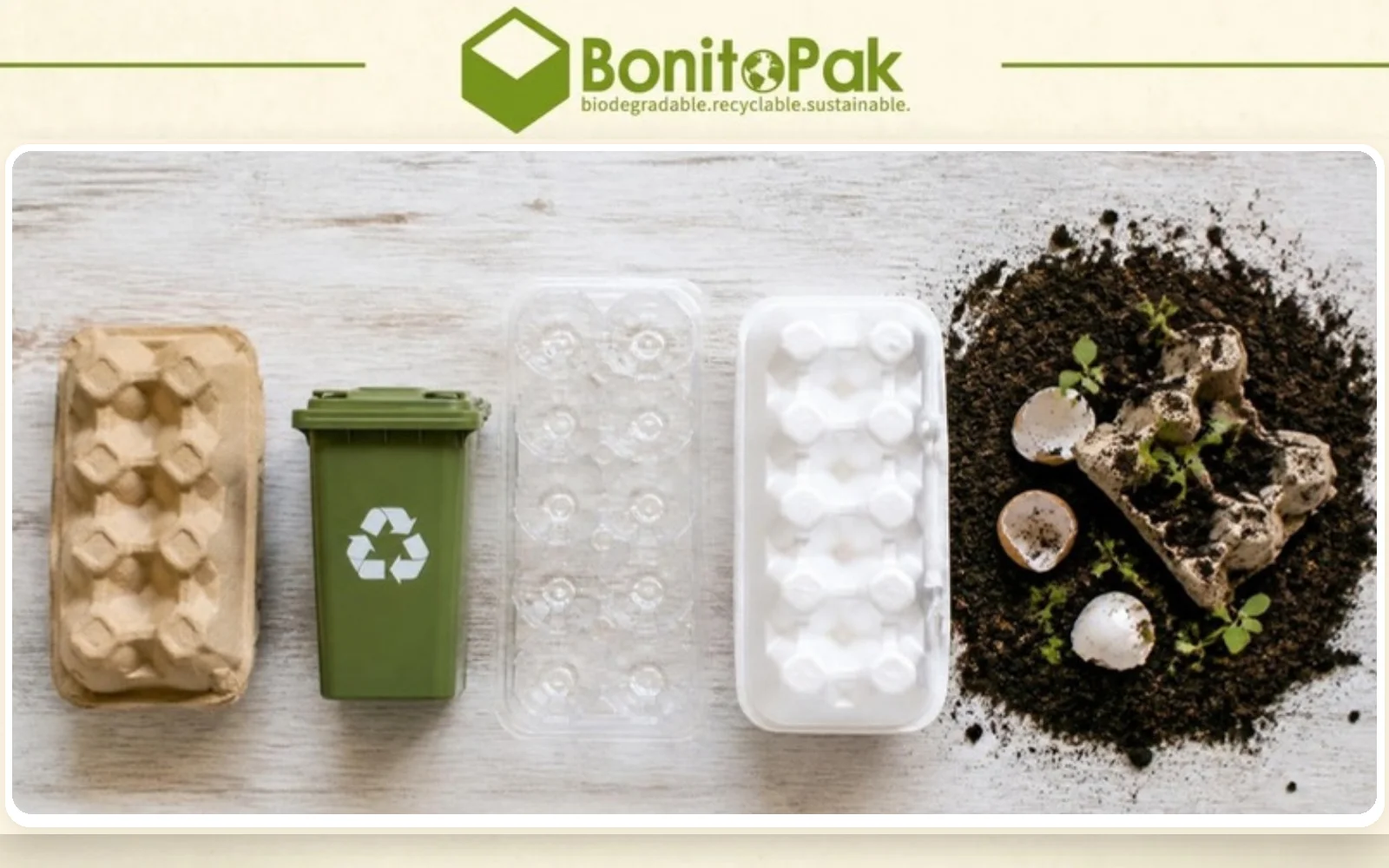
The practical conclusion is that the case is doing more work than the carton in this comparison. If you are chasing a breakage problem, the secondary packaging is both the larger variable and usually the cheaper one to change while you gather data.
Eggshell Cracks: Transport Vibration and Impact Differ
They damage eggs in different ways and call for different fixes.
Impact
A drop or a hard knock delivers a large force briefly. Packaging addresses it by absorbing energy. Free fall testing comparing molded pulp against PET and high impact polystyrene found pulp performing best on vibration resistance and durability, maintaining integrity up to the maximum tested drop height. Fiber is genuinely good at this, because crushing fiber consumes energy.
Vibration
Sustained road vibration causes eggshell cracks in transport by delivering small forces thousands of times. This is the more insidious mode, because packaging cannot absorb its way out of it. The only real defense is preventing movement, which comes back to cell fit and base geometry rather than cushioning.
Field research on egg transport using shock loggers found a significant relationship between cargo weight, breakage and g-force frequency, and that at extreme impact levels even the gentlest packaging stopped protecting the eggs. Packaging has a ceiling. Above it, the fix is the vehicle and the route rather than the carton.
Damage Appears Later Than It Happens
This is why dispatch counts mislead people.
Most eggshell cracks in transport begin as micro cracks that are not visible at inspection. They propagate under later handling and become countable damage further down the chain. Classic studies tracking eggs through retail found cracked percentages rising from just over five percent before shipment to nearly seven percent in the store holding room, then higher again in the display case, and higher still when the same eggs were re-candled a few hours after stocking.
So a shipment that leaves clean can arrive clean and still generate complaints two days later. If you are diagnosing breakage, count at multiple points rather than at dispatch, and expect the number to rise.
Fit Problems That Cause Breakage
Egg carton protection fails when the cell fits the wrong egg, regardless of material quality.
Eggs of abnormal size do not hold up in standard cartons. Very large eggs suffer shell fractures because the cell forces them against the walls or the lid. Very small eggs suffer yolk displacement, because there is enough clearance for the egg to move under sustained tremor. Neither is a material failure. Both are geometry failures, and we cover cell sizing in our guide to Größen und Stückzahlen von Eierkartons. The problem is sharper still for non chicken eggs, as set out in our piece on duck, goose and turkey carton sizing. Fiber choice interacts with this too, since our recycled paper pulp cartons deform slightly under load rather than presenting a rigid face to the shell.
The diagnostic sign is worth knowing. Breakage concentrated in a few cells suggests a tooling or fit issue. Breakage spread evenly across the pack suggests vibration or a handling problem upstream.
Was wir an unserer eigenen Fertigungslinie sehen
We form molded pulp egg packaging in Chashan Town, Dongguan, and breakage complaints usually resolve into one of a small number of causes.
Base geometry gets less attention than it deserves
Given that most damage happens at the bottom of the shell, the radius and flex of the cell base is where design effort belongs. Fiber is good here because it deforms slightly under load rather than presenting a rigid surface, which is the same property that makes it work for protecting fragile items generally. A base that is too flat concentrates load on a small area of shell.
Wall section is a means, not an end
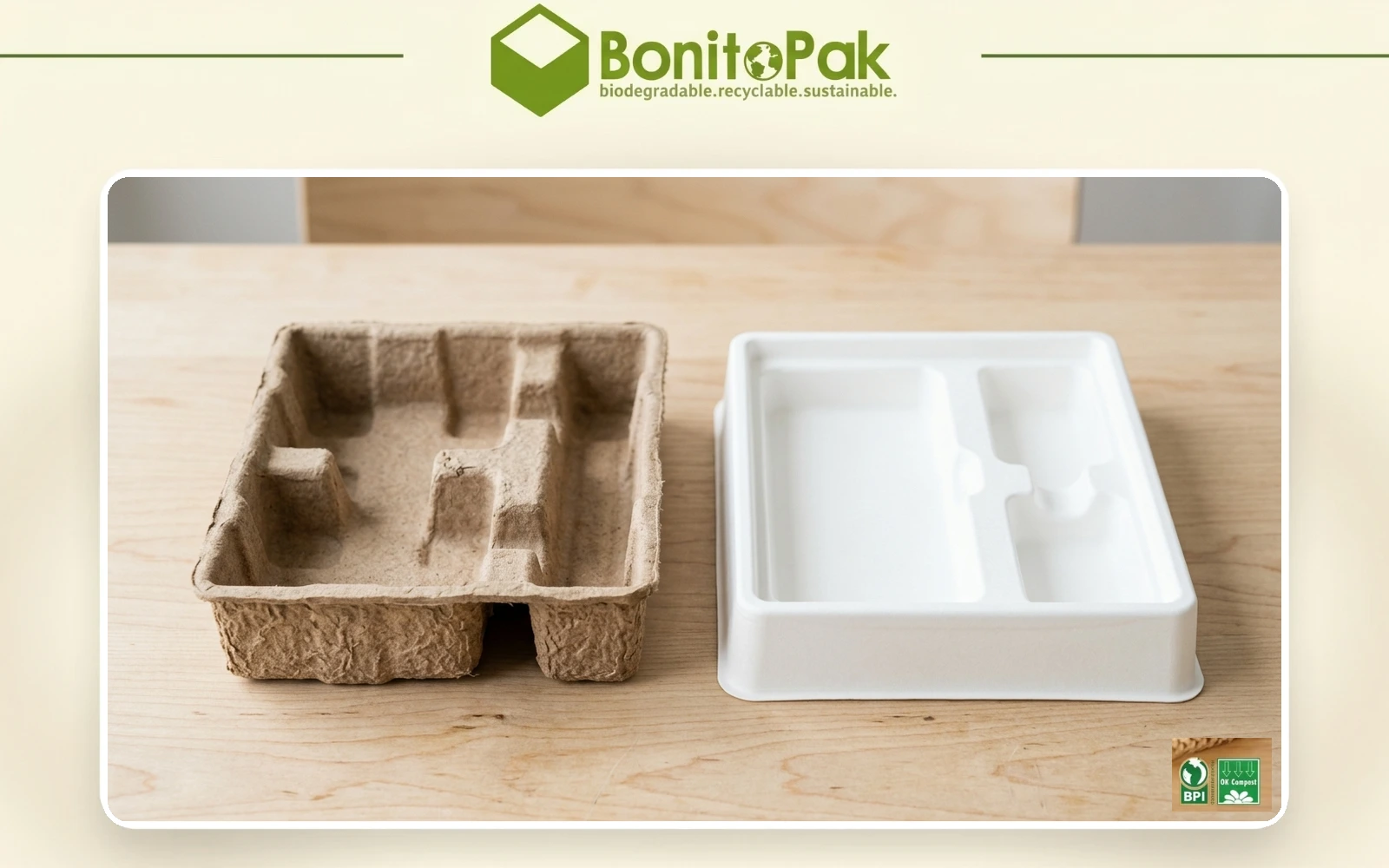
Customers sometimes ask for a heavier wall after a breakage incident. Our Trockenpressplatten finish at roughly 2.5 to 3.0mm and nassgepresste Kartons at roughly 0.7 to 1.2mm, and we can specify anywhere across that range. But once the cell supports the egg correctly, extra material adds cost and weight without reducing breakage. We would rather change the base profile than thicken the wall.
Ask what changed before changing the carton
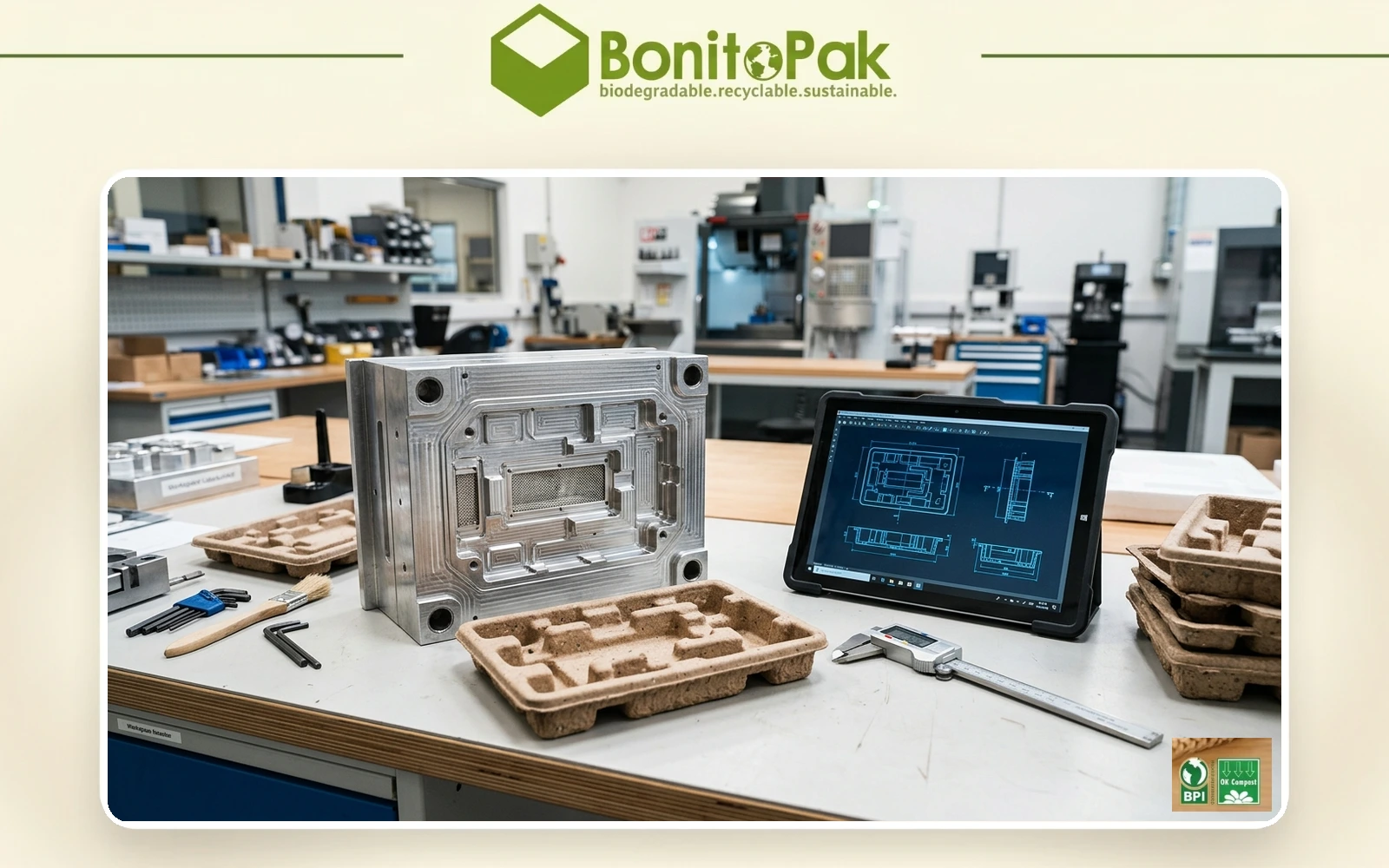
The most common thing we find is that nothing about the packaging changed at all. A new route, a different case, a new flock coming into lay at a larger grade, or a change in how pallets are stacked will all move a breakage rate. Sample molds run in about seven days precisely so a hypothesis can be tested on real parts before a production tool is committed.
How to Diagnose and Reduce Egg Breakage
To reduce egg breakage you first have to isolate the cause rather than guess at it. This sequence does that.
- Candle and count at four points: after grading, after packing, at dispatch, and on arrival.
- Record where on the shell the damage sits. Bottom heavy points to cell base and vibration. Top or side points to fit or crushing.
- Note whether damage clusters in particular cells or spreads evenly across the pack.
- Change one variable at a time, starting with the case rather than the carton.
- Check whether egg grade has drifted, since flock age changes egg size within a season.
Das in die Praxis umsetzen
Start upstream. Breakage at lay and during grading is usually larger than egg breakage in transit, and both sit inside your own operation where you can act on them directly. Only once those are measured does packaging become the right variable to change.
When it is, design around the base of the cell rather than the lid, because that is where most damage occurs. Look hard at the case as well as the carton, since the secondary pack moved breakage more than carton material in controlled testing. And accept that packaging has a ceiling: above a certain level of road impact, no carton protects the load, and the answer becomes the route, the vehicle and the stacking.
Unter BonitoPak we treat a breakage brief as a diagnostic question before a tooling question, because a new mold that solves the wrong problem is expensive and slow. Sending your damage location data alongside the breakage rate tells us more than the rate alone ever will.
Über den Autor
Leo Chan is the founder of BonitoPak and has spent more than 20 years in molded pulp packaging, working with over 500 brands moving from plastic and foam to fiber based formats. BonitoPak manufactures molded pulp packaging at its facility in Chashan Town, Dongguan, Guangdong, running both wet pressing and dry pressing lines across six pulp systems, with in house mold design and tooling. The analysis here reflects tooling and production experience on that line alongside published research on eggshell breakage, packaging vibration testing and supply chain monitoring.
Häufig gestellte Fragen
Q: What breakage rate should I accept from a supplier?
A: Commercial buyers generally expect under one percent on Grade A shell eggs, with well handled short hauls achieving under half a percent. Long haul and export commonly run higher. Agree the tolerance in the contract.
Q: Does a thicker carton wall reduce breakage?
A: Only up to a point. Once the cell supports the egg properly, extra wall thickness adds cost and weight without improving protection. Fit and base geometry matter more than material volume.
Q: Why do eggs break during shipping and only show cracks later?
A: Weak impacts create micro cracks that are not visible at first and propagate under later handling. Candling counts rise through the retail chain for this reason, so dispatch counts understate real damage.
Q: Are plastic trays better than pulp for transport?
A: Research does not support that. In hatching egg trials, plastic trays produced measurably worse outcomes than paper ones under the same vibration, and fiber performed well in free fall testing.
Q: Should I change the carton or the case first?
A: Test the case first. Secondary packaging changed breakage more than carton material in controlled trials, and it is usually the cheaper variable to swap while you gather data.

 German
  English
  Spanish
  French
  Russian
  Japanese
  Portuguese
  Arabic