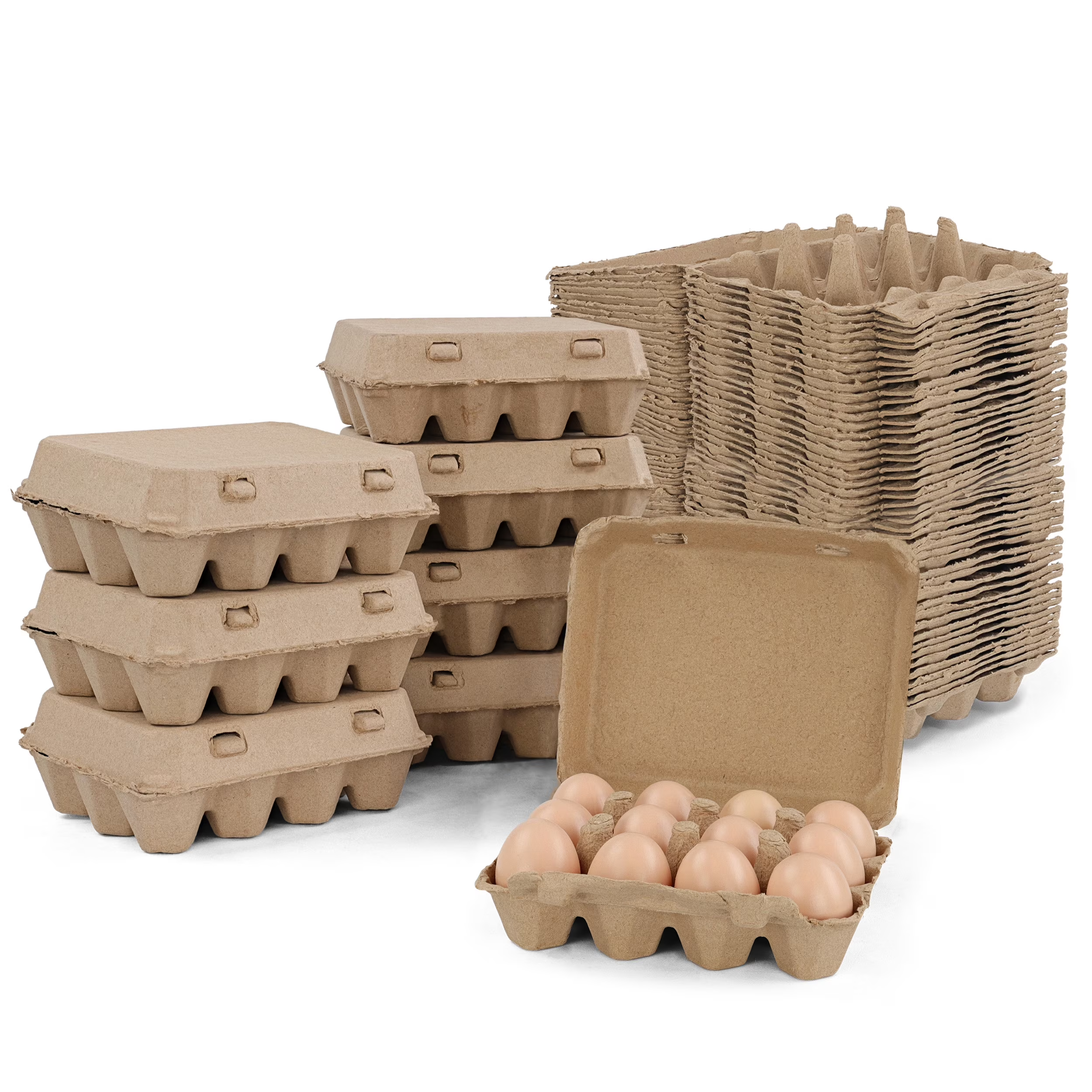
Bulk really just means buying at volume instead of by the pack, anywhere from a case of a few hundred up to pallets and containers running into the thousands. And the more you take in one go, the less each carton costs you, since the tooling, the setup, and the freight all get spread thinner.
There isn’t one clean line where retail stops and bulk begins. For a backyard flock, a case of a few hundred cartons already feels like bulk. For a packing house moving trays by the truckload, bulk doesn’t really start until you’re talking pallets.
What matters is the shape of the pricing. Buy a handful of packs and you pay close to retail. Order a pallet and the number per carton drops. Fill a container and it drops again, hard, because the fixed costs, the tooling, the line setup, the ocean freight, all get divided across a much bigger pile of cartons.
So when a supplier quotes you “wholesale egg cartons,” the first question back should be: at what volume? A price that looks great at 50,000 pieces can look very different at 2,000. If you’re still working out formats and counts, our guide to custom egg cartons walks through what actually changes at the tooling stage before you scale a big order.
Wholesale Pricing: What Really Moves the Per-Unit Cost
Five levers move a wholesale price more than anything else: how much you order, dry press versus wet, the pulp color, any custom tooling, and how far it ships. Two of those, the volume and the freight, tend to swing the number harder than the carton design ever does, which is why a full container will often beat a slightly cheaper small run.
It’s tempting to compare suppliers on the headline per-carton number alone. That’s the number that fools people. Two quotes at the “same” price can land miles apart once volume, color, and freight are folded in.
Here’s how the main levers actually pull:
What moves a bulk egg carton price, and by how much:
| Cost driver | Direction | Why it matters at volume |
| Order volume | Higher volume, lower per-unit | Tooling, setup, and freight spread across more cartons |
| Press type | Dry press cheaper than wet press | Dry press skips the hot-press stage; fine for distribution |
| Pulp color | Gray/natural cheapest; colors add a little | Colors need dedicated pulping lines |
| Custom tooling | One-time cost, then per-unit is comparable | Amortizes fast at pallet and container scale |
| Shipping distance | Often the biggest hidden swing | Cartons nest, so full containers cut freight per unit |
Notice that two of the five, volume and shipping, have almost nothing to do with the carton design and everything to do with how you buy. That’s the part procurement teams underweight. A dry press molded pulp egg tray bought by the container can undercut a “cheap” small order once you divide out the freight.
If cost is the governing factor for your channel, lean toward gray or natural pulp on a dry press line, order in round pallet or container quantities, and keep the spec simple. Every extra, a custom color, a carry handle, a tight tolerance, is worth having, but each one nudges the number.
Bulk Carton Materials: Dry Press vs Wet Press for Volume
For bulk, dry press molded pulp is nearly always the one to reach for, thicker walls at 2.5 to 3.0mm, lower cost, and more than enough protection for distribution. Wet press, thinner at 0.7 to 1.2mm and smooth on both faces, costs more, and it only earns that premium when the carton is going to be handled by a shopper.
Molded pulp comes off the line two ways, and the choice quietly sets both your cost and your look.
Dry press skips the hot-press stage and just dries the formed part in a tunnel oven. You get a thicker wall, 2.5 to 3.0mm, one smooth face and one that keeps the screen texture. It’s the workhorse: cheaper per unit, tough enough for stacking and transit, and honestly nobody inspecting a distribution carton cares about the surface. For most wholesale volume, this is the format. You can see the full range on our Trockenpressen von Zellstoffschalen Seite.
Wet press adds a heated press stage that squeezes the fiber from both sides. The wall comes out thinner, 0.7 to 1.2mm, smooth on both faces, with crisp emboss definition. It costs more, and the reason to pay it is presentation, a carton the shopper actually picks up and handles. If your bulk order is headed to retail shelves rather than a distribution chain, wet press earns its premium.
Plenty of buyers split the difference: dry press for the wholesale and food-service volume, a smaller wet press run for the retail-facing SKUs. There’s no rule that says one order has to be one format.
How Many Cartons Fit on a Pallet or in a Container?
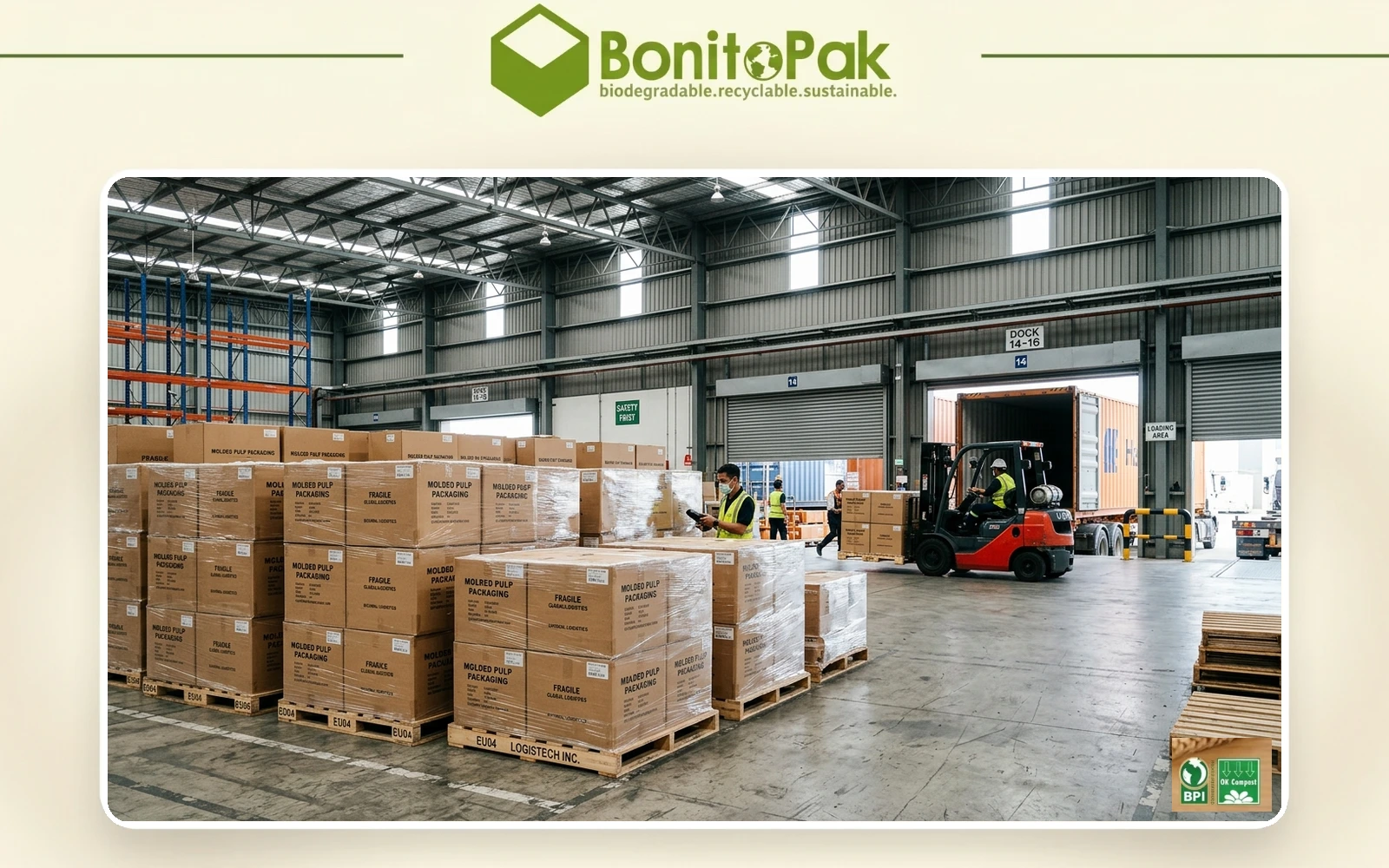
Because the cartons nest, you fit a lot per pallet and a huge amount per container, and that nesting is the whole reason bulk freight per unit stays so low. The exact count shifts with the format, but a single 40ft container will usually take tens of thousands, which is the scale where the shipping cost per carton really caves in.
This is the part that turns an abstract “buy in bulk” into real money. Because empty molded pulp cartons stack into each other, you fit a lot into a small space, and freight is priced by space and weight.
Treat the numbers below as planning ranges, not a fixed quote, because the real count depends on the count-per-carton, the cell depth, and how the run is packed:
Approximate bulk quantities and lead-time planning (indicative):
| Order tier | Rough quantity | Typical use | Freight impact per unit |
| Fall | A few hundred cartons | Small farms, trials, top-ups | Highest per unit |
| Pallet | Several thousand cartons | Regional producers, packing houses | Unter |
| Half container (20ft) | Tens of thousands | Distributors, growing brands | Niedrig |
| Full container (40ft) | Many tens of thousands | High-volume producers, private label | Lowest per unit |
The takeaway isn’t the exact figure, it’s the slope. Every step up the tiers, the carton itself barely changes but the landed cost per unit keeps falling, mostly on freight. If you’re consolidating from several small orders a year into one or two container buys, that consolidation alone often saves more than switching suppliers would.
One practical note: plan your storage before the container lands. Nested cartons are compact, but tens of thousands still need dry, covered space. Damp storage undoes the whole point of a clean molded pulp carton.
MOQ, Lead Times, and the Sample Process
Custom carton MOQs start around 1,000 pieces, though the bulk economics don’t really wake up until pallet scale. On timing, figure roughly 2 days for 3D drawings, 7 for a sample mold, and 8 more for the production mold once you sign off, so about 15 to 17 working days to a production-ready mold, then the run and the shipping stacked on top.
MOQ scares off some buyers, but for a stock format it’s low, from around 1,000 pieces. Where MOQ climbs is on fully custom tooling, and even then it usually sits at 1,000 to 5,000 per design because each design needs its own mold.
The sequence for a custom bulk order is predictable. Send your spec, or physical egg samples, and 3D drawings come back inside about 2 days. A sample mold follows in roughly 7 days so you can test the real part. Once you sign off, the production mold is done in about 8 more days, then the full run schedules and ships.
Do not skip the sample to save a week. A sample mold is cheap; a production mold that has to be re-cut because a cell was a millimeter off is not. Test the sample against your actual eggs, confirm any color against a Pantone reference, and put your approval in writing before the big run starts.
If your bulk order is standard rather than custom, you skip the tooling steps entirely and lead time is mostly production plus freight, which is why a lot of first-time bulk buyers start with a stock format and move to custom tooling once the volume justifies it.
Private Label and Custom Bulk Orders
You can absolutely brand a bulk run without losing the compostability. Emboss and deboss get cut into the tooling, so the logo sits in the fiber itself, no ink, nothing to peel, and the six in-pulp colors (white, natural, black, orange, gray, blue) are Pantone matched to better than 95%, so even a wholesale run can look like your brand instead of a commodity carton.
Bulk doesn’t have to mean generic. The most durable branding on molded pulp is embossed straight into the mold, which means every carton in a hundred-thousand-piece run carries your mark with zero per-unit ink cost and nothing to peel off in a damp warehouse.
Color is the other lever. Instead of a gray commodity carton, a private-label run can go black for a premium look or natural for farm-to-table, matched to your brand through farbige geformte Zellstoffschalen. Because the pigment goes into the slurry, the color runs through the full wall and survives handling.
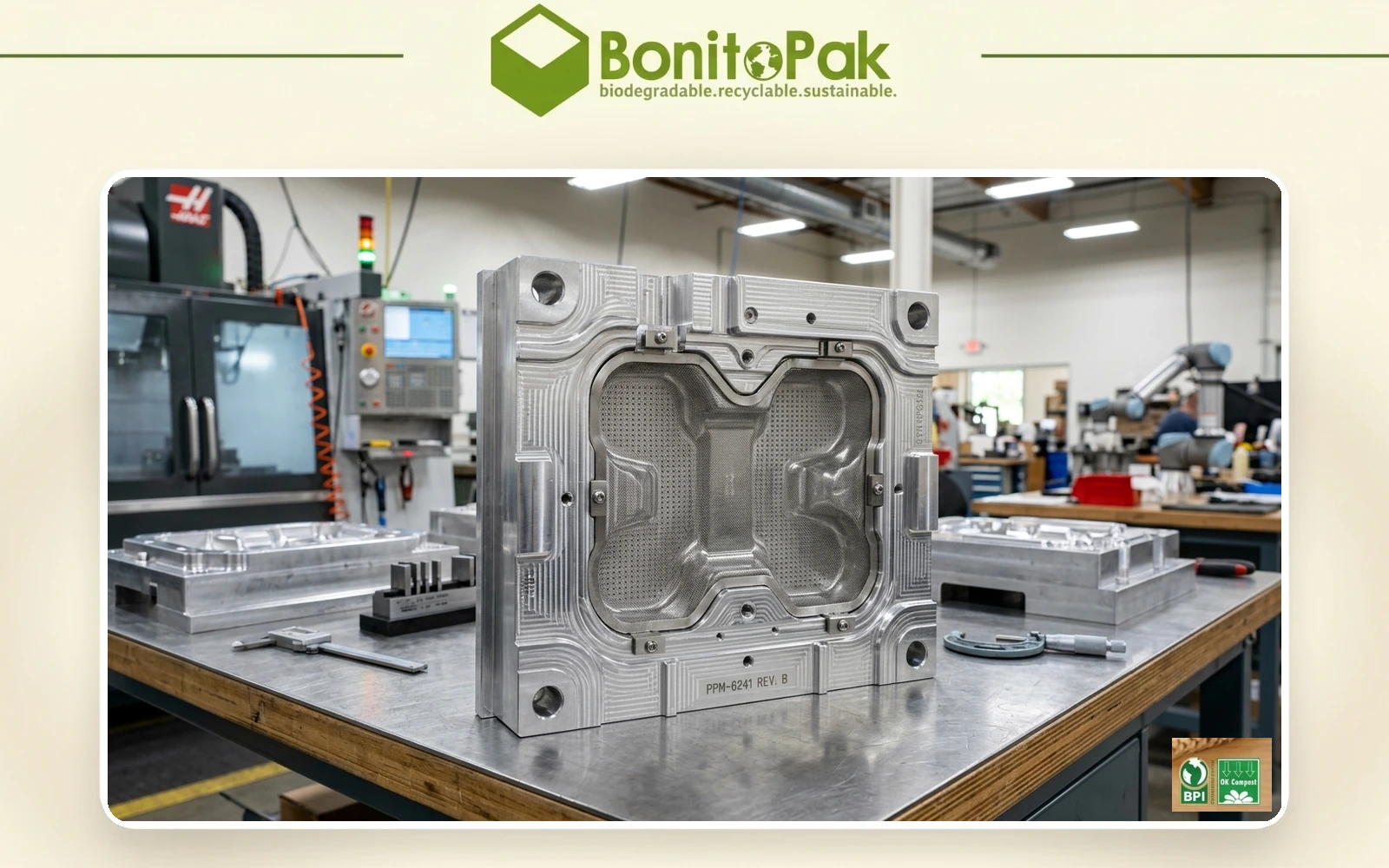
For anything genuinely custom, count, cell geometry, structural features, the work happens at the tooling stage, which our mold design and tooling team handles per project. If you’re weighing labels against in-pulp branding for a big run, the trade-offs are laid out in our custom egg cartons guide.
Buying Bulk Egg Cartons: Mistakes That Cost More Than They Save
The costly bulk mistakes barely change from one buyer to the next: chasing the lowest per-piece rate while ignoring freight, ordering a count or cell that doesn’t actually fit the eggs, skipping the sample to save a week, and assuming a compostability claim on the fiber somehow covers the finished carton.
A cheap carton that arrives cracked, or that your eggs rattle around in, isn’t cheap. Breakage at volume erases a per-piece saving fast, and it lands on your customer, not the supplier.
Verify the compostability paperwork too. If you’re selling on an eco claim, the certification has to cover the finished carton, BPI under ASTM D6400 for North America, OK Compost under EN 13432 for Europe, not just the raw pulp. Our breakdown of biodegradable egg cartons explains why that distinction matters, and what’s actually recyclable covers end-of-life for each material.
And confirm lead time against your real demand curve. Running out of cartons mid-season because a container was three weeks late is its own kind of expensive. Order early, keep a buffer, and consolidate where you can.
Häufig gestellte Fragen
What is the minimum order for bulk egg cartons?
For stock molded pulp formats, minimums start around 1,000 pieces. Fully custom cartons that need their own tooling usually sit at 1,000 to 5,000 per design, since each design requires its own mold. Real bulk savings, though, show up at pallet and container scale rather than at the minimum.
Are cheaper bulk egg cartons worse quality?
Not necessarily, but you have to know why they’re cheaper. Gray or natural pulp on a dry press line is genuinely lower cost without sacrificing protection. A price that’s cheap because the wall is too thin or the cell doesn’t fit your eggs is a false saving, because breakage at volume costs far more than the discount.
How much can I save buying egg cartons wholesale vs retail?
The saving grows with volume, and a lot of it is freight rather than the carton. Because molded pulp cartons nest, a full container carries tens of thousands of units, which drops per-unit shipping sharply. Consolidating several small orders into one container buy often saves more than switching suppliers.
Can I get my brand printed on bulk egg cartons?
Yes. Emboss and deboss branding is cut into the tooling, so your logo is in the fiber on every carton with no per-unit ink cost. In-pulp color across six systems is Pantone matched to better than 95%, and water-based print is available for color branding elements, all while keeping the carton compostable.
Which is better for bulk orders, dry press or wet press?
For most wholesale and distribution volume, go dry press, you get thicker 2.5 to 3.0mm walls, a lower cost, and plenty of protection. Wet press, which comes in around 0.7 to 1.2mm with smooth faces and a sharp emboss, is only worth the extra when the carton is retail-facing and has to look clean and branded on a shelf.
How long does a bulk egg carton order take?
A stock order is mostly production plus shipping. A custom order adds tooling: roughly 2 days for 3D drawings, 7 for a sample mold, and 8 more for the production mold after approval, so about 15 to 17 working days to a production-ready mold, then the run and freight on top.
Do bulk egg cartons ship internationally?
Yes. Molded pulp cartons nest tightly, which makes container freight efficient, and BonitoPak ships to more than 50 countries. Match the certification to your destination market, BPI for North America and OK Compost for Europe, so your compostability claim holds up under local rules.
Schlussfolgerung
Buying egg cartons in bulk isn’t really about hunting for the lowest number on a quote. It’s about how you buy: the volume you consolidate into, the press type that fits your channel, and the freight you save by shipping cartons that nest. Get those right and the per-unit cost takes care of itself.
BonitoPak produces molded pulp egg cartons and trays at scale from its Dongguan facility, dry and wet press, six pulp colors, BPI and OK Compost certified, with custom tooling from 1,000 pieces and shipping to more than 50 countries. Start with the full egg tray and carton range, or send your volume and format for a wholesale quote.