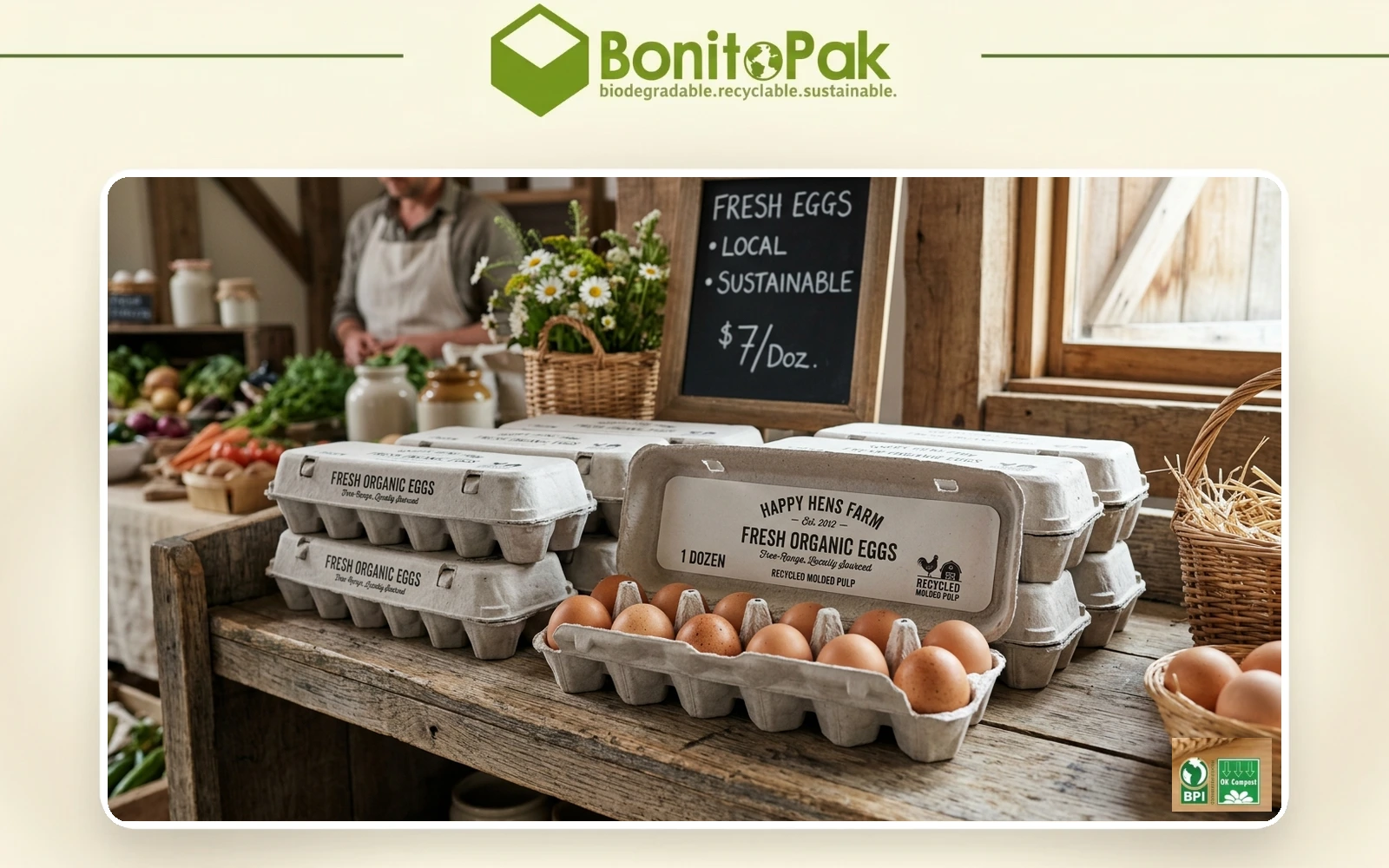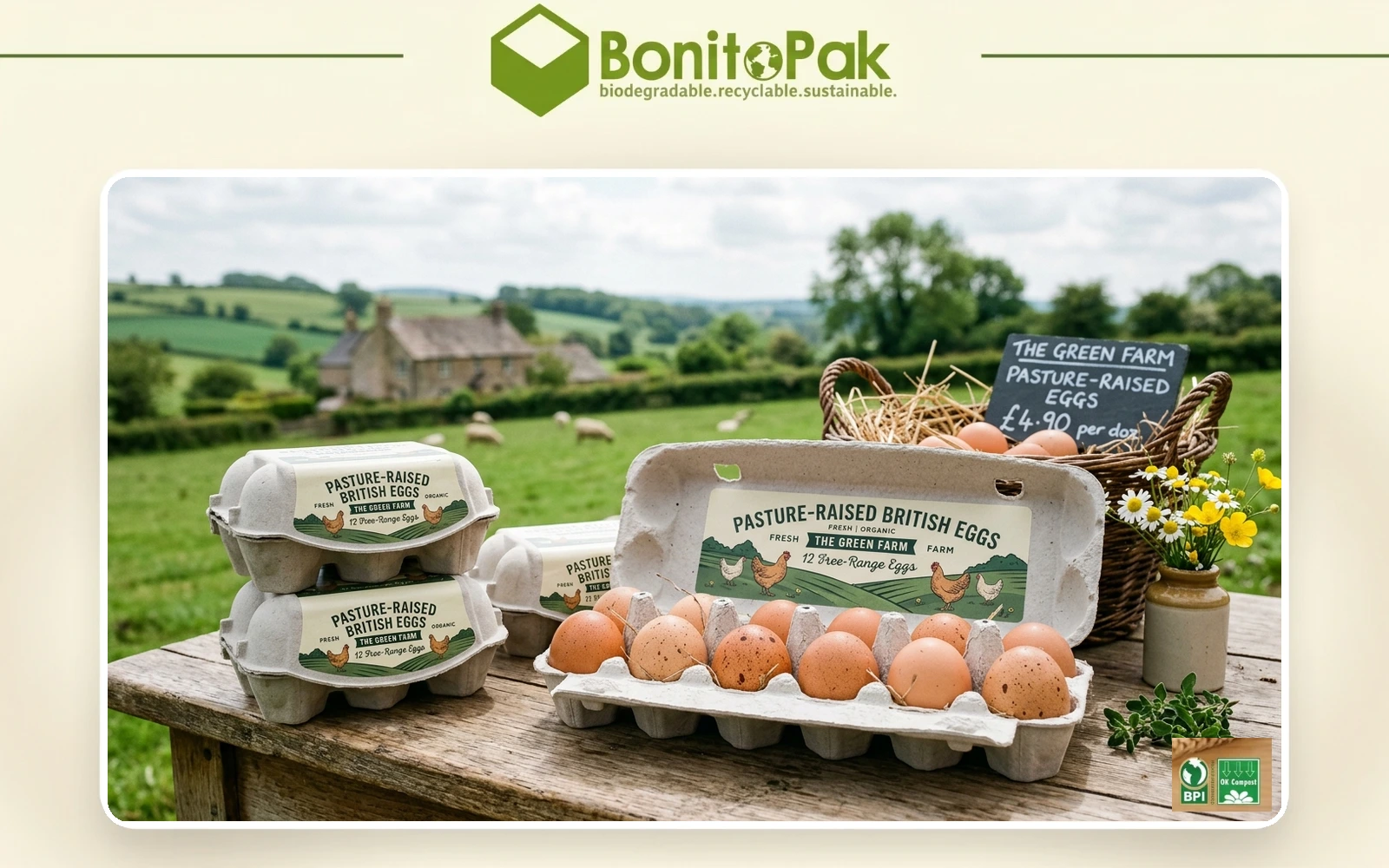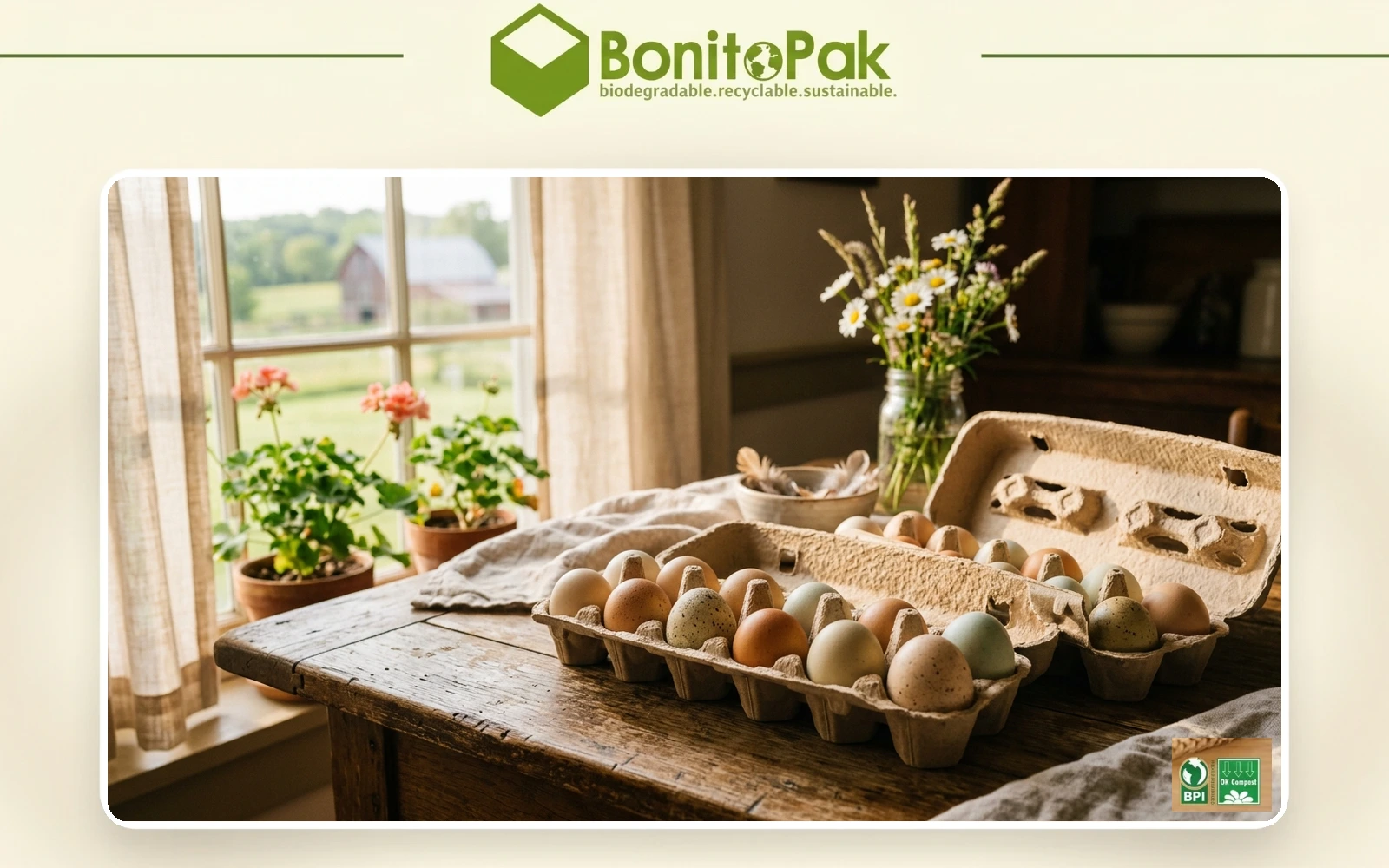

Almost every egg carton is molded paper pulp, PET or RPET plastic, or polystyrene foam, and molded pulp is by far the most common. But the more useful question isn’t just what they’re made of, it’s which one you should actually buy, because that single choice sets the protection, the price, and the end-of-life story all at once.
Ask what an egg carton is made of and you’ll get a tidy three-item answer: pulp, plastic, or foam. True enough. But if you’re the one buying, that list isn’t really the point, what you want to know is which one to reach for and why.
So I’ll answer both. I’ve specced a lot of these, and honestly the material decision is the one that quietly settles everything downstream, so it’s worth a couple of minutes. If you’d rather see how the fiber ones are actually formed, our companion piece on how egg cartons are made walks the process end to end.
Molded Pulp: The One I’d Start With
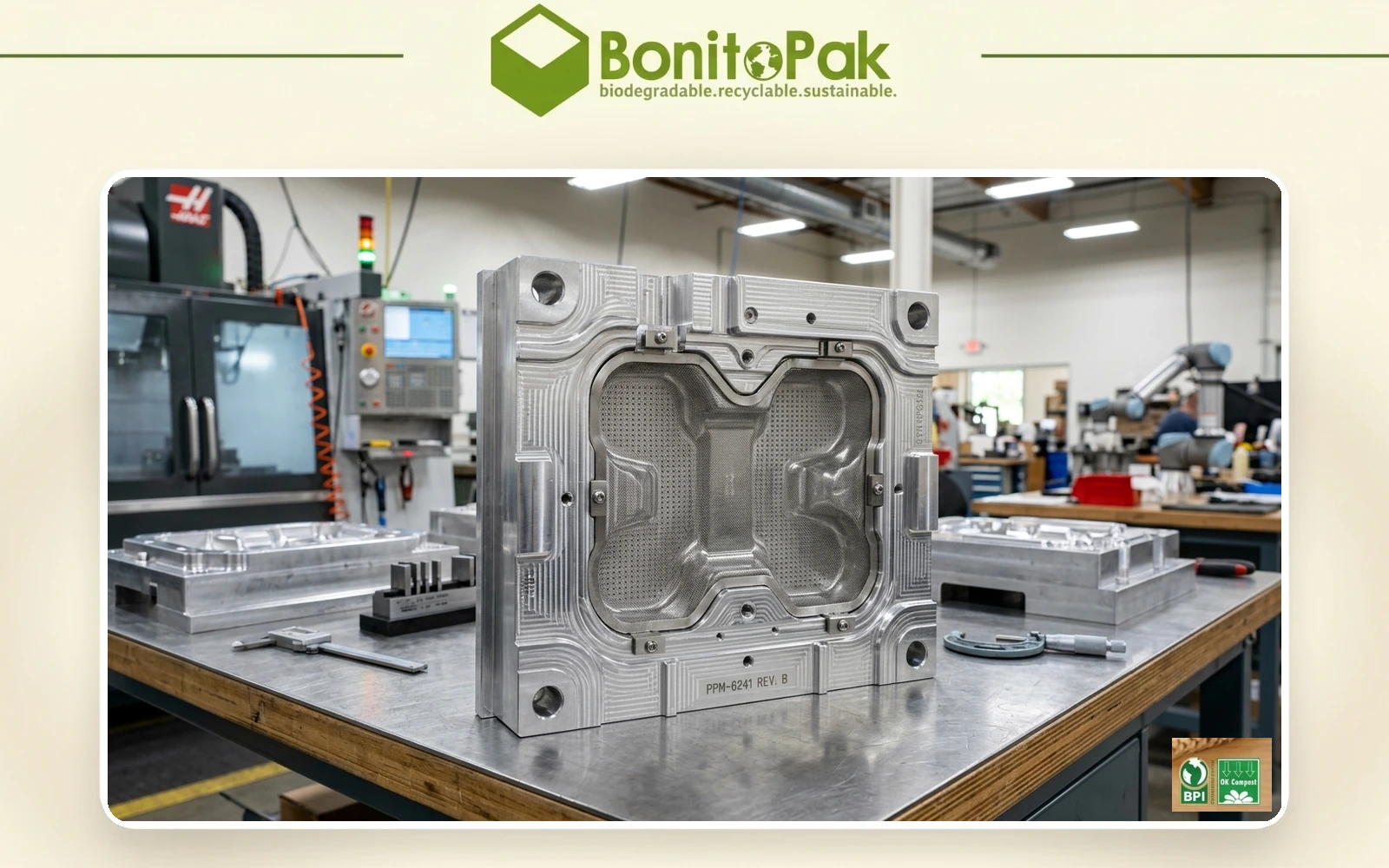
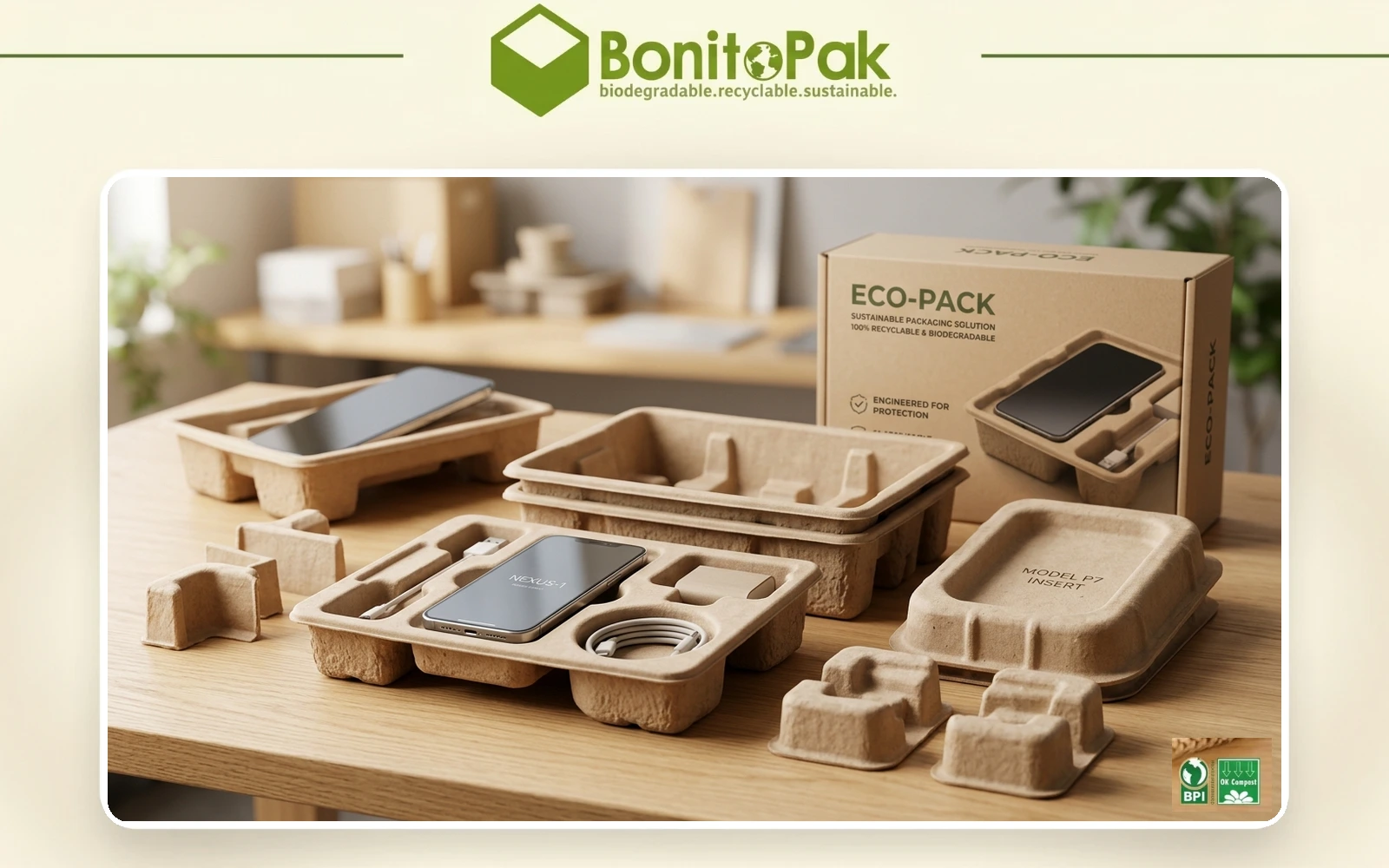
This is the one I’d reach for first, and there’s barely anything to it, just natural fiber pulped with water and shaped. A plain one hides no plastic, no coating, no glue anywhere, which is precisely why it’ll compost and recycle, and why most of the world already leans on it.
You already know the one I mean, dull gray or brown, faintly rough, like thick paper. The fiber inside comes down to whatever was cheapest and to hand: recovered paper for the gray ones, sugarcane bagasse where they want a smoother pale finish, bamboo where they’re after that warmer natural tone. It’s pulped, pressed over a mesh mold, and dried, and that genuinely is the whole recipe.
Why do I lean on it? Three reasons that actually matter on the loading dock: the fiber gives a little on impact so it cushions the eggs, the raw material is renewable or already recycled, and at the end it both composts and recycles. If you want the material itself explained properly, we go deeper in what is molded pulp packaging.
The three fibers that make up molded pulp cartons:
| Fiber | Woher es stammt | Look / feel | I’d use it for |
| Recyceltes Papier | Recovered paper and cardboard | Familiar gray, slightly rough | Everyday and distribution cartons |
| Zuckerrohrbagasse | Pulp left after pressing sugarcane | Smooth, pale, takes color well | Premium retail, colored cartons |
| Bambusfaser | Fast-regrowing bamboo | Warm natural tone, strong | Natural and white cartons |
Plastic (PET / RPET): Great to Look Through, Awkward to Bin
The whole selling point here is that you can see the eggs, which shops love, and the material behind it is PET (or recycled RPET). Where it lets you down is afterward: it’ll recycle only where #1 plastic is taken and only clean and dry, it never composts, and a dirty one just ends up in landfill.
One thing worth knowing: it starts out petroleum-based, or from plastic that’s already been round the loop once in the case of RPET, and gets heat-formed into that glossy shell.
I get the appeal, a shopper sees exactly what they’re buying without cracking the lid, and retailers like that. Where it falls down is afterward. PET recycles where #1 is collected, but egg residue fouls it, so it has to be rinsed and dried first, and it won’t compost at all. RPET is a touch kinder upstream since it reuses plastic, but at the end it behaves the same. If you’re torn between this and fiber, we put them head to head in Formpapier vs. Kunststoff.
Foam (Polystyrene): Cheap Up Front, Costly After
Cheap and insulating, that’s genuinely the entire case for foam, and it doesn’t hold up. Afterward almost no curbside program will take it, it won’t biodegrade, and it just crumbles into microplastics, which is why most producers I know have quietly walked away from it.
Pick up the light white one and you’re holding expanded polystyrene, polystyrene blown up with gas into a stiff foam. It’s dirt cheap and it keeps things cool, and I’ll be straight with you, that’s pretty much the only thing going for it.
Everything after purchase is the problem. To recycle foam you need specialist densification kit that hardly any facility owns, so curbside just refuses it. It doesn’t biodegrade either, it fragments into microplastics that stick around in soil and water. That end-of-life mess is exactly why so many buyers have dropped it, and why I’d only ever consider it if cost were the single thing that mattered.
So Which Should You Actually Choose?
If sustainability is anywhere in your pitch, choose molded pulp, it’s the only one of the three that both composts and recycles. Pick plastic only when see-through display genuinely drives sales, and skip foam unless rock-bottom upfront cost is the one thing you care about. The material really does write the whole downstream story.
Here’s how I’d actually decide. Lead with pulp unless you’ve got a specific reason not to, it protects well, it’s renewable or recycled, and it’s the only option that composts and recycles. Reach for plastic when visibility on shelf genuinely moves product. And foam? Only if you’re buying purely on the lowest sticker price and nothing else.
How the three stack up when you’re choosing:
| Material | Hergestellt aus | Composts | Recycles | I’d pick it when |
| Geformter Zellstoff | Recycled paper, bagasse, or bamboo | Ja | Yes (paper stream) | Sustainability matters, most of the time |
| PET / RPET plastic | Petroleum-based or recycled plastic | Nein | Yes (#1, if clean) | See-through display drives sales |
| Polystyrolschaum | Expanded polystyrene | Nein | Rarely | Only if upfront cost is everything |
That composts-and-recycles column is the whole game wherever eco is part of the sell. And if you’re going to put a compostable claim on the box, the detail that trips people is certification, so read biodegradable egg cartons before you print anything, and are egg cartons recyclable for what your customer can actually do with it.
Häufig gestellte Fragen
What material are most egg cartons made of?
Nine times out of ten, that gray or brown fiber one, molded paper pulp, spun from recycled paper, sugarcane bagasse, or bamboo. You’ll meet it just about everywhere. The only other two worth mentioning are the clear plastic (PET or RPET) and the light white foam.
Are paper egg cartons made from recycled material?
Plenty are. That dull gray gives it away, it’s recovered paper and cardboard pulped back down. Others lean on sugarcane bagasse (what’s left once cane is pressed for sugar) or bamboo instead. Either way you’re looking at plain natural fiber, nothing plastic hiding in a bare carton.
What is molded fiber, and is it the same as molded pulp?
Two names for one thing, don’t let it confuse you. Fiber and water, whipped into a slurry, pressed over a mold, dried off. Nothing plastic, nothing coated, nothing glued on a plain one, and that’s the very reason it composts and recycles so easily.
What are clear plastic egg cartons made of?
Look for the #1 on the bottom, that’s PET, polyethylene terephthalate, or RPET if it’s the recycled sort. The see-through is the whole point. They’ll go in wherever #1 plastic is collected, as long as they’re rinsed and dry, but composting is off the table.
What are foam egg cartons made of?
That’s expanded polystyrene, EPS, the same stuff as a throwaway cup. Cheap, and it does hold temperature. Trouble is your curbside almost certainly won’t take it, and it never really breaks down, it just shreds into ever-smaller microplastics.
Which egg carton material is best for the environment?
Pulp, easily. It’s the one option that’ll both compost and recycle, and it starts from fiber that’s renewable or already recovered, leaving no microplastic behind. Only caveat: if you’re making a green claim, get BPI or OK Compost certification on the finished carton, not just the fiber going in.
Schlussfolgerung
So, what are egg cartons made of? Almost always molded paper pulp, sometimes PET or RPET plastic, now and then polystyrene foam. But the answer that actually helps you is which to buy, and for most people, most of the time, that’s molded pulp, it protects the eggs, it’s made from renewable or recycled fiber, and it’s the only one that both composts and recycles.
BonitoPak makes molded pulp egg cartons and trays from recycled paper, sugarcane bagasse, and bamboo fiber, BPI and OK Compost certified, in six pulp colors, from 1,000 pieces. Have a look at the full egg tray and carton range, or tell us your product and we’ll point you at the right fiber.