ألياف الخيزران

Bamboo fiber comes from a grass rather than a tree, and that single fact is why it sits apart in our range. It reaches harvest maturity in three to five years against 25 to 40 for a softwood plantation, regrows from the existing root system without replanting, and yields fibers at 1.5 to 3.0 mm that approach softwood strength. It is the one material that does not force a trade between structural performance and a fast renewal cycle.

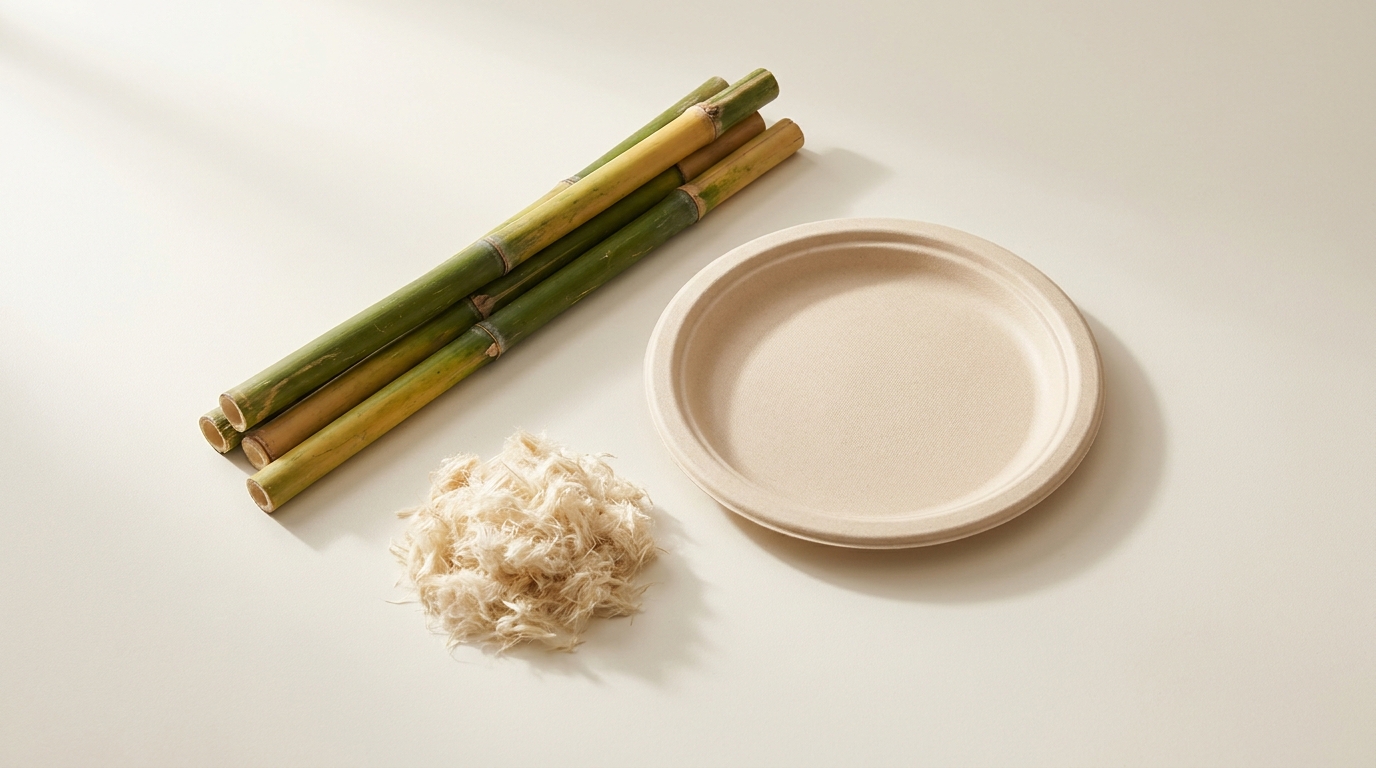
Why bamboo fiber resolves the usual trade-off

  • Near-softwood fiber length. At 1.5 to 3.0 mm, bamboo fiber builds a bonded network close to what softwood kraft achieves, and well above any agricultural residue.
  • Three to five year harvest cycle. A managed grove is cut on rotation and regrows from the same rhizome system. No replanting, no soil disturbance between harvests.
  • Regrows from the root, not from seed. Harvesting a culm does not kill the plant. The root network stays intact and continues sequestering carbon between cuts.
  • Naturally pale. Forms lighter than wood and considerably lighter than recycled fiber, so a clean-looking part is achievable without a bleaching stage.
  • High tensile strength per unit weight. The same property that makes bamboo a structural material in construction carries through into formed fiber parts.
  • No competition with food crops. Bamboo grows on land often unsuitable for agriculture, including degraded slopes where it also stabilizes soil.

The processing consideration is that bamboo is dense and silica-bearing, so it needs more energy to pulp than wood and more process control than a soft agricultural residue. Suppliers who treat it as a drop-in wood substitute get inconsistent fiber separation and variable part strength.

The second consideration is honest sourcing. Bamboo’s environmental credentials depend on the grove being managed rather than wild-cut, and on processing chemistry being controlled. Bamboo is not automatically sustainable because it grows quickly. The management practice is what makes the claim true.

Specification table

المواصفات التفاصيل
اسم المادة ألياف الخيزران
نوع المادة Bamboo culm cellulose
مصدر الألياف Managed bamboo groves
Average Fiber Length 1.5 to 3.0 mm
Harvest Cycle 3 to 5 years
Regeneration From existing rhizome; no replanting required
Natural Color Pale natural
تشطيب السطح Fine, smooth
Relative Strength Very high; second only to softwood kraft
Typical Wall Thickness 0.8 to 4.0 mm
توافق العملية Wet pressing, dry pressing, thermoformed fiber
أنواع اللب المقولب Type 2, Type 3, Type 4
قابلية التسميد Meets the chemistry basis for EN 13432 and ASTM D6400 uncoated
قابلية إعادة التدوير Accepted in paper streams uncoated
Food Contact Use bleached variant; confirm for your market
خيارات الألوان Natural pale; takes pigment cleanly
Processing Energy Higher than wood; dense and silica-bearing
Relative Cost Medium-high

Where bamboo fiber is the right specification

Parts needing strength and a sustainability narrative. This is the combination bamboo exists to serve. Where kraft delivers strength but reads as conventional virgin wood, and where straw delivers the story but not the structural performance, bamboo does both.

Premium retail packaging. The naturally pale finish and fine surface suit parts that a customer sees and handles, without the processing cost of bleaching.

Brands with explicit deforestation policies. Procurement policies that restrict or exclude wood fiber can usually accommodate bamboo, because it is a grass harvested on rotation rather than a felled tree.

Type 3 thermoformed parts. Bamboo supports the smooth, densified finish that cure-in-the-mold tooling produces, alongside لب الخشب و اللب المبيض.

Where bamboo is the wrong call: cost-driven volume parts, where لب الورق المعاد تدويره أو ألياف القش do the job for considerably less, and parts where absolute maximum tear strength governs, where ورق كرافت قابل للتحويل إلى سماد still leads.

Buyers comparing bamboo against virgin wood are usually weighing a slightly lower strength ceiling against a renewal cycle roughly eight times faster. Which matters more depends on whether the binding constraint is the part’s performance or the customer’s reporting.

الأسئلة الشائعة (FAQs)

Is bamboo actually more sustainable than wood for packaging?
On renewal rate, clearly: three to five years against 25 to 40, with regrowth from the existing root system and no replanting. On the full picture it depends on management and processing. Bamboo needs more energy to pulp than wood, and wild-cut bamboo from unmanaged stands carries real ecological cost. The material has a strong case when the grove is managed and the processing is controlled, and a weak one when neither is verified.
Close, and below it. Bamboo fibers run 1.5 to 3.0 mm against 2.5 to 4.5 mm for softwood kraft, so the bonded network is slightly less interconnected and tear resistance is correspondingly lower. For most packaging the gap does not govern the design. For edge protectors and heavy cradles carrying serious compression, kraft is still the specification.
This claim circulates widely and does not survive the pulping process. Bamboo plants contain a compound sometimes described as antibacterial, but chemical pulping removes it along with the lignin. A finished molded bamboo part should not be marketed as antimicrobial. We would rather tell you that than let the claim go on a pack and fail a substantiation challenge.
Collection and processing. Straw is a residue already aggregated at harvest, so it arrives cheaply. Bamboo is a primary crop that has to be cut, transported, and pulped, and it is dense enough to need more energy to separate into fibers. You are paying for the strength advantage, which straw cannot match.
Yes, through bleaching, which produces the material described on our bleached pulp page using bamboo as the fiber source. Bamboo bleaches to a clean white and retains more strength through the process than many wood pulps do. Unbleached bamboo is already pale enough for most applications, so bleaching is usually specified for food contact rather than for appearance alone.
اسم المادة

ألياف الخيزران

نوع المادة

الألياف النباتية المستدامة

توافق العملية

مواد تغليف بونيتوباك بونيتوباك

تُصنع حلول التعبئة والتغليف لدينا من مواد مستدامة مثل ألياف قصب السكر والخيزران ولب الورق المعاد تدويره، مما يوفر خيارات صديقة للبيئة وقابلة للتحلل لمجموعة كبيرة من المنتجات.

ورق الكرافت القابل للتحلل هو أقوى أنواع الألياف التي نصنعها. وهو مصنوع من ألياف خام

اللب الملون ليس أليافًا منفصلة. إنه أي من منتجاتنا

يجب تحديد «اللب المبيض» كمواد عند الحاجة إلى أن يكون الجزء

تشمل الألياف النباتية الطبيعية مصادر السليلوز غير الخشبية التي نمزجها خارج

الورق المموج، باعتباره مادة من اللب المقولب، يعني صناديق الكرتون المسترجعة التي أعيد تحويلها إلى لب

تُصنع ألياف القش من السيقان المتبقية بعد حصاد الحبوب، وهي مادة

فئات منتجاتنا

اكتشف مجموعة بونيتوباك المتنوعة من حلول التعبئة والتغليف، بما في ذلك صواني اللب المقولبة، وتغليف المواد الغذائية، والتصميمات المخصصة، والخيارات المستدامة. صُممت كل فئة من هذه الفئات من أجل المتانة والأداء الوظيفي والمسؤولية البيئية، وهي مصممة خصيصًا لتلبية احتياجاتك الخاصة.
هل أنت مستعد للارتقاء بمشروعك؟

اجعل تصميماتك تنبض بالحياة مع BonitoPak

اختبر الهندسة الدقيقة مع BonitoPak. من النماذج الأولية التفصيلية إلى الإنتاج بكميات كبيرة، نحن هنا لتحويل مفاهيمك إلى واقع ملموس. اتصل بنا اليوم لمناقشة احتياجات مشروعك!

مقالات ورؤى ذات صلة

ابق على اطلاع بآخر التحديثات حول اتجاهات التغليف المستدام ورؤى الصناعة ونصائح الخبراء من خلال مدونتنا. استكشف الأفكار والحلول المبتكرة لتعزيز معرفتك بالتعبئة والتغليف.

By Leo Chan, Senior Packaging Consultant · November 14, 2026 Molded fiber food containers are

By Leo Chan, Senior Packaging Consultant · November 14, 2026 Egg cartons are easy to

By Leo Chan, Senior Packaging Consultant · November 14, 2026 The molded pulp packaging market

املأ هذا النموذج المفصل