 Skip to content
By Leo Chan | Writer, BonitoPak | 20+ years in molded pulp packaging
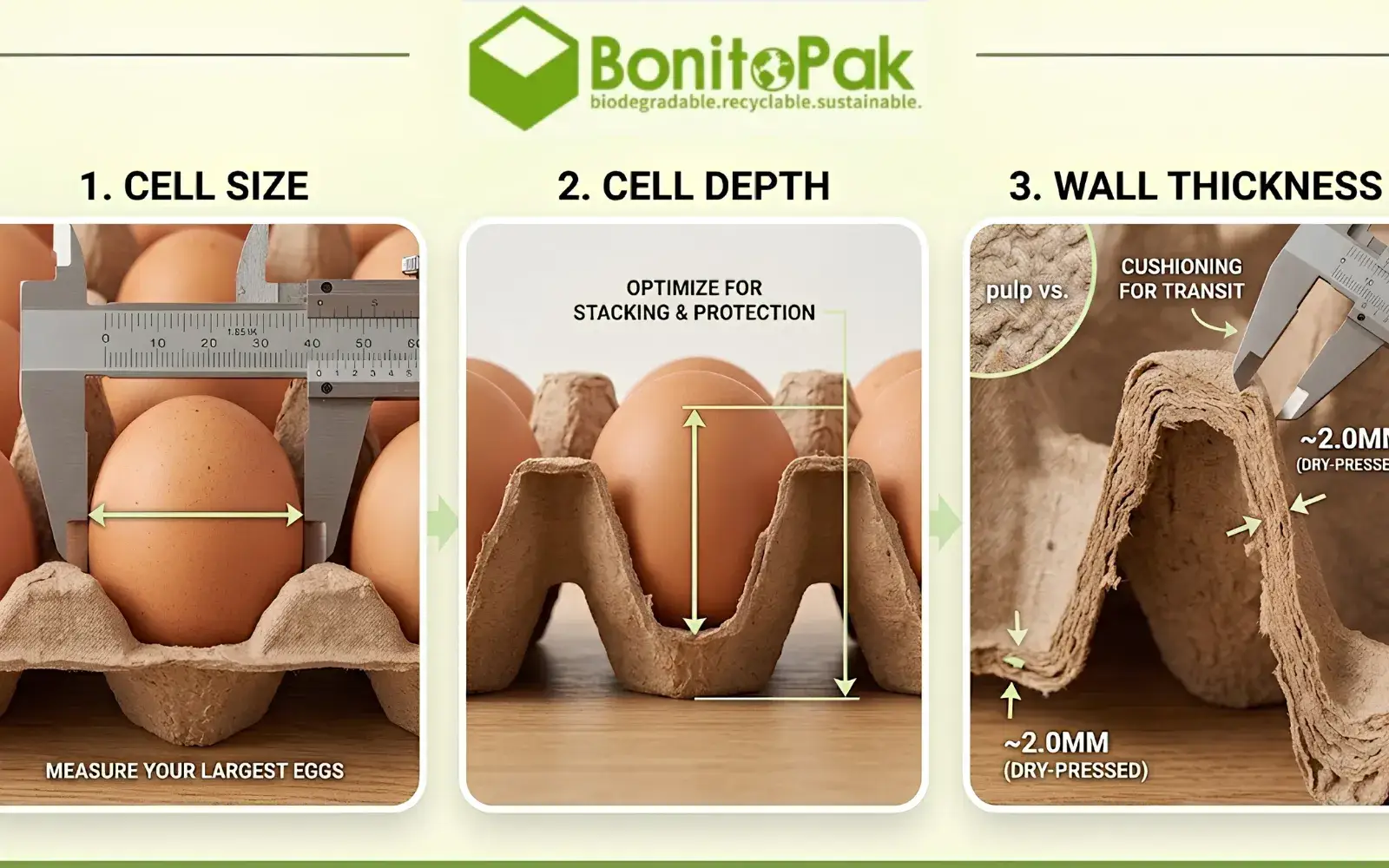
Custom egg tray design comes down to three numbers: how wide each cell is, how deep it sits, and how thick the wall is. Get those right and the rest of the tray follows. Get them wrong and you have tooling that produces a tray your eggs rattle in or crack in, and tooling doesn’t get adjusted after it’s cut.
The good news is that you can settle all three before you talk to a supplier. It starts with your eggs, not with a catalog.
Start With the Eggs, Not the Tray
The most common mistake in this whole process is specifying a count without specifying a grade. A 30-cell tray cut for large eggs won’t seat jumbos, and a jumbo cell leaves medium eggs loose.
US egg sizes are set by weight per dozen, not by physical size. These are the USDA weight classes:
| Weight class | Minimum net weight per dozen |
| Jumbo | 30 oz |
| Extra large | 27 oz |
| Large | 24 oz |
| Medium | 21 oz |
| Small | 18 oz |
| Peewee | 15 oz |
Weight tells you roughly what to expect, but it doesn’t give you a cell dimension. For that, measure.
How to measure properly:
- Take at least 20 to 30 eggs from a normal week of production.
- Measure the width at the widest point and the length tip to tip.
- Record the largest width you find, not the average.
- Repeat for your biggest layers, since flock age changes egg size over a laying cycle.
- Send a dozen real eggs to your supplier with the specification.
Design for the largest egg you regularly pack. A cell that comfortably holds your biggest egg still holds a slightly smaller one. The reverse never works.
Spec 1: Cell Size
Cell width is the spec that decides whether eggs sit properly. A standard large chicken egg measures roughly 1.75 to 1.87 inches (44 to 47.5 mm) across the widest point, and cells are cut with a small amount of clearance around that.
Getting egg tray cell size wrong fails in two directions:
- Too tight: The shell contacts the cell wall under load. Eggs get squeezed rather than cradled, and cracks show up on the sides of the shell.
- Too loose: Eggs rock in the cell. Vibration in a truck turns that movement into shell-on-fiber abrasion and eventually into cracks.
Specialty eggs make this sharper. Duck eggs are longer and heavier. Quail eggs are tiny enough that a standard chicken cell is useless, and even jumbo quail lines need a wider pocket than standard quail. Our article on quail egg cartons and cell size covers that margin in detail.
Spec 2: Cell Depth
Depth controls how much of the egg sits below the rim. It affects three things at once.
Protection. A deeper cell shields more of the shell and keeps eggs from touching each other or the tray above.
Stacking. Egg flats are stacked directly on top of each other, so the cells of the upper tray sit over the eggs below. Depth and cone height decide whether that contact is gentle or hard.
Nesting. Empty trays nest into each other for storage and freight. A deeper cell usually means a taller nest per tray, which raises your shipping volume. This is a genuine tradeoff, and it’s worth asking your supplier for the nesting height of any design before you approve it.
For a closed carton, depth works with the lid. The lid needs to close without pressing down on the eggs, which means the lid dome has to account for the tallest egg you pack.
Spec 3: Wall Thickness
Wall thickness is where cushioning comes from, and it’s set by the forming process more than by the mold shape.
| Process | Typical wall | Feel and use |
| Wet pressing (thermoformed) | About 0.7 to 1.2 mm | Thin, smooth, dense. Used for premium retail packs |
| Transfer molded or dry pressed | About 1.5 to 3.0 mm | Thicker, rougher, springier. The standard for egg trays and flats |
Thicker walls absorb more shock and resist crushing in stacked cases. They also use more fiber, which raises unit cost and shipping weight slightly. For most egg programs, a dry-pressed tray at the thicker end is the right call, and our guide to the 4 types of molded pulp explains where the thinner processes earn their place.
One point that surprises buyers: egg tray wall thickness is not perfectly uniform across a tray. Fiber deposits slightly differently across cones, rims, and flats. A good supplier controls the variation and can tell you where the thinnest section sits.
The Details That Come With the Tooling
Once the three main specs are set, the rest of the design gets decided at the same time. These are the items worth naming in your specification.
- Draft angle: The slight taper that lets a tray release from the mold and nest cleanly. Too little draft causes sticking and deformed cells.
- Cone shape: The posts between cells. Their shape decides how eggs are separated and how load transfers through a stack.
- Ribs and edges: Rolled or reinforced rims add stiffness without added weight.
- Vent openings: Airflow helps in cold storage and reduces condensation around shells.
- Label flats: A flat area for a sticker, stamp, or barcode. Compliance text needs somewhere to sit, and our guide to egg carton labels and USDA and FDA requirements covers what must appear.
- Closure: For cartons, a snap tab or lock tab, sized so it holds without tearing the fiber.
- Embossed branding: A logo cut into the tool, which costs nothing per unit.
Choosing Format and Count
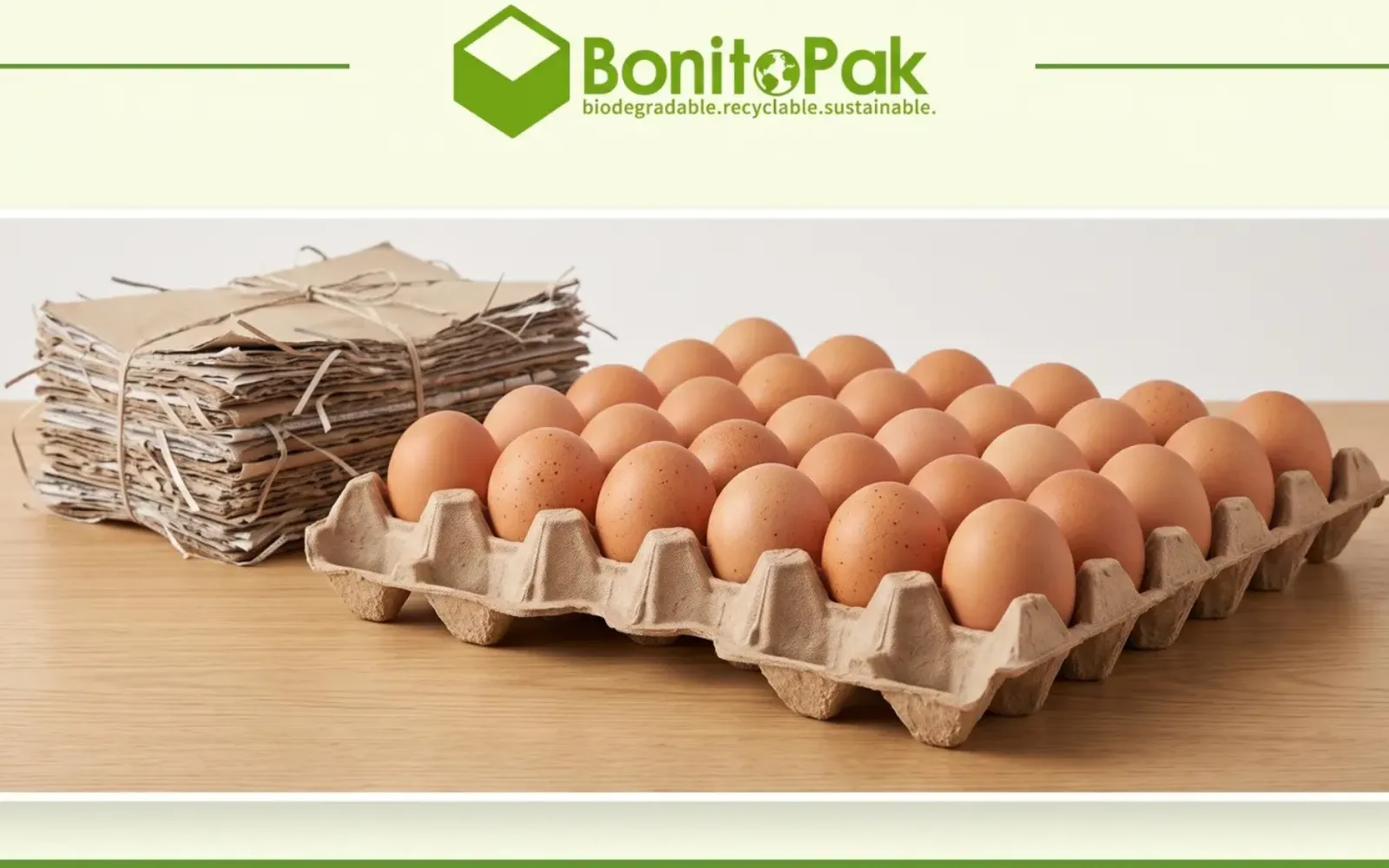
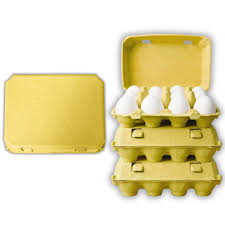
Format follows your channel. Open flats hold 30 eggs in a five by six grid and usually measure around 11.5 to 12 inches square, roughly 2.75 to 3 inches tall. They suit farm handling, wholesale, and food service.
Closed cartons in 6, 12, and 18 counts suit retail, with 4-count packs used for gift and premium eggs. If you’re still deciding, our guide to egg carton sizes and counts breaks the formats down by channel.
Count and cell size are separate decisions. Pick the count from how you sell, and the cell from your eggs.
Your Pre-Tooling Checklist
Work through this before anyone cuts steel or aluminum.
- Measured width and length of your largest regular eggs, in millimeters or inches
- Grade or bird type, including any specialty lines
- Count and format, open flat or closed carton
- Target wall thickness or process choice, wet or dry press
- Nesting height limit, if freight volume matters to you
- Vent, label flat, and closure requirements
- Fiber and color, including any Pantone reference
- Yearly volume, which decides cavity count and tooling payback
- A dozen sample eggs sent to the supplier
- An agreed drop test and vibration test before the production mold is cut
That last point is the one people skip. Test the sample tray with your real eggs, in your real case, over your real delivery route.
Mistakes That Show Up After Tooling Is Cut
Copying a competitor’s tray. Their eggs are not your eggs, and you can’t measure wall thickness by eye.
Designing for today’s flock. Pullets lay smaller eggs and work up to full size. A cell that fits perfectly in month two can be tight in month eight.
Forgetting the label area. A compliance element with nowhere to sit becomes a reprint or a new mold.
Ignoring the case. The tray has to fit the case, the case has to fit the pallet, and the pallet has to fit your truck. Check all three before approving.
Rushing the sample stage. Changes at sample stage are cheap. Changes after the production mold is cut usually mean a new mold.
Getting Your Spec Right the First Time
Good custom egg tray design is mostly measurement and honesty about how your eggs actually travel. Measure your largest eggs, choose the depth that fits your stacking and your freight, pick the wall thickness your route needs, then test a sample before the production tooling is cut. Do that and the tray simply works, which is all a tray is supposed to do.
At BonitoPak, we design and cut molds per project through our mold design and tooling team, and we make custom egg trays and cartons in six pulp colors from 1,000 pieces. Send us your egg measurements and volume, and we’ll come back with a drawing.
FAQs
Q: How much clearance should an egg tray cell have?
Egg tray cell size should let the egg seat without contacting the wall under load, and still hold it firmly enough that it can’t rock. There’s no universal clearance figure, which is why suppliers ask for sample eggs rather than working from a grade alone.
Q: What wall thickness should I ask for?
Egg tray wall thickness for flats and trays is usually dry-pressed at roughly 1.5 to 3.0 mm , which cushions well. Thinner wet-pressed walls near 0.7 to 1.2 mm suit premium retail cartons where finish matters more than bulk.
Q: Can I use one tray design for different egg sizes?
Within limits. A cell cut for large eggs usually handles medium and extra large, but jumbo, duck, and quail eggs need their own geometry. Always design around the biggest egg you regularly pack.
Q: Does a deeper cell always protect eggs better?
Not always. Deeper cells protect more of the shell but raise nesting height and freight volume, and they can interfere with lid closure. Balance depth against your stacking method and your shipping costs.
Q: What do I need to send a supplier to start custom egg trays?
Send sample eggs, your measured width and length, the count and format, your yearly volume, and any color or branding requirements. That package is usually enough for a drawing and a tooling quote.


 English
  German
  Spanish
  French
  Russian
  Japanese
  Portuguese
  Arabic