 Skip to content
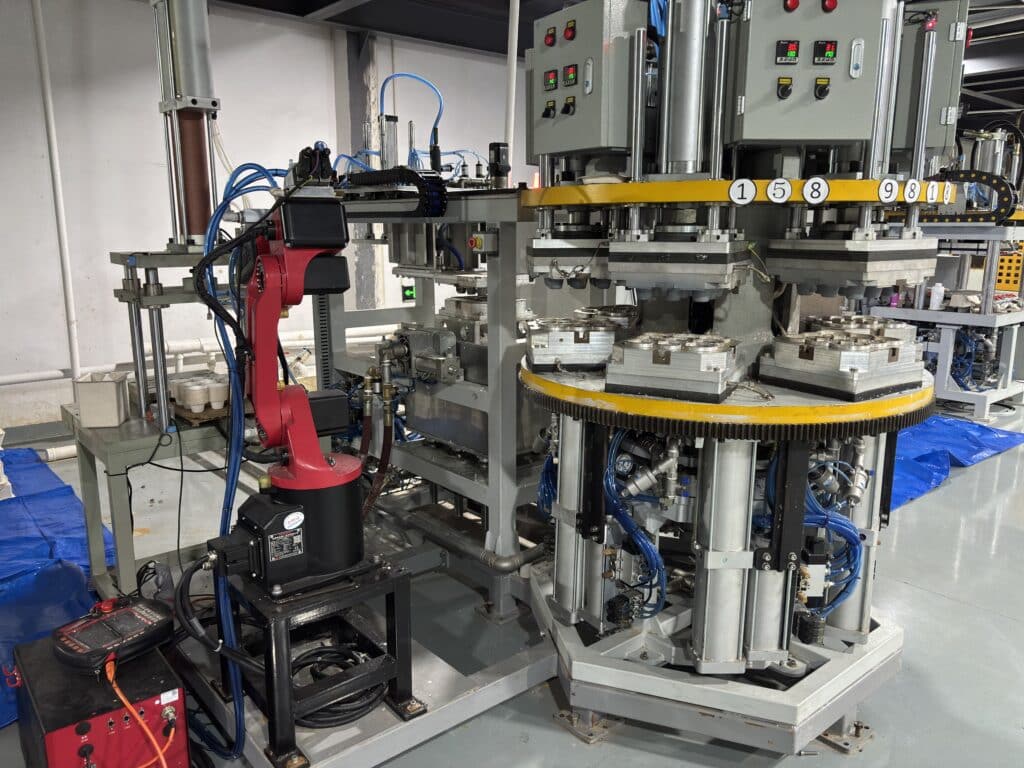
Introduction: The Real Power Behind Modern Manufacturing
When people talk about advanced manufacturing in the United States, the conversation usually focuses on automation, robotics, and high-speed production lines. But behind every high-performance factory lies a much quieter piece of technology that ultimately determines whether those systems work correctly: the mould. Without precision molds, even the most advanced machines cannot produce consistent results. That is why a mould making machine manufacturer in USA plays such a crucial role in industrial supply chains.
From plastic injection molding and automotive components to molded fiber packaging and consumer electronics, mold quality defines product accuracy, surface finish, and durability. A poorly engineered mold introduces defects before production even begins. A precision-engineered mold, on the other hand, stabilizes the entire manufacturing process.
For companies expanding into high-volume manufacturing or sustainable packaging solutions, choosing the right mould making machine manufacturer in USA becomes a strategic decision rather than a simple equipment purchase.
What a Mould Making Machine Manufacturer in USA Provides
A mould making machine manufacturer in USA typically designs and produces advanced tooling equipment such as CNC machining centers, EDM systems, precision milling machines, and multi-axis machining platforms. These machines are used to create molds that define the shape, surface finish, and tolerances of manufactured products.
Unlike generic machining tools, mould making machines are designed to produce extremely precise cavities that must perform consistently across thousands or even millions of production cycles. Small variations in cavity geometry or surface finish can lead to part defects, dimensional drift, or premature tool wear.
This level of precision becomes even more important in industries that require consistent forming behavior. For example, in molded fiber manufacturing systems such as dry pressing molded pulp trays, the mold determines drainage behavior, surface smoothness, and product strength. If the mold cavity is not manufactured accurately, the forming machine cannot compensate for those errors.
That is why many manufacturers look specifically for experienced mould making machine manufacturers in the USA, where engineering standards, material quality, and precision machining capabilities are often highly developed.
Technologies Used by American Mould Making Machine Manufacturers
Manufacturers in the United States typically combine several advanced machining technologies to produce high-performance molds. CNC machining centers handle primary cavity shaping and contour accuracy. Electrical discharge machining (EDM) refines sharp internal features and intricate details that traditional cutting tools cannot achieve. Precision grinding ensures flatness and alignment across mold surfaces.
Multi-axis machining has become especially important in modern mold production. Five-axis CNC machines allow complex geometries to be machined in fewer setups, improving both precision and efficiency. Laser measurement systems are also increasingly used to verify dimensional accuracy before molds enter production.
This emphasis on precision tooling aligns with integrated manufacturing philosophies seen across modern production systems, including the engineering-driven approach applied at BonitoPak, where machinery, material behavior, and tooling design are treated as interconnected parts of the same system rather than isolated components.
Energy and Efficiency in Mould Manufacturing
Although mould making machines operate on smaller scales compared to large production equipment, their efficiency still influences manufacturing economics. Faster machining cycles reduce lead times for new molds, while accurate first-pass machining reduces costly rework.
In a typical CNC-based mold manufacturing setup, energy use is distributed approximately as follows:
| System Area | Primary Energy Type | Approximate Share of Total Energy |
| CNC Spindle Operation | Electricity | 35–45% |
| Motion Control & Servos | Electricity | 20–30% |
| Cooling & Lubrication | Electricity | 10–15% |
| Auxiliary Systems | Electricity | 10–15% |
While energy consumption is not usually the primary cost driver in mold production, machining efficiency and tool longevity strongly influence operational profitability. High-performance machines minimize downtime and extend cutting tool life.
Comparing Tooling Quality: Standard vs Precision Mould Manufacturing
Choosing a mould making machine manufacturer in USA often comes down to balancing upfront tooling cost with long-term production stability. Lower-cost molds may appear attractive initially but can introduce performance problems during mass production.
| Metric | Standard Tooling | Precision Mold Manufacturing |
| Dimensional Accuracy | Moderate | High |
| Surface Finish Consistency | Variable | Stable |
| Tool Lifespan | Shorter | Longer |
| Production Rejection Rate | Higher | Lower |
| Maintenance Requirements | Frequent | Reduced |
Precision molds reduce production variability and extend operational life. For companies operating high-volume manufacturing systems, these benefits significantly outweigh the initial tooling cost difference.
In sectors like molded fiber packaging — where customization and branding are becoming increasingly important — tooling precision directly affects product appearance and functionality. Industry discussions around packaging customization, such as insights shared in Are Molded Pulp Boxes Customizable for Branding?, highlight how mold quality influences both design flexibility and final product consistency.
Customization Capabilities of Modern Mould Making Machines
Modern mould making machines allow engineers to integrate complex features that improve production performance. Cooling channels can be strategically placed to control thermal distribution during injection molding. Venting structures can be optimized to improve fiber drainage in molded pulp systems. Reinforced structural supports can increase mold durability under high-pressure cycles.
Customization ensures that molds are not only precise but also optimized for specific manufacturing conditions. This alignment between tooling design and production process reduces waste, improves cycle time stability, and enhances product quality.
Manufacturers who rely on standardized molds often find themselves compensating with machine adjustments or process modifications. Custom tooling eliminates many of those inefficiencies before production begins.
Why U.S. Manufacturers Remain Important in Global Tooling Supply
Despite the globalization of manufacturing, many companies continue to source molds or mold-making technology from American manufacturers. This preference often comes down to engineering reliability, material standards, and the ability to collaborate directly with tooling specialists during design and testing phases.
Proximity can also shorten development cycles. When mold adjustments are needed, local manufacturers can provide faster turnaround compared to overseas suppliers. For companies developing new products or entering new packaging markets, this responsiveness can accelerate time to market.
At the same time, companies like BonitoPak demonstrate how global manufacturing expertise can integrate with advanced tooling strategies to support modern sustainable packaging production.
Conclusion: Precision Tooling Is the Foundation of Reliable Manufacturing
A mould making machine manufacturer in USA does more than supply equipment. These manufacturers provide the technological foundation that allows production systems to operate reliably and efficiently. Precision molds influence product quality, cycle stability, and long-term manufacturing cost.
Whether producing plastic components, molded fiber packaging, or complex industrial parts, the accuracy of the mold determines the success of the entire production process. Companies that invest in high-quality tooling and advanced mold manufacturing technology create stronger foundations for scalable manufacturing.
In modern industry, manufacturing excellence begins long before the first product is formed. It begins with the mold.
Frequently Asked Questions
What does a mould making machine manufacturer in USA produce?
They design and manufacture equipment used to create molds for production systems such as injection molding, molded fiber forming, and die casting.
Why are molds so important in manufacturing?
Molds define the shape, dimensions, and surface quality of manufactured products. Poor mold design leads to defects and production instability.
Are American mold manufacturers more precise?
Many U.S. manufacturers emphasize advanced machining technology, engineering standards, and quality control, which often results in highly precise molds.
Can molds be customized for specific products?
Yes. Modern mold making machines allow customization of cavity geometry, cooling channels, and venting structures to match production requirements.
How does mold quality affect production cost?
High-quality molds reduce rejection rates, minimize downtime, and extend tool lifespan, lowering overall manufacturing cost.

 English
  German
  Spanish
  French
  Russian
  Japanese
  Portuguese
  Arabic