 Skip to content
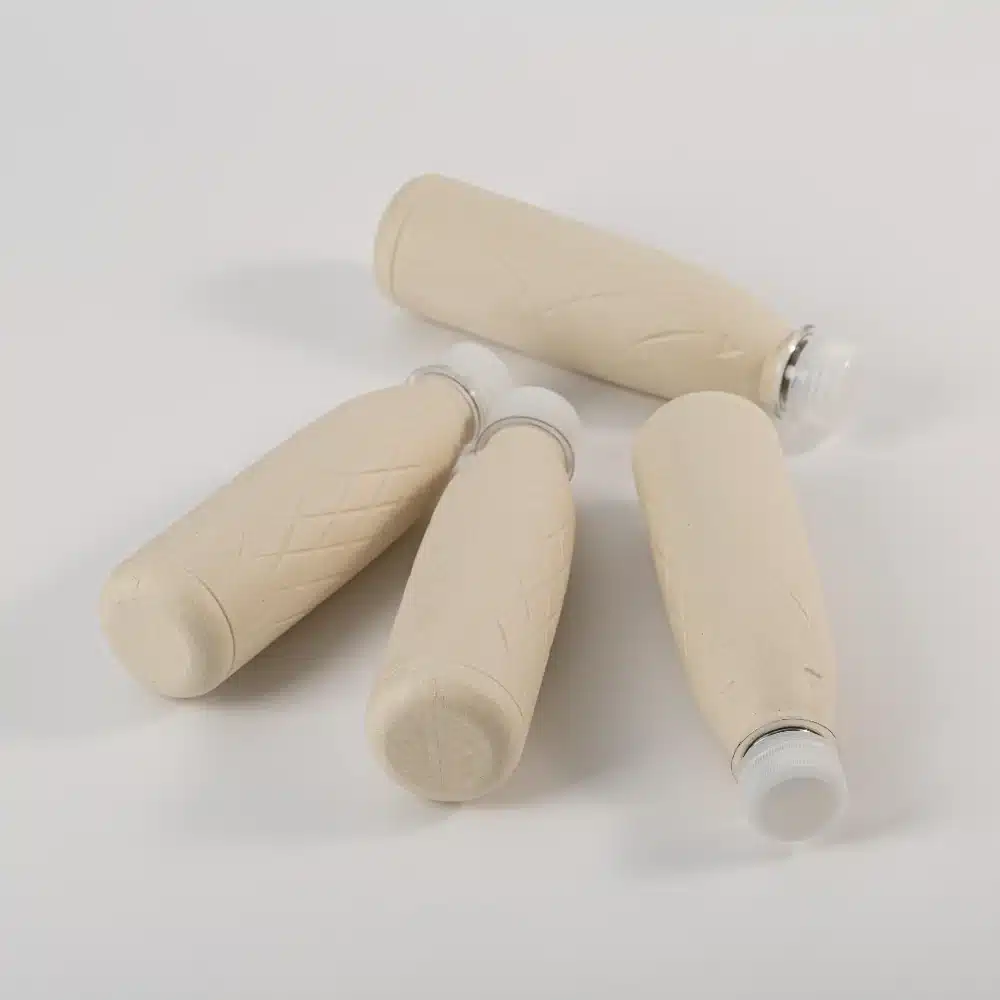
Introduction: The Rise of Paper Bottles in Sustainable Packaging
As industries move away from single-use plastics, paper bottles have emerged as one of the most promising sustainable packaging innovations. Designed to reduce plastic consumption while maintaining structural strength and barrier protection, paper bottles are increasingly used for beverages, personal care products, household liquids, and specialty applications.
Manufacturing paper bottles is a technically advanced process that combines molded pulp technology, precision tooling, barrier science, and modern automation. Unlike traditional plastic bottle production, which relies on injection stretch blow molding, paper bottle production requires fiber forming, drying, shaping, and internal lining integration. Understanding how to manufacture paper bottles involves examining each stage—from raw material preparation to final quality testing.
Understanding the Structure of a Paper Bottle
Before exploring the manufacturing process, it is essential to understand how paper bottles are constructed. Most paper bottles consist of two primary components:
First, the outer structural shell, typically made from molded pulp or paperboard fibers. This provides rigidity, shape, and branding surface.
Second, the inner barrier layer, which prevents liquid leakage and protects the contents from oxygen and moisture. Depending on the application, this barrier may be a thin plant-based lining, recyclable polymer layer, or water-dispersible coating.
Some advanced paper bottles are designed with removable liners to improve recyclability. Others integrate ultra-thin barrier coatings that maintain product freshness while minimizing plastic content. The manufacturing method depends heavily on the chosen design structure.
Raw Materials Required
The production of paper bottles begins with carefully selected materials. Recycled paper pulp or virgin wood pulp is commonly used for structural strength and consistency. Recycled fibers are often preferred for sustainability goals, while virgin fibers provide enhanced mechanical performance.
Additives such as binding agents, water-resistant chemicals, or natural resins may be incorporated to improve fiber bonding and moisture resistance.
For the barrier layer, manufacturers may use bio-based polymers, thin recyclable plastics, or advanced water-based coatings. The selection of barrier materials significantly influences product shelf life, recyclability, and regulatory compliance.
Step-by-Step Manufacturing Process
1. Pulp Preparation
The process begins by mixing recycled or virgin paper fibers with water in a pulper. This creates a fiber slurry with controlled consistency. The slurry is refined to achieve the correct fiber length and bonding characteristics, ensuring optimal strength in the final bottle shell.
Additives may be introduced at this stage to enhance durability or improve water resistance. Proper pulp consistency is critical for uniform wall thickness and structural integrity.
2. Molded Fiber Forming
The prepared pulp slurry is transferred to a forming station where precision molds shape the bottle halves or full body structure. Vacuum suction draws fibers onto the mold surface, forming a uniform layer.
At this stage, excess water is removed through drainage holes and mesh screens integrated into the mold. Mold design is crucial because drainage patterns influence thickness distribution and forming speed.
Most paper bottles are produced in two symmetrical halves, which are later joined together. However, some advanced systems allow single-piece molding depending on machine capabilities.
3. Pressing and Densification
After initial forming, the wet pulp structure undergoes hot pressing. Heated molds compress the fiber structure, improving density, surface smoothness, and mechanical strength.
This step reduces moisture content further and ensures dimensional accuracy. For premium paper bottles, high-pressure thermoforming techniques are used to achieve smoother surfaces suitable for branding and labeling.
4. Drying Process
The molded bottle shells are transferred to drying systems. Industrial drying can occur through convection ovens, hot air tunnels, or integrated heated molds.
Proper drying is essential to prevent warping or structural weakness. Moisture levels must be carefully controlled to maintain dimensional stability. The drying phase directly affects production speed and energy efficiency.
5. Trimming and Finishing
Once dry, the bottle halves are trimmed to remove excess material. CNC trimming systems or precision cutting machines ensure clean edges for accurate joining.
Surface finishing may include smoothing, embossing, or pre-print treatments. At this stage, branding elements can be incorporated through printing or labeling.
6. Barrier Liner Integration
The internal barrier layer is then added. This step varies depending on the bottle design. Some systems insert a thin preformed liner, while others apply a spray-on or laminated coating inside the shell.
The liner must create a liquid-tight seal without compromising recyclability. Advanced manufacturing systems focus on minimizing plastic content while maintaining oxygen and moisture protection.
7. Assembly and Sealing
If the bottle is formed in two halves, they are aligned and bonded using adhesives, ultrasonic welding, or mechanical locking systems.
Neck finishes and caps—often made from recyclable materials—are integrated at this stage. Precision assembly ensures structural strength and leak resistance.
8. Quality Control and Testing
Final inspection includes leak testing, compression strength testing, drop testing, and barrier performance evaluation. Manufacturers also test for shelf life compatibility with intended liquids, such as carbonated beverages or personal care products.
Quality assurance is essential to meet regulatory standards and consumer safety requirements.
Machinery Required for Paper Bottle Manufacturing
Manufacturing paper bottles requires specialized equipment, including:
Pulping systems for fiber preparation.
Molded fiber forming machines with vacuum systems.
Hot pressing units for densification.
Industrial drying ovens or heated mold systems.
CNC trimming and finishing machines.
Barrier coating or liner insertion systems.
Assembly and sealing equipment.
Quality testing machinery.
Production lines may be semi-automated or fully automated depending on output requirements. High-volume facilities integrate robotics and digital monitoring systems for efficiency and consistency.
Technical Challenges in Paper Bottle Manufacturing
Producing paper bottles presents several engineering challenges. Achieving sufficient liquid resistance while minimizing plastic use requires advanced barrier technologies.
Maintaining structural strength under compression, especially for carbonated beverages, demands precise fiber engineering and densification techniques.
Ensuring compatibility with recycling systems is another key concern. Manufacturers must design bottles that can be easily separated into recyclable components.
Additionally, scaling production while maintaining consistent wall thickness and surface finish requires precision tooling and process optimization.
Cost Considerations
Initial investment in paper bottle manufacturing equipment can be substantial. Tooling, automation systems, and barrier integration technologies contribute significantly to capital costs.
However, long-term benefits include reduced reliance on petroleum-based plastics, improved brand sustainability positioning, and compliance with environmental regulations. As production scales, unit costs decrease due to improved efficiency and material optimization.
Sustainability Benefits
Paper bottles offer reduced plastic usage, lower carbon footprint potential, and improved recyclability. When made from responsibly sourced pulp, they contribute to circular economy initiatives.
Many designs aim for high fiber content while keeping barrier materials minimal and recyclable. This balance is central to achieving true environmental benefits.
Future Innovations in Paper Bottle Manufacturing
Research and development continue to focus on fully biodegradable barrier coatings, enhanced strength through fiber blending, and energy-efficient drying systems.
Digital process monitoring, AI-driven quality control, and improved pulp formulation technologies are shaping the next generation of paper bottle production lines.
As consumer demand for sustainable packaging increases, manufacturing techniques will continue to evolve toward higher efficiency and lower environmental impact.
Conclusion
Manufacturing paper bottles involves a sophisticated integration of pulp molding technology, barrier science, precision tooling, and quality control systems. From pulp preparation to final assembly, each step must be carefully managed to ensure structural strength, liquid resistance, and sustainability.
Although the process requires significant technical expertise and investment, paper bottle production represents a major advancement in eco-friendly packaging. With continued innovation in materials and machinery, paper bottles are poised to become a scalable, sustainable alternative to traditional plastic containers.
If you would like, I can also create a detailed production flow diagram explanation or a cost breakdown model for setting up a paper bottle manufacturing plant to make this guide even more practical for investors and manufacturers.

 English
  German
  Spanish
  French
  Russian
  Japanese
  Portuguese
  Arabic