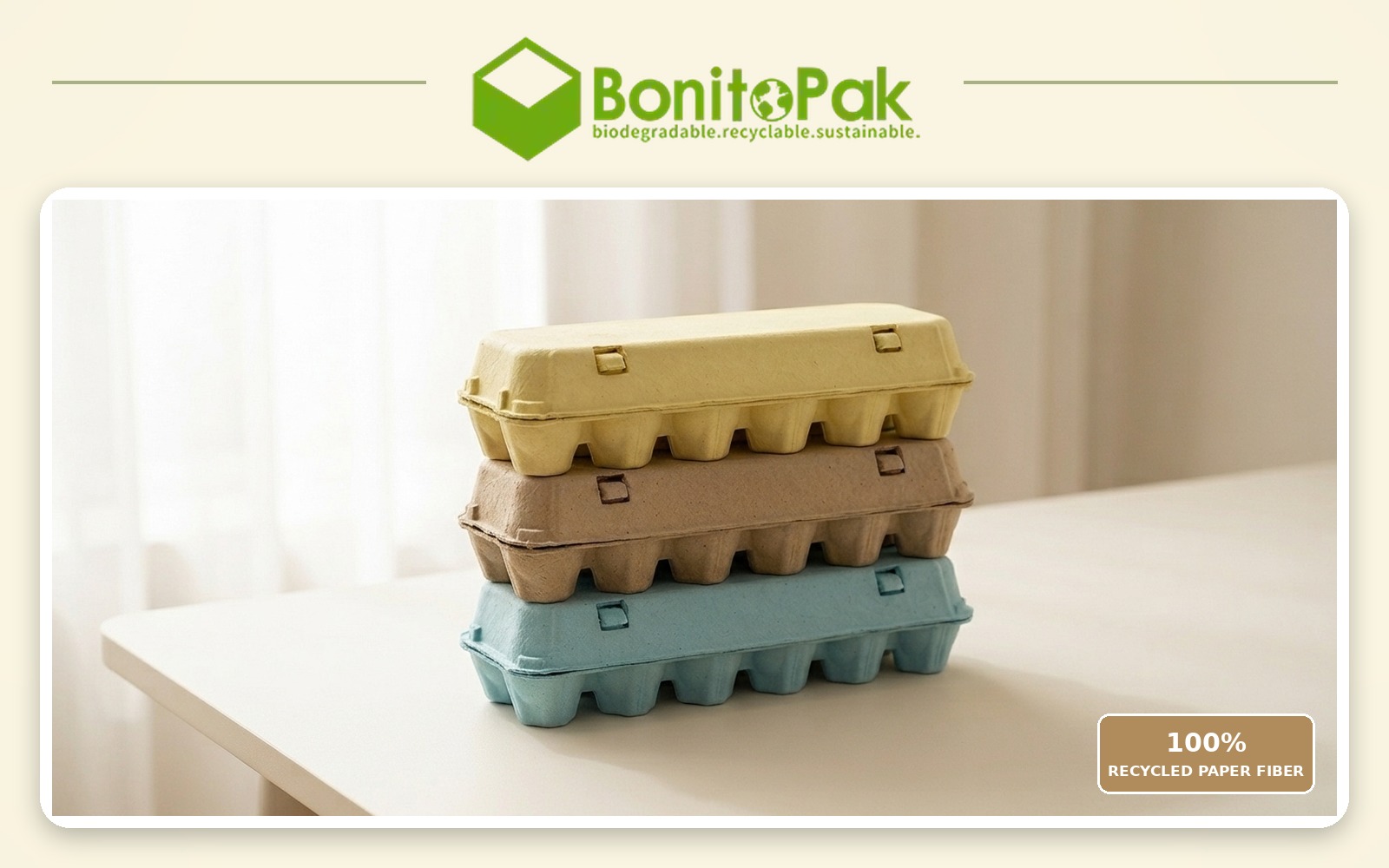
By Leo Chan, Senior Packaging Consultant, BonitoPak. Last updated: November 2026.
A 6 egg carton holds half a dozen eggs in a 2 by 3 layout. Our molded pulp version measures 175 x 105 x 75 mm (6.9 x 4.1 x 3.0 inches), weighs 28 to 34 g empty, and takes standard to jumbo chicken eggs. It is the right pack for small households, premium lines, gift boxes and farm stand sales.
The small size brings its own problems. The lid has less room for your label, a filled carton is light and easy to crush in a case, and egg size matters more than it does in a dozen. This guide covers dimensions, weight, egg fit, style, color, label rules, branding, shipping and a simple test, so you can order a half dozen carton with fewer surprises. We make these cartons in Dongguan, China, and every product spec below comes from our product page.
What Is a 6 Egg Carton and Who Uses It?
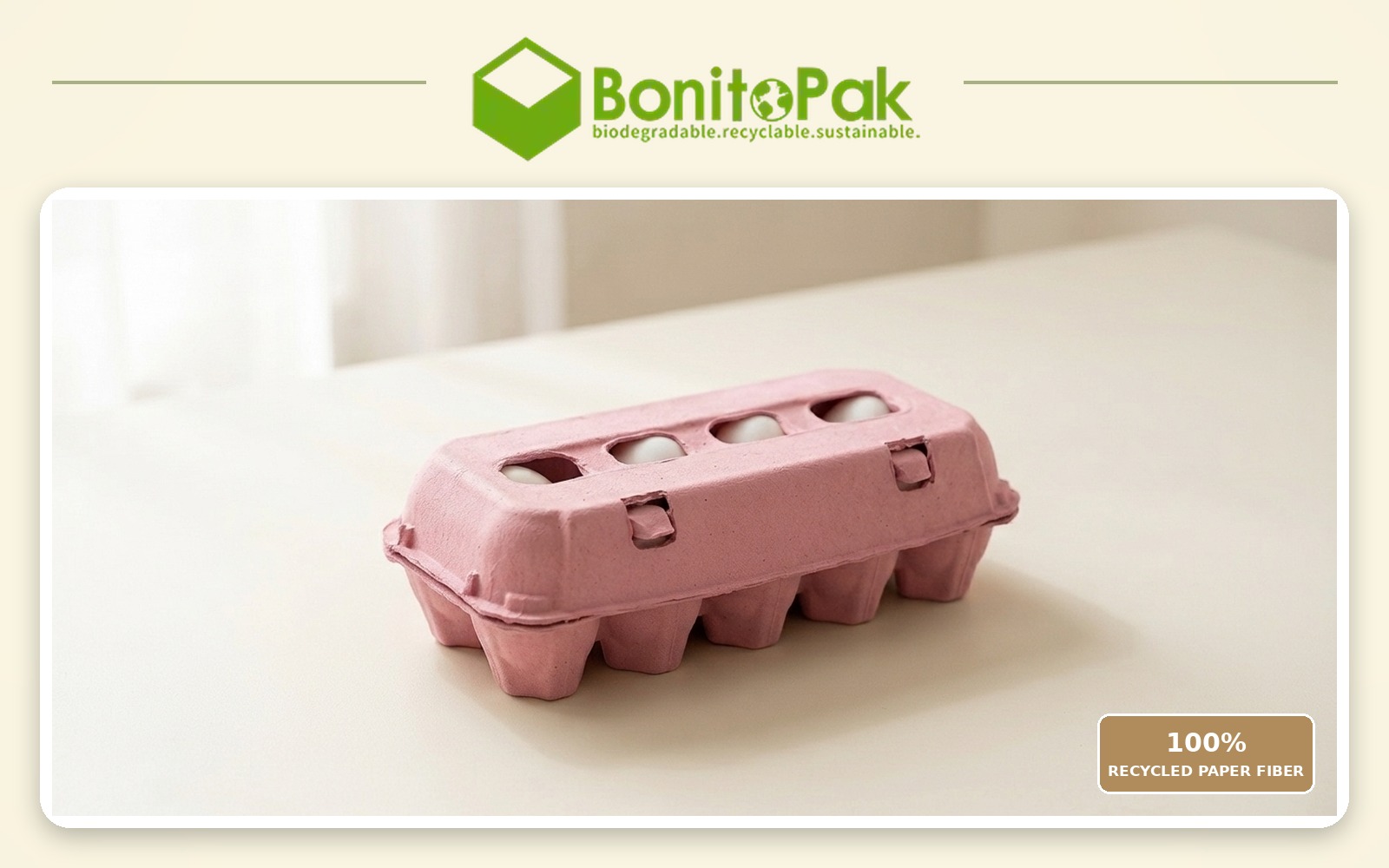
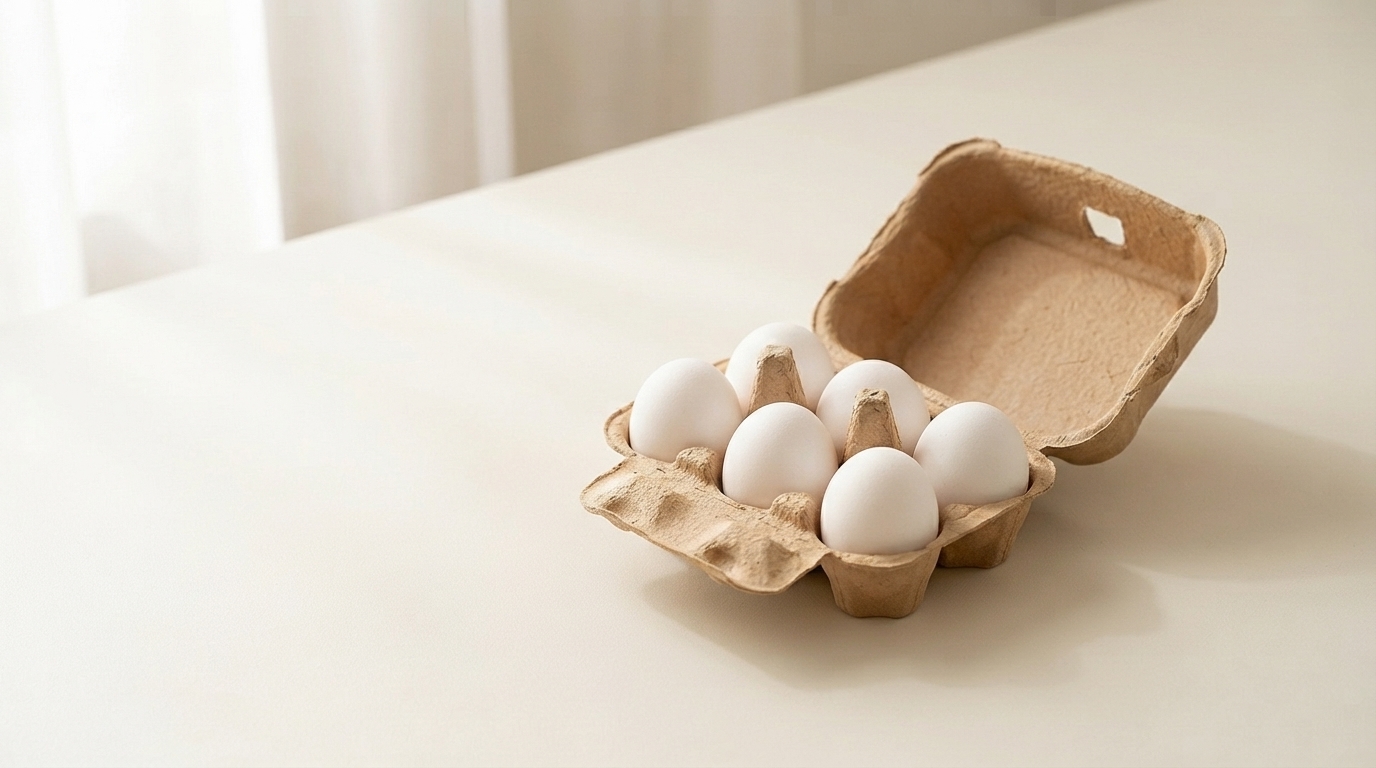
A 6 egg carton, also called a half dozen carton, is a molded pulp pack with six cells in two rows of three. Poultry farms, farm stands, retail grocers and gift packers use it. Our model, EC-06, is formed from post-consumer recycled paper pulp by wet pressing, and it closes with a top fold lid and a front locking tab.
The table below shows the full spec from our product page.
| Característica | BonitoPak 6 egg carton (EC-06) |
|---|---|
| Cell layout | 6 cells, 2 x 3 |
| Outer size | 175 x 105 x 75 mm (6.9 x 4.1 x 3.0 in) |
| Peso unitario | 28 to 34 g |
| Rango de tamaño de los huevos | Huevos de gallina, desde el tamaño estándar hasta el jumbo |
| Estilo | Top fold clamshell with front locking tab |
| Material | Recycled paper pulp, wet pressed |
| Colores | Natural pulp, six stock colors, custom color match |
| Marca | Impresión en relieve, en hueco o flexográfica |
| Order type | Stock mold or custom, OEM and ODM accepted |
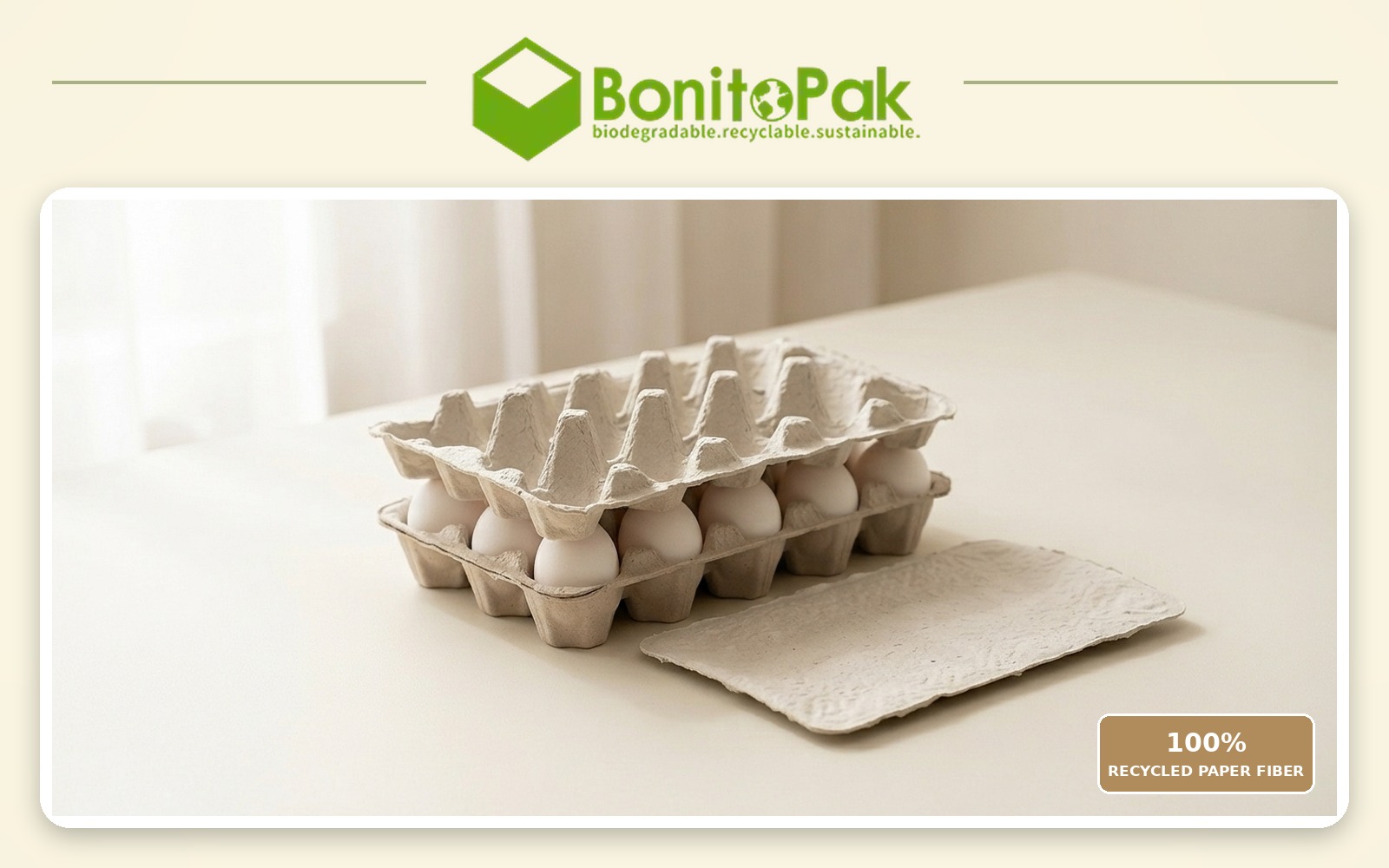
You can see the product itself on our 6 cajas de huevos page. The cartons nest when empty, so a pallet of blanks takes far less room than the same count of filled packs.
How Big Is a 6 Egg Carton?
It is 175 mm long, 105 mm wide and 75 mm tall, which is 6.9 by 4.1 by 3.0 inches. That is the same width and height as our standard dozen at 300 x 105 x 75 mm, and the length is about 58 percent of the dozen. A shopper or a packer can treat it as a dozen cut roughly in half along its length.
One retail listing for a flat top half dozen carton shows close numbers, about 6 by 4 by 3 inches. Check the exact drawing from any supplier, because a few millimeters decide whether a carton fits your case. The 3.0 inch height is the number to check for refrigerator doors and display shelves.
How Much Does a Filled Half Dozen Weigh?
A filled half dozen of Large eggs holds at least 12 ounces of egg, and the carton adds 28 to 34 g, about 1 ounce. The USDA sets minimum net weights per dozen for each size class, and a half dozen carries half the dozen figure. These are floors, so real eggs can weigh more.
Using the USDA per dozen minimums, the half dozen minimums work out as follows. Peewee eggs come to 7.5 ounces, Small to 9 ounces, Medium to 10.5 ounces, Large to 12 ounces, Extra Large to 13.5 ounces and Jumbo to 15 ounces. That halving is our arithmetic from the per dozen figures, so check your own scale and your state rules before you print a net weight on a pack.
The light weight is easy in the hand, but small cartons shift in a case, so pack them snug.
Which Egg Sizes Fit a 6 Egg Carton?
Our carton fits standard to jumbo chicken eggs. Cell depth and diameter are cut for chicken egg weights, so the carton is not a match for every bird.
Duck, goose and turkey eggs are larger than most chicken eggs, so test them in a sample before you plan a run. A review on one retail listing shows the usual trap: the buyer picked a chicken carton for turkey eggs and they would not fit. Quail eggs are far smaller, so they rattle in a chicken carton and need a mold cut to their size.
A flock sold as Large can include eggs from the 24 ounce per dozen floor up to just below the Extra Large floor, so test the heaviest and roundest eggs you pack, not only the average ones.
Who Should Choose a Half Dozen Pack?
Choose a half dozen when your buyers do not need twelve eggs, or when you want a lower price at the till. This is our reasoning from how packs are used, not sales data, so ask a few regular buyers how many eggs they take each week before you add the size.
Singles, couples and small households can finish six eggs before they go stale, so a half dozen wastes less. Farm stands and farmers markets use it as an entry pack for new customers. Premium lines, such as heritage breeds or pasture raised eggs, sell well in six because a small pack feels like a treat and the price stays low. Gift packers use it because six eggs in a colored carton look neat in a basket.
Most sellers keep a dozen as the main pack and add the half dozen as a second choice. If you want to compare both formats, our caja de una docena de huevos page shows the 12 cell spec, and our guide on Tamaños y número de huevos de los cartones explains how to pick between counts.
Should You Pick the Standard Fold or a Flat Top 6 Cell Carton?
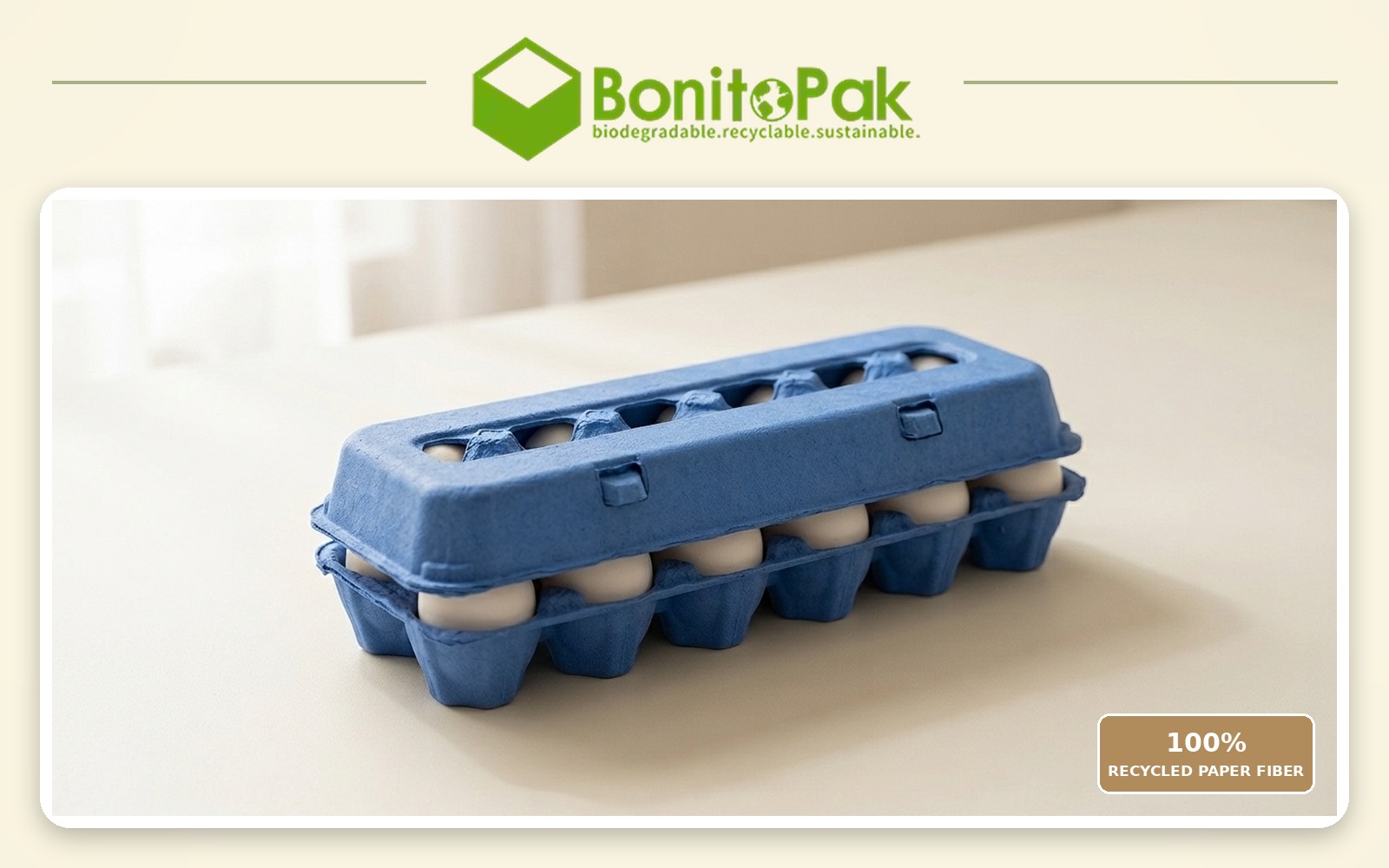
Pick the standard top fold if you want the better hinge and the locking tab, and pick the flat top if you want the largest print panel and a retro look. We make both in six cells. The standard carton is 175 x 105 x 75 mm. The flat top vintage carton is 175 x 108 x 68 mm, which is 7 mm shallower.
That depth is why the flat top range stops at extra large eggs, while the standard carton takes jumbo. The flat lid also gives you more room for a farm name and a short line of text, and it lies flat on a market table. The trade is hinge life. A single deep fold concentrates flex in one line, so it will crack sooner than a multi crease hinge if customers reuse the carton again and again. Our cajas de huevos antiguas page lists the full flat top spec.
Ours is a single six cell carton, so there is no perforated seam to tear, unlike split apart half dozen styles.
Which Colors Come in a 6 Egg Carton?
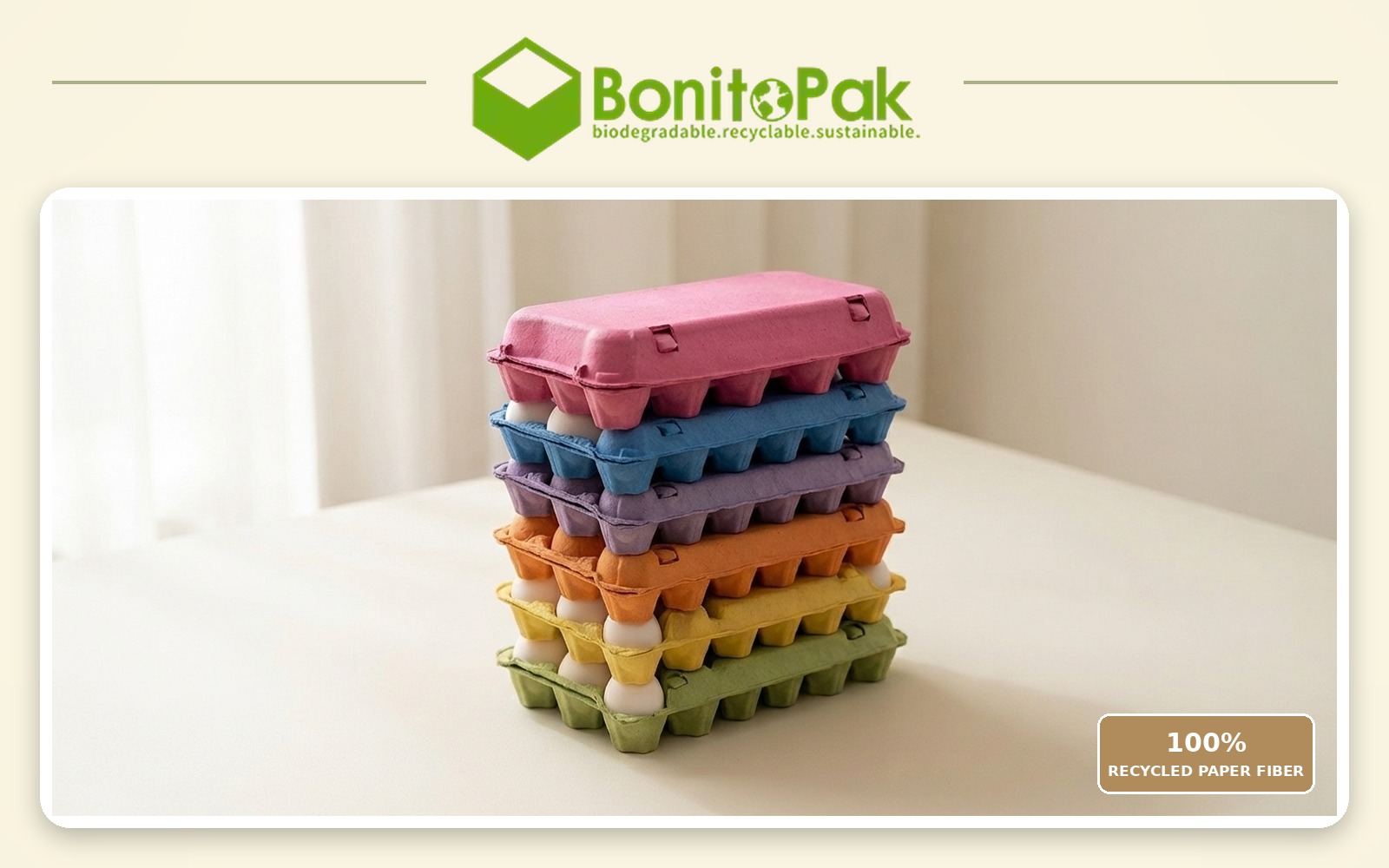
A 6 egg carton comes in natural pulp, six stock colors and custom matched shades. The pigment is blended into the pulp before forming, so the color runs through the fiber and there is no surface coating. Pink, blue and green are available in the 6 cell size, with pale, mid and deep shades in each family.
Color sets your pack apart on a shelf of brown cartons, and it lets staff tell a half dozen from a dozen at a glance. If you want a brand shade, we match to a Pantone reference or a physical sample as closely as pigmented fiber allows. An exact ink match is not possible in pulp, because fiber scatters light differently from coated paper. We send a formed sample for your approval before production. You can compare the stock shades on our cartones de huevos de colores página.
What Label Rules Apply to a 6 Egg Carton?
A smaller carton has a smaller lid, and the same text still has to fit. A University of Maryland Extension fact sheet says the net quantity must appear in at least 1/8 inch type for 6 or 8 egg cartons and 3/16 inch type for 12 or 18 egg cartons. So the half dozen takes a smaller minimum type size than a dozen, but you have less lid area to fit it. The same Maryland fact sheet asks for the words safe handling instructions in a bold, boxed line, the packer name and address, a registration number and a lot designation, plus the word eggs, the grade and the size. Rules differ by state, so confirm yours with your state department of agriculture before you print.
Lay your label against the lid before you order a full run. Our guide on Etiquetas y sellos para cajas de huevos shows what most sellers print. If the required text fills most of the lid, you might need a sticker for the extras or a flat top lid, which gives you more room.
How Do You Brand a Small Lid?
Brand a half dozen lid with one strong mark and as little extra text as the rules allow. A small panel carries a farm name, a logo and a short line, and looks crowded with a fourth element. Plan the required label text first, then fit your brand around it.
Embossing is formed in the mold, so it adds no print step. Debossing presses a mark into the lid and reads as quiet and premium. Flexographic print adds color, with a plate charge for each color. Pulp texture softens fine detail, so bold type and heavy line work reproduce better than small text or photographs. Test the artwork on a formed sample, because a flat proof and a pulp surface read differently.
How Do You Ship and Store 6 Egg Cartons?
Empty cartons nest, and we pack them in bulk in export cartons, or with custom packing if you ask. Nesting saves storage and freight space.
Keep filled half dozens snug in a case with no loose space, and keep cartons dry, since wet fiber loses stiffness. One retail review mentions corners crushed in shipping, so test a packed case before a large order.
If you need more than one cell count, you can order them together. Mixed loads are quoted per line and consolidated into one container, which is usually cheaper than separate shipments. Each mold runs on its own, so a mixed order can take slightly longer.
How Do You Test a 6 Egg Carton Before You Order?
Run a short test on a formed sample with your own eggs, in the conditions where you sell. A carton passes when every egg sits on its cell floor and the lid closes with no pressure on a shell.
- Seat your heaviest and roundest eggs and close the lid.
- Check that the front tab locks with no force.
- Apila tres cajas llenas y comprueba si la tapa está abombada.
- Pack a case with no loose space and carry it a short distance.
- Open and close the lid a few times to judge the hinge.
- Check that your label text fits the lid at the type size your state requires.
Keep the approved sample as your standard for reorders.
How Do You Order 6 Egg Cartons From BonitoPak?
Send your cell count, color and artwork idea to leo@bonitopak.com, and say whether you want a stock carton or a custom mold. Stock molds carry a lower minimum than custom tooling, and confirm the exact minimum with each quote. Seasonal deadlines fail on approval time, not on manufacturing, so allow time for shade approval, artwork proofing and sea freight before the date you need cartons in hand.
Egg cartons are generally treated as secondary rather than direct food contact packaging, but requirements vary by market, so supply material declarations on request. Our product page describes the cartons as biodegradable and home compostable, so ask for the supporting documents before you print any such claim on your own pack. You can see the rest of the range on the BonitoPak homepage. Request a sample and test it with your eggs.
Preguntas frecuentes
Q: How many eggs does a 6 egg carton hold?
A: Six eggs, which is half a dozen, in two rows of three. Our carton fits standard to jumbo chicken eggs.
Q: What are the dimensions of a 6 egg carton?
A: Ours is 175 x 105 x 75 mm, or 6.9 x 4.1 x 3.0 inches, and weighs 28 to 34 g empty. The flat top version is 175 x 108 x 68 mm. Ask for a drawing before you plan case or shelf sizes.
Q: Can a 6 egg carton hold duck or turkey eggs?
A: Not reliably. The cells are cut for chicken eggs. Larger eggs can stop the lid from closing, so test a sample first. We can quote a custom mold sized to your eggs.
Q: Is a half dozen carton cheaper than a dozen?
A: Per carton, usually yes, because it uses less fiber. Per egg, the cost depends on the mold, volume and print, so compare quotes for both counts per egg.
Q: Can I print my logo on a 6 cell carton?
A: Yes. We emboss, deboss or print by flexography. The lid is small, so use one mark and a short line, and fit the required label text first.
Q: What is the difference between molded pulp and molded fiber cartons?
A: Nothing meaningful. Both describe fiber drawn onto a mold under vacuum and pressed to shape. Molded fiber is more common in electronics, molded pulp in food and farm packaging.
About the author: Leo Chan is a Senior Packaging Consultant at BonitoPak, a molded pulp packaging manufacturer in Dongguan, China.