بقلم ليو تشان | كاتب، BonitoPak | أكثر من 20 عامًا في مجال التغليف المصنوع من اللب المقولب
Paperboard carriers clip onto can tops, ship flat and run at high line speeds. Molded fiber forms three dimensionally around the cans, grips the body and needs no coating. The choice usually comes down to line speed, freight volume and whether you need a large print area.
Molded fiber vs paperboard can carriers is the choice facing anyone moving away from plastic rings. These are the two fiber routes, and they are often discussed as if they were the same answer in different shapes. They are not. They attach differently, run differently and ship differently.
This comparison is published by a molded fiber manufacturer, so it is worth saying up front that paperboard genuinely wins in several situations described below.
They Are Structurally Different, Not Just Different Materials
The important distinction is where the carrier engages the can.
A paperboard can carrier is cut and creased from flat stock, then folded and clipped onto the tops of the cans. It holds the pack by gripping the rim or the chime, and it sits across the top like a lid.
A molded fiber carrier is formed three dimensionally in a mold, so it wraps down around the upper body of each can rather than sitting on top of it. It holds the pack by contact with the can wall.
Everything else follows from that. Where the carrier grips determines how it is applied, how much material it needs, how it prints and how it ships.
How a Paperboard Can Carrier Works
The paperboard category is well established and dominated by a few named formats.
| التنسيق | Approach | Notable detail |
|---|---|---|
| CanCollar | Collar around can tops using a tooth design | No glue or adhesive, relies on geometry for retention |
| KeelClip | Clip across the can tops | Core formats from 2×2 to 2×6, protects can tops |
| EnviroClip | Minimal material clip ring | Single ply, no adhesive or plastic lamination |
| TopClip | Top applied clip | Aimed at smaller producers |
These are mature systems with real adoption. CanCollar uses a coated paperboard containing up to 15 percent recycled content and works with standard and slim cans, with automation running mid-speed lines up to 240 cans per minute. KeelClip scales from small operations up to more than 400 packs per minute and has been adopted by large beverage companies internationally.
The scale of those switches is worth noting. One Coca-Cola bottler moving 7.5 ounce cans to a clip format reported removing 75,000 pounds of plastic packaging a year across roughly 3.1 million cases.
How a Fiber Can Carrier Works
Molded fiber takes the opposite approach. Pulp slurry is formed in a mold to produce a finished three dimensional part with cavities sized to the can.
The part is usually a single uncoated material, which keeps both recycling and composting routes open without a separate barrier layer. It grips the can body rather than the rim, which spreads load over a larger contact area and tolerates more variation in can geometry.
The trade is that geometry is fixed at the mold. A carrier cut for a 66mm standard can does not fit a 57mm sleek can, so each diameter family needs its own tooling rather than a settings change.
Molded Fiber vs Paperboard Can Carriers: Head to Head
| العامل | مشبك أو طوق من الورق المقوى | حامل من الألياف المقولبة |
|---|---|---|
| Grip point | Can top, rim or chime | Upper can body |
| Ships as | Flat blanks | Formed parts, partly nesting |
| Print area | Large billboard surface | Limited, often emboss only |
| Line speed | Up to 400+ packs per minute | Generally lower, often manual to mid speed |
| Equipment | Dedicated clipping systems | Simpler application, less automation available |
| Coating | Some grades coated | Usually uncoated |
| قابلية التسميد | Depends on coating | Route available for uncoated fiber |
| الأدوات | Cutting dies per format | Mold per can diameter family |
| Can top exposure | Covered, described as protecting tops | Tops remain exposed |
Where Paperboard Genuinely Wins
High line speeds
If you are filling at several hundred cans a minute, paperboard clip systems are the proven answer. The equipment exists, it is refined, and it keeps pace with upstream fillers. Molded fiber application at those speeds is far less established.
Freight and storage
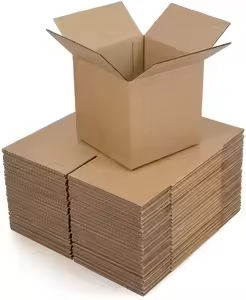
Flat blanks ship and store at a fraction of the volume of formed parts. Over a year of shipments across long distances, that difference is real money and it favors paperboard clearly.
Print and shelf presence
A clip or collar across the can tops creates a printable billboard that a molded fiber carrier cannot match. If the multipack is doing brand work on shelf, that surface matters.
Can top hygiene
Covering the can tops is presented as a consumer hygiene benefit, since the drinking surface is protected through distribution. A fiber carrier that grips the body leaves the tops exposed.
Where Molded Fiber Genuinely Wins
Grip on the can body
Holding the body rather than the rim spreads load over more contact area. For heavier packs, particularly tall cans in six counts, that is a structural advantage. It also tolerates more variation in can dimensions than a design engaging a narrow chime.
Single material, no coating
An uncoated fiber carrier is one material throughout, which keeps recycling straightforward and leaves composting available. Coated paperboard grades can complicate both, and that matters more as labeling rules tighten. We work through the certification detail in our article on compostable and recyclable can carriers. The base fiber matters too, since our منتجات لب الورق المعاد تدويره use mechanical pulping with no chemical additives.
Lower equipment barrier at small scale
A formed carrier can be placed over cans by hand or with simple tooling. For a producer running modest volumes without capital for a clipping system, that is a lower threshold, though paperboard systems have also moved down market with manual and low speed options.
Protective performance
Fiber deforms under impact and absorbs energy, which is why it is used for protective packaging generally. A carrier is a structural part rather than a cosmetic one, and formed fiber brings that behaviour with it.
The Freight Question Nobody Models
This deserves its own consideration because it often decides the answer and rarely appears in a quote comparison.
Paperboard arrives flat. A pallet holds an enormous number of blanks, and forming happens on your line as part of application. Molded fiber arrives formed, occupying its finished volume from the factory onward. Nesting recovers some of that, and how well a carrier nests is set by draft angle at the tooling stage, but a formed part will never ship like a flat one.
For a producer sourcing domestically this is a modest difference. For one importing across an ocean, freight volume can move the landed cost enough to change the decision, and it should be calculated rather than assumed. The same reasoning applies to warehouse space, since formed carriers occupy shelf volume continuously rather than only at the point of use.
End of Life Is Closer Than It Looks
Both routes are fiber, and both generally travel with paper in recycling, so the gap is narrower than marketing on either side suggests.
The differences are at the margins and they are worth knowing. Coated paperboard grades can complicate acceptance depending on the coating and the facility. Uncoated molded fiber usually has a composting route available that coated board does not. And at least one paperboard format is single ply with no adhesive or plastic lamination, which closes much of that gap from the other direction.
The practical advice is the same for both: ask for the specific grade and coating rather than accepting a general recyclable claim, and check what your actual markets accept. A format that is technically recyclable everywhere and accepted nowhere in your distribution area has not solved anything.
ما نراه على خط الإنتاج الخاص بنا
We form molded fiber packaging in Chashan Town, Dongguan, so this comparison sits on one side of our own business. A few observations offered as straightforwardly as we can.
We turn down projects where paperboard is the better answer
If a customer is filling at high speed with an existing clipping line and needs a large print area, molded fiber is not the right recommendation. Saying so early is cheaper for everyone than discovering it after tooling.
Wall section is where fiber earns its place
A carrier holds its full loaded weight in tension while being carried one handed, with stress concentrating at cell edges and any handle aperture. That is structural work closer to our التغليف الصناعي والوقائي باستخدام اللب than to a tray. We specify wall thickness from roughly 0.8 to 3mm against loaded weight, and our خط الكي الجاف compacts fiber for rigidity while الضغط الرطب gives the smoother face where appearance matters.
Tooling per diameter is the real constraint
Molded fiber cannot be adjusted between can diameters the way a cutting die can be changed. Standard 66mm, sleek 57mm and slim 53mm are three tooling families, not three settings. Sample molds run in about seven days and production molds around eight days after geometry approval, minimums from 1,000 pieces, and options are set out on our عبوات اللب المصبوبة حسب الطلب page. A producer running one can format is well served. One running three should price the tooling before deciding.
How to Choose
- Line speed above roughly 200 packs per minute points to paperboard.
- A large printed surface as a brand requirement points to paperboard.
- Long distance freight with tight landed cost points to paperboard.
- A single can diameter and modest volumes point to molded fiber.
- An uncoated single material claim with a composting route points to molded fiber.
- Heavier packs, particularly tall cans in six counts, point to molded fiber.
In any fiber can carrier comparison, most producers find two or three of these point the same way, which settles it. Where they conflict, line speed and existing equipment usually override the others, because retrofitting a filling line is the most expensive variable in the comparison.
تطبيق ذلك عمليًّا
Start with equipment and speed, since those constrain the choice hardest. Then model freight properly rather than comparing unit prices, particularly if you are importing. Then decide how much the print surface is worth to you, because that is the clearest single advantage paperboard holds.
Whichever route you take, test on your own cans before committing. Nominal dimensions and real cans differ by manufacturing tolerance, and both formats are tight enough for that to matter.
في بونيتوباك we make one of the two options described here and we would rather a customer chose correctly than chose us. If your line is fast, your print requirement is large and your freight is long, paperboard is likely the better fit. If you run a single can format at moderate volume and want a single uncoated material, that is where formed fiber is genuinely strong.
نبذة عن المؤلف
Leo Chan is the Writer of BonitoPak and has spent more than 20 years in molded pulp packaging, working with over 500 brands moving from plastic and foam to fiber based formats. BonitoPak manufactures molded pulp packaging at its facility in Chashan Town, Dongguan, Guangdong, running both wet pressing and dry pressing lines across six pulp systems, with in house mold design and tooling. The format descriptions here draw on published specifications from the named suppliers, alongside production experience on that line. Competitor details should be confirmed directly with those companies, as specifications change.
الأسئلة الشائعة
Q: Is a fiber carrier a viable KeelClip alternative?
A: At moderate volumes, yes. Above roughly 200 packs per minute the clip systems hold a clear advantage, so a fiber carrier is a viable alternative below that threshold rather than across the board.
Q: Do paperboard carriers need adhesive?
A: Not always. Some designs rely on the tooth or clip geometry for retention rather than glue, and at least one is single ply with no adhesive or plastic lamination. Confirm per format rather than assuming.
Q: Is one clearly more recyclable?
A: Both are fiber and both generally go in paper streams. Coated paperboard grades can complicate that, and uncoated molded fiber has a compostability route paperboard often does not. Check the specific grade.
Q: Why does molded fiber cost more to ship?
A: It is formed rather than flat, so it occupies its finished volume from the factory onward. Nesting recovers some of that, but a pallet of flat blanks holds far more units than a pallet of formed parts.
Q: Can I move to a CanCollar alternative without new equipment?
A: Rarely. Application methods differ fundamentally between clipping onto can tops and placing a formed carrier over them. Treat equipment compatibility as a first filter rather than a later detail.