بقلم ليو تشان | كاتب في BonitoPak | أكثر من 20 عامًا من الخبرة في مجال التغليف المصنوع من اللب المقولب
Are egg cartons recyclable, or should they go in compost? Both bins can be right. Which one you should use depends on what the carton is made of and what state it’s in when you’re done with the eggs.
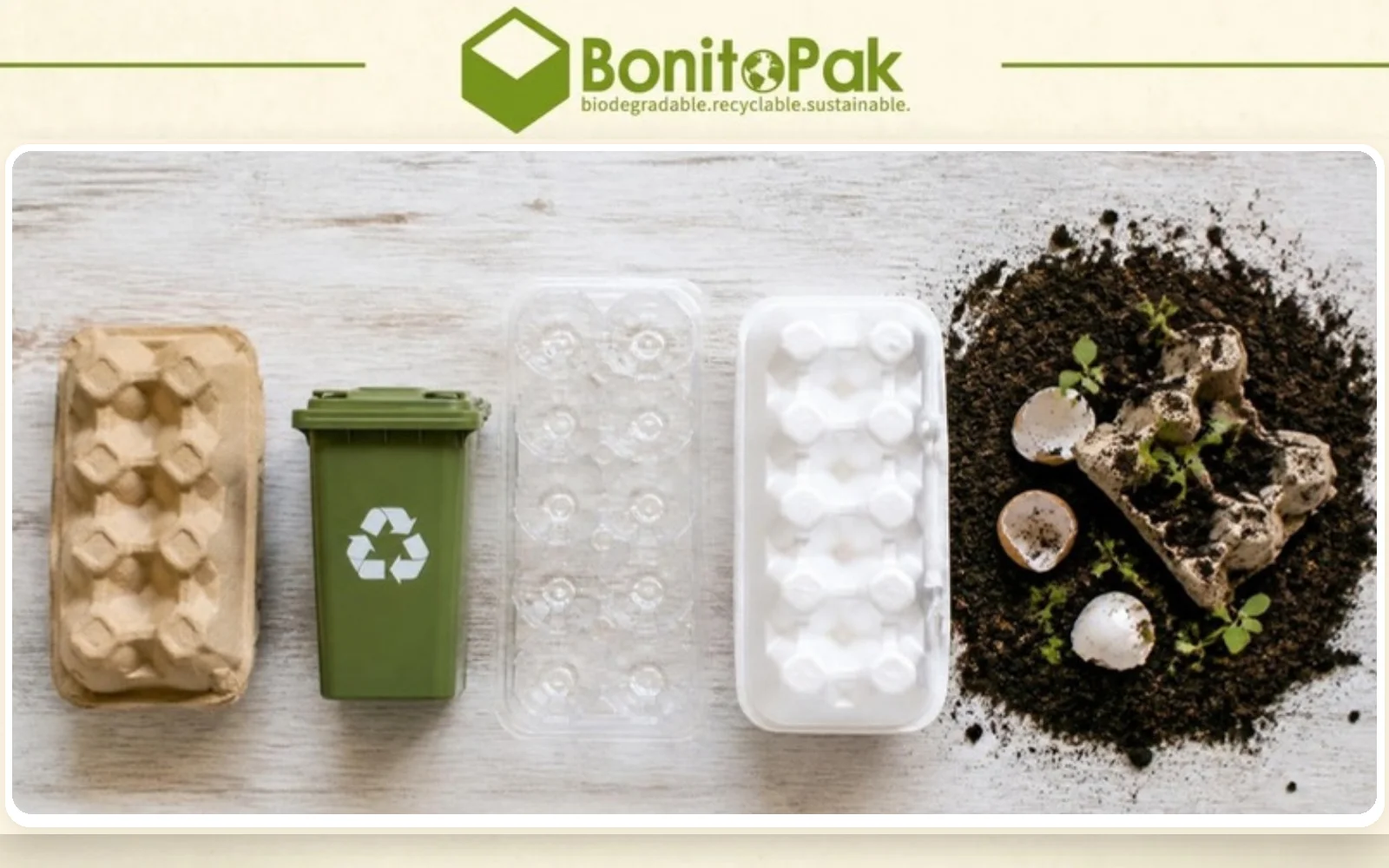
Here’s the quick version. A clean molded fiber carton goes in with paper. A soiled fiber carton goes in compost. A clear plastic carton goes in recycling only if your program takes thermoformed plastic. Foam almost always goes in the trash. Everything below explains why, and how to check which rules apply where you live.
Are Egg Cartons Recyclable? The Answer by Material
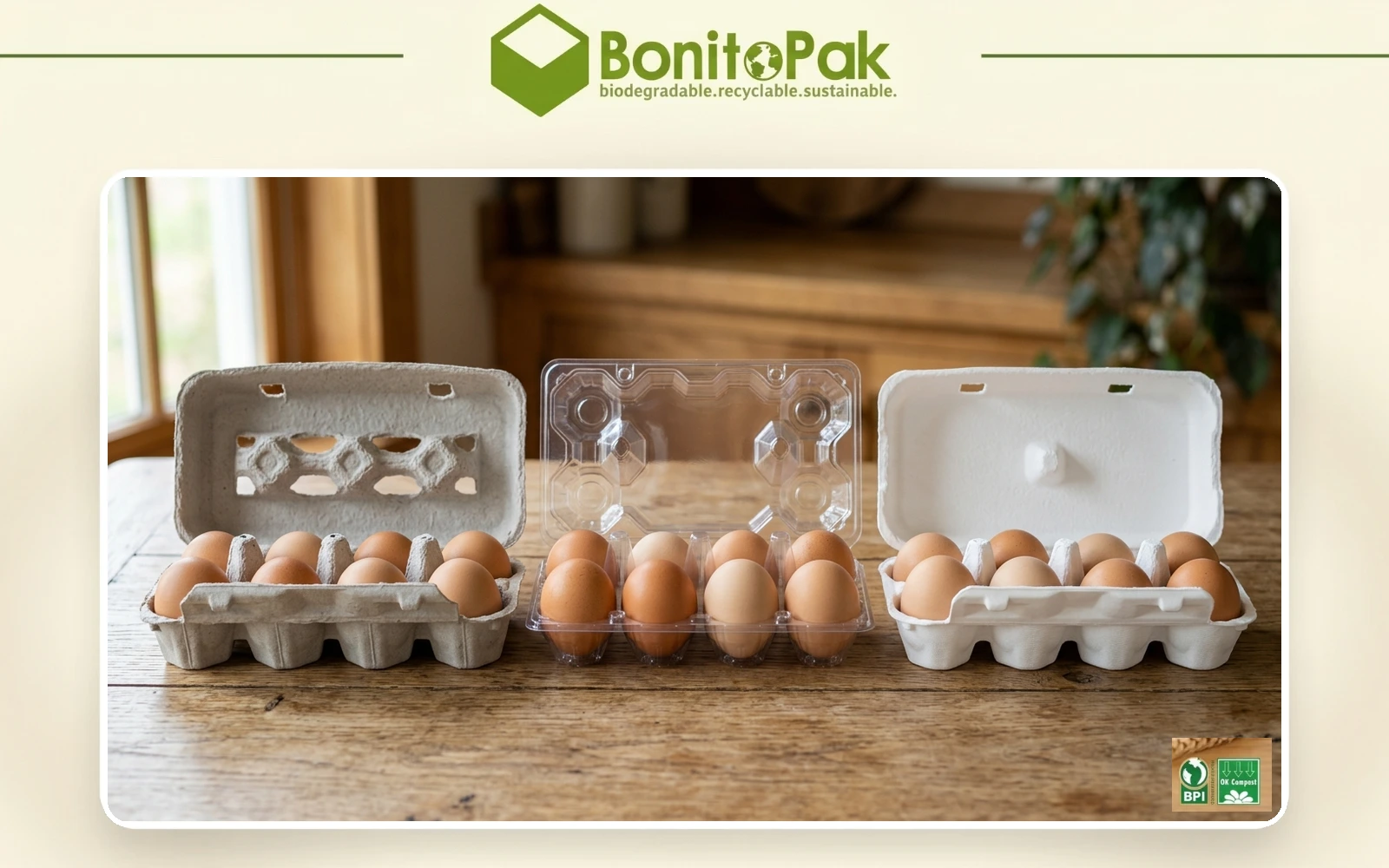
| Carton material | كيفية التعرف عليه | Recycle | Compost |
|---|---|---|---|
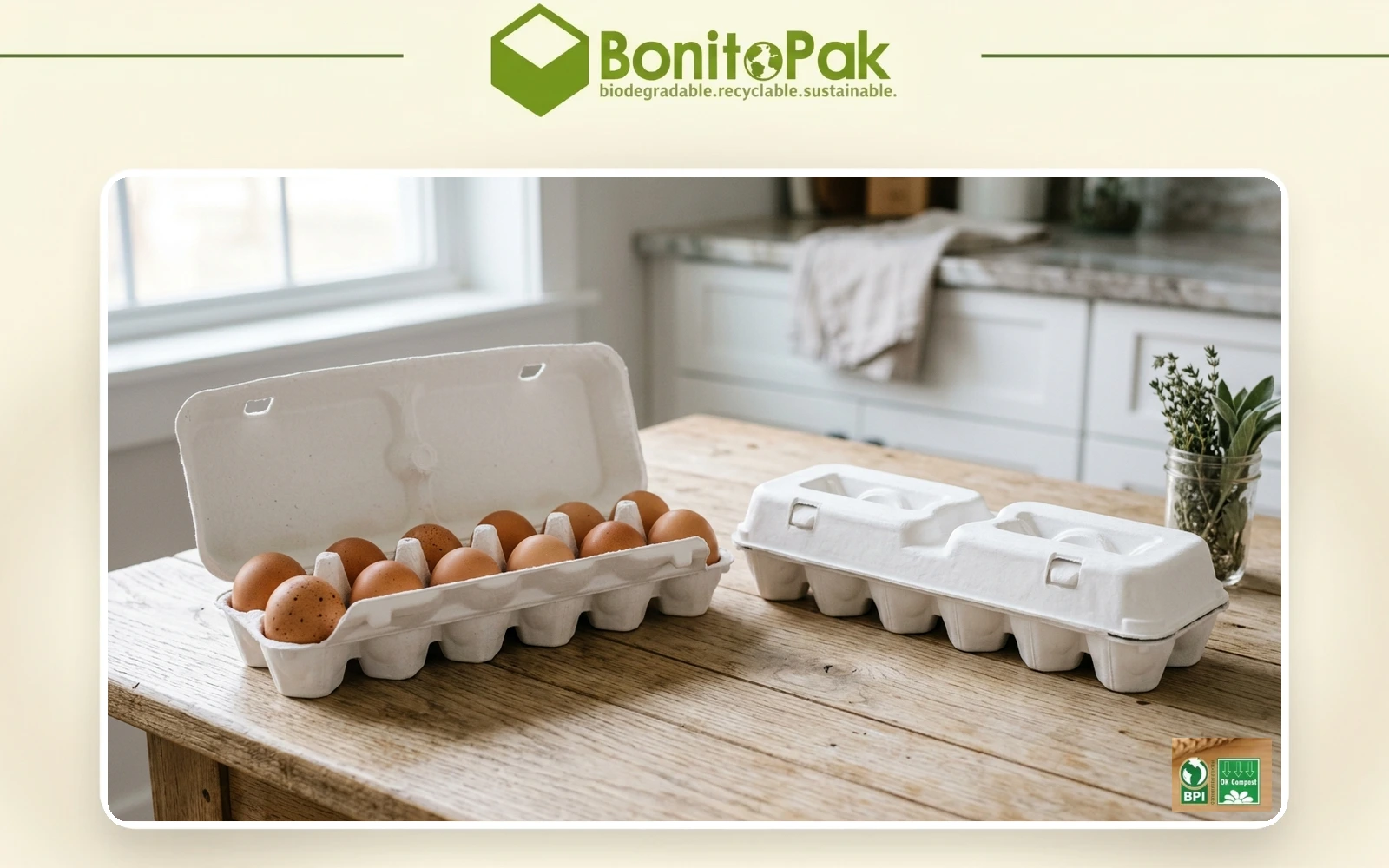
| Molded fiber (pulp) | Gray or brown, slightly rough, feels like thick paper | Yes, with paper, if clean | Yes, at home or in a facility that accepts it |
| البلاستيك من نوع PET | Clear, rigid, crinkles when squeezed, often marked #1 | Only if your program accepts thermoforms | لا يوجد |
| رغوة البوليسترين | White, very light, squeaks under a fingernail, often marked #6 | نادرًا ما يتم قبولها | لا يوجد |
| Coated or hybrid cartons | Fiber with a plastic window, sleeve, or waxy feel | Only after removing the plastic | Only after removing the plastic |
That table answers most cases. The rest of this guide covers the situations where it doesn’t.
How to Tell What Your Carton Is Made Of
Whether egg cartons are recyclable where you live starts with the material. Three quick checks settle it:
- Look at the color and texture. Fiber cartons are dull gray, brown, or dyed, with a visibly fibrous surface. Plastic is glossy and see-through. Foam is bright white and smooth.
- Squeeze it. Fiber gives and stays bent. PET crinkles loudly and springs back. Foam compresses with a slight squeak.
- Tear a corner. Fiber tears like paper. Plastic and foam do not.
If there’s a resin code stamped on the carton, #1 means PET and #6 means polystyrene. A recycling symbol on its own is not a promise that your local program accepts the item, which is a point of confusion that trips up a lot of households.
What Happens to Recyclable Egg Cartons After the Truck
People searching “are egg cartons recyclable” usually want one clean answer, but a sorting line treats each material differently. Knowing where a carton goes makes the rules easier to remember.
At a material recovery facility, mixed recycling runs along conveyors past screens, magnets, optical sorters, and people. Fiber cartons sort with mixed paper, get baled, and go to a mill that pulps them back down into fiber for new paper products. The process is routine, which is why molded fiber cartons appear on so many curbside accepted lists.
Plastic egg carton recycling is harder. Egg cartons are thermoforms, not bottles, and sorting equipment catches bottles more reliably. A NAPCOR report found domestic recycling of PET thermoforms more than tripled between 2011 and 2023, reaching 130 million pounds, so the picture is improving. Even so, The Recycling Partnership’s PET Recycling Coalition has noted that only about 30% of North American reclaimers can process thermoforms mixed into bottle bales, and the coalition is working toward 60% nationwide acceptance of PET thermoforms by 2027.
Foam is a different story again. It’s mostly air, which makes it expensive to collect and transport, and most facilities are not set up to handle it. A few communities run drop-off programs, but curbside acceptance is unusual.
What Happens at a Composting Site
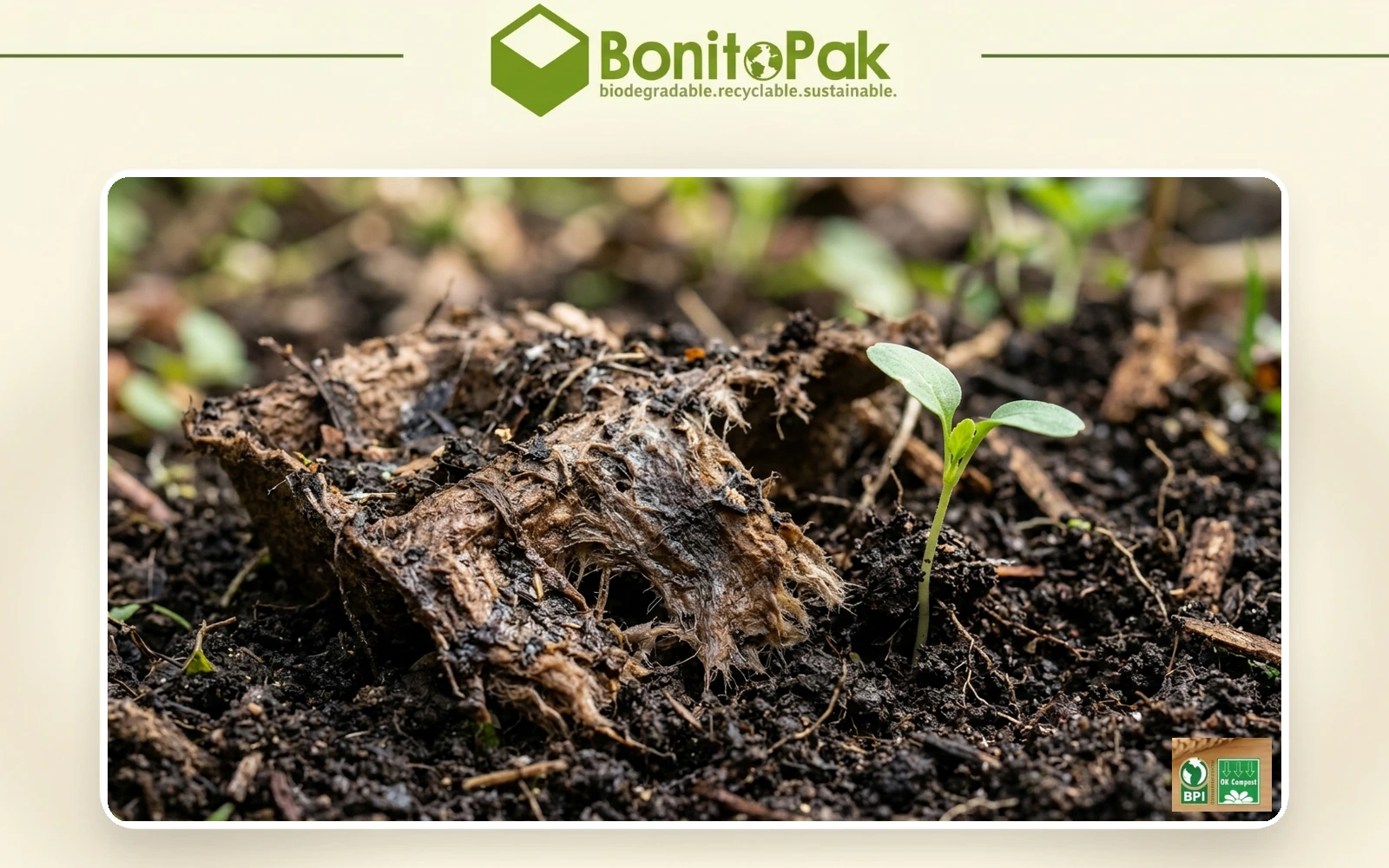
Fiber cartons are a carbon-rich feedstock, the same category as cardboard and paper towels. Composters generally like clean fiber, because it balances wet food scraps and helps airflow in a pile.
Even fiber egg cartons that are recyclable can end up here instead, but access is the limiting factor in the US. BioCycle’s 2023 national survey counted 14.9 million households with access to municipal food waste collection, roughly 12% of homes, and only 27 programs in that survey reported accepting molded fiber containers. The Sustainable Packaging Coalition’s 2025 research found that 18.1% of the population it sampled could use programs accepting food waste plus some compostable packaging.
So for most American households, composting egg cartons means a backyard pile, a community garden drop-off, or a private subscription service rather than a city green cart.
How to Check Your Local Program in Two Minutes
The national answer to whether egg cartons are recyclable is only a starting point. Local rules decide.
- Search your city or county name plus “recycling accepted items.” Municipal lists usually name egg cartons directly, by material.
- Check your hauler, not just your city. In many areas a private hauler sets the list, and it may differ from the city page.
- Read any How2Recycle label on the package. A “Widely Recyclable” label means the item is accepted by at least 60% of US recycling programs. “Check Locally” means it varies. “Not Yet Recyclable” means the trash.
- Call if the list is unclear. Two minutes on the phone beats contaminating a whole load.
Worth doing once, then you’ll know for good.
When Composting Beats Recycling
Composting egg cartons is the better call when:
- The carton is soaked, greasy, or has dried egg on it
- It’s torn, wet, or has been sitting in a damp bin
- Your area has no paper recycling collection
- You keep a home pile or garden and want the carbon
- The carton is certified compostable and you have access to a facility that accepts it
Food residue is the big one. A carton soaked with raw egg can contaminate the paper baled around it, and contaminated bales lose value or get rejected. Composting handles that same carton without any trouble.
If you want the full path that fiber takes after the compost bin, our article on the lifecycle of compostable egg cartons follows it from farm waste to finished soil.
When Egg Cartons Are Recyclable: Choose Recycling
Choose recycling when the carton is clean, dry, and your program accepts paper. Recycling keeps the fiber working in the paper stream for another cycle, which has real value. Composting returns the material to the soil, which is also good, but the fiber’s useful life as a material ends there.
If both options are open to you, and the carton is clean, recycling is usually the better first choice.
Rules That Keep a Carton Out of Both Bins
Even when egg cartons are recyclable in your area, a few habits cause more problems than people realize:
- Leaving plastic attached. Windows, shrink sleeves, and plastic labels need to come off first.
- Bagging recyclables. Most programs want loose items. Bagged material often goes straight to disposal.
- Wishcycling. Putting foam or unaccepted plastic in the bin because it feels recyclable creates real cost at the sorting facility.
- Shredding fiber cartons. Small pieces fall through screens. Keep them whole for recycling, and tear them only for compost.
- Composting coated cartons. A wax or plastic coating slows breakdown and leaves fragments behind unless the carton is certified compostable.
Reusing Cartons: Fine at Home, Regulated for Sellers
Reuse beats both bins for cartons still in good shape. At home, nobody minds if you refill a carton from your own hens or use one to start seedlings.
Selling eggs in used cartons is a different matter. There’s no single federal ban, but state egg laws require that a carton accurately identify the eggs inside. Reuse is typically allowed only if the carton is clean and all previous labeling that doesn’t apply, including another farm’s name, the old pack date, and the old grade, is removed or fully covered. Minnesota’s guidance for local egg sellers puts it plainly, and states including California, Pennsylvania, Ohio, and Colorado apply the same principle.
Some farmers markets and retail buyers refuse reused cartons regardless of state law, which is one reason many small producers switch to blank cartons. Our guide to egg carton labels and USDA and FDA requirements covers what the label has to say either way.
How to Dispose of Egg Cartons: A Short Decision List
- Identify the material: fiber, PET, or foam.
- If it’s fiber and clean, recycle it with paper.
- If it’s fiber and soiled, compost it, at home if you have a pile.
- If it’s PET, check whether your program lists thermoforms. If it doesn’t, it’s trash.
- If it’s foam, look for a drop-off program. Otherwise, trash.
- If any plastic is attached to a fiber carton, remove it first.
- If the carton is still clean and intact, consider reusing it before any of the above.
That’s how to dispose of egg cartons in almost every case you’ll meet.
So, Are Egg Cartons Recyclable? Making the Right Call at the Bin
The material decides the bin, and the condition decides which of two good options you use. Fiber cartons are the only type with two real endings, which is a large part of why they’ve stayed the default for more than a century. If you buy eggs and want the simplest disposal, fiber is the carton to reach for. Our article on لماذا تُعدّ العلب المصنوعة من اللب الخيار الصديق للبيئة covers the wider environmental picture.
في بونيتوباك, we make علب البيض المصنوعة من اللب المقولب و recyclable corrugated pulp egg cartons from recycled paper, sugarcane bagasse, and bamboo fiber, BPI and OK Compost certified, from 1,000 pieces. If you sell eggs and want packaging your customers can dispose of without a second thought, send us your format.
الأسئلة الشائعة (FAQs)
Q: Are egg cartons recyclable if they have a little egg on them?
A: Light residue and a few shell bits are usually fine once you shake the carton out. A carton soaked with raw egg is not, because food residue contaminates the paper baled with it. Compost that one instead.
Q: Can I put fiber egg cartons in my green waste bin?
A: Only if your program lists them. Municipal composting access is limited in the US, and relatively few programs accept molded fiber containers. Check the accepted items list for your green cart before you assume it’s allowed.
Q: Is plastic egg carton recycling possible at all?
A: Yes, where the local program accepts thermoformed PET. Acceptance is lower than for bottles because sorting equipment catches bottles more easily. Check your program’s list for clamshells or thermoforms rather than assuming a #1 code is enough.
Q: Do I need to tear up cartons before composting them?
A: Tearing helps a lot. Smaller pieces give microbes more surface area, break down faster, and mix into a pile more evenly. Dampen the pieces if your pile is dry, and keep them mixed with wet food scraps.
Q: Can foam egg cartons be recycled?
A: Rarely in curbside programs. Foam is mostly air, which makes it costly to collect and process, and most facilities cannot handle it. Some communities run drop-off points for foam, so check locally before defaulting to the trash.