Автор: Лео Чан, старший консультант по упаковке, BonitoPak
An 18 egg carton holds one and a half dozen eggs. It sits between the dozen and the larger packs, and it suits sellers whose customers buy more than a dozen at a time. A 20 egg carton holds twenty eggs, or one and two thirds of a dozen.
Most egg sellers only think about 6 and 12. The bigger counts have their own rules. They weigh more when filled, they need bigger label type and they change how you stack and display. This guide gives you the numbers.
BonitoPak makes molded pulp cartons in 4, 6, 12, 18 and 20 cells in our colored range, and some shades also come in 10 cells. We make them in Dongguan, China, so the specs come from our product pages. We have not published outer dimensions for the 18 and 20 cell cartons, so ask our team for a drawing before you plan shelf or case sizes.
What Is an 18 Egg Carton?
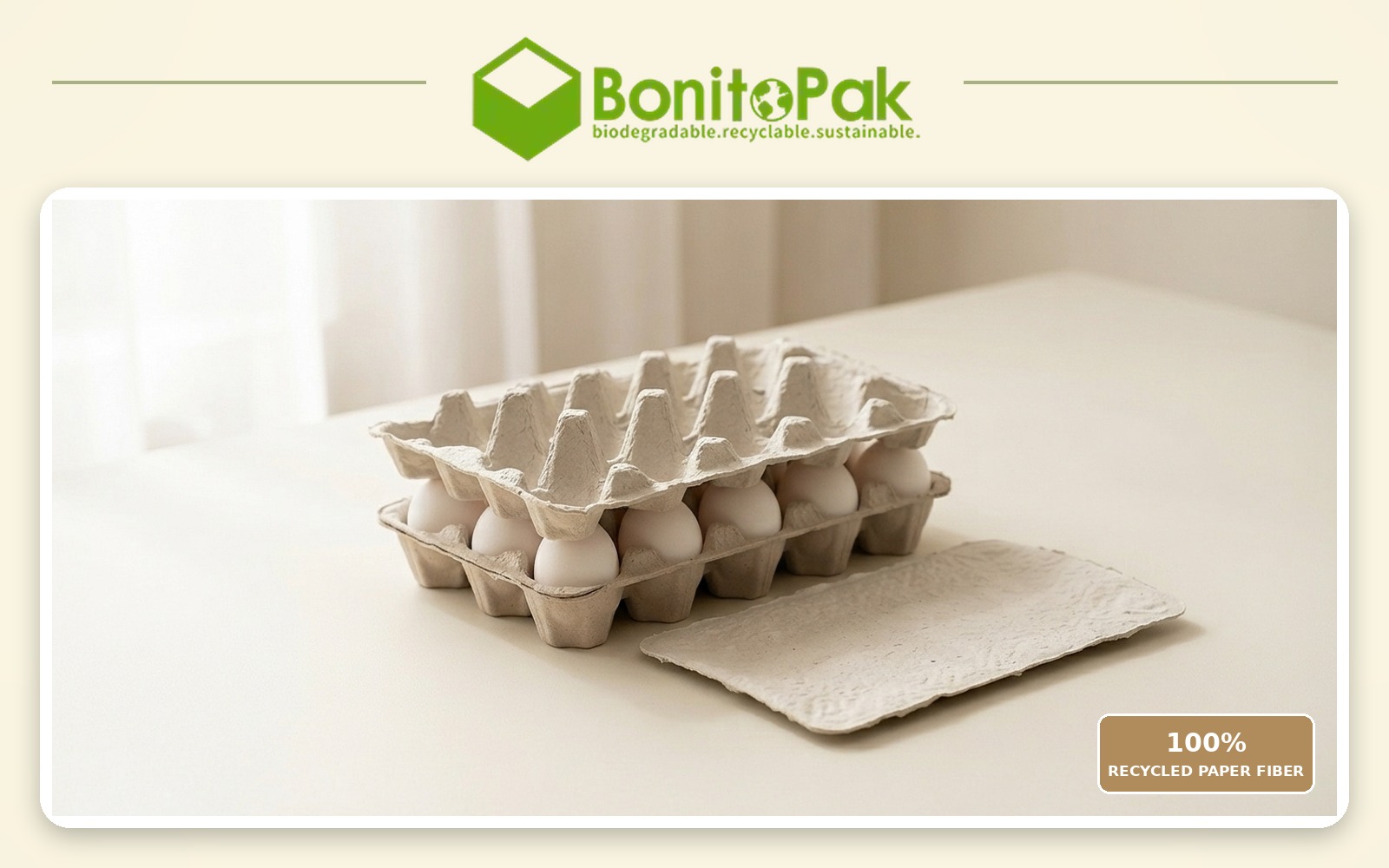
It is a carton with 18 cells, each holding one egg. Eighteen eggs equals 1.5 dozen. Each egg sits in its own dimple, so eggs stay apart and the carton absorbs shock.
The count is a middle size. A dozen is the standard grocery pack. An 18 pack gives a buyer more eggs per trip without buying in bulk. Many farm stands, co-ops and market sellers use it as the “family pack.”
The cell layout depends on the mold. Ask for the drawing so you know the length, width and height before you order.
How Much Does a Filled 18 Egg Carton Weigh?
A filled 18 count carton of Large eggs weighs at least 36 ounces, or 2.25 pounds, before you add the carton itself. This comes from the USDA size classes. Large eggs must weigh at least 24 ounces per dozen, and Jumbo at least 30 ounces per dozen (USDA Agricultural Marketing Service, Shell Egg Standard, 7 CFR 56.218).
The table below is our own arithmetic from those minimums. It shows the egg weight only. Real eggs often weigh more than the floor, so treat these as minimums.
| Carton | Яйца | Large eggs, minimum weight | Jumbo eggs, minimum weight |
|---|---|---|---|
| 6 cell | 6 | 12 oz (0.75 lb) | 15 oz (0.94 lb) |
| 12 cell | 12 | 24 oz (1.5 lb) | 30 oz (1.88 lb) |
| 18 cell | 18 | 36 oz (2.25 lb) | 45 oz (2.81 lb) |
| 20 cell | 20 | 40 oz (2.5 lb) | 50 oz (3.13 lb) |
An 18 count carton is half again as heavy as a dozen. A 20 count carton is two thirds heavier. That matters when you stack cartons in a cooler, carry them at a market or load a display. The weight should rest on the carton frame, not on the eggs.
What Label Rules Apply to an 18 Egg Carton?
Bigger cartons need bigger type for the net quantity. A University of Maryland Extension fact sheet says the net quantity must appear on the main panel in at least 1/8 inch type for 6 or 8 egg cartons, and at least 3/16 inch type for 12 or 18 egg cartons (University of Maryland Extension, Selling Shell Eggs to Retailers).
So an 18 egg carton takes the same 3/16 inch type as a dozen. The fact sheet lists 12 and 18, not 20, so check your state rules before you label a 20 count carton.
The same fact sheet lists other required text. It includes the words “safe handling instructions” in a bold, boxed line, the packer name and address, a packer registration number and a lot designation. It also lists the word “eggs” in at least 1/4 inch type, and the grade and size in at least 1/4 inch type. It is written for Maryland sellers, so confirm your own state’s rules.
A larger carton usually gives you more lid area, which helps fit all of this. Lay your label against the lid before you order a full run.
Who Should Use an 18 Egg Carton?
Use it when your customers buy more than a dozen at a time. These are common cases:
- Families and big households. One carton lasts longer between trips.
- Farm stands and markets. A bigger pack means fewer sales to ring up.
- Co-ops and share boxes. One carton fits a weekly share.
- Bakers and small cafes. They go through eggs fast and want fewer cartons to open.
This is our reasoning from how packs are used, not sales data. Your own customers decide. Ask a few regular buyers how many eggs they take each week before you add a new pack size.
Where Does the 20 Egg Carton Fit?
The 20 count suits sellers who want an even bigger pack, or a clean “twenty” to sell. It carries 20 eggs, which is 1 and 2/3 dozen. It weighs at least 40 ounces filled with Large eggs.
Use the same checks you use for the 18 count: confirm the drawing, test the cell fit and check label rules. Because rules in the fact sheet name 12 and 18 egg cartons, confirm the type size for a 20 count with your state office.
A simple way to choose:
| If your buyers want | Choose |
|---|---|
| A small gift or specialty pack | 6 cell |
| A standard grocery pack | 12 cell |
| A family pack, 1.5 dozen | 18 cell |
| A larger pack, 20 eggs | 20 cell |
Which Colors Come in 18 and 20 Cells?
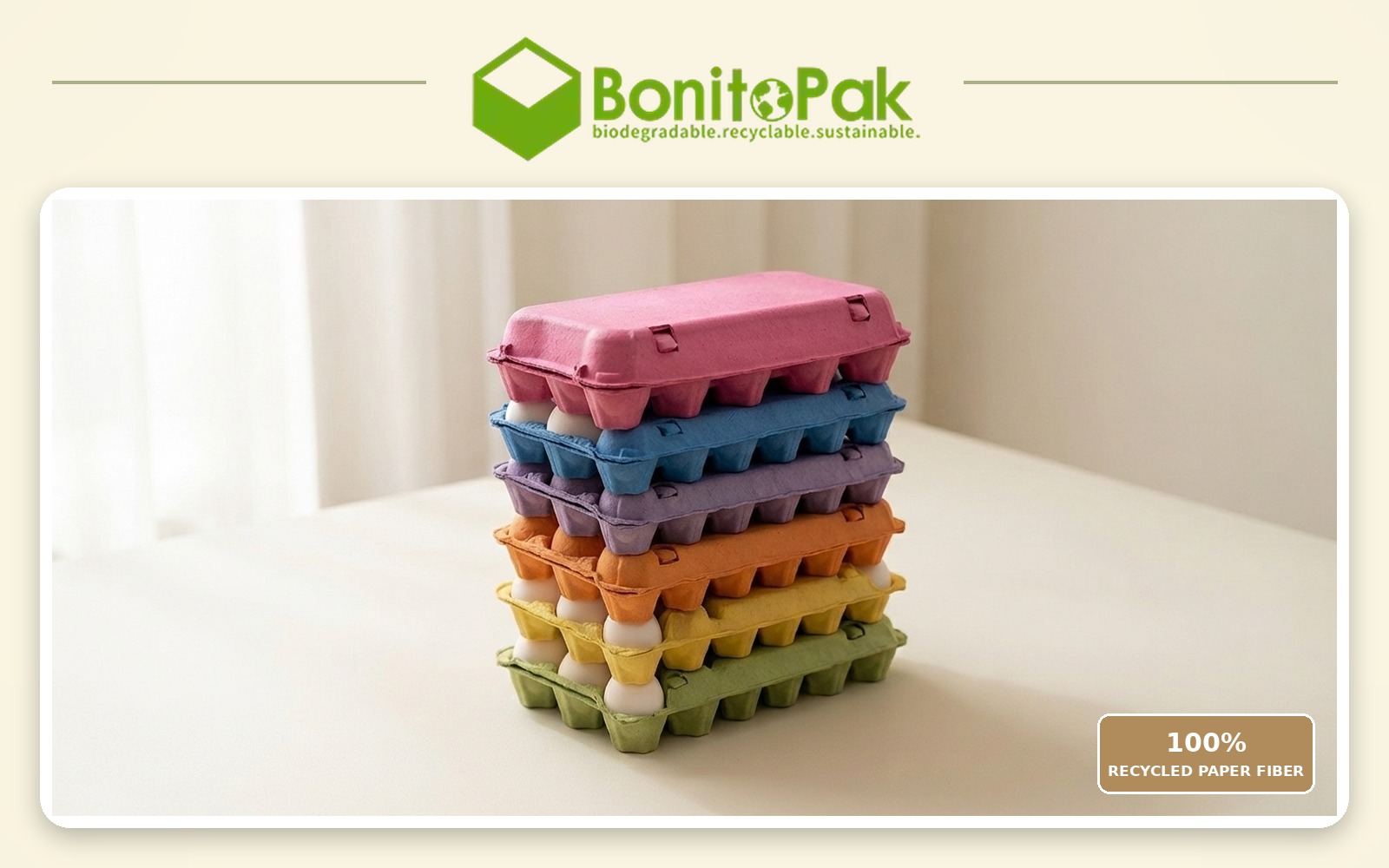
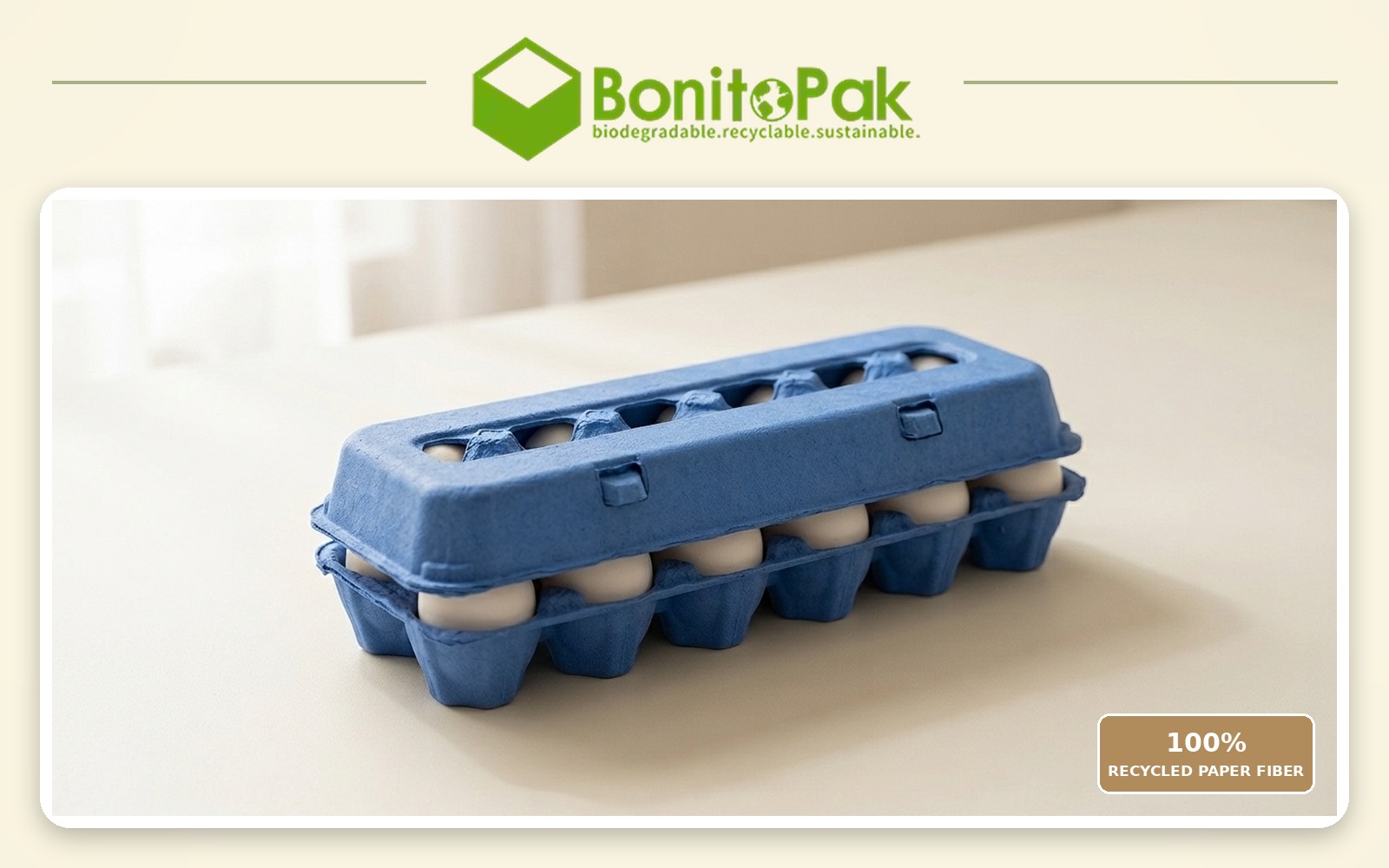
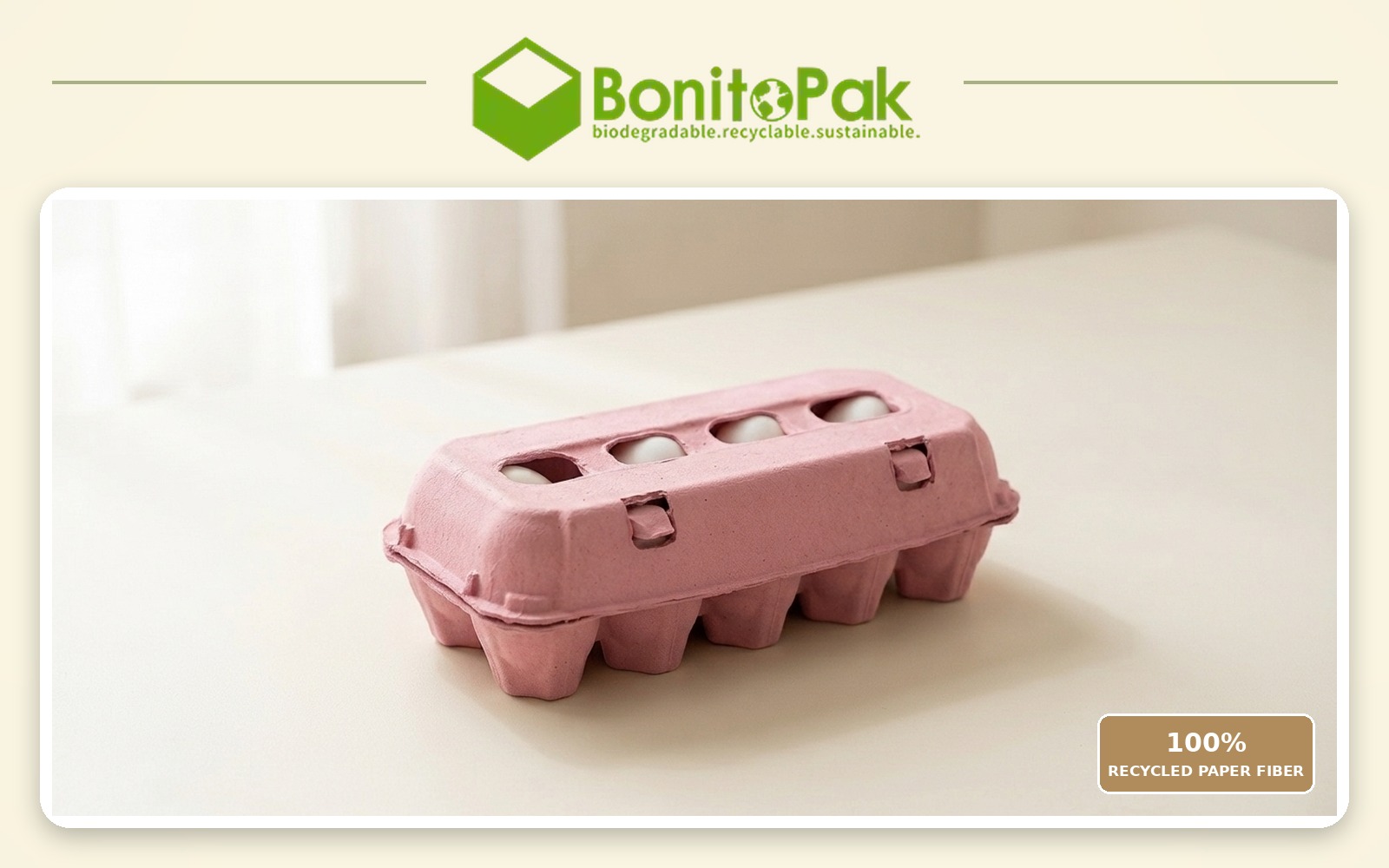
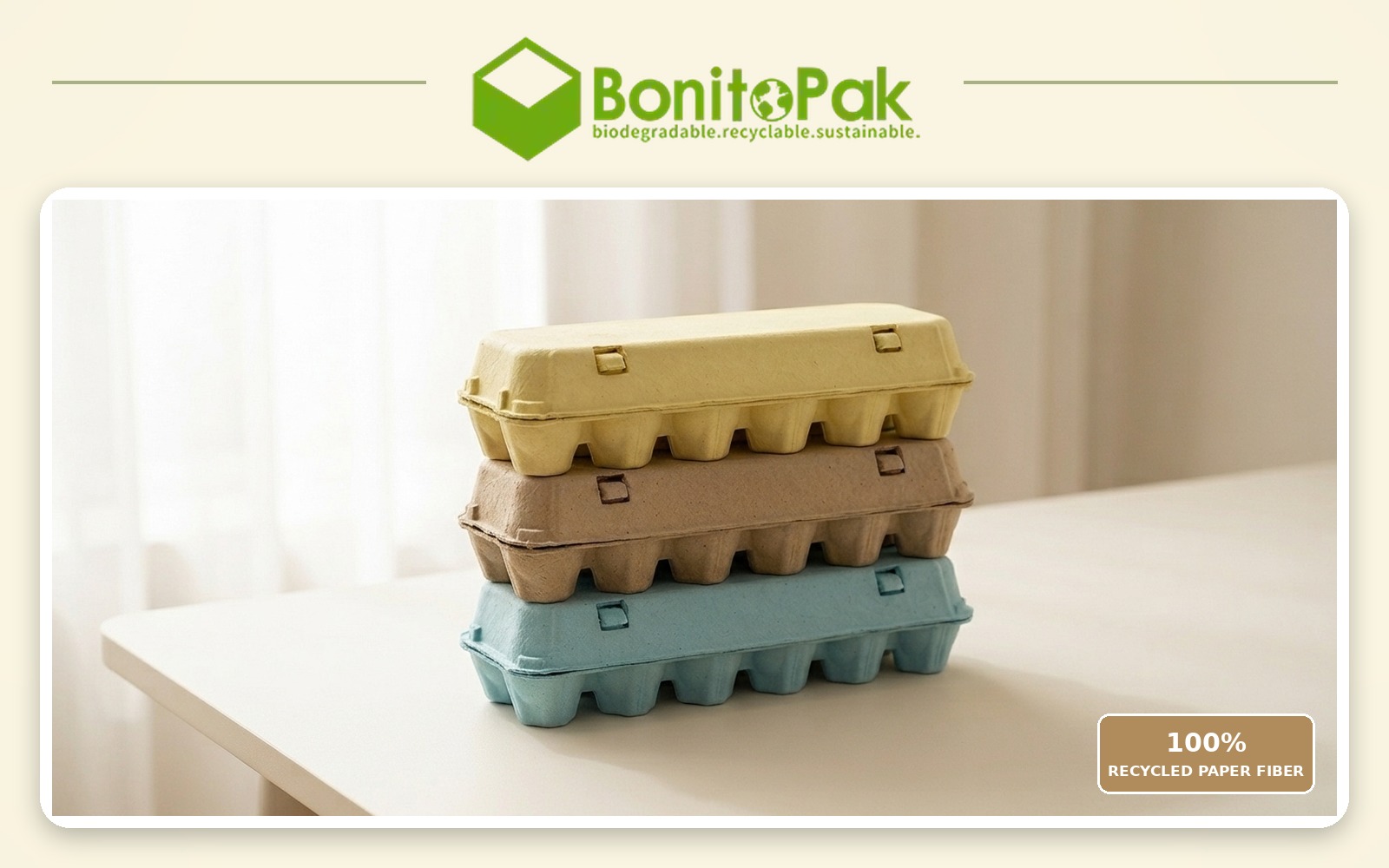
Our colored range comes in 18 and 20 cells. That includes our розовые коробки для яиц, which are available in 4, 6, 12, 18 and 20 cells, and the six stock shades on our цветные картонные коробки для яиц страница.
A color can help a large pack stand out. Use one shade for your 18 count and another for your dozen, so staff and customers can tell them apart. You can emboss, deboss or print your logo on any of them. Pigment is blended into the pulp, so the color runs through the fiber and there is no surface coating.
How Do You Test a Larger Carton Before You Order?
Test the cell fit and the stack. Bigger cartons carry more eggs, so a flaw costs you more.
- Weigh a few of your heaviest, roundest eggs and seat them in a sample.
- Close the lid and check that it locks with no pressure on the shells.
- Fill a carton and carry it a short way by hand. It should not flex or twist.
- Сложите три наполненных картонных коробки друг на друга и проверьте, не выпукла ли крышка.
- Check that your required label fits on the lid.
For more on matching cell fit to egg size, see our guide on Размеры и количество яиц в упаковках and our look at egg carton dimensions, cavity depth and footprint.
How Do 18 and 20 Cartons Affect Packing and Storage?
Bigger cartons change how you handle eggs from the coop to the customer. Think through these points before you order.
- Cooler space. A larger footprint means fewer cartons per shelf. Measure your cooler before you choose a count.
- Stack height. Heavier cartons put more load on the ones below. Keep stacks short and test them first.
- Handling. A filled 20 count carton can weigh 2.5 pounds or more. Plan for two hands and steady carrying.
- Mixed cases. If you pack 12, 18 and 20 together, label the cartons clearly so staff do not mix them up.
- Pallet planning. Ask us for outer dimensions first. Our guide to egg carton dimensions and pallet math explains how to work out the fit.
Good planning saves time. A carton that looks fine on paper can still be awkward in a real cooler.
How Do You Choose Between 12, 18 and 20 Cells?
Start with your buyer, not your mold. Ask how many eggs they use in a week and how often they shop.
- A buyer who shops often and uses a few eggs fits a 6 or 12 cell carton.
- A family that cooks daily may prefer an 18 cell carton.
- A baker, a cafe or a share box may prefer the 20 cell carton.
You can also sell more than one size. Many sellers keep a dozen as the main pack and add an 18 or 20 as a bonus choice. This gives shoppers a choice without confusing them. For a full look at counts, read our guide on Размеры и количество яиц в упаковках.
What Mistakes Should You Avoid With Larger Cartons?
- Assuming dimensions. Do not guess the size from the 12 cell carton. Ask for a drawing.
- Skipping the weight check. A heavy carton needs a strong frame and a good lid lock.
- Using small label type. Larger cartons follow bigger type rules in some states. Confirm yours.
- Ordering too many at once. Start with a sample, then a small stock run.
- Mixing up counts. Make 18 and 20 look different, with a color or a printed number.
Which Questions Do Buyers Ask About Larger Cartons?
Buyers often ask the same few things, so keep short answers ready.
- “Is the carton strong enough?” The frame and lid carry the weight, not the eggs. Test with a full load before you commit.
- “Do you have it in color?” Yes. Our colored range, including pink, comes in 18 and 20 cells.
- “Can I add my logo?” Yes. You can emboss, deboss or print it.
- “What are the exact dimensions?” We do not publish them yet, so ask our team for a drawing.
Answering these early makes planning faster. It also helps you decide which count fits your sales best.
How Do You Order 18 and 20 Egg Cartons?
Ask for a drawing and a sample first, then place a stock run. Stock molds carry a lower minimum than custom tooling.
- Choose 18 or 20 cells.
- Pick natural pulp or a stock shade.
- Выберите: тиснение, углубленное тиснение или печать.
- Check your label text against the lid area.
- Request a drawing and a sample.
- Уточните у нашей команды текущие минимальные объёмы заказа и сроки выполнения.
Send your details to leo@bonitopak.com. If you need a different size, our индивидуальное обслуживание starts with your egg weights and your target count. You can also browse the full Ассортимент яичных лотков из формованной целлюлозы.
Часто задаваемые вопросы
Q: How many eggs are in an 18 egg carton?
A: Eighteen, which is one and a half dozen. Each egg sits in its own cell.
Q: How much does a filled 18 egg carton weigh?
A: At least 36 ounces of eggs, or 2.25 pounds, if the eggs are Large. Jumbo eggs bring that to at least 45 ounces. These numbers come from the USDA minimums per dozen (USDA AMS).
Q: What size type does the net quantity need on an 18 egg carton?
A: A Maryland extension fact sheet says at least 3/16 inch for 12 or 18 egg cartons (University of Maryland Extension). Check your own state’s rules.
Q: Do you make a 20 egg carton?
A: Yes, in our colored range. Ask our team for a drawing and a sample, since we have not published outer dimensions for the 20 cell carton.
Q: Can I get 18 and 20 egg cartons in color?
A: Yes. Our pink egg cartons and our six stock shades come in 18 and 20 cells, with pigment blended into the pulp.