By Leo Chan, Senior Packaging Consultant · November 14, 2026
Molded fiber food containers are bowls, plates, clamshells and trays pressed from plant fiber such as sugarcane bagasse, bamboo and wheat straw. They hold hot and cold food, stack and nest well, and are compostable where facilities accept them. The two things buyers most need to check are the grease barrier (it should be PFAS-free) and the container’s heat and liquid limits.
Restaurants, caterers, meal prep brands and food trucks switch to fiber to-go containers for a few practical reasons. Foam bans are spreading, customers notice plastic, and a well-made fiber bowl feels solid in the hand. But fiber is not plastic. It handles grease and steam differently, and the wrong spec can soften on a long delivery route.
This guide explains what these containers are made of, which types suit which menus, how safe they are, how they hold up to heat, and what they cost to customize. We make molded fiber food packaging at our plant in Dongguan, so the production details below come from our own lines.
What Are Fiber Food Containers Made Of?
Fiber food containers are made from plant fiber pulp, most often sugarcane bagasse, bamboo, wheat straw or recycled paper. The pulp is formed on a mesh mold, then hot pressed so the fibers lock into a dense, smooth wall. Food grade lines use virgin plant fiber rather than mixed recycled paper.
Sugarcane bagasse. Bagasse is the fiber left after sugarcane is crushed for juice. It is the most common material for compostable sugarcane bowls, plates and clamshells because it is renewable, cheap and forms a smooth surface.
Bamboo fiber. Bamboo fiber is long and strong. Sugarcane and bamboo fiber are commonly blended to stiffen thin walls.
Wheat straw. Straw is another farm by-product. It gives a slightly speckled look.
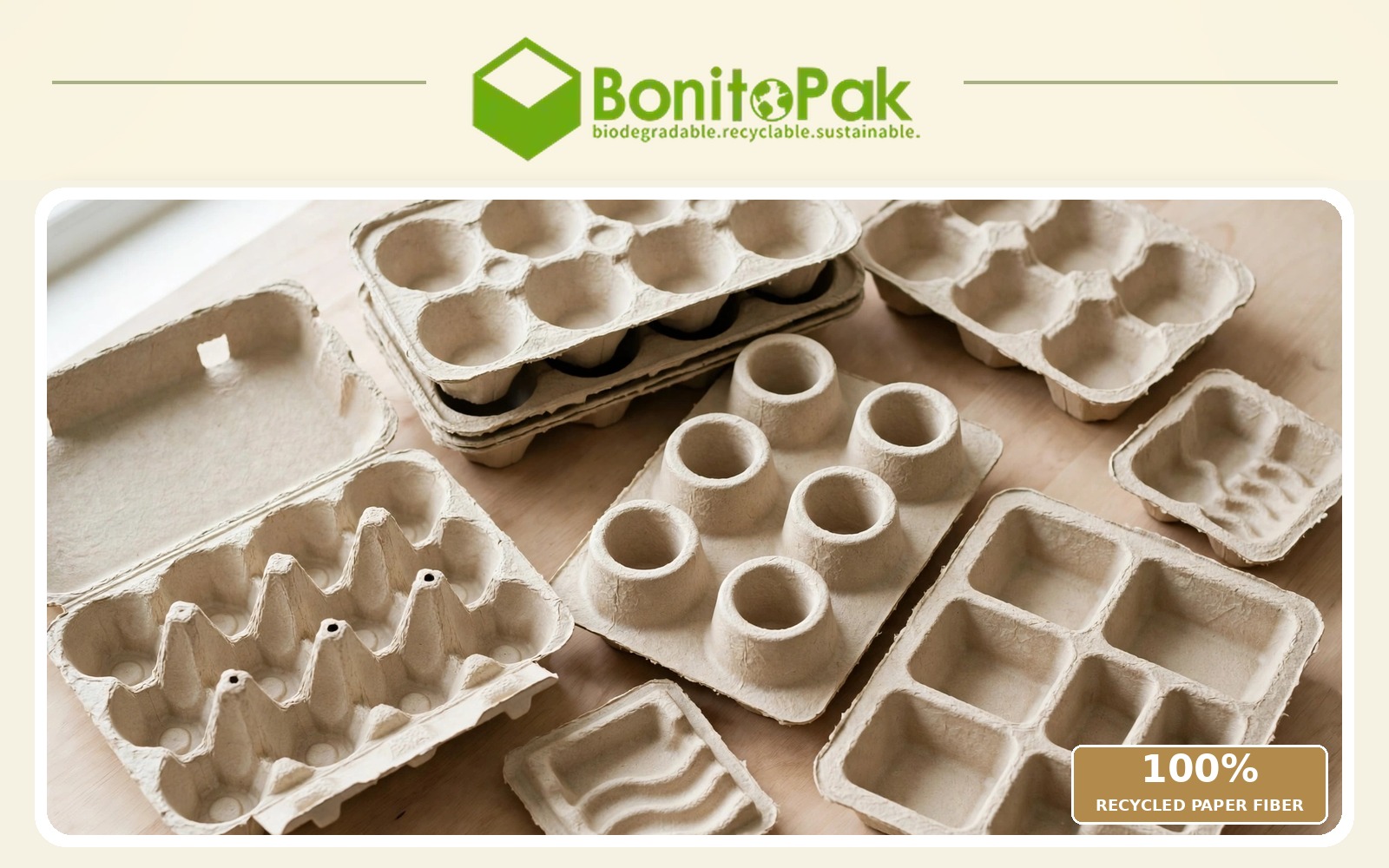
Recycled paper. Recycled paper pulp works well for egg cartons and dry goods trays. For direct food contact, especially with fatty or hot food, virgin fiber is the safer choice.
Recycled fiber can carry mineral oil residue from printing inks, which we explain in our guide to mineral oil in recycled fiber food packaging.
Our own plant fiber tableware uses bagasse, straw and bamboo. Natural and white pulp are the colors we recommend for food contact.
Types of Bagasse Food Containers and Fiber Tableware
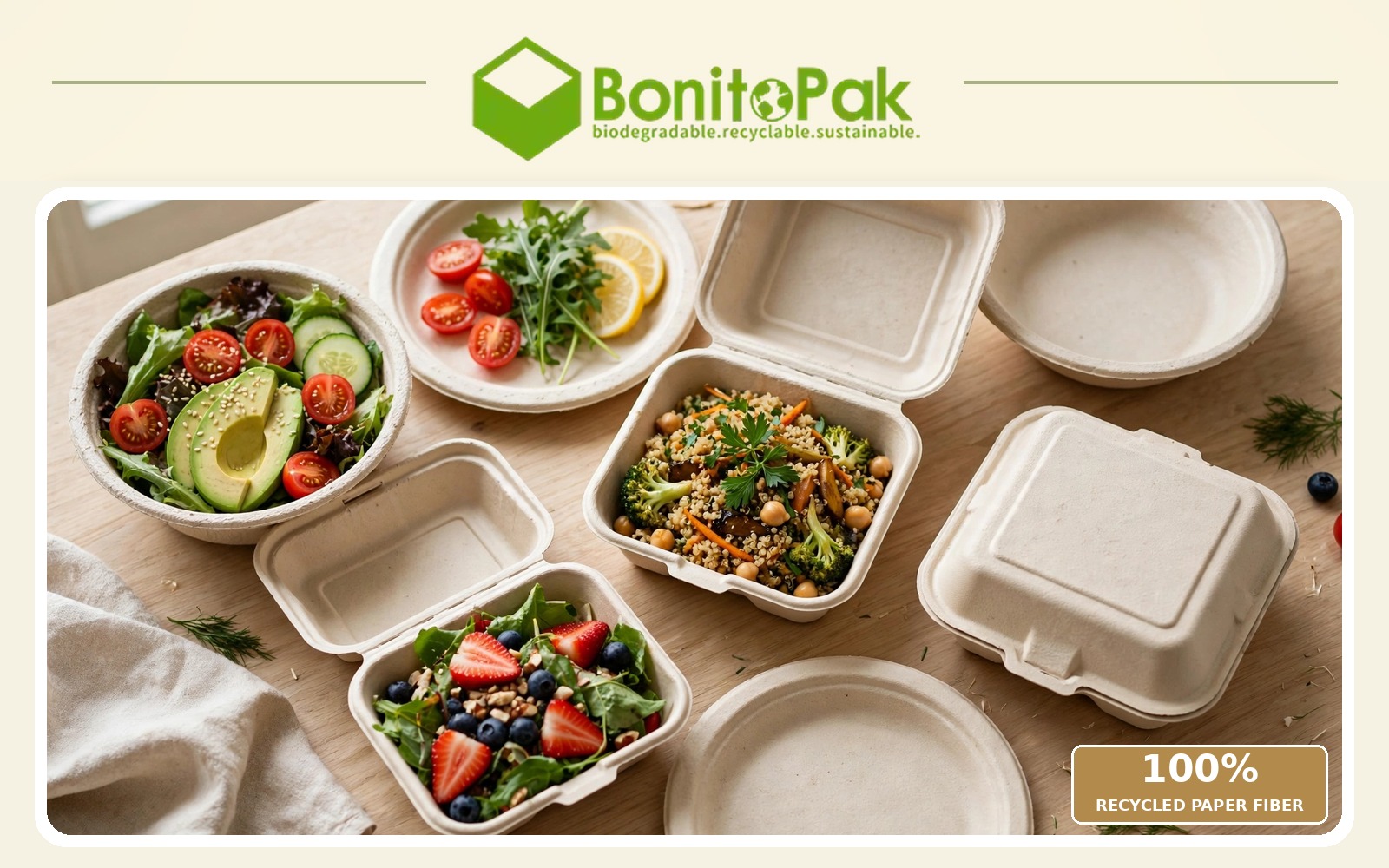
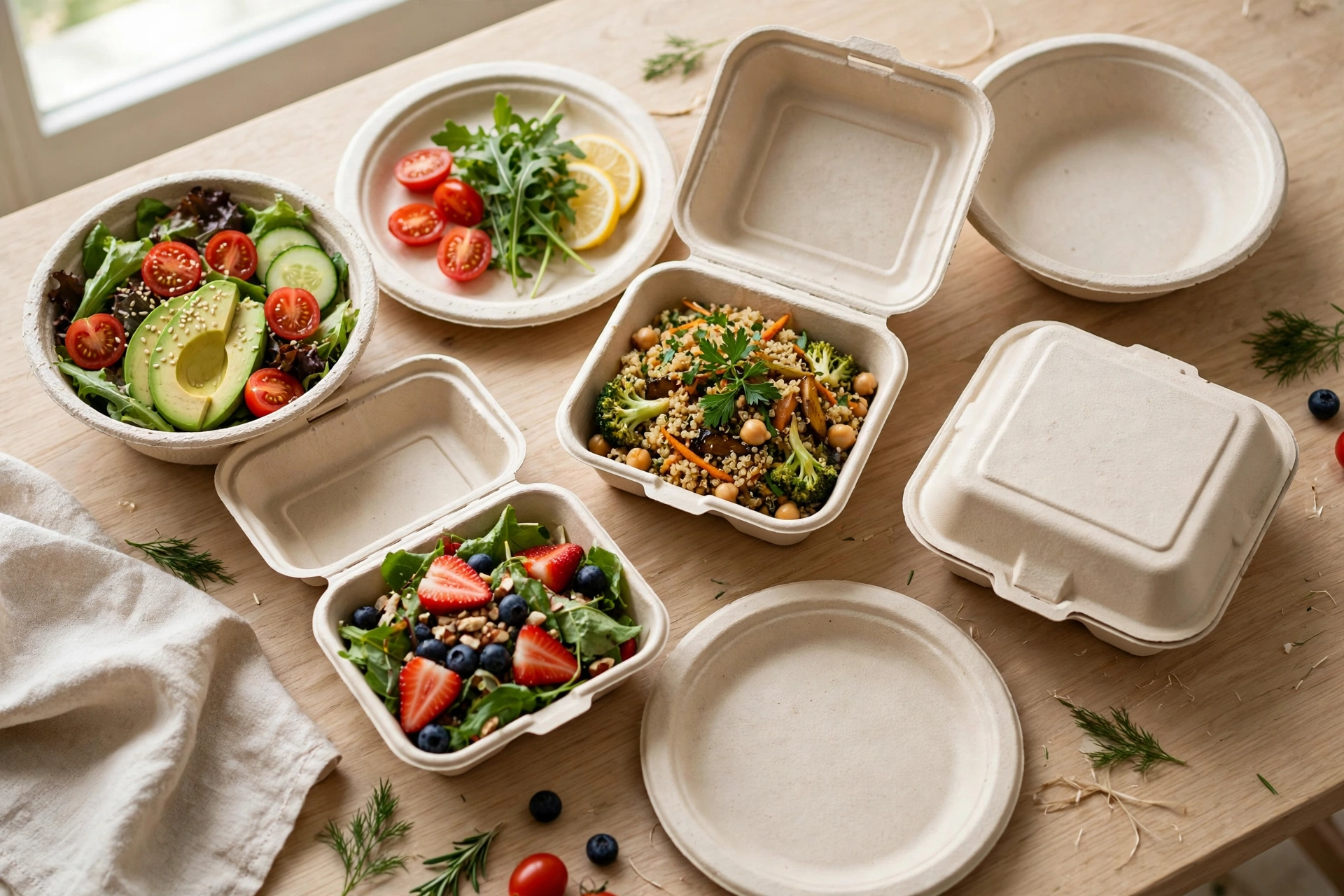
The main types of fiber food containers are bowls, plates, hinged lid clamshells, compartment trays, cups and lids. Each type is formed in its own mold, so a single supplier can usually match bowls, plates and lids in one material. Pick by the food, the portion size and whether the meal travels.
Bowls. Round, square and oval bowls suit rice dishes, salads, noodles and soups. Our 815 ml oval bagasse bowl is a common size for fast casual counters and catering.
Plates. Round and oval plates cover events, buffets and catering. Our 9-inch compostable bagasse plate is a common dinner size.
Clamshells. A molded fiber clamshell has a hinged lid joined to the base. A hinged lid container is the default for burgers, sandwiches and fries in takeout, and a good hinge lets the lid close securely without cracking.
Compartment trays. 2 and 3-compartment trays keep a main and sides apart for school meals, meal prep and lunch boxes.
Cups and lids. Fiber cups and paper lids cover tea, coffee and dessert. Fully fiber lids are improving, though some bowls still ship with a PET lid.
Produce and bakery trays. Shallow trays hold fruit, meat, eggs and baked goods on the retail shelf.
Are Molded Fiber Food Containers Safe?
Fiber containers are safe for food contact when they are made from food grade fiber, use an approved grease barrier, and come with food contact test reports. In the US, paper and paperboard food contact materials fall under FDA rules such as 21 CFR 176.170. Ask your supplier for test reports that match your exact container.
The biggest food safety question in this category is PFAS. PFAS, short for per- and polyfluoroalkyl substances, are “forever chemicals” that were once added to fiber packaging to resist grease and water. In February 2024 the FDA announced that grease-proofing substances containing PFAS are no longer being sold for food contact use in the US. In January 2025 the FDA also said the food contact notifications for 35 of these substances were no longer effective.
Several states, including California and New York, also ban intentionally added PFAS in food packaging. BPI, which certifies compostable products in North America, has refused to certify items with intentionally added fluorinated chemicals since 2020.
That leaves buyers with a simple rule. Ask for PFAS-free oil and water resistant containers in writing, and ask what replaces it. Most PFAS-free barriers today are food grade oil and water resistant agents mixed into the pulp, or thin plant-based coatings. Plain bagasse with no barrier works well for dry and lightly sauced food.
We can supply food contact documentation for our molded fiber food packaging, and we help customers choose a barrier that suits the menu.
Can Molded Fiber Containers Handle Hot Food and the Microwave?
Molded fiber handles hot food well, including soups, curries and fried items, because the dense pressed wall insulates and resists steam. Dry fiber is usually microwave safe for short reheating. Very oily or wet food on a long delivery route needs an oil and moisture barrier, and fiber should not go under a broiler or open flame.
Hot and cold. Fiber suits hot and cold service. It holds heat better than thin plastic, and it does not melt or warp the way some plastics do.
Grease and liquid. Fiber absorbs some liquid over time, so a container must be sturdy enough for the whole trip, not just the counter. A container that works for a 15-minute pickup may soften on a 60-minute delivery with a wet sauce. If your recipes are oil heavy or your routes run long, specify a barrier.
Microwave. Short reheating is fine for most plain fiber containers. Long cooking at full power can dry and scorch the fiber. Containers with metal, foil or plastic film lids should not go in the microwave.
Freezer. Fiber handles freezer storage. Seal it with a lid or wrap so food does not take on freezer odors.
Oven. Ask for the supplier’s temperature rating before using fiber in a conventional oven. Never use it under a broiler.
Our guide on whether molded fiber food trays are microwave and freezer safe goes deeper into heating tests.
How Does Molded Fiber Compare to Plastic and Foam?
Fiber containers beat foam and plastic on end of life, because they are compostable and made from renewable plant fiber. Plastic still wins on clarity and long liquid hold, and foam is lighter and cheaper per piece. Fiber sits in the middle on cost and handles hot food better than thin plastic.
| Характеристика | Molded fiber (bagasse, bamboo) | Plastic (PP, PET) | Foam (polystyrene) | Coated paperboard |
|---|---|---|---|---|
| Сырье | Renewable plant fiber | Petroleum | Petroleum | Wood fiber plus coating |
| Hot food | Good, insulates | PP good, PET poor | Good, insulates | Ярмарка |
| Liquid and grease hold | Good with a barrier | Превосходно | Хорошо | Fair to good |
| Microwave | Short reheating | PP yes, PET no | Нет | Depends on coating |
| See-through | Нет | PET yes | Нет | Нет |
| Компостируемый | Yes, where accepted | Нет | Нет | Only if certified |
| Переработка | Sometimes, with paper | PET and PP in some programs | Редко | Иногда |
| Restricted by state or city bans | Редко | Иногда | Часто | Редко |
Polystyrene foam is the material most often restricted. Maine, Maryland, New York and several other states, plus a long list of cities, restrict foam food service containers. Molded fiber is a common foam replacement because it insulates hot food in a similar way.
Price is the trade-off. Fiber usually costs more per piece than foam. We compare total cost in our guide to whether molded fiber is more affordable than plastic packaging.
Are Fiber Food Containers Compostable or Recyclable?
Compostable food containers made of fiber break down in commercial composting facilities that accept packaging, and plain fiber also breaks down in home compost. Acceptance depends on the local facility and on certification. Recycling is possible only where clean paperware is accepted, because food residue usually keeps fiber containers out of paper recycling.
Certified compostable. Compostability standards set the test. BPI certifies to ASTM D6400 and D6868 in North America. In Europe, OK compost by TUV Austria certifies to EN 13432. A certified compostable label tells composters the product passed lab tests for breakdown and safety.
Facility acceptance. Passing a compostability test does not mean every facility will take the container. A BioCycle and Composting Consortium survey (2023) found molded fiber containers were accepted by just under half of the responding facilities.
Home compost. Plain fiber with no plastic coating breaks down in a home pile, especially when torn into pieces.
Recycling. Clean fiber plates and trays can sometimes go in with paper. Containers with food stuck to them belong in compost or trash.
For buyers, the honest message on the container matters. Say “Compost where facilities exist” rather than a blanket “100% eco-friendly.” We cover the same issue for egg cartons in our guide to whether egg cartons are compostable.
How Much Do Bagasse Food Containers Cost?
Stock bagasse food containers usually cost more per piece than foam. How they compare with plastic depends on the item and the volume. Custom containers add a one-time mold cost and a minimum order. Price depends on size, wall thickness, fiber, barrier, color and the volume you order.
Stock items. Standard bowls, plates and clamshells use existing molds, so there is no tooling cost.
Custom items. A custom shape needs a new mold. We start with a 3D drawing in about 2 days and samples in 7 to 10 days. Our sample mold cost is not refundable.
Minimums. Our MOQ for food packaging such as the oval bagasse bowl is 5,000 pieces. Bulk orders lower the unit price.
Branding. An embossed or debossed logo pressed into the fiber adds no ink and keeps the container fully fiber.
Shipping. Bowls and plates ship nested, which lowers pallet height and storage space.
How to Choose Fiber Containers for Your Menu
To choose the right fiber container, match the container to your food, your service style and your local disposal rules, then test samples with real dishes before ordering in bulk. The steps below cover what restaurants, caterers and food brands usually check.
- List your menu items. Group dishes by type: dry, saucy, oily, soupy, hot or cold. This decides whether you need a barrier.
- Map the trip. Note dine-in, pickup and delivery times. Long delivery windows with wet food need stronger walls or a barrier.
- Pick the shape and size. Choose bowls, plates, clamshells or compartment trays, and match capacity to your portions.
- Ask for PFAS-free proof. Request the food contact test reports and a written statement on the barrier used.
- Check compost and recycling rules. Look at your city’s rules and decide whether you need BPI or OK compost certification.
- Test samples with real food. Fill samples, hold them for your longest delivery time, then check leaks, softening and lid fit.
- Plan lids and stacking. Confirm lids match, containers nest, and cases fit your storage.
Once a sample passes, order a first run and track customer feedback for a few weeks before scaling up.
Order Molded Fiber Food Containers From BonitoPak
If you want containers made to your menu, we can match the shape, size, color and barrier to your food and your brand. Browse our Упаковка для пищевых продуктов из формованного волокна, including bagasse bowls, plates, cups and cutlery, or see how fiber fits the wider food industry.
Food containers are one branch of упаковка из формованной целлюлозы. For a custom container with your logo, our Индивидуальная формованная упаковка из целлюлозы team handles the drawing, the sample and production. We reply to quote requests within 24 hours, so you can request a quote and have samples moving within days.
Часто задаваемые вопросы
Are bagasse and fiber containers PFAS-free?
A: They can be, but you should ask. PFAS grease-proofing agents are no longer sold for food contact in the US, and several states ban intentionally added PFAS in food packaging. Ask your supplier for a written PFAS-free statement and the test report for your container, plus the name of the barrier used instead.
Can fiber food containers go in the refrigerator?
A: Fiber containers can go in the refrigerator with food inside. Cover them with a matching lid or wrap to keep moisture and odors out. Over a few days in the fridge, very wet food can soften the wall, so transfer leftovers to a sealed container for longer storage.
Can fiber bowls hold soup?
A: Yes, bowls with a barrier hold soup for typical pickup and delivery times. Pair them with a tight lid and test with your recipe first. Thin, unbarriered fiber can soften with hot broth over long holds, so specify the barrier for soup menus.
Are used fiber takeout containers recyclable?
A: Sometimes. Clean, uncoated fiber plates and trays can go in with paper where programs accept paperware. Containers with food residue are usually rejected by paper recycling. For used takeout containers, commercial compost or home compost is the better route where it is available.
What is the difference between bagasse and molded fiber?
A: Molded fiber is the process and product family, and bagasse is one of the materials. Bagasse is sugarcane fiber. Fiber containers can also be made from bamboo, wheat straw or paper pulp. Bagasse is the most common material for food service bowls, plates and clamshells.
Is molded fiber tableware biodegradable?
A: Yes, the fiber body is biodegradable because it is plant fiber. Biodegradable is a broad term, though, and in the US a compostable claim needs evidence such as certification. Plastic lids, film windows and labels are not biodegradable, so check every part of the package.