Plain Egg Cartons

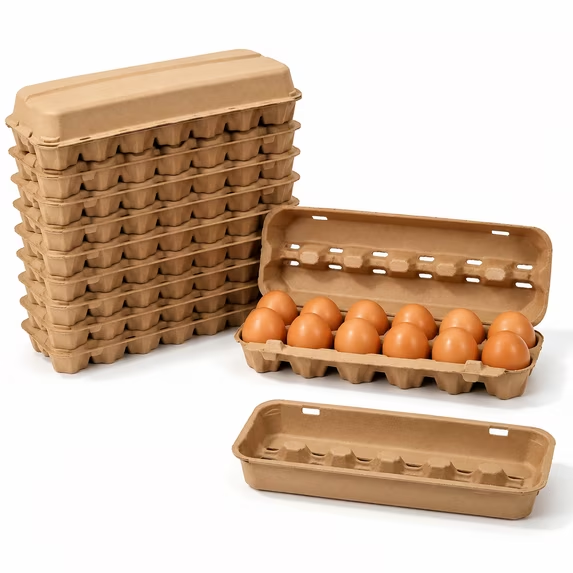
  • No printing, no branding, no supplier marks anywhere on the carton
  • Available in every count from 4 through 20 cells
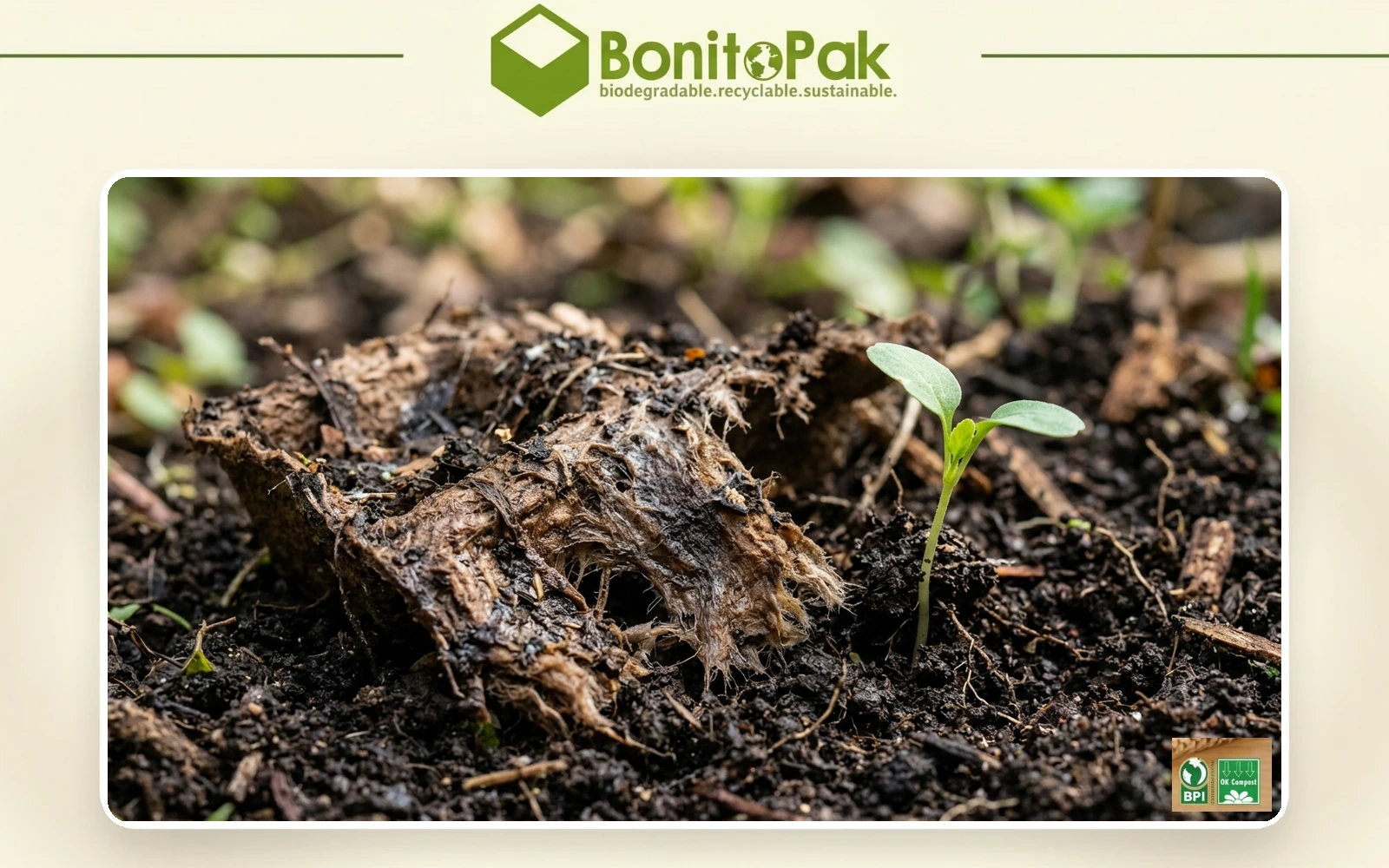
  • Изготовлено из переработанной бумажной массы 100%, поддается биологическому разложению и компостированию в домашних условиях
  • Lid surface finished for label adhesion, so stickers hold through cold storage
  • Lowest cost per carton in the range, with no plate or tooling charges
  • Natural pulp plus six stock colors, all supplied unprinted
  • Shortest lead time we offer, since printing sits outside the production path

Общественная плесень

Упаковочные решения

3D-дизайн

Подгонянная прессформа

Описание товара

Технические характеристики Подробности
Название бренда BonitoPak
Номер модели EC-BLK series
Название продукта Plain Egg Cartons / Blank Pulp Cartons
Материал Переработанная бумажная целлюлоза
Тип бумаги Бумага, полученная в результате вторичной переработки отходов потребления
Техника Формование из формованной целлюлозы (мокрое прессование)
Количество клеток 4, 6, 10, 12, 18, or 20 cells
Печать None; supplied completely blank
Supplier Marks None anywhere on the carton
Label Surface Finished for pressure sensitive label adhesion
Цвет Natural pulp; six stock colors, all unprinted
Форма и стиль Top-fold clamshell; flat top available
Промышленное использование Distributors, repackers, private label, farm direct sellers
Приложение Own-label packing, resale, relabeling, bulk supply
Размер Принимаются заказы по спецификациям OEM и с индивидуальными размерами
Преимущества Biodegradable, home compostable, lowest unit cost, shortest lead time
Упаковка Оптовая партия укладывается в экспортные картонные коробки; возможна упаковка по индивидуальному заказу
Индивидуальный заказ Принято
MOQ Lowest in the range; confirm with sales

Галерея Plain Egg Cartons запчасти

Эта галерея демонстрирует исключительное качество и внимание к деталям, которые мы воплощаем в каждом проекте. От сложных конструкций до безупречной отделки - каждое изображение отражает наше стремление к совершенству в Plain Egg Cartons .

40%

Экономия средств и времени

Передовые упаковочные решения оптимизируют ваши затраты и время, обеспечивая эффективность процессов и максимальную окупаемость инвестиций.

50%

Более устойчивый

Создайте экологичную упаковку из экологически чистых материалов, сократите количество отходов и повысьте экологическую ответственность за весь ассортимент продукции.

25%

Увеличение продаж

Повысьте привлекательность вашей продукции на полке с помощью инновационных дизайнов, которые повышают видимость и продажи как в розничной торговле, так и на онлайн-рынках.

100%

Надежнее

Доверьтесь приверженности BonitoPak к качеству, гарантирующему, что каждый продукт соответствует нашим высоким стандартам и обеспечивает постоянное и надежное обслуживание.

Blank is a specification, not an absence

A plain carton sounds like a carton with something missing. In practice it is the format with the most specific requirement attached, because the surface has to accept something else.

If a carton is going to carry a pressure sensitive label, the lid surface has to be consistent enough for adhesive to bond across its full area. Molded pulp varies in surface density depending on how the fiber drained during forming, and a lid with uneven density will hold a label at one end and lift at the other.

We finish blank lids to a controlled surface density for this reason. It is the difference between a label that survives six weeks in a cold case and one that curls at the corner within a week.

Buyers who have had labels lift on pulp cartons before have usually bought a carton that was blank by omission rather than blank by specification.

Who buys blank, and what each group needs

Three groups, with genuinely different requirements.

Distributors and resellers buy blank because they supply many small producers who each want their own identity. The carton has to carry no supplier marks at all, including ours, because the distributor is the supplier as far as their customer is concerned. We do not put our name on these cartons anywhere.

Private label packers buy blank and apply a retailer’s printed label. Their requirement is dimensional consistency, since labels are applied by machine against a fixed registration point, and a carton that varies in height will label crooked.

Small farm sellers buy blank because they cannot reach printing minimums. They label by hand or stamp with a custom rubber stamp. Their requirement is simply low minimum order quantity, which blank cartons give them because there is no plate or mold cost to amortize.

Cost, and why blank is the cheapest route

Blank cartons carry the lowest unit cost in our range, and the reasons compound.

There is no plate charge, since nothing is printed. There is no mold tooling charge, since blanks run on stock molds. There is no print pass, which removes an entire operation from the production path. And blank runs can be scheduled flexibly against other production, because there is no color or artwork changeover to plan around.

That last point also makes blank the shortest lead time we offer. For a buyer whose constraint is timing rather than branding, blank plus a quickly printed label is almost always faster than a printed carton.

Labeling that actually holds

Four practical points from buyers who label blanks.

Paper labels outperform film on pulp. Film has less conformability and lifts at the edges where the lid surface is slightly textured. Uncoated paper labels bond better and look more appropriate on fiber.

Apply at room temperature, not in the cold room. Adhesive needs time to flow into the surface, and cold slows that to the point where the bond never fully forms.

Keep the label away from the hinge and the front tab. Both flex, and a label bridging a flex point peels from that edge first.

And size the label to the flat center panel rather than edge to edge. The lid curves slightly at its margins and a full-width label will tent at the corners.

Stamping as an alternative to labels

Small producers often skip labels entirely and use a custom rubber stamp with food safe ink. On natural pulp it works well, because the absorbent surface takes stamp ink cleanly without smearing, and the slightly irregular result reads as handmade rather than as a printing defect.

It is the cheapest branding route available, it needs no minimum order, and it suits farm stand selling where the handmade impression is an asset. It does not scale, since every carton is a manual operation, and it does not work on darker colored pulp where the ink has nothing to contrast against.

When blank stops being the right answer

Blank is the correct choice up to a point, and past that point it costs more than printing.

Labels have a per unit cost that never falls away, same as printing. Once annual volume is high enough, the accumulated label cost passes what embossing would have cost once in the mold. The crossover is usually lower than buyers expect, because labels also carry an application labor cost that printing does not.

Producers who find themselves hand-labeling thousands of cartons have usually passed that point already. Embossing is covered at яичные лотки с индивидуальной печатью, and it costs nothing per unit once the tool exists.

Across the range

Blank is available in every count. The volume formats are the molded pulp dozen egg carton и molded pulp 18 egg carton, and both are commonly ordered blank for private label work.

Blank is also available in color, which buyers often miss. A colored blank gives shelf differentiation with no printing at all, and for small producers it is frequently the best value in the catalog. See molded pulp colored egg cartons.

For bulk ordering and pricing tiers, see wholesale egg cartons.

Blank is a specification, not an absence

A plain carton sounds like a carton with something missing. In practice it is the format with the most specific requirement attached, because the surface has to accept something else.

If a carton is going to carry a pressure sensitive label, the lid surface has to be consistent enough for adhesive to bond across its full area. Molded pulp varies in surface density depending on how the fiber drained during forming, and a lid with uneven density will hold a label at one end and lift at the other.

We finish blank lids to a controlled surface density for this reason. It is the difference between a label that survives six weeks in a cold case and one that curls at the corner within a week.

Buyers who have had labels lift on pulp cartons before have usually bought a carton that was blank by omission rather than blank by specification.

Who buys blank, and what each group needs

Three groups, with genuinely different requirements.

Distributors and resellers buy blank because they supply many small producers who each want their own identity. The carton has to carry no supplier marks at all, including ours, because the distributor is the supplier as far as their customer is concerned. We do not put our name on these cartons anywhere.

Private label packers buy blank and apply a retailer’s printed label. Their requirement is dimensional consistency, since labels are applied by machine against a fixed registration point, and a carton that varies in height will label crooked.

Small farm sellers buy blank because they cannot reach printing minimums. They label by hand or stamp with a custom rubber stamp. Their requirement is simply low minimum order quantity, which blank cartons give them because there is no plate or mold cost to amortize.

Cost, and why blank is the cheapest route

Blank cartons carry the lowest unit cost in our range, and the reasons compound.

There is no plate charge, since nothing is printed. There is no mold tooling charge, since blanks run on stock molds. There is no print pass, which removes an entire operation from the production path. And blank runs can be scheduled flexibly against other production, because there is no color or artwork changeover to plan around.

That last point also makes blank the shortest lead time we offer. For a buyer whose constraint is timing rather than branding, blank plus a quickly printed label is almost always faster than a printed carton.

Labeling that actually holds

Four practical points from buyers who label blanks.

Paper labels outperform film on pulp. Film has less conformability and lifts at the edges where the lid surface is slightly textured. Uncoated paper labels bond better and look more appropriate on fiber.

Apply at room temperature, not in the cold room. Adhesive needs time to flow into the surface, and cold slows that to the point where the bond never fully forms.

Keep the label away from the hinge and the front tab. Both flex, and a label bridging a flex point peels from that edge first.

And size the label to the flat center panel rather than edge to edge. The lid curves slightly at its margins and a full-width label will tent at the corners.

Stamping as an alternative to labels

Small producers often skip labels entirely and use a custom rubber stamp with food safe ink. On natural pulp it works well, because the absorbent surface takes stamp ink cleanly without smearing, and the slightly irregular result reads as handmade rather than as a printing defect.

It is the cheapest branding route available, it needs no minimum order, and it suits farm stand selling where the handmade impression is an asset. It does not scale, since every carton is a manual operation, and it does not work on darker colored pulp where the ink has nothing to contrast against.

When blank stops being the right answer

Blank is the correct choice up to a point, and past that point it costs more than printing.

Labels have a per unit cost that never falls away, same as printing. Once annual volume is high enough, the accumulated label cost passes what embossing would have cost once in the mold. The crossover is usually lower than buyers expect, because labels also carry an application labor cost that printing does not.

Producers who find themselves hand-labeling thousands of cartons have usually passed that point already. Embossing is covered at яичные лотки с индивидуальной печатью, and it costs nothing per unit once the tool exists.

Across the range

Blank is available in every count. The volume formats are the molded pulp dozen egg carton и molded pulp 18 egg carton, and both are commonly ordered blank for private label work.

Blank is also available in color, which buyers often miss. A colored blank gives shelf differentiation with no printing at all, and for small producers it is frequently the best value in the catalog. See molded pulp colored egg cartons.

For bulk ordering and pricing tiers, see wholesale egg cartons.
Материалы для Plain Egg Cartons Детали

Ведущие компании и инженеры полагаются на BonitoPak для быстрых итераций и прочных, высококачественных деталей. Будь то прототипирование или полномасштабное производство, наш широкий ассортимент материалов позволяет удовлетворить уникальные требования любого Plain Egg Cartons проект с точностью и скоростью.

Compostable kraft paper is the strongest fiber we form. Made from virgin

Colored pulp is not a separate fiber. It is any of our

Bleached pulp is the material to specify when the part has to

Natural plant fiber covers the non-wood cellulose sources we blend outside the

Corrugated paper as a molded pulp material means recovered cardboard boxes repulped

Straw fiber is made from the stalks left after grain harvest, material

Пользовательские Экологичный Надежный

Индивидуальная, экологически чистая упаковка

Полностью настраиваемый

Настройте свою упаковку, используя индивидуальные стили, размеры, цвета и отделку для удовлетворения конкретных потребностей.

Экспертная поддержка

Компания Bonitopak предоставляет экспертные консультации по дизайну и логистике, чтобы максимально повысить эффективность упаковки и увеличить рентабельность инвестиций.

Экорешения

Выбирайте экологичную упаковку, чтобы снизить воздействие на окружающую среду и поддержать "зеленые" цели вашего бренда.

Обеспечение качества

Bonitopak гарантирует высокое качество обслуживания и превосходство продукции в каждом упаковочном решении.

Часто задаваемые вопросы

Plain Egg Cartons

  • Can I get blank cartons with a flat top for easier labeling?

    Yes, and it is worth specifying if labeling is the plan. A flat top gives a genuinely flat label area rather than a slightly domed one, which improves both application accuracy and adhesion at the label edges. The flat top profile is covered on the molded pulp vintage egg cartons страница.

  • Is a blank carton lower quality than a printed one?

    No. It comes off the same mold, at the same fiber density, with the same top load performance. The only difference is that no print pass was applied. Buyers sometimes assume blank means seconds or overruns, and that is a different product category entirely which we do not sell.

  • Can I order blank cartons in small quantities for a trial?

    Blank carries our lowest minimum because there is no tooling or plate cost to recover. It is the right product for a first order while you test a format. We would rather supply a small blank run and have you come back than push a printed minimum onto a buyer who is still deciding.

  • What label adhesive works best on molded pulp?

     General purpose permanent acrylic adhesives on uncoated paper face stock perform well. Avoid removable adhesives, which never develop sufficient bond on a porous surface, and avoid film face stocks, which lift at the edges. Your label supplier will know these as standard options; the substrate to specify is uncoated paper.

  • Will your company name appear anywhere on a blank carton?

     No. Blank means blank, including no supplier identification, no mold numbers visible on the outer faces, and nothing on the base. Distributors reselling under their own name need that to be absolute, and we treat it as such rather than leaving a small mark somewhere.

Биоразлагаемый результат

0 дней

7 дней

14 дней

30 дней

Специализированные отрасли

Произведя миллионы деталей, компания BonitoPak обладает глубокими знаниями в многочисленных областях применения. Мы особенно преуспели в отраслях, требующих точного и сложного изготовления деталей. Доверьтесь нам, мы обеспечим опыт и качество, независимо от сложности.

Упаковочные решения OEM и ODM

Компания Bonitopak предлагает как индивидуальные (OEM), так и предварительно разработанные (ODM) упаковочные решения. Независимо от того, нужна ли вам полностью индивидуальная конструкция или готовая к использованию упаковка, мы предлагаем высококачественные, эффективные и гибкие варианты, отвечающие потребностям вашего бренда.

Услуги OEM

OEM-упаковочные решения позволяют создавать полностью индивидуальные продукты, разработанные и изготовленные в соответствии с вашими специфическими требованиями. Компания Bonitopak предлагает всестороннюю поддержку на протяжении всего процесса разработки, создания прототипов и производства, гарантируя, что упаковка будет отражать уникальный стиль вашего бренда. Наши возможности точного производства гарантируют высокое качество и последовательность изготовления, независимо от сложности дизайна. Мы предоставляем комплексное обслуживание на всех этапах - от разработки концепции до поставки, помогая вам оптимизировать процесс производства упаковки.

Услуги ODM

Упаковочные решения ODM предлагают заранее разработанные продукты, которые могут быть адаптированы к требованиям вашего бренда. Благодаря инновационному опыту Bonitopak в области дизайна и эффективному производственному процессу, вы можете выбрать из широкого спектра готовых к использованию вариантов упаковки. Мы обеспечиваем гибкую настройку, позволяя вам добавлять свой брендинг и выбирать из различных вариантов отделки, цветов и размеров. Это решение позволяет сэкономить время и средства, обеспечивая при этом высокое качество упаковки, отвечающее стандартам вашего бренда.
Готовы ли вы повысить уровень своего проекта?

Воплощайте свои проекты в жизнь с BonitoPak

Испытайте на себе прецизионное проектирование с BonitoPak. От детальных прототипов до крупносерийного производства - мы готовы воплотить ваши концепции в реальность. Свяжитесь с нами сегодня, чтобы обсудить потребности вашего проекта!

Наши категории продуктов

Откройте для себя разнообразный ассортимент упаковочных решений Bonitopak, включая формованные лотки для целлюлозы, упаковку для пищевых продуктов, индивидуальные конструкции и экологичные варианты. Каждая категория создана для обеспечения долговечности, функциональности и экологической ответственности, с учетом ваших конкретных потребностей.

Blank is a specification, not an absence

A plain carton sounds like a carton with something missing. In practice it is the format with the most specific requirement attached, because the surface has to accept something else.

If a carton is going to carry a pressure sensitive label, the lid surface has to be consistent enough for adhesive to bond across its full area. Molded pulp varies in surface density depending on how the fiber drained during forming, and a lid with uneven density will hold a label at one end and lift at the other.

We finish blank lids to a controlled surface density for this reason. It is the difference between a label that survives six weeks in a cold case and one that curls at the corner within a week.

Buyers who have had labels lift on pulp cartons before have usually bought a carton that was blank by omission rather than blank by specification.

Who buys blank, and what each group needs

Three groups, with genuinely different requirements.

Distributors and resellers buy blank because they supply many small producers who each want their own identity. The carton has to carry no supplier marks at all, including ours, because the distributor is the supplier as far as their customer is concerned. We do not put our name on these cartons anywhere.

Private label packers buy blank and apply a retailer’s printed label. Their requirement is dimensional consistency, since labels are applied by machine against a fixed registration point, and a carton that varies in height will label crooked.

Small farm sellers buy blank because they cannot reach printing minimums. They label by hand or stamp with a custom rubber stamp. Their requirement is simply low minimum order quantity, which blank cartons give them because there is no plate or mold cost to amortize.

Cost, and why blank is the cheapest route

Blank cartons carry the lowest unit cost in our range, and the reasons compound.

There is no plate charge, since nothing is printed. There is no mold tooling charge, since blanks run on stock molds. There is no print pass, which removes an entire operation from the production path. And blank runs can be scheduled flexibly against other production, because there is no color or artwork changeover to plan around.

That last point also makes blank the shortest lead time we offer. For a buyer whose constraint is timing rather than branding, blank plus a quickly printed label is almost always faster than a printed carton.

Labeling that actually holds

Four practical points from buyers who label blanks.

Paper labels outperform film on pulp. Film has less conformability and lifts at the edges where the lid surface is slightly textured. Uncoated paper labels bond better and look more appropriate on fiber.

Apply at room temperature, not in the cold room. Adhesive needs time to flow into the surface, and cold slows that to the point where the bond never fully forms.

Keep the label away from the hinge and the front tab. Both flex, and a label bridging a flex point peels from that edge first.

And size the label to the flat center panel rather than edge to edge. The lid curves slightly at its margins and a full-width label will tent at the corners.

Stamping as an alternative to labels

Small producers often skip labels entirely and use a custom rubber stamp with food safe ink. On natural pulp it works well, because the absorbent surface takes stamp ink cleanly without smearing, and the slightly irregular result reads as handmade rather than as a printing defect.

It is the cheapest branding route available, it needs no minimum order, and it suits farm stand selling where the handmade impression is an asset. It does not scale, since every carton is a manual operation, and it does not work on darker colored pulp where the ink has nothing to contrast against.

When blank stops being the right answer

Blank is the correct choice up to a point, and past that point it costs more than printing.

Labels have a per unit cost that never falls away, same as printing. Once annual volume is high enough, the accumulated label cost passes what embossing would have cost once in the mold. The crossover is usually lower than buyers expect, because labels also carry an application labor cost that printing does not.

Producers who find themselves hand-labeling thousands of cartons have usually passed that point already. Embossing is covered at яичные лотки с индивидуальной печатью, and it costs nothing per unit once the tool exists.

Across the range

Blank is available in every count. The volume formats are the molded pulp dozen egg carton и molded pulp 18 egg carton, and both are commonly ordered blank for private label work.

Blank is also available in color, which buyers often miss. A colored blank gives shelf differentiation with no printing at all, and for small producers it is frequently the best value in the catalog. See molded pulp colored egg cartons.

For bulk ordering and pricing tiers, see wholesale egg cartons.

Похожие статьи и статьи

В нашем блоге вы найдете самые свежие новости о тенденциях в области экологичной упаковки, отраслевые идеи и советы экспертов. Изучайте инновационные идеи и решения, чтобы расширить свои знания об упаковке.

Автор: Лео Чан | Автор статей, BonitoPak | Более 20 лет опыта в сфере упаковки из формованной целлюлозы. Водка — это

Автор: Лео Чан | Автор статей, BonitoPak | Более 20 лет опыта в сфере упаковки из формованной целлюлозы. Практически каждый

Автор: Лео Чан | Автор статей, BonitoPak | Более 20 лет опыта в сфере упаковки из формованной целлюлозы. Поиск по этой теме

Часто задаваемые вопросы

Plain Egg Cartons

  • Can I get blank cartons with a flat top for easier labeling?

    Yes, and it is worth specifying if labeling is the plan. A flat top gives a genuinely flat label area rather than a slightly domed one, which improves both application accuracy and adhesion at the label edges. The flat top profile is covered on the molded pulp vintage egg cartons страница.

  • Is a blank carton lower quality than a printed one?

    No. It comes off the same mold, at the same fiber density, with the same top load performance. The only difference is that no print pass was applied. Buyers sometimes assume blank means seconds or overruns, and that is a different product category entirely which we do not sell.

  • Can I order blank cartons in small quantities for a trial?

    Blank carries our lowest minimum because there is no tooling or plate cost to recover. It is the right product for a first order while you test a format. We would rather supply a small blank run and have you come back than push a printed minimum onto a buyer who is still deciding.

  • What label adhesive works best on molded pulp?

     General purpose permanent acrylic adhesives on uncoated paper face stock perform well. Avoid removable adhesives, which never develop sufficient bond on a porous surface, and avoid film face stocks, which lift at the edges. Your label supplier will know these as standard options; the substrate to specify is uncoated paper.

  • Will your company name appear anywhere on a blank carton?

     No. Blank means blank, including no supplier identification, no mold numbers visible on the outer faces, and nothing on the base. Distributors reselling under their own name need that to be absolute, and we treat it as such rather than leaving a small mark somewhere.

Заполните эту подробную форму