 Перейти к содержимому
Автор: Лео Чан | Автор, BonitoPak | Более 20 лет опыта в сфере упаковки из формованной целлюлозы
Опубликовано: 21 августа 2026 г. | Последнее обновление: 21 августа 2026 г.
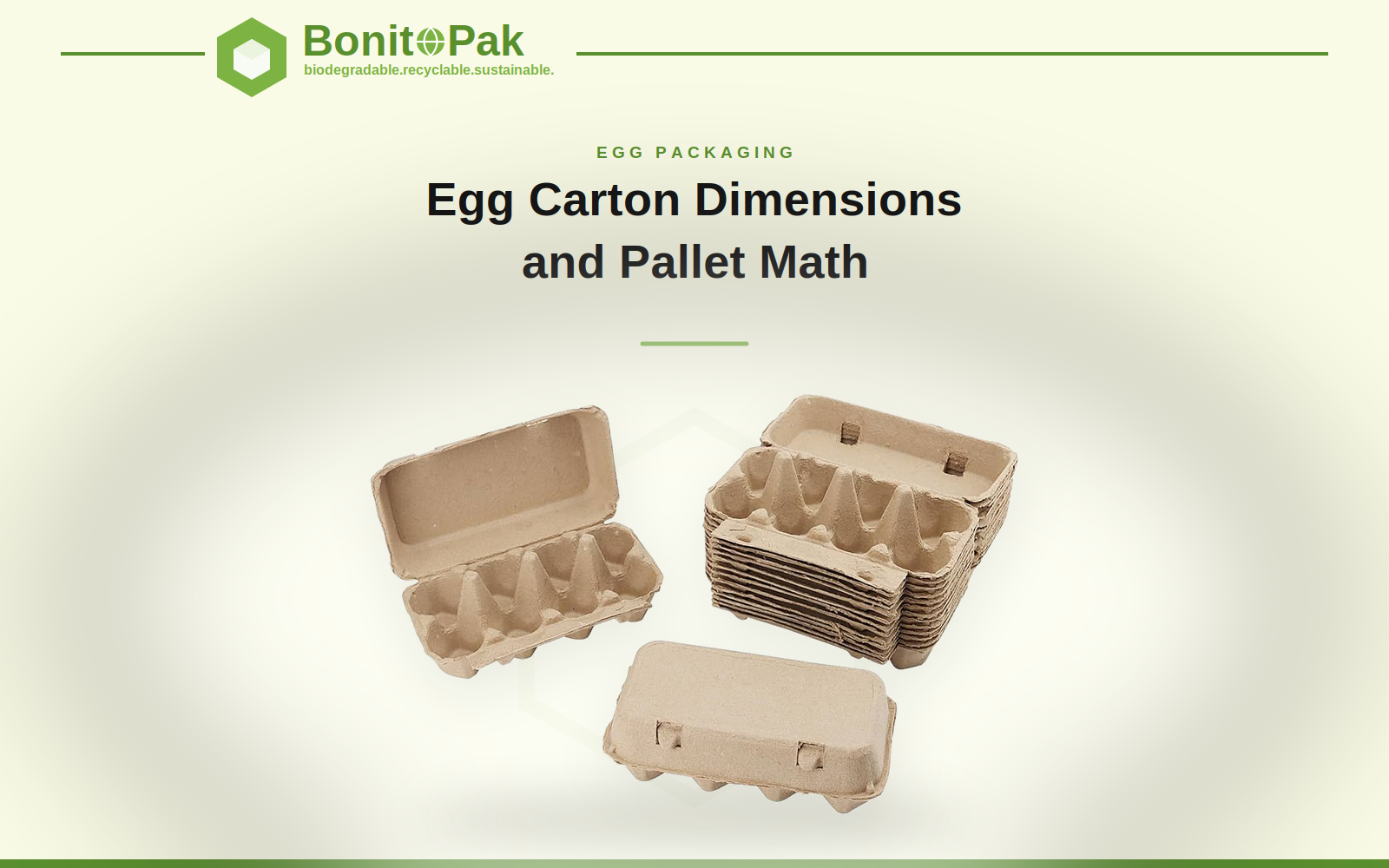
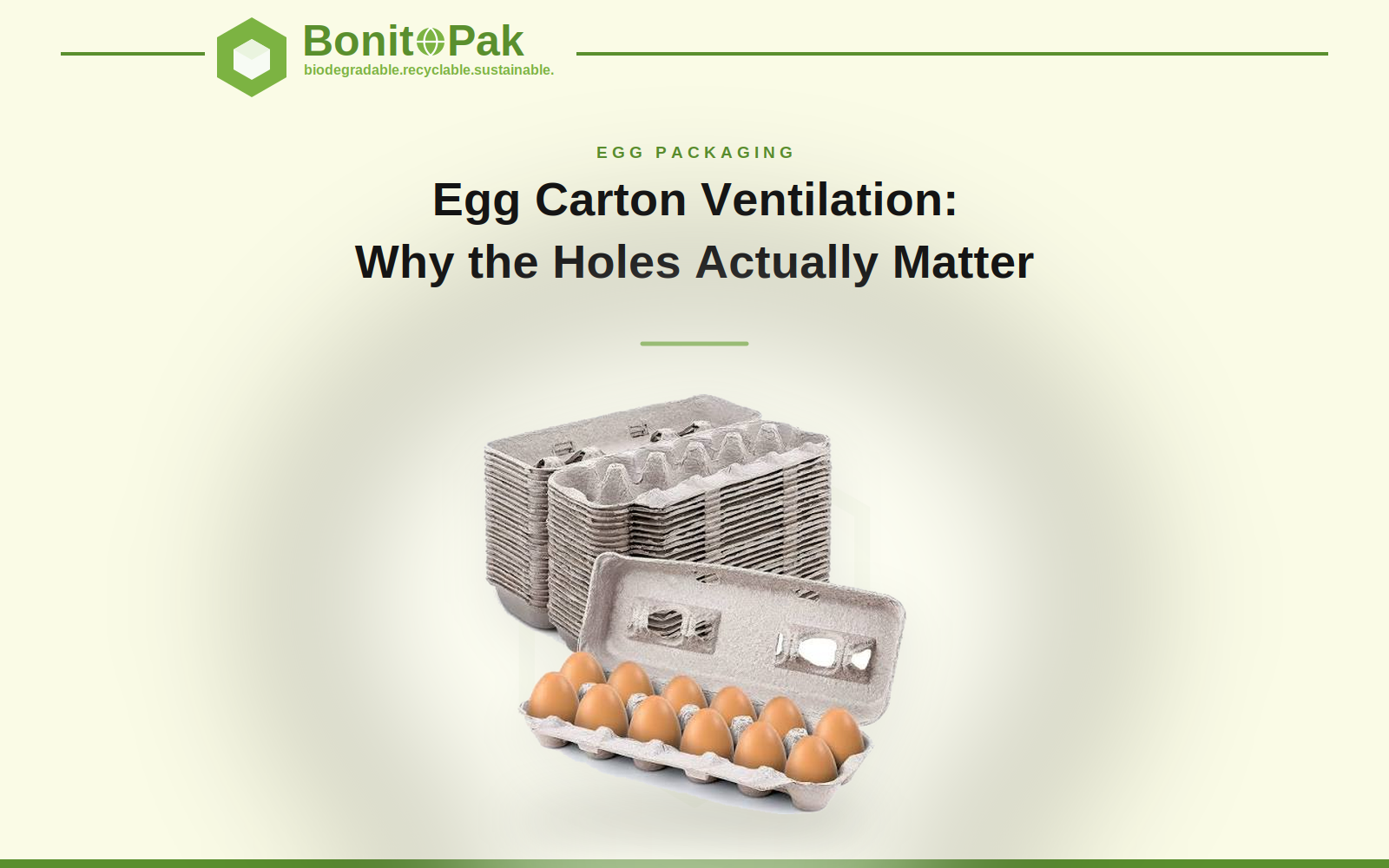
Стандартная коробка на 12 ячеек имеет размеры примерно 11,75 дюйма в длину и 4 дюйма в ширину, а высота составляет около 2–2,25 дюйма для яиц размера «Large» и 3–3,25 дюйма для яиц размера «Jumbo». Плоская упаковка на 30 ячеек имеет размеры, близкие к квадрату со стороной 11,7 дюйма. Количество коробок и поддонов рассчитывается исходя из этих цифр.
Размеры ящика для яиц — это не то же самое, что количество яиц. Количество указывает, сколько яиц находится в упаковке. Оно ничего не говорит о том, сколько места в холодильной камере занимает упаковка, сколько упаковок помещается в ящик или сколько ящиков укладывается на поддон. Эти показатели определяются физическими размерами, и именно они фактически определяют стоимость упаковки.
В данном руководстве сначала рассматриваются сами размеры, а затем подробно объясняется расчёт размеров упаковки и поддона. Если вы пока только выбираете формат, а не определились с ним окончательно, ознакомьтесь с нашим руководством по Размеры и количество яиц в упаковках вначале рассматривает именно это решение.
Размеры ячеек для яиц в зависимости от формата
Используйте эту таблицу размеров ячеек для яиц в качестве ориентировочных значений, а не в качестве стандарта. Ячейки изготавливаются на оборудовании, которое у разных производителей может различаться, поэтому рассматривайте приведенные данные как диапазон возможных размеров и уточняйте точные размеры по чертежу вашего поставщика.
| Формат | Приблизительная длина | Приблизительная ширина | Высота в сложенном состоянии |
|---|---|---|---|
| 6 штук, большие | от 7 до 7,5 дюймов | от 4 до 4,25 дюйма | от 2 до 2,25 дюйма |
| 12 штук, большие | от 11,75 до 12 дюймов | от 4 до 4,25 дюйма | от 2 до 2,25 дюйма |
| 12 штук, формат «джамбо» | от 11,75 до 12 дюймов | от 4,25 до 4,5 дюйма | от 3 до 3,25 дюйма |
| 18 штук, большой размер | от 11,75 до 12 дюймов | от 6 до 6,5 дюймов | от 2 до 2,25 дюйма |
| Квартира на 30 комнат | 11,7 дюймов | 11,7 дюймов | от 1,75 до 1,9 дюйма |
Здесь обращают на себя внимание две вещи. Длина остается удивительно неизменной как для 12-ячеечной, так и для 18-ячеечной упаковки, поскольку длина ряда фиксирована и составляет шесть ячеек. Меняется ширина, поскольку в 18-ячеечной упаковке добавляется третий ряд, а не расширяется сама коробка. А коробка формата «джамбо» не длиннее, а выше.
Глубина полости зависит от класса, а не от количества
Именно этот параметр покупатели чаще всего упускают из спецификации, а ведь именно он определяет, будут ли яйца надежно удерживаться.
Классы размера по классификации Министерства сельского хозяйства США (USDA) определяются не по физическим размерам, а по минимальному весу на дюжину. Класс «Jumbo» — 30 унций на дюжину, «Extra Large» — 27, «Large» — 24, «Medium» — 21 и «Small» — 18, как указано в опубликованных сведения о форматах оптовых упаковок. Более тяжёлые яйца — это более крупные яйца, а для крупных яиц требуются более глубокие ячейки и больший зазор между крышкой и ячейками.
Таким образом, картонная упаковка, обозначенная лишь как «12 штук», может быть изготовлена в формате «large» или «jumbo», а это разные формы, обеспечивающие разную внешнюю высоту. Укажите класс качества наряду с количеством штук, и поставщик сможет предоставить вам реальные размеры, а не номинальный диапазон.
На практике неисправность заключается в том, что крышка закрывается на корпус, а не над ним. На рабочем столе это выглядит вполне приемлемо, но при пробеге в сто миль под воздействием дорожных вибраций приводит к поломке, поскольку каждая точка соприкосновения крышки становится зоной концентрации напряжений.
Размеры яичного контейнера и что в него действительно помещается
Размеры яичных коробок более стандартизированы, чем размеры картонных коробок, что упрощает расчеты.
| Дело | Приблизительные размеры | Предназначено для хранения картонных коробок | Удерживает квартиры | Всего яиц |
|---|---|---|---|---|
| 15 дюжин гофрированных | 12 × 12 × 13,5 дюйма | 15 по 12 штук | 6 по 30 ячеек | 180 |
| 30 дюжин гофрированного | Большая площадь основания | 30 по 12 штук | 12 × 30 ячеек | 360 |
| 15 дюжин пластиковых | 14,1 × 14,1 × 15,4 дюйма | 15 по 12 штук | 6 по 30 ячеек | 180 |
Предупреждение относительно опубликованных цифр. В нескольких широко распространенных статьях утверждается, что ящик на 30 дюзин вмещает пятнадцать лотков по 30 ячеек, что дало бы 450 яиц вместо 360. В других источниках указывается, что ящик на 15 дюжин содержит пятнадцать лотков по двенадцать ячеек. Ни одно из этих утверждений не соответствует техническим характеристикам, опубликованным компаниями, фактически продающими эти ящики, которые последовательно описывают ящик на 30 дюжин как состоящий из двенадцати лотков по 30 ячеек, а ящик на 15 дюжин — как состоящий из шести таких лотков. Ориентируйтесь на технические характеристики поставщика, а не на общие статьи, включая эту.
Обратите также внимание, что формат «джамбо» меняет не только количество яиц в лотке, но и в коробке. В лотке для яиц формата «джамбо» помещается 20 яиц вместо 30, поэтому в коробке, рассчитанной на двенадцать стандартных лотков, не помещается 360 яиц формата «джамбо».
Working Out Your Egg Carton Pallet Configuration
The standard North American pallet is the GMA footprint at 48 by 40 inches. The method is the same regardless of case size.
Step one, cases per layer
Divide pallet length by case length, divide pallet width by case width, round both down, and multiply. Then repeat with the case rotated and keep whichever result is higher.
For a 15 dozen case at 12 by 12 inches: 48 divided by 12 gives 4, and 40 divided by 12 gives 3 after rounding down. That is 12 cases per layer. Rotating a square case changes nothing, which is one small advantage of a square footprint.
Step two, layers high
Take your maximum load height, subtract the pallet deck, and divide by case height. Working to roughly 95 inches of usable height above a five inch pallet, and a case height of 13.5 inches, gives 7 layers.
Step three, multiply out
12 cases per layer times 7 layers is 84 cases. At 180 eggs per case that is 15,120 eggs per pallet.
This is the calculation behind the TI and HI figures on pallet pattern sheets, where TI is cases per layer and HI is layers high, as explained in packaging references. Retail distribution centers expect those numbers on inbound pallets, and getting them wrong causes rejected shipments and repalletizing charges.
The Trap: Cube Utilization Is Not Pallet Efficiency
This is the most useful thing on the page, and it catches experienced buyers.
It is natural to optimize a case so it holds the maximum number of cartons with minimum wasted space inside. That is cube utilization, and maximizing it can lose you money.
The reason is that pallet fit depends on how case dimensions divide into 48 and 40, not on how efficiently the case is packed. A case that is beautifully full inside but divides badly into the pallet footprint wastes far more space on the pallet than it saved in the box. Published packaging worked examples show cases at 100 percent internal cube utilization shipping fewer units per pallet than cases at 93 percent, because the tighter case fitted only six per layer while the looser one fitted twelve.
The order of operations matters. Work out what divides cleanly into the pallet first, then design the case to those dimensions, then check how many cartons fit inside. Doing it the other way round optimizes the wrong variable.
Worth sanity checking the answer against a known figure. Standard egg cases are often quoted as loading somewhere in the region of 30 to 40 cases per pallet in general references, which reflects larger 30 dozen cases rather than the 15 dozen case worked through above. If your own calculation lands far outside the range you would expect for your case size, the usual cause is a rounding error or a forgotten clearance rather than a genuinely unusual configuration.
Clearances Everyone Forgets
Four allowances routinely get left out of a first calculation, and together they are enough to lose a layer.
- Internal versus external case dimensions. Corrugated board has thickness, and single wall C flute costs roughly five sixteenths of an inch across each dimension. Pack to internal dimensions, palletize to external.
- Assembly clearance. A theoretical zero clearance pack jams on a line. Allow an eighth to a quarter inch per dimension so flaps close and cartons load cleanly.
- Stretch wrap and corner boards. These add several millimetres per side to the finished load, which matters when you are within an inch of a rack opening.
- Trailer height. Most dry vans allow around 100 to 102 inches total including the pallet, and warehouse racking is often lower. Calculate to the lower of the two.
There is also weight. A pallet can be height limited or weight limited, and the real layer count is whichever comes first. Eggs are dense enough that a full height stack of cases can exceed a pallet weight budget before it runs out of vertical space.
Что мы видим на нашей собственной производственной линии
We cut tooling per project in Chashan Town, Dongguan, so external dimensions are something we set rather than something we look up. A few observations.
Forming process changes the wall, and the wall changes the dimensions
Наш сайт картонные коробки, изготовленные методом мокрого прессования finish at a wall thickness of roughly 0.7 to 1.2mm, while dry pressed trays finish at roughly 2.5 to 3.0mm. At the same internal cell geometry those produce different external dimensions. It is a small difference per carton and a meaningful one across a stack of fifteen inside a case.
Nesting is a tooling decision that changes your pallet count
How well flats nest is governed by the draft angle on the cell walls when the mold is cut. Too little draft and trays lock together and slow the packing line. Too much and stack height grows, which can cost you a layer on the pallet. We settle draft before cutting tooling because it cannot be adjusted afterwards without a new mold.
Check pallet fit at sample stage, not after production
Sample molds run in about seven days and production molds follow around eight days after geometry approval, with minimums from 1,000 pieces. That gap exists so real parts can be measured and stacked before the production tool is committed. Once external dimensions come off a production mold, changing them means new tooling. Our Страница с индивидуальными лотками для яиц sets out what is adjustable at that stage, and the same nesting logic applies to stacked формованные лотки для целлюлозы.
One recurring request worth flagging. Customers sometimes ask for a thinner wall purely to gain a pallet layer. That trade is available, but wall section is carrying the stacking load, and the eggs at the bottom of a seven layer pallet are relying on it. The materials side of that decision is covered in our article on Из чего изготавливаются картонные упаковки для яиц.
Применение этого на практике
Specify grade alongside count on every quote request, and ask for external dimensions rather than a size name. Those two habits eliminate most fit surprises before they reach production.
Then work the logistics in the right order. Establish what case footprint divides cleanly into 48 by 40, design the case around that, and only then check how many cartons fit inside it. Deduct board thickness, assembly clearance, wrap and a realistic height limit before you commit, and check whether weight or height binds first.
На сайте BonitoPak we confirm external dimensions on physical samples before a production mold is cut, because a carton that fits the eggs but not the case is an expensive thing to discover at the first shipment. Sending your case and pallet targets alongside the egg grade lets both be designed together rather than sequentially.
Об авторе
Leo Chan is the founder of BonitoPak and has spent more than 20 years in molded pulp packaging, working with over 500 brands moving from plastic and foam to fiber based formats. BonitoPak manufactures molded pulp packaging at its facility in Chashan Town, Dongguan, Guangdong, running both wet pressing and dry pressing lines across six pulp systems, with in house mold design and tooling. The dimensional guidance here reflects tooling work on that line alongside published case specifications and pallet loading references, which should always be confirmed against your own supplier drawings.
Часто задаваемые вопросы
Q: Why does every egg carton size chart show different numbers?
A: Cavity depth and wall section differ by tooling, and forming process changes wall thickness. A wet pressed carton and a dry pressed one at the same count will not have identical external dimensions.
Q: Does egg grade change the carton footprint?
A: Rarely the footprint, usually the height. Cell diameter and depth grow with grade, which pushes closed lid height up. Jumbo cartons are noticeably taller than large at the same length and width.
Q: How do I calculate eggs per pallet myself?
A: Divide pallet length and width by case dimensions to get cases per layer, divide usable height by case height for layers, multiply the two, then multiply by eggs per case. Round every division down.
Q: What height should an egg carton pallet configuration allow?
A: Most dry vans allow around 100 to 102 inches total including the pallet deck. Deduct roughly five inches for the pallet, then leave margin for stretch wrap and any load top sheet.
Q: Can I change egg carton dimensions after tooling is cut?
A: No. External dimensions come from the mold, so any change means new tooling. This is why pallet fit should be checked at the sample stage rather than after the first production run ships.

 Russian
  English
  German
  Spanish
  French
  Japanese
  Portuguese
  Arabic