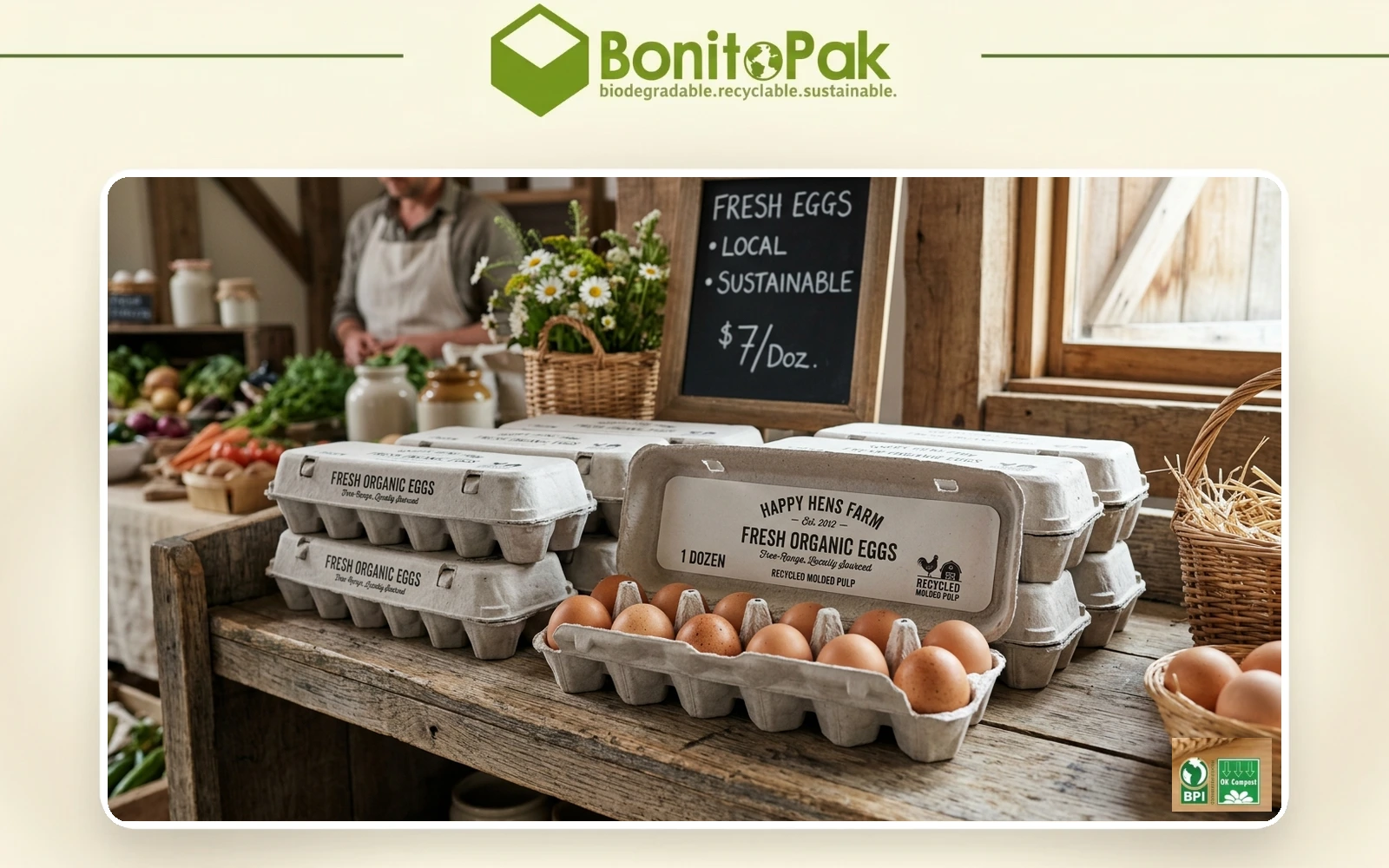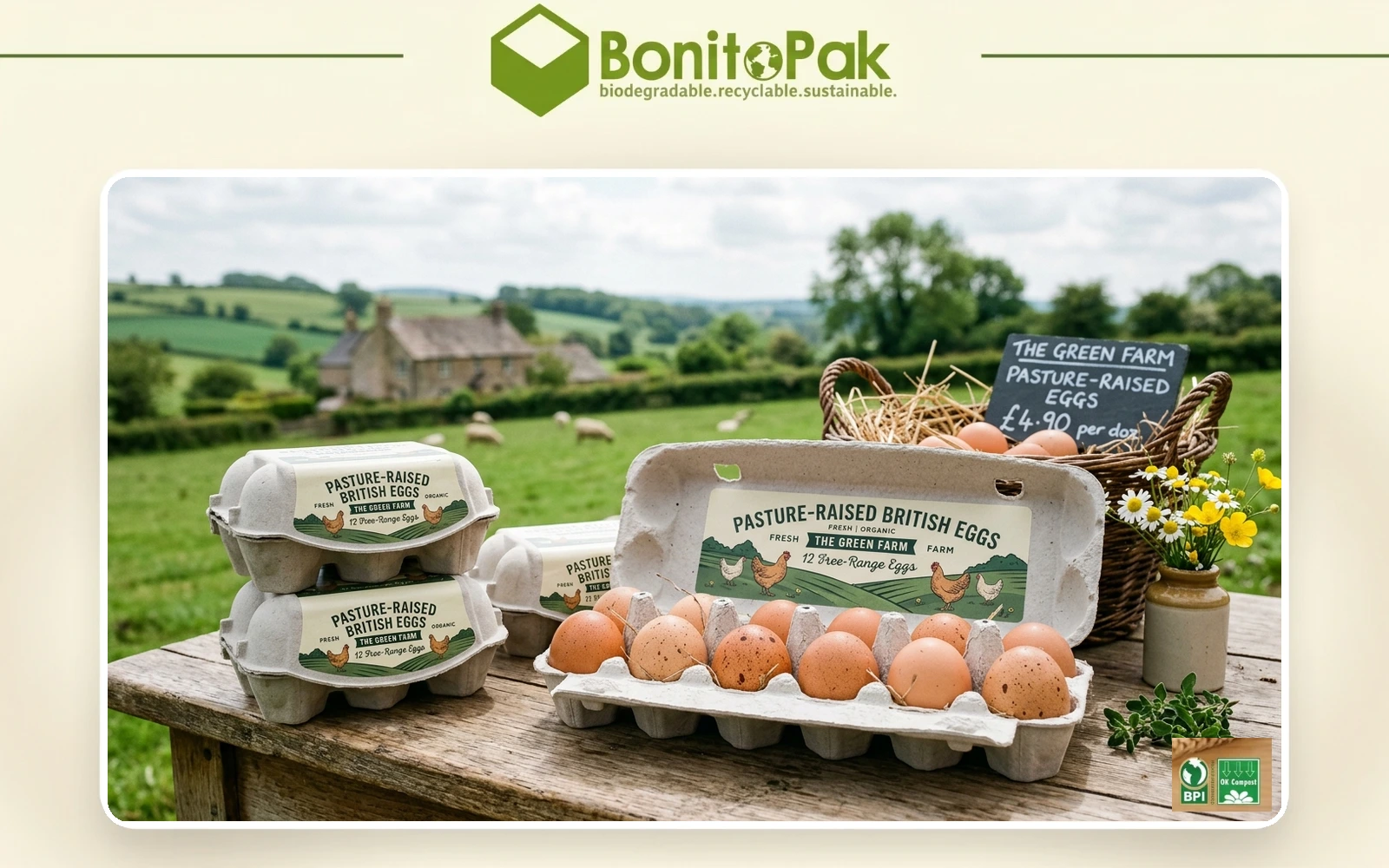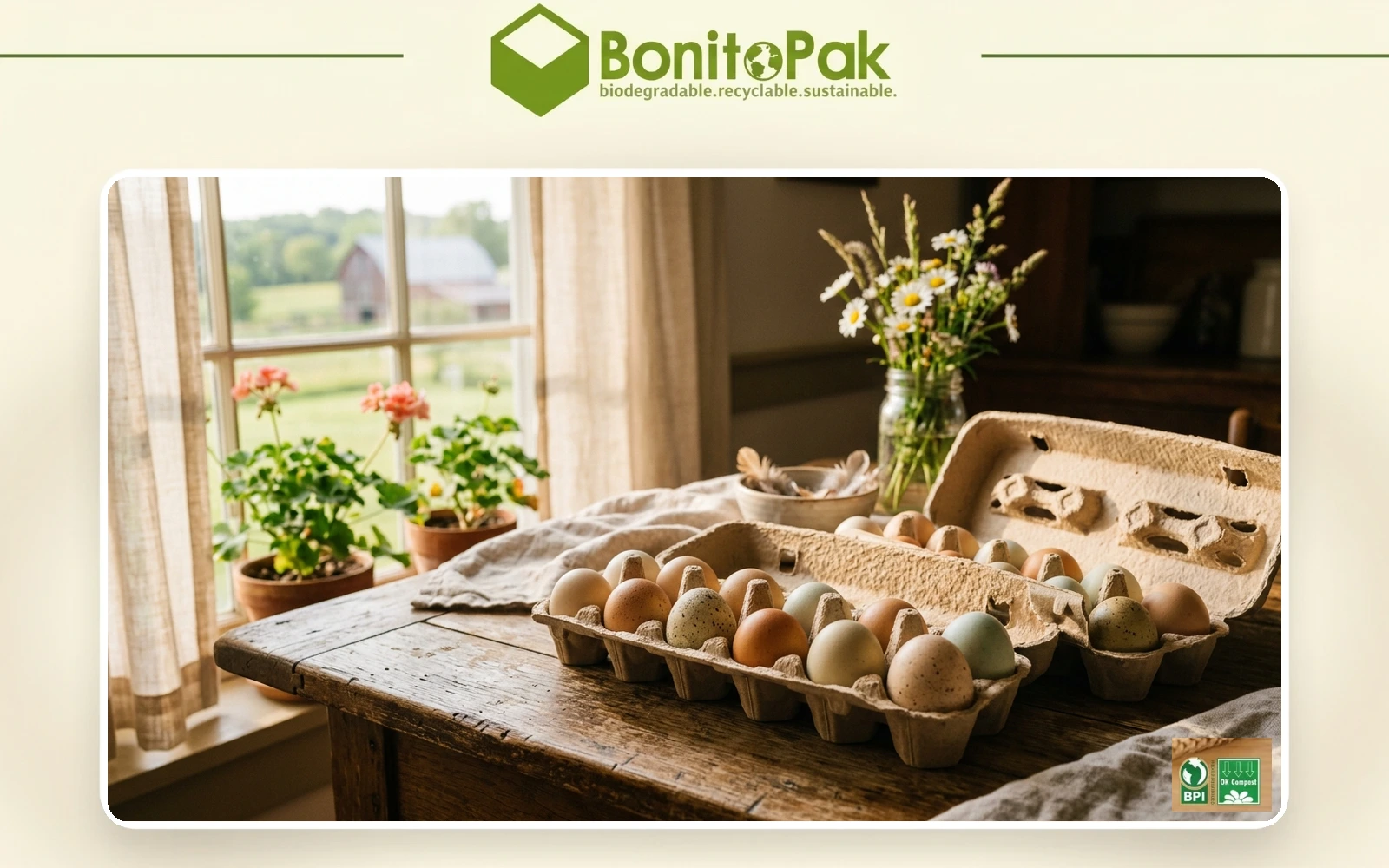
Jumbo sits at the top of the US size grades, roughly 71g an egg (about 30 ounces a dozen), a clear jump up from a large at around 57g. And that extra weight is really extra size, enough that a carton cut for large eggs won’t close over jumbos. So the grade isn’t just a sticker, it quietly decides the pocket you need.
The grades are basically weight bands, and the jumbo one sits right at the top. For context, the large egg most cartons are built around is near 57g, an extra large a bit more, and a jumbo pushes past 71g, which turns out to be a good deal more egg than the number lets on.
All that extra weight shows up as a longer, wider shell, and that’s really the crux of it, a pocket built for a 57g large egg was never going to take a 71g jumbo and still shut. If you want the whole ladder of grades and the cell each one wants, we lay it out in our Tamaños y número de huevos de los cartones guide.
Jumbos turn up more than people expect, too. Older hens lay bigger, some breeds run large by nature, and double-yolkers land squarely in jumbo territory. If any real share of your eggs grade jumbo, you need a carton that admits it.
Why a Large-Cut Carton Fails a Jumbo Egg
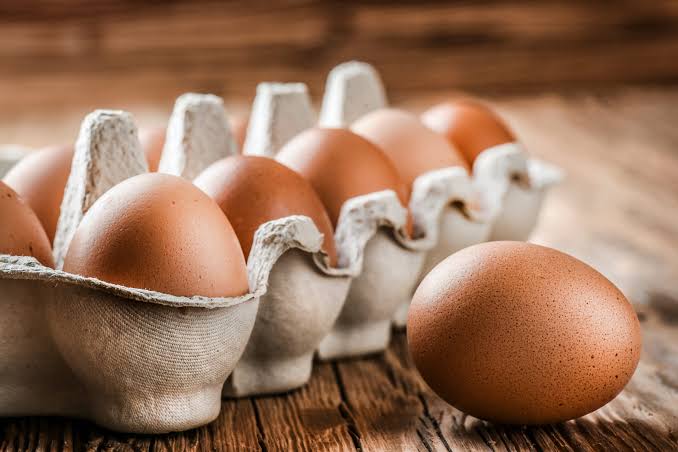
In a large-cut carton, a jumbo egg sits proud of the cell rim because the pocket’s too shallow and narrow, so the lid closes down onto the shell instead of over it. That constant pressure, plus any movement in transit, is what cracks jumbos. It’s not a padding problem; the cell is simply the wrong size.
Here’s what actually happens on the packing bench. You drop a jumbo into a large cell and it doesn’t drop far, the pocket bottoms out before the egg is seated, so the top of the egg pokes above the rim.
Now close the lid. Instead of shutting cleanly over the eggs, it comes down onto them, and every jumbo in the carton is taking a bit of load through its shell. Add the jostling of a delivery run and that’s a recipe for cracks and leaks by the time it reaches the customer.
People try to fix this with foam pads or by leaving the lid loose, but neither works, one adds cost and waste, the other defeats the point of a carton. The only real fix is a cell cut deep and wide enough that the jumbo sits below the rim and the lid closes over it, not on it.
The Cell a Jumbo Actually Needs
What a jumbo really wants is a deeper, wider pocket than a large cell, with a taper that still catches the egg’s middle so it doesn’t rattle around. Depth is the one to get right, deep enough that the egg drops fully below the rim, and once you’ve nailed that the lid closes freely without leaning on the shell.
Three dimensions decide the fit, and for jumbos all three grow. The diameter opens up to take the wider shell, the depth increases so the egg sits low enough for the lid to clear it, and the taper still has to catch the egg around its widest point so it doesn’t slide around once it’s in.
Depth is the one to watch. It’s tempting to just widen a large cell, but if you don’t also deepen it, the egg still stands proud and you’re back to the lid pressing down. The pocket has to be tall enough to swallow the whole egg.
How egg grade maps to the cell you need (indicative):
| Grade | Approx. weight | Cell vs a large-cut carton |
| Large | ~57g | The standard cell most cartons are built for |
| Extra large | ~64g | A little deeper and wider than large |
| Jumbo | ~71g+ | Clearly deeper and wider; large cartons won’t close |
| Double-yolk / over-jumbo | 80g+ | Custom cell; even jumbo tooling may be tight |
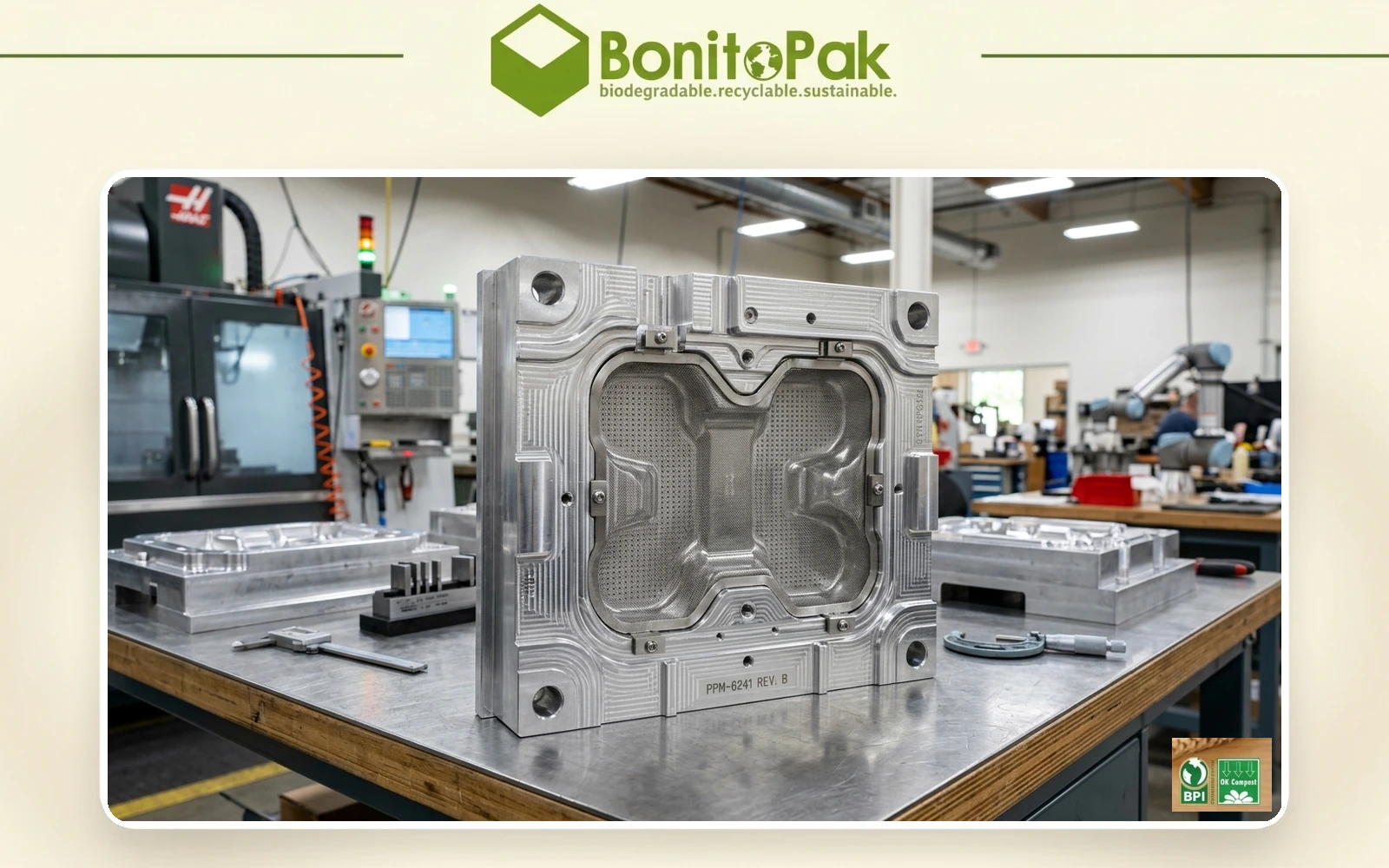
Because this is really a geometry problem, it’s the kind of thing that gets cut into the tooling per project. Send physical eggs and the cavity gets built to your actual jumbos, which is how our mold design and tooling team handles it, and the same logic we walk through for oversized shells in the duck egg cartons guide.
Material and Count for Jumbo Cartons
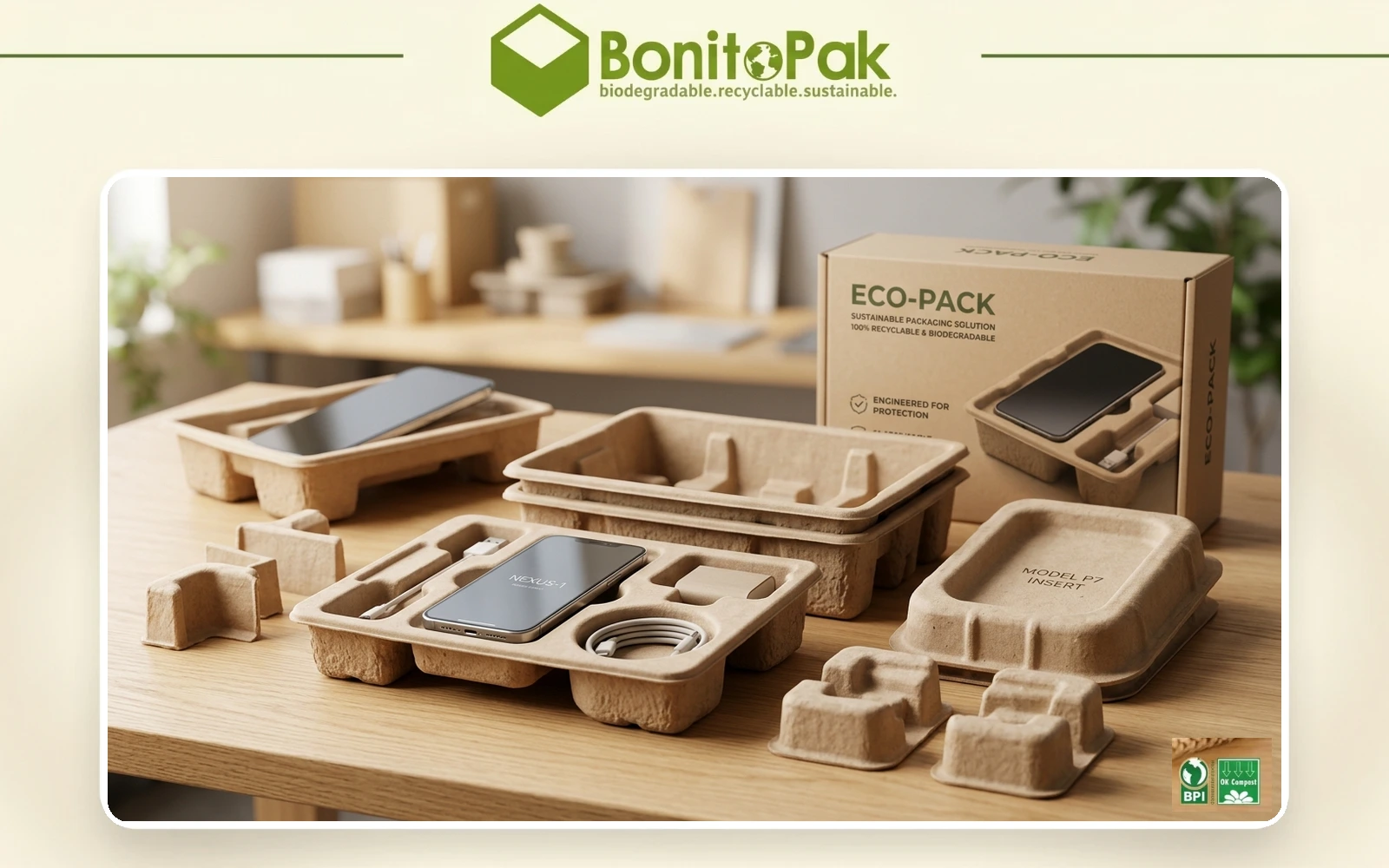
Molded pulp is a good match for jumbos. The eggs are heavier, so each pocket carries more, and the fiber earns its keep by giving on impact while still holding a deep cell cleanly. On counts you’re usually choosing between a 6 and a 12, a 6 keeps a pricey jumbo affordable, a 12 slots into dozen-based retail.
A jumbo egg is heavier, so the carton is carrying more weight per cell and taking more of a knock if it’s dropped. Molded pulp handles that nicely: it flexes slightly under impact and spreads the load across the fiber rather than into one point of the shell, and it forms a deep, clean cell without collapsing.
On counts, most jumbo sellers stick with 6 or 12. A 6-count keeps the price sensible for what are usually premium eggs, and a 12-count matches the dozen that retail is built around. Both need the jumbo cell, so the count is really a channel decision; there’s more on choosing between them in our sizes and counts guide.
Jumbo carton options at a glance:
| Choice | Ideal para | Nota |
| 6-count molded pulp | Farm gate, premium, gift | Keeps a pricey jumbo affordable to try |
| 12-count molded pulp | Retail, regular buyers | Matches the standard dozen |
| Dry press | Distribution, wholesale | Thicker wall, lower cost, takes the weight |
| Prensa húmeda | Retail-facing, branded | Smooth finish and sharp emboss |
Mixed Flocks and the Odd Double-Yolker
If only some of your eggs grade jumbo, size the cell for your biggest regular egg and let the smaller ones sit a little looser, that’s safer than the reverse, where a jumbo won’t fit at all. For true over-jumbo double-yolkers, you may need a dedicated custom cell, since even standard jumbo tooling can be tight.
Not everyone lays a clean jumbo grade every time. Plenty of farms get a spread, mostly large or XL with a run of jumbos, especially from older hens. The rule of thumb is simple: cut the cell for the biggest egg you regularly pack.
A slightly loose large egg in a jumbo cell is fine, it just has a bit of room. A jumbo in a large cell is the problem, because it won’t close. So err toward the larger pocket if your grades vary.
The exception is the genuine over-jumbo, the 80g double-yolker. Those can be tight even in standard jumbo tooling, and if you sell them as a line, they’re worth their own custom cell. That’s a per-project job, and the process is the same one we cover in custom egg cartons.
Preguntas frecuentes
What size carton do jumbo eggs need?
A carton with a deeper, wider cell than a standard large-cut one. Jumbos run about 71g and up, so the pocket has to be tall enough for the egg to sit fully below the rim, otherwise the lid closes onto the shell. Diameter and taper widen too, so the egg is held without rattling.
Why won’t jumbo eggs fit in normal egg cartons?
Simply put, a normal carton is cut for large eggs (around 57g) and a jumbo is a good bit heavier at roughly 71g and up. It can’t sink far enough into the shallow cell, so it stands proud of the rim, the lid comes down on it, and between that pressure and a bit of transit jostling the shells crack.
Are molded pulp cartons good for jumbo eggs?
Yes. Heavier eggs put more load on each cell, and molded pulp cushions by flexing on impact and spreading the load across the fiber instead of into one point of the shell. It also forms a deep jumbo cell cleanly, and it composts and recycles at the end of life.
What count should jumbo egg cartons be?
6 and 12 are the usual choices. A 6-count keeps a premium jumbo affordable and suits farm gate and gift sales; a 12-count matches the standard retail dozen. Both use the same jumbo cell, so the count is mainly a channel decision, not an egg-fit one.
Can I use one carton for large and jumbo eggs?
Only if you cut the cell for the jumbo and let the large eggs sit a little looser. A large egg in a jumbo cell is fine; a jumbo in a large cell won’t close. If your grades vary, always size the pocket for the biggest egg you regularly pack.
Do double-yolk eggs need a special carton?
Often, yes. True over-jumbo double-yolkers can run 80g or more, which is tight even in standard jumbo tooling. If you sell them as a line, a dedicated custom cell is worth cutting, since it guarantees the lid closes without pressing on those big shells.
Conclusión
Jumbo eggs aren’t a packaging problem so much as a sizing one. Give them a cell that’s genuinely deep and wide enough and the lid closes cleanly, the shells stay whole, and your customer opens a full carton instead of a cracked one. Try to force them into a large-cut carton and you’ll pay for it in breakage.
BonitoPak cuts molded pulp jumbo egg cartons to your actual eggs, deep-cell tooling, 6 or 12 count, dry or wet press, six pulp colors, BPI and OK Compost certified, from 1,000 pieces. Browse the full egg tray and carton range, or send a few of your biggest eggs and we’ll size the cell to them.