By Leo Chan, Senior Packaging Consultant, BonitoPak
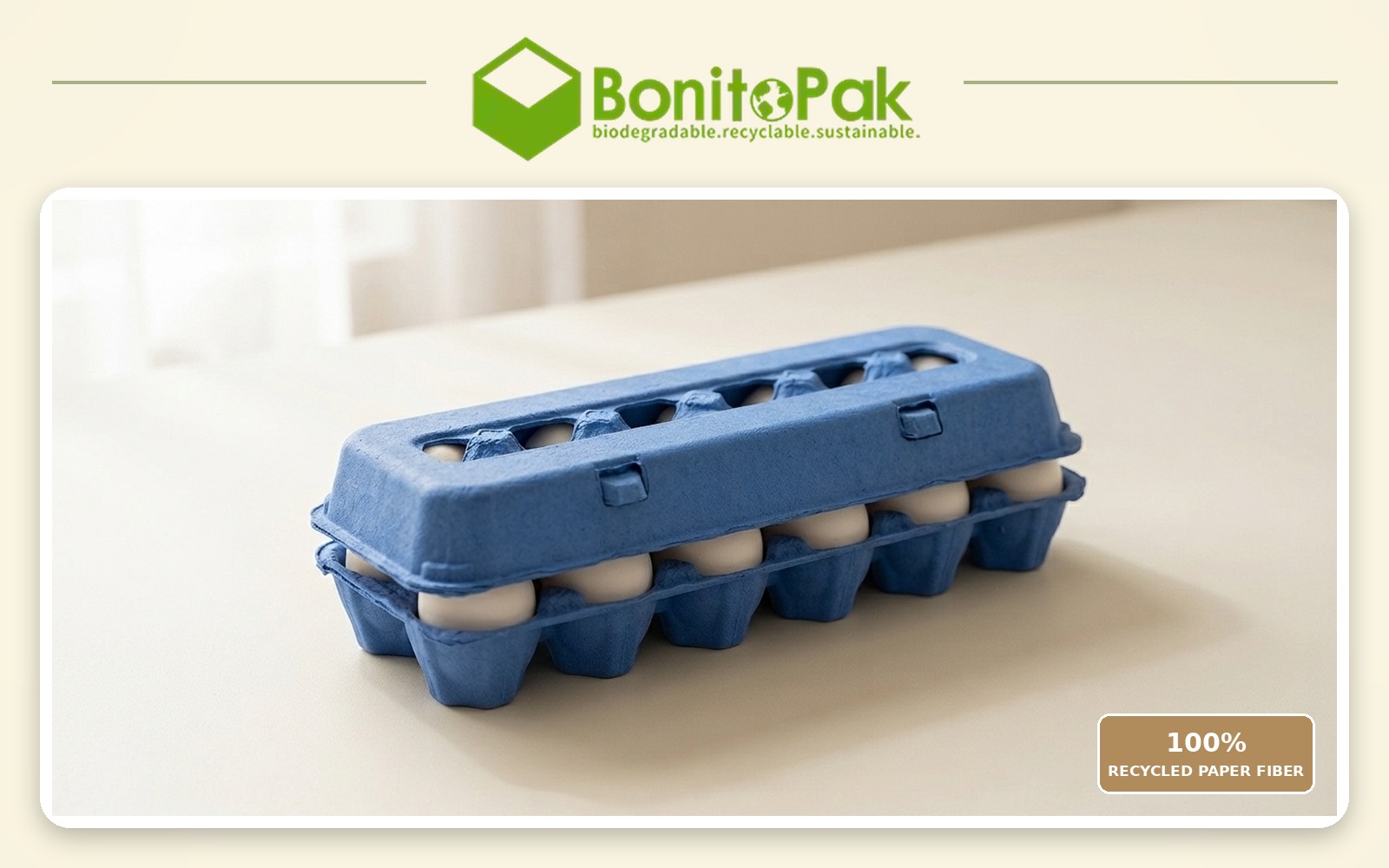
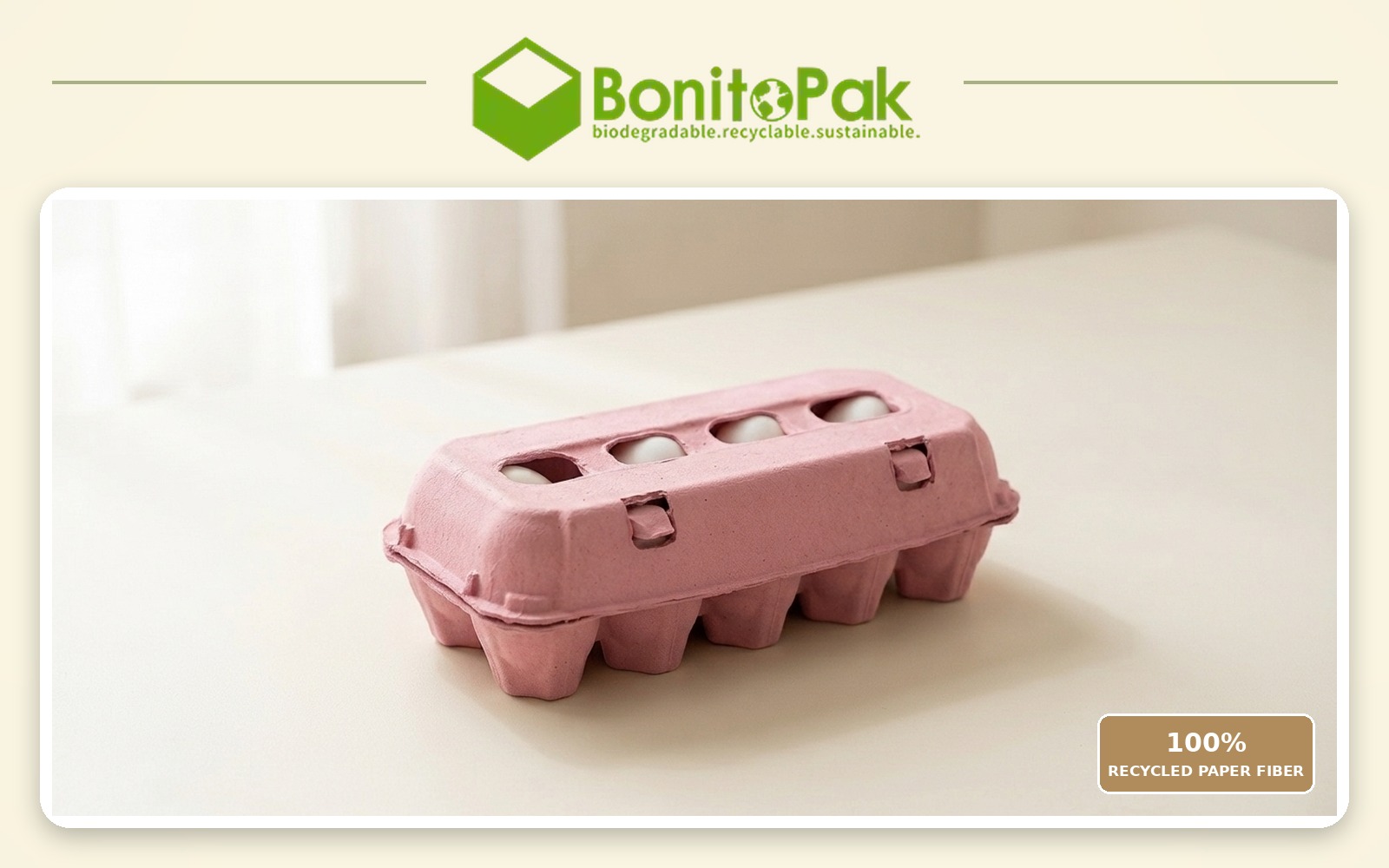
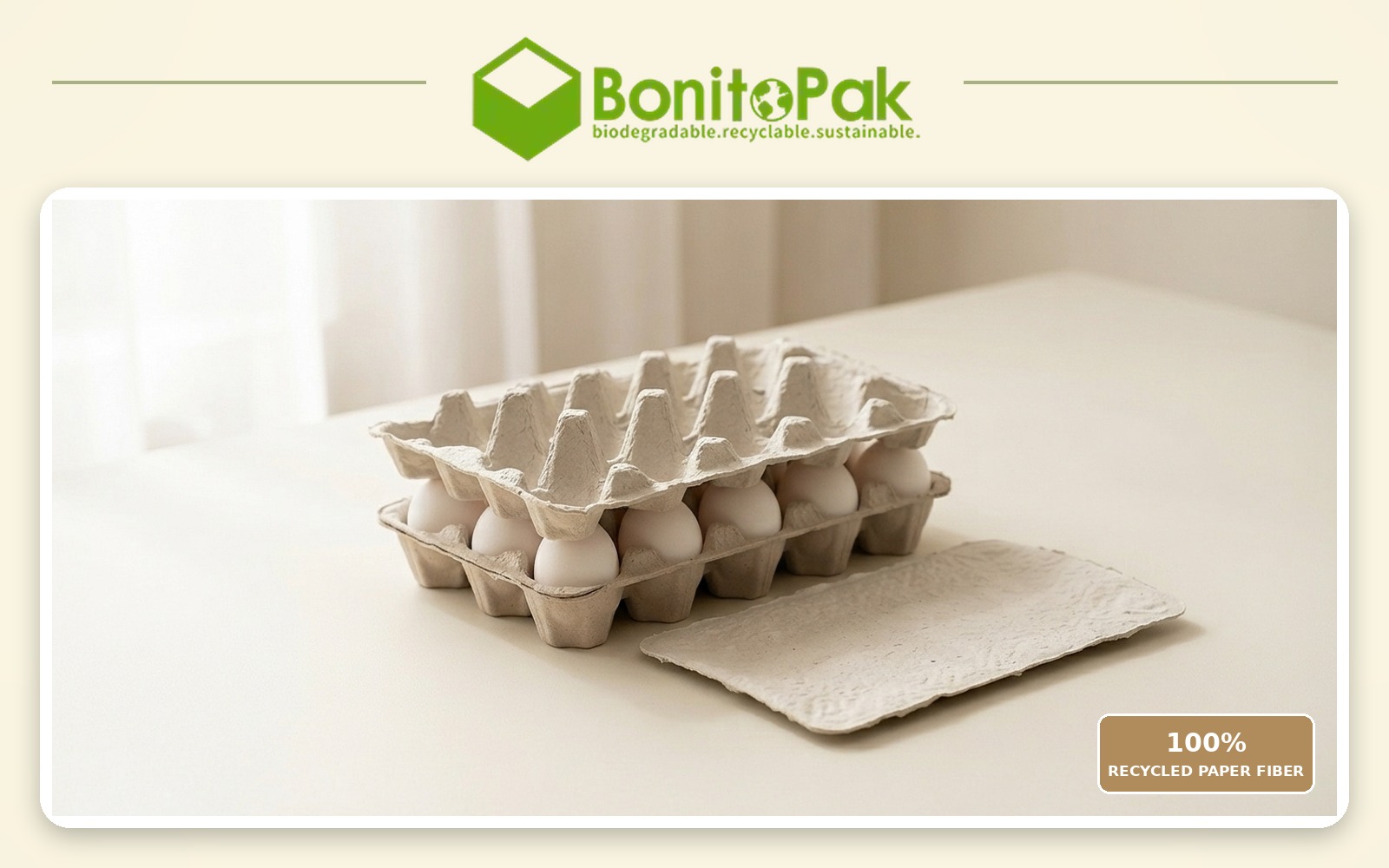
Vintage egg cartons are flat top molded pulp cartons with a squared edge and a single fold hinge. They look like the cartons many people remember, and they give you the largest print panel in our egg carton range. That makes them a strong fit for farmers markets, heritage brands and farm direct sellers.
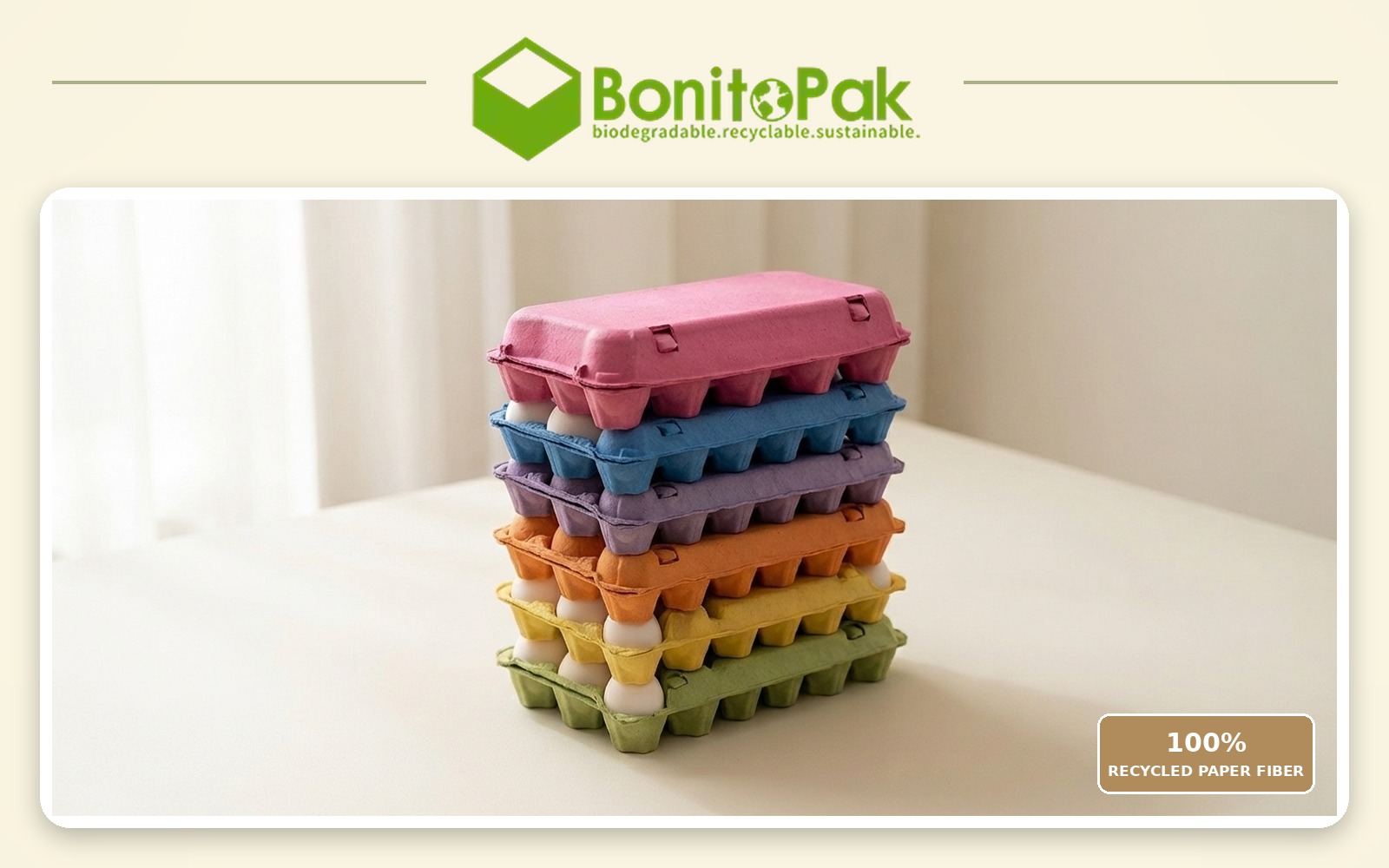
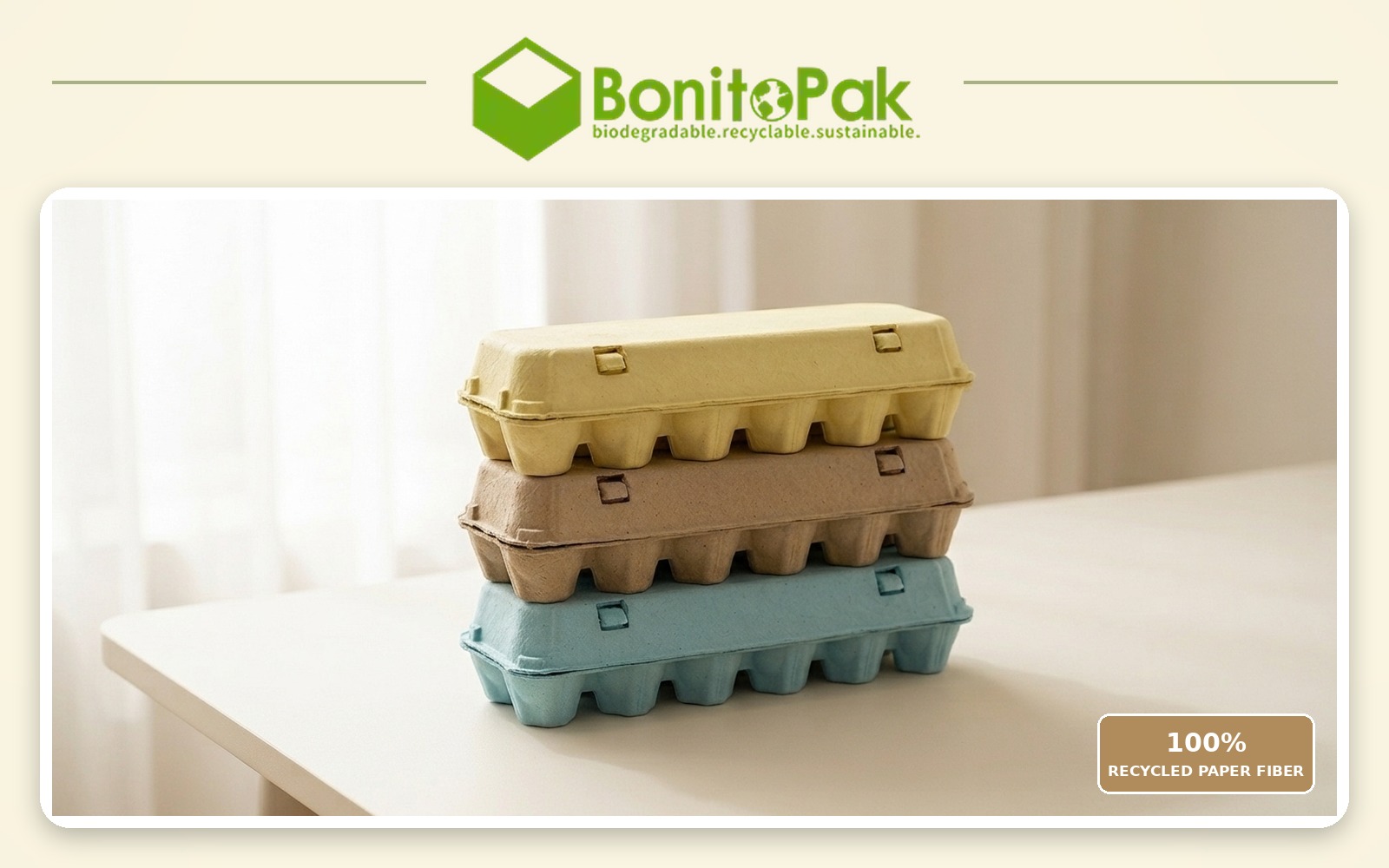
We make a 12 cell vintage carton measuring 300 x 108 x 68 mm and a 6 cell vintage carton measuring 175 x 108 x 68 mm. Both take standard to extra large chicken eggs. They come in natural pulp, muted period shades or a custom color match.
This guide covers where the style comes from, how it differs from a standard top fold carton, how to brand it and what to check before you order. The specs come from our own product page.
What Is a Vintage Egg Carton?
It is a flat top clamshell carton with a retro, squared profile. Our spec lists a flat top lid, a squared edge and a single fold hinge. It is formed from recycled paper pulp using the wet pressed molded pulp process.
The look is plain on purpose. A flat lid is easy to read, easy to stamp and easy to stack in a market display. Many sellers pick it to give their eggs an old time, farm direct feel.
Here is the quick spec:
| الميزة | BonitoPak vintage egg carton |
|---|---|
| Lid profile | Flat top, squared edge, single fold hinge |
| Cell counts | 6 or 12 |
| Outer size, 12 cell | 300 x 108 x 68 mm |
| Outer size, 6 cell | 175 x 108 x 68 mm |
| Unit weight | 32 to 60 g, depending on cell count |
| Egg size range | Standard to extra large chicken eggs |
| Colors | Natural pulp, muted period shades, custom match |
| العلامة التجارية | Embossed, debossed or flexographic print |
You can see the full spec on our علب البيض القديمة الصفحة.
Where Does the Vintage Look Come From?
The egg carton has a long history behind the vintage look. In 1911, Joseph Coyle, a newspaper publisher in Smithers, British Columbia, designed the first carton after eggs from a local farm kept arriving cracked at a hotel. His “hard dimples” protected the eggs from the stress of transport and storage (Ingenium Canada, Egg Carton).
Later steps shaped what we see today. According to Wikipedia, Morris Koppelman patented a cut and folded cardboard carton in 1921. Francis H. Sherman followed with a pressed paper pulp carton in 1931, and H.G. Bennett added a sealable lid design in the 1950s (Wikipedia: Egg carton).
Pressed pulp cartons date back to at least 1931. A vintage style carton in pulp ties your eggs to that history without trying too hard.
How Is a Vintage Carton Different From a Standard One?
The main differences are the lid shape and the depth. Our standard 12 cell carton is a top fold clamshell with a front locking tab, measuring 300 x 105 x 75 mm. The vintage 12 cell carton is flat top and measures 300 x 108 x 68 mm.
| الميزة | Vintage flat top | Standard top fold |
|---|---|---|
| Lid | Flat top, squared edge | Top fold with front locking tab |
| 12 cell size | 300 x 108 x 68 mm | 300 x 105 x 75 mm |
| 6 cell size | 175 x 108 x 68 mm | 175 x 105 x 75 mm |
| Egg range | Standard to extra large | Standard to jumbo |
| Print panel | Largest in our range | Full width lid panel |
The vintage carton is 7 mm shallower. That is why its egg range stops at extra large, while our standard carton takes jumbo. If your hens lay very large or round eggs, test them in a sample first, or choose a standard علبة بيض سعة اثني عشر بيضة instead.
Who Uses Vintage Egg Cartons?
Our product page lists farmers markets, heritage brands, food styling, hospitality and prop use. Farm direct sellers pick them for a classic look. Food stylists and cafes use them for shoots and display.
If you run a market stall, the flat top works like a small billboard. It faces up on the table, and customers read it from above. Put your farm name and one short line on it, and let the pulp texture do the rest.
How Do You Brand a Vintage Carton?
Keep the design simple and let the style lead. A good vintage carton uses one or two colors, a clear name and plenty of space.
- Emboss your farm name. Embossing sits in the mold, so it adds no printing step. It suits the pressed look.
- Print in one ink. Flexographic print adds a plate charge per color, so one color keeps cost down. Choose a dark, muted ink for natural pulp.
- Try a muted shade. Our period shades are soft, such as faded tones. A custom shade can match your logo.
- Leave room for your label. Required text must stay clear of the design.
Egg cartons sold to shoppers must carry required text, such as safe handling wording, the packer name and address, a lot designation and the grade and size. Rules vary by state, so check yours before you print. The large flat panel makes it easier to fit all of this.
لدينا خدمة مخصصة starts with your logo and egg sizes if you need help.
Is a Vintage Carton Strong Enough?
It is made to protect eggs the same way any molded pulp carton does: each egg sits in its own dimple. Weight runs from 32 to 60 g depending on cell count. As with any carton, test it in your own conditions.
Run this quick test on a sample:
- Seat your eggs and close the lid.
- Check the lid closes with no pressure on the shells.
- Stack three filled cartons and look for lid bulge.
- Carry one to your market and back, then check for cracks.
Our cartons nest when empty, so spare stock stores in a small space.
How Do You Design a Retro Label That Works?
A vintage carton gives you a wide, flat panel. That space is your chance to tell a story. Keep the design simple so the retro feel comes through.
- Use one strong name. Put your farm name in large type across the top panel.
- Choose a classic type style. Bold serif letters or simple block capitals feel old fashioned and read well.
- Limit your colors. One or two ink colors look more authentic than many. Muted tones fit the period look.
- Add a small badge. A round or shield shape with a year or a place name adds charm.
- Leave space. Empty area around the text makes a pack look confident, not cheap.
Remember the required text. Your net quantity, grade, size, packer details and handling wording still have to appear. Plan where they go before you finalize the art. Our guide on custom printed egg cartons and labels shows which branding methods last.
How Do You Mix Vintage With Other Cartons?
You do not have to switch your whole line. Many sellers use vintage for one product and keep the rest simple.
- Heritage line. Use vintage for your best eggs, such as pasture raised or heirloom breeds.
- Market pack. Use vintage when you sell face to face, where the look helps start a chat.
- Gift pack. A vintage carton with a ribbon or band makes a nice present.
- Everyday pack. Keep a standard علبة بيض سعة اثني عشر بيضة أو علبة بيض سعة 6 بيضات for daily sales.
Using both lets you test the vintage style without changing your whole range. If it sells well, you can grow it.
What Mistakes Should You Avoid With Vintage?
- Making it too busy. Retro does not mean crowded. Fewer elements look better.
- Using modern fonts. A sleek digital font can break the old fashioned mood.
- Skipping the sample. Check how the flat top sits, stacks and closes before a big run.
- Forgetting egg size. The cartons suit standard to extra large chicken eggs. Check your eggs against the cell size.
- Ignoring the design tools. If you want a special emboss, our design and tooling page explains how the work is done.
Take your time with the sample. A vintage carton is about character, and the small details are where that character shows.
Which Questions Do Customers Ask About Vintage Cartons?
A vintage carton gets noticed, so expect questions. Short answers help.
- “Is this an old style carton?” It follows a classic flat top shape with a retro look, but it is made new from recycled paper fiber.
- “Why is it flat on top?” The flat lid gives you a large panel for your name and story.
- “Does it hold regular eggs?” Yes. It suits standard to extra large chicken eggs.
- “Can you match an old color?” We offer natural pulp, muted period shades and custom matching. Send a sample of the color you want.
Keep a few of these answers handy. When shoppers understand the story, they tend to trust the product more.
What Should You Check Before You Place a Vintage Order?
Use this checklist before the first run.
- Confirm the size you need: 6 cell or 12 cell flat top.
- Pick natural pulp, a muted period shade or a custom match.
- Plan your print panel and keep the art simple.
- Check that your required label text fits.
- Ask our team for current minimums and lead times.
Stock molds carry a lower minimum than custom tooling, so a stock vintage carton is a good first step. You can see our factory and process on the مرافق التصنيع الصفحة.
A vintage carton rewards patience. Test it with your own eggs, in your own display, and you will know quickly whether the style fits your brand.
How Do You Order Vintage Egg Cartons?
Start with a sample and a stock option. Stock molds carry a lower minimum than custom tooling.
- Choose 6 or 12 cells.
- Pick natural pulp or a muted shade.
- Decide on emboss, deboss or print.
- Check your label text against the lid.
- Request a sample and test it with your eggs.
- Confirm current minimums and lead times with our team.
Send your details to leo@bonitopak.com. You can also browse the molded pulp egg carton range.
الأسئلة الشائعة
Q: What is a vintage egg carton?
A: It is a flat top carton with a squared edge and a single fold hinge, styled like classic farm cartons. Ours is made from recycled paper pulp.
Q: What sizes do vintage egg cartons come in?
A: Ours come in 6 cells at 175 x 108 x 68 mm and 12 cells at 300 x 108 x 68 mm. They take standard to extra large chicken eggs.
Q: Who invented the egg carton?
A: Joseph Coyle, a newspaper publisher in Smithers, British Columbia, designed it in 1911 after eggs from a local farm kept arriving cracked (Ingenium Canada).
Q: Do vintage cartons fit jumbo eggs?
A: Our vintage carton is shallower, so its range stops at extra large. For jumbo eggs, test a sample or choose our standard carton.
Q: Can I put my logo on a vintage egg carton?
A: Yes. You can choose embossing, debossing or flexographic print, and the large flat lid gives you the most print space in our range.