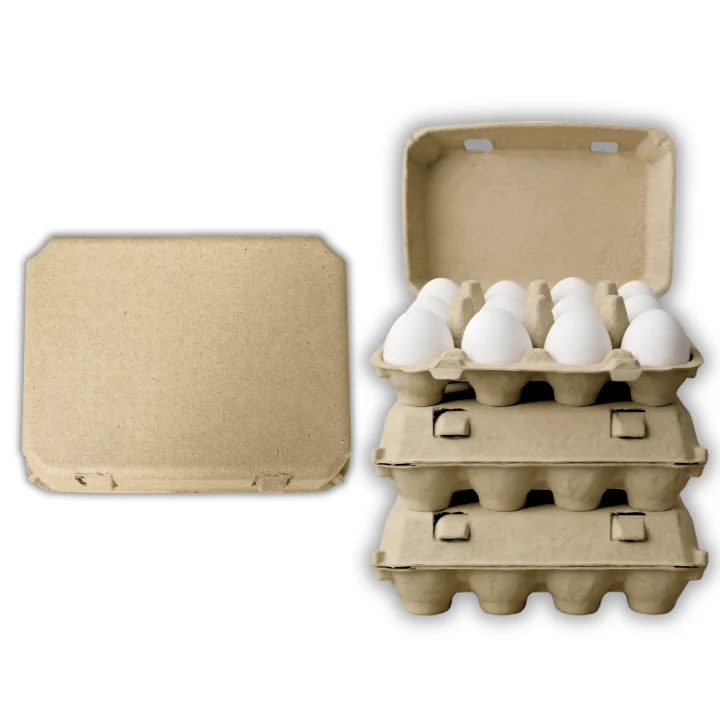
Ретро-ящики для яиц из формованной целлюлозы

BonitoPak molded pulp vintage egg cartons are formed to the flat top profile egg packaging carried before the modern domed clamshell.

  • Flat top lid with a squared profile, matching mid century egg carton geometry
  • Full flat panel gives the largest printable surface of any carton in the range
  • Изготовлено из переработанной бумажной массы 100%, поддается биологическому разложению и компостированию в домашних условиях
  • Deep single fold hinge that opens flat for market display
  • Natural pulp reads authentically period; muted stock colors available
  • Suits farmers markets, heritage brands, food styling, and prop use
  • OEM and ODM sizing accepted; period style print and embossing supported

Общественная плесень

Упаковочные решения

3D-дизайн

Подгонянная прессформа

gg Картон

Описание товара

Технические характеристики Подробности
Название бренда BonitoPak
Номер модели EC-VTG series
Название продукта Vintage Egg Cartons / Flat Top Retro Pulp Carton
Материал Переработанная бумажная целлюлоза
Тип бумаги Бумага, полученная в результате вторичной переработки отходов потребления
Техника Формование из формованной целлюлозы (мокрое прессование)
Количество клеток 6 or 12 cells
Диапазон размеров яиц Standard to extra large chicken eggs
Lid Profile Flat top, squared edge, single fold hinge
Габаритные размеры 12 cell: 300 x 108 x 68 mm; 6 cell: 175 x 108 x 68 mm
Вес единицы продукции 32 to 60 g depending on cell count
Цвет Natural pulp; muted period shades; custom color matching
Форма и стиль Flat top clamshell, retro squared profile
Печать логотипа Тиснение, углубленная печать или флексографская печать
Промышленное использование Farmers markets, heritage brands, food styling, hospitality
Приложение Farm direct sales, branded heritage lines, styling and prop use
Размер Принимаются заказы по спецификациям OEM и с индивидуальными размерами
Преимущества Biodegradable, home compostable, plastic free, largest print panel
Упаковка Оптовая партия укладывается в экспортные картонные коробки; возможна упаковка по индивидуальному заказу
Индивидуальный заказ Принято
MOQ Confirm with sales; stock molds carry a lower minimum than custom tooling

Галерея Ретро-ящики для яиц из формованной целлюлозы запчасти

Эта галерея демонстрирует исключительное качество и внимание к деталям, которые мы воплощаем в каждом проекте. От сложных конструкций до безупречной отделки - каждое изображение отражает наше стремление к совершенству в Ретро-ящики для яиц из формованной целлюлозы .

40%

Экономия средств и времени

Передовые упаковочные решения оптимизируют ваши затраты и время, обеспечивая эффективность процессов и максимальную окупаемость инвестиций.

50%

Более устойчивый

Создайте экологичную упаковку из экологически чистых материалов, сократите количество отходов и повысьте экологическую ответственность за весь ассортимент продукции.

25%

Увеличение продаж

Повысьте привлекательность вашей продукции на полке с помощью инновационных дизайнов, которые повышают видимость и продажи как в розничной торговле, так и на онлайн-рынках.

100%

Надежнее

Доверьтесь приверженности BonitoPak к качеству, гарантирующему, что каждый продукт соответствует нашим высоким стандартам и обеспечивает постоянное и надежное обслуживание.

Vintage describes a mold profile, not a decoration

Buyers searching for vintage egg cartons are usually looking for a specific physical shape rather than a printed graphic, and suppliers who treat the request as a print job get it wrong.

Egg cartons made through the middle of the twentieth century had a flat top. The lid was a squared panel with straight sides, folding down onto a base with a single deep hinge. Domed and contoured lids came later, driven by material savings and by automatic packing equipment that needed a self locating shape.

The flat top is the vintage carton. Print style contributes, but a domed modern carton with a retro typeface still looks modern, because the silhouette is what the eye reads first.

Our vintage molds reproduce the flat top geometry, including the squared shoulder where the lid meets the base and the deeper single fold hinge that lets the lid lay fully back.

Why the flat panel matters commercially

The flat top has a practical advantage that has nothing to do with nostalgia. It is the best print surface in egg packaging.

A domed lid curves in two directions, which means printed artwork distorts toward the edges and registration is harder to hold. A flat panel prints like a sheet. Fine detail holds, straight lines stay straight, and edge to edge coverage is achievable.

For a producer who wants their farm name reproduced properly rather than approximately, the flat top is the correct specification regardless of whether they care about the retro association. Several of our customers order it purely for the print quality.

The panel on a twelve cell vintage carton runs roughly 320 square centimeters of usable flat area, which is generous enough for a full illustrated design rather than a logo and a line of text.

The hinge behaves differently

A single deep fold hinge is more fragile than the multiple shallow creases used on modern cartons, and it needs more fiber to survive repeated opening.

We compensate by running additional wall thickness through the hinge zone, which adds a small amount of material per carton. The payoff is a lid that lays fully flat when opened, presenting the eggs as a display rather than propping the lid at an angle.

At a farmers market that difference is worth the extra grams. A carton that opens flat on a table shows twelve eggs to a passing customer. A carton with a lid standing up hides half of them.

Buyers should note that the deep hinge is the wear point on this format. Cartons opened and closed repeatedly for display, then sold, will show hinge fatigue. Producers who display eggs loose and pack at the point of sale avoid the issue entirely.

Color choices that read as period

Bright saturated color undermines the vintage effect. The shades that work are muted.

Natural pulp is the most authentic, since it is what the originals were, and it needs no pigment at all. Beyond that, muted greens, faded blues, and warm off-whites read as period. Bright pink and vivid purple do not, however well they perform on modern formats.

Print color follows the same logic. Single color printing in a dark ink on natural pulp is close to how these cartons were actually produced, since multi-color printing on egg cartons was uncommon until much later. A one color design also costs less to print, which is a rare case where the authentic choice is also the cheaper one.

Uses beyond selling eggs

Vintage cartons have a secondary market that surprises most producers.

Food stylists and photographers buy them as props, since a flat top carton signals farm and heritage in a single frame. Restaurants use them for table presentation. Craft and education buyers use them for the shape rather than the function.

These are low volume buyers, but they order consistently and they do not negotiate on price, since the carton is a small line item against a larger production. Producers with an online storefront often find prop sales cover a meaningful share of their minimum order.

Where it sits against the rest of the range

Vintage is a positioning choice rather than a functional one. A producer choosing it is trading efficiency for identity.

The pragmatic setup runs a коробка на двенадцать яиц in modern profile for volume and wholesale accounts, with vintage reserved for direct sales where the customer sees the pack. A 6 ячеек для яиц in vintage profile works well for premium and gift lines.

Producers wanting distinctiveness through shape rather than period style should compare octagon egg cartons. Those combining vintage profile with a brand shade should read цветные картонные коробки для яиц for the pigment detail first.

Vintage describes a mold profile, not a decoration

Buyers searching for vintage egg cartons are usually looking for a specific physical shape rather than a printed graphic, and suppliers who treat the request as a print job get it wrong.

Egg cartons made through the middle of the twentieth century had a flat top. The lid was a squared panel with straight sides, folding down onto a base with a single deep hinge. Domed and contoured lids came later, driven by material savings and by automatic packing equipment that needed a self locating shape.

The flat top is the vintage carton. Print style contributes, but a domed modern carton with a retro typeface still looks modern, because the silhouette is what the eye reads first.

Our vintage molds reproduce the flat top geometry, including the squared shoulder where the lid meets the base and the deeper single fold hinge that lets the lid lay fully back.

Why the flat panel matters commercially

The flat top has a practical advantage that has nothing to do with nostalgia. It is the best print surface in egg packaging.

A domed lid curves in two directions, which means printed artwork distorts toward the edges and registration is harder to hold. A flat panel prints like a sheet. Fine detail holds, straight lines stay straight, and edge to edge coverage is achievable.

For a producer who wants their farm name reproduced properly rather than approximately, the flat top is the correct specification regardless of whether they care about the retro association. Several of our customers order it purely for the print quality.

The panel on a twelve cell vintage carton runs roughly 320 square centimeters of usable flat area, which is generous enough for a full illustrated design rather than a logo and a line of text.

The hinge behaves differently

A single deep fold hinge is more fragile than the multiple shallow creases used on modern cartons, and it needs more fiber to survive repeated opening.

We compensate by running additional wall thickness through the hinge zone, which adds a small amount of material per carton. The payoff is a lid that lays fully flat when opened, presenting the eggs as a display rather than propping the lid at an angle.

At a farmers market that difference is worth the extra grams. A carton that opens flat on a table shows twelve eggs to a passing customer. A carton with a lid standing up hides half of them.

Buyers should note that the deep hinge is the wear point on this format. Cartons opened and closed repeatedly for display, then sold, will show hinge fatigue. Producers who display eggs loose and pack at the point of sale avoid the issue entirely.

Color choices that read as period

Bright saturated color undermines the vintage effect. The shades that work are muted.

Natural pulp is the most authentic, since it is what the originals were, and it needs no pigment at all. Beyond that, muted greens, faded blues, and warm off-whites read as period. Bright pink and vivid purple do not, however well they perform on modern formats.

Print color follows the same logic. Single color printing in a dark ink on natural pulp is close to how these cartons were actually produced, since multi-color printing on egg cartons was uncommon until much later. A one color design also costs less to print, which is a rare case where the authentic choice is also the cheaper one.

Uses beyond selling eggs

Vintage cartons have a secondary market that surprises most producers.

Food stylists and photographers buy them as props, since a flat top carton signals farm and heritage in a single frame. Restaurants use them for table presentation. Craft and education buyers use them for the shape rather than the function.

These are low volume buyers, but they order consistently and they do not negotiate on price, since the carton is a small line item against a larger production. Producers with an online storefront often find prop sales cover a meaningful share of their minimum order.

Where it sits against the rest of the range

Vintage is a positioning choice rather than a functional one. A producer choosing it is trading efficiency for identity.

The pragmatic setup runs a коробка на двенадцать яиц in modern profile for volume and wholesale accounts, with vintage reserved for direct sales where the customer sees the pack. A 6 ячеек для яиц in vintage profile works well for premium and gift lines.

Producers wanting distinctiveness through shape rather than period style should compare octagon egg cartons. Those combining vintage profile with a brand shade should read цветные картонные коробки для яиц for the pigment detail first.

Материалы для Ретро-ящики для яиц из формованной целлюлозы Детали

Ведущие компании и инженеры полагаются на BonitoPak для быстрых итераций и прочных, высококачественных деталей. Будь то прототипирование или полномасштабное производство, наш широкий ассортимент материалов позволяет удовлетворить уникальные требования любого Ретро-ящики для яиц из формованной целлюлозы проект с точностью и скоростью.

Compostable kraft paper is the strongest fiber we form. Made from virgin

Colored pulp is not a separate fiber. It is any of our

Bleached pulp is the material to specify when the part has to

Natural plant fiber covers the non-wood cellulose sources we blend outside the

Corrugated paper as a molded pulp material means recovered cardboard boxes repulped

Straw fiber is made from the stalks left after grain harvest, material

Пользовательские Экологичный Надежный

Индивидуальная, экологически чистая упаковка

Полностью настраиваемый

Настройте свою упаковку, используя индивидуальные стили, размеры, цвета и отделку для удовлетворения конкретных потребностей.

Экспертная поддержка

Компания Bonitopak предоставляет экспертные консультации по дизайну и логистике, чтобы максимально повысить эффективность упаковки и увеличить рентабельность инвестиций.

Экорешения

Выбирайте экологичную упаковку, чтобы снизить воздействие на окружающую среду и поддержать "зеленые" цели вашего бренда.

Обеспечение качества

Bonitopak гарантирует высокое качество обслуживания и превосходство продукции в каждом упаковочном решении.

Часто задаваемые вопросы

Ретро-ящики для яиц из формованной целлюлозы

  • Will the deep hinge crack if customers reuse the carton?

    With repeated opening over weeks, eventually yes. The deep single fold concentrates flex in one line, which is the trade for a lid that lays flat. Modern multi-crease hinges last longer through reuse cycles. If your customers routinely return cartons for refilling, the modern profile is the more practical specification.

  • Do vintage cartons fit modern refrigerator door shelves?

    The twelve cell runs slightly shallower than a modern domed carton at around 68 mm tall against 75 mm, so it fits comfortably where a modern one does. Length is the same. Buyers switching between profiles do not usually need to change anything downstream.

  • Can I print a full color illustration on the lid?

    Yes, and the flat panel is the reason. Multi-color flexographic work holds registration on a flat surface in a way it cannot on a dome. Bear in mind that pulp texture softens fine detail regardless of print quality, so illustrations with heavy line work reproduce better than photographic images.

  • Does the flat top stack as well as a domed lid?

    Better, in fact. A flat surface bears directly on the base of the carton above with no contour to slide against, so stacks stay square. What the flat top loses is the arch strength a dome provides, which we compensate for with rib structure underneath the panel. Net top load performance is comparable.

  • Are vintage cartons actually old, or reproductions?

    They are newly manufactured to a historic profile. Genuinely old cartons are not food safe, since fiber packaging absorbs whatever it has been stored with and has no traceable material history. Our vintage cartons are produced from the same recycled pulp as the rest of the range, on molds cut to reproduce the flat top geometry

Биоразлагаемый результат

0 дней

7 дней

14 дней

30 дней

Специализированные отрасли

Произведя миллионы деталей, компания BonitoPak обладает глубокими знаниями в многочисленных областях применения. Мы особенно преуспели в отраслях, требующих точного и сложного изготовления деталей. Доверьтесь нам, мы обеспечим опыт и качество, независимо от сложности.

Упаковочные решения OEM и ODM

Компания Bonitopak предлагает как индивидуальные (OEM), так и предварительно разработанные (ODM) упаковочные решения. Независимо от того, нужна ли вам полностью индивидуальная конструкция или готовая к использованию упаковка, мы предлагаем высококачественные, эффективные и гибкие варианты, отвечающие потребностям вашего бренда.

Услуги OEM

OEM-упаковочные решения позволяют создавать полностью индивидуальные продукты, разработанные и изготовленные в соответствии с вашими специфическими требованиями. Компания Bonitopak предлагает всестороннюю поддержку на протяжении всего процесса разработки, создания прототипов и производства, гарантируя, что упаковка будет отражать уникальный стиль вашего бренда. Наши возможности точного производства гарантируют высокое качество и последовательность изготовления, независимо от сложности дизайна. Мы предоставляем комплексное обслуживание на всех этапах - от разработки концепции до поставки, помогая вам оптимизировать процесс производства упаковки.

Услуги ODM

Упаковочные решения ODM предлагают заранее разработанные продукты, которые могут быть адаптированы к требованиям вашего бренда. Благодаря инновационному опыту Bonitopak в области дизайна и эффективному производственному процессу, вы можете выбрать из широкого спектра готовых к использованию вариантов упаковки. Мы обеспечиваем гибкую настройку, позволяя вам добавлять свой брендинг и выбирать из различных вариантов отделки, цветов и размеров. Это решение позволяет сэкономить время и средства, обеспечивая при этом высокое качество упаковки, отвечающее стандартам вашего бренда.
Готовы ли вы повысить уровень своего проекта?

Воплощайте свои проекты в жизнь с BonitoPak

Испытайте на себе прецизионное проектирование с BonitoPak. От детальных прототипов до крупносерийного производства - мы готовы воплотить ваши концепции в реальность. Свяжитесь с нами сегодня, чтобы обсудить потребности вашего проекта!

Наши категории продуктов

Откройте для себя разнообразный ассортимент упаковочных решений Bonitopak, включая формованные лотки для целлюлозы, упаковку для пищевых продуктов, индивидуальные конструкции и экологичные варианты. Каждая категория создана для обеспечения долговечности, функциональности и экологической ответственности, с учетом ваших конкретных потребностей.

Vintage describes a mold profile, not a decoration

Buyers searching for vintage egg cartons are usually looking for a specific physical shape rather than a printed graphic, and suppliers who treat the request as a print job get it wrong.

Egg cartons made through the middle of the twentieth century had a flat top. The lid was a squared panel with straight sides, folding down onto a base with a single deep hinge. Domed and contoured lids came later, driven by material savings and by automatic packing equipment that needed a self locating shape.

The flat top is the vintage carton. Print style contributes, but a domed modern carton with a retro typeface still looks modern, because the silhouette is what the eye reads first.

Our vintage molds reproduce the flat top geometry, including the squared shoulder where the lid meets the base and the deeper single fold hinge that lets the lid lay fully back.

Why the flat panel matters commercially

The flat top has a practical advantage that has nothing to do with nostalgia. It is the best print surface in egg packaging.

A domed lid curves in two directions, which means printed artwork distorts toward the edges and registration is harder to hold. A flat panel prints like a sheet. Fine detail holds, straight lines stay straight, and edge to edge coverage is achievable.

For a producer who wants their farm name reproduced properly rather than approximately, the flat top is the correct specification regardless of whether they care about the retro association. Several of our customers order it purely for the print quality.

The panel on a twelve cell vintage carton runs roughly 320 square centimeters of usable flat area, which is generous enough for a full illustrated design rather than a logo and a line of text.

The hinge behaves differently

A single deep fold hinge is more fragile than the multiple shallow creases used on modern cartons, and it needs more fiber to survive repeated opening.

We compensate by running additional wall thickness through the hinge zone, which adds a small amount of material per carton. The payoff is a lid that lays fully flat when opened, presenting the eggs as a display rather than propping the lid at an angle.

At a farmers market that difference is worth the extra grams. A carton that opens flat on a table shows twelve eggs to a passing customer. A carton with a lid standing up hides half of them.

Buyers should note that the deep hinge is the wear point on this format. Cartons opened and closed repeatedly for display, then sold, will show hinge fatigue. Producers who display eggs loose and pack at the point of sale avoid the issue entirely.

Color choices that read as period

Bright saturated color undermines the vintage effect. The shades that work are muted.

Natural pulp is the most authentic, since it is what the originals were, and it needs no pigment at all. Beyond that, muted greens, faded blues, and warm off-whites read as period. Bright pink and vivid purple do not, however well they perform on modern formats.

Print color follows the same logic. Single color printing in a dark ink on natural pulp is close to how these cartons were actually produced, since multi-color printing on egg cartons was uncommon until much later. A one color design also costs less to print, which is a rare case where the authentic choice is also the cheaper one.

Uses beyond selling eggs

Vintage cartons have a secondary market that surprises most producers.

Food stylists and photographers buy them as props, since a flat top carton signals farm and heritage in a single frame. Restaurants use them for table presentation. Craft and education buyers use them for the shape rather than the function.

These are low volume buyers, but they order consistently and they do not negotiate on price, since the carton is a small line item against a larger production. Producers with an online storefront often find prop sales cover a meaningful share of their minimum order.

Where it sits against the rest of the range

Vintage is a positioning choice rather than a functional one. A producer choosing it is trading efficiency for identity.

The pragmatic setup runs a коробка на двенадцать яиц in modern profile for volume and wholesale accounts, with vintage reserved for direct sales where the customer sees the pack. A 6 ячеек для яиц in vintage profile works well for premium and gift lines.

Producers wanting distinctiveness through shape rather than period style should compare octagon egg cartons. Those combining vintage profile with a brand shade should read цветные картонные коробки для яиц for the pigment detail first.

Похожие статьи и статьи

В нашем блоге вы найдете самые свежие новости о тенденциях в области экологичной упаковки, отраслевые идеи и советы экспертов. Изучайте инновационные идеи и решения, чтобы расширить свои знания об упаковке.

Автор: Лео Чан | Автор статей, BonitoPak | Более 20 лет опыта в сфере упаковки из формованной целлюлозы. Водка — это

Автор: Лео Чан | Автор статей, BonitoPak | Более 20 лет опыта в сфере упаковки из формованной целлюлозы. Практически каждый

Автор: Лео Чан | Автор статей, BonitoPak | Более 20 лет опыта в сфере упаковки из формованной целлюлозы. Поиск по этой теме

Часто задаваемые вопросы

Ретро-ящики для яиц из формованной целлюлозы

  • Will the deep hinge crack if customers reuse the carton?

    With repeated opening over weeks, eventually yes. The deep single fold concentrates flex in one line, which is the trade for a lid that lays flat. Modern multi-crease hinges last longer through reuse cycles. If your customers routinely return cartons for refilling, the modern profile is the more practical specification.

  • Do vintage cartons fit modern refrigerator door shelves?

    The twelve cell runs slightly shallower than a modern domed carton at around 68 mm tall against 75 mm, so it fits comfortably where a modern one does. Length is the same. Buyers switching between profiles do not usually need to change anything downstream.

  • Can I print a full color illustration on the lid?

    Yes, and the flat panel is the reason. Multi-color flexographic work holds registration on a flat surface in a way it cannot on a dome. Bear in mind that pulp texture softens fine detail regardless of print quality, so illustrations with heavy line work reproduce better than photographic images.

  • Does the flat top stack as well as a domed lid?

    Better, in fact. A flat surface bears directly on the base of the carton above with no contour to slide against, so stacks stay square. What the flat top loses is the arch strength a dome provides, which we compensate for with rib structure underneath the panel. Net top load performance is comparable.

  • Are vintage cartons actually old, or reproductions?

    They are newly manufactured to a historic profile. Genuinely old cartons are not food safe, since fiber packaging absorbs whatever it has been stored with and has no traceable material history. Our vintage cartons are produced from the same recycled pulp as the rest of the range, on molds cut to reproduce the flat top geometry

Заполните эту подробную форму