Автор: Лео Чан | Автор, BonitoPak | Более 20 лет опыта в сфере упаковки из формованной целлюлозы
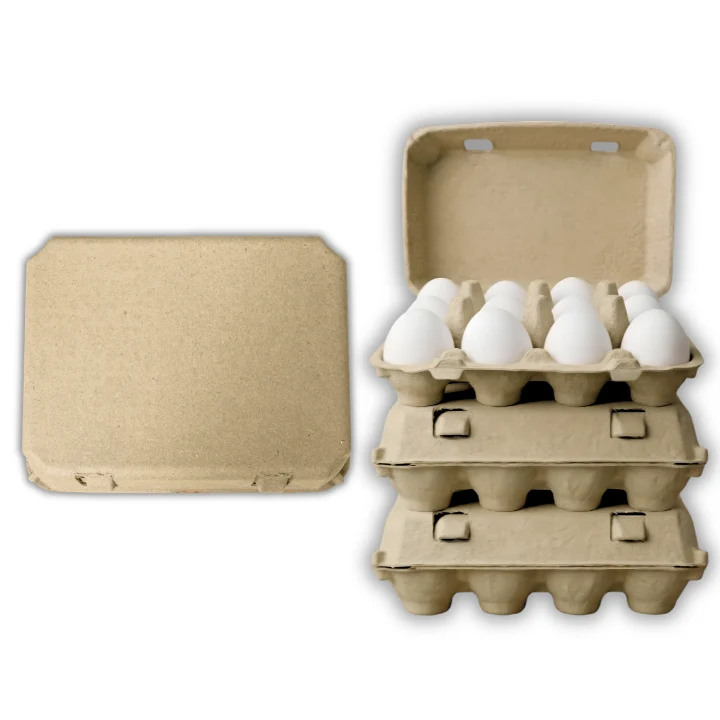
Federal food safety guidance treats egg cartons as one-time-use packaging. Several state agriculture departments explicitly permit reuse provided cartons are clean and all prior labeling is covered or removed. A few states prohibit it. The labeling rules bite harder than the hygiene ones.
Can you reuse egg cartons? Ask and you will get confident answers in both directions, which is unusual for a food safety question. The reason is that the sources genuinely disagree, and they disagree because they are answering different questions.
This article separates what federal guidance says, what state rules actually permit, why fiber behaves differently from plastic, and where reuse is completely fine.
Are Egg Cartons One Time Use? Sources Disagree
Worth stating plainly, because most articles pick one side and present it as settled.
On one hand, USDA’s Food Safety and Inspection Service treats items such as foam meat trays, convenience food dishes and egg cartons as one-time-use packaging, and industry bodies go further, advising that cartons should never be reused because they can act as a reservoir for bacteria. That position is set out in published egg storage and handling guidance.
On the other, state agriculture departments regulating actual egg sales often permit it. Minnesota’s guidance for people selling locally produced eggs states directly that cartons may be reused or recycled provided they are clean and any labeling information from a prior pack, including anything relating to another egg packer, is covered or crossed out, and it suggests a black permanent marker. You can read the Minnesota shell egg guidance in full.
Both are correct within their own frame. Federal guidance addresses egg carton food safety as consumer best practice. State egg law is regulating commercial sale, where the dominant concern is accurate labeling. If you are selling eggs, the state rule is the one that determines whether you are compliant.
What State Rules Actually Require
Rules vary, but the pattern across states that permit reuse is consistent.
| Requirement | What it means in practice |
|---|---|
| Carton must be clean | Visibly clean and dry, with no residue, staining or odor |
| Prior labeling covered or removed | Another producer’s name, pack date and plant code must not be visible |
| Accurate current information | Your name and address, and a correct pack date for these eggs |
| No false or misleading claims | Grade or size claims left from the previous pack are misstatements |
Some states go further. Where a carton still carries incorrect or misleading information about the eggs inside, reuse is prohibited outright unless that information is fully removed or replaced. And at least one state prohibits selling eggs in used cartons regardless of relabeling. Federal rules do not ban reuse outright, but they do prohibit false or misleading information, which reaches the same result by a different route.
None of this is legal advice, and it changes. Your state department of agriculture is the only reliable source for your own situation.
Reusing Egg Cartons: Labeling Beats Hygiene as the Problem
This surprises people, but it is the practical reality for anyone selling.
A retail carton is covered in another business’s information: their farm name and address, their pack date, their plant code, their grade and size claims, and often their marketing. Every one of those is now wrong for your eggs, and covering all of it thoroughly is genuinely tedious work.
Michigan’s egg law, for example, requires cartons to carry the producer’s name and address, egg size, the last date of sale, and the safe handling statement, and prohibits false or misleading labeling. Meeting that on a reused retail carton means blanking out a printed billboard and adding four correct items, per carton, by hand.
Set against a new blank carton costing roughly the price of two eggs, the arithmetic rarely favors reuse once labor is counted. That is the same calculation we work through in our comparison of оптовые цены на картонные коробки, and it lands the same way: the cheap option stops being cheap once handling time is included.
Egg Carton Food Safety: Why Fiber Cannot Be Sanitized
This is where fiber and plastic genuinely differ, and it is the strongest hygiene argument.
Sanitizing a surface requires a surface. Rigid plastic is non porous, so it can be washed, sanitized and dried, and the process reaches everything that matters. Molded fiber is absorbent by design, which is exactly why it protects eggs and manages moisture well. Liquid does not sit on it, it goes into it.
So washing a fiber carton saturates the material rather than cleaning it. That weakens the fiber bonding that gives the carton its strength, and it introduces moisture into a porous material, which invites mould. You end up with a weaker, damper carton that is not meaningfully cleaner.
The risk this matters for is real rather than theoretical. Eggshells carry thousands of pores, and anything on the shell surface has a route inward. Cracked eggs in a previous pack, or moisture sitting on shells, are precisely the conditions where transfer happens, which we cover in our article on Размеры и количество яиц в упаковках.
Advice Circulating Online That You Should Ignore
- Microwaving cartons to sanitize them. It does not reliably reach fibers, it is a fire risk with fiber packaging, and it addresses none of the labeling problem.
- Washing fiber cartons. Saturates and weakens the material without sanitizing it.
- Spraying disinfectant into cells. Adds chemical residue to a porous surface that will contact food, which is an egg carton food safety problem rather than a solution.
- Assuming reuse is fine because it is environmentally responsible. Fiber cartons are already recyclable or compostable, so disposal is not the wasteful outcome it is being compared against.
That last one is worth dwelling on. The environmental argument for reuse is weaker with fiber than with plastic, because the alternative is not landfill. A pulp carton has genuine end of life routes, so the trade is between reuse and recycling rather than between reuse and waste.
The Carton Return Model, and Why It Persists
Reusing egg cartons through an informal deposit scheme is common among small producers. Eggs cost one price with a carton and less if the customer brings their own, which reliably gets cartons coming back.
It is easy to see the appeal. Cartons are a recurring cost, customers feel good about it, and supply problems around molt and holiday demand ease. Producers running out of cartons at exactly the wrong time is a common complaint.
The problem is that returned cartons are a mixed bag. Some are yours, some are retail cartons from three different brands, and their condition varies. If you are selling rather than gifting, each one needs assessing and relabeling individually, which is the part that quietly consumes an afternoon.
A workable middle path used by a number of producers: accept returned cartons gratefully, use the clean ones of your own for household eggs or for gifts to people you know, and sell only in new blank cartons that carry correct labeling from the start.
Where You Can Reuse Egg Cartons Freely
None of the above applies once the carton leaves the food chain. For non food uses, a used carton is simply a molded fiber tray with cells in it.
- Seed starting. The cells hold soil, and pulp can be planted out as it breaks down.
- Small parts storage in a workshop or craft room.
- Fire starters, since dry fiber and wax work well together.
- Composting directly, torn into pieces to speed breakdown.
- School and craft projects.
For a producer, encouraging customers toward these uses is a better message than encouraging returns. It keeps the fiber out of waste without creating a labeling problem for your business.
Что мы видим на нашей собственной производственной линии
We manufacture molded pulp egg packaging in Chashan Town, Dongguan, and reuse comes up more often than expected in customer conversations.
Are egg cartons one time use by design? Largely yes
Wall section, cell geometry and closure design are all specified against a single pack, transport and unpack cycle. Our картонные коробки, изготовленные методом мокрого прессования finish at roughly 0.7 to 1.2mm and dry pressed trays at roughly 2.5 to 3.0mm, and neither figure includes a safety margin for repeated opening, closing and handling. A closure tab in particular loses grip after several cycles, which is how packs open in transit.
Blank stock is the practical answer to the labeling problem
Most producers asking about reuse are really asking about cost. Blank cartons plus a printed label solve the same problem without the compliance exposure, and they let details change without writing off stock. That comparison is set out in our guide to blank versus printed cartons. Where flat areas for labels and date codes are formed into the mold, applying them takes seconds rather than requiring workarounds.
Design for end of life rather than for reuse
For fiber, the sustainability gain comes from keeping the pack single material and uncoated so recycling and composting stay open, rather than from extending its life. Our recycled paper pulp cartons use mechanical pulping without chemical additives for that reason. Sample molds run in about seven days and production molds around eight days after geometry approval, with minimums from 1,000 pieces, and options are set out on our Индивидуальная формованная упаковка из целлюлозы страница.
Применение этого на практике
Before you reuse egg cartons for sale, check your own state rules first, because they vary from explicitly permitted with conditions through to prohibited. Where reuse is allowed, the conditions are consistent: clean cartons, all prior labeling covered or removed, and accurate current information including a correct pack date.
Then work out whether it is worth it. For most producers it is not, once the time spent blanking out another farm’s printing is compared against the cost of a new blank carton. Reserve returned cartons for household use and gifts, sell in new stock, and point customers toward seed starting and composting rather than returns.
На сайте BonitoPak we design cartons for a single filling cycle and for a clean end of life rather than for reuse, because that is where fiber packaging is genuinely strong. If carton cost is what is driving the question, the more useful conversation is usually about volume pricing and label flats rather than about extending the life of stock you already have.
Об авторе
Leo Chan is the Writer of BonitoPak and has spent more than 20 years in molded pulp packaging, working with over 500 brands moving from plastic and foam to fiber based formats. BonitoPak manufactures molded pulp packaging at its facility in Chashan Town, Dongguan, Guangdong, running both wet pressing and dry pressing lines across six pulp systems, with in house mold design and tooling. The regulatory summary here reflects published federal guidance and state agriculture department requirements as of mid 2026, alongside production experience on that line. Rules vary by state and change. This is general information rather than legal advice.
Часто задаваемые вопросы
Q: Can I sanitize a used carton in the microwave?
A: No. It does not reliably reach the fibers, it risks fire, and it does nothing about the labeling problem. Fiber cartons cannot be sanitized because the material is absorbent and porous.
Q: Can you reuse egg cartons for eggs you give away?
A: Labeling rules generally attach to sale, so gifting to friends is a lower risk situation. The hygiene considerations are the same, so a visibly soiled or previously used carton is still a poor choice.
Q: What if customers return my own cartons to me?
A: The labeling problem is smaller since it is already your branding, but the hygiene question remains, along with an inaccurate pack date. Many producers reuse them only for their own household.
Q: Can I wash a plastic egg carton and reuse it?
A: Rigid plastic is a non porous surface and can be washed and sanitized properly, which fiber cannot. Labeling rules still apply, and eggs move more inside plastic cells under vibration.
Q: What is the cheapest compliant option for a small flock?
A: Blank cartons with a printed or stamped label. They cost roughly the price of a couple of eggs each, remove the labeling risk entirely, and can be updated when your details change.