Продукция

Ознакомьтесь с широким ассортиментом высококачественных, экологически чистых упаковочных решений, разработанных с учетом уникальных потребностей различных отраслей промышленности. От индивидуальных разработок до экологичных материалов - найдите идеальный вариант упаковки для вашей продукции.

Материал :

Переработанная бумага
Упаковка :
Коробка для яиц
Процесс
Мокрая пресса
Цвет :
Multicolor

Материал :

Переработанная бумага
Упаковка :
Коробка для яиц
Процесс
Мокрая пресса
Цвет :
Натуральный

Материал :

Переработанная бумага
Упаковка :
Quail Egg Carton
Процесс
Мокрая пресса
Цвет :
Натуральный

Материал :

Тип материала
Упаковка :
Тип упаковки
Процесс
Список процессов
Цвет :
Цвет серый
egg cartons stacked on a pallet showing reinforced lid profile

Материал :

Тип материала
Упаковка :
Тип упаковки
Процесс
Список процессов
Цвет :
Цвет серый

Материал :

Тип материала
Упаковка :
Тип упаковки
Процесс
Список процессов
Цвет :
Цвет серый

Материал :

Тип материала
Упаковка :
Тип упаковки
Процесс
Список процессов
Цвет :
Цвет серый
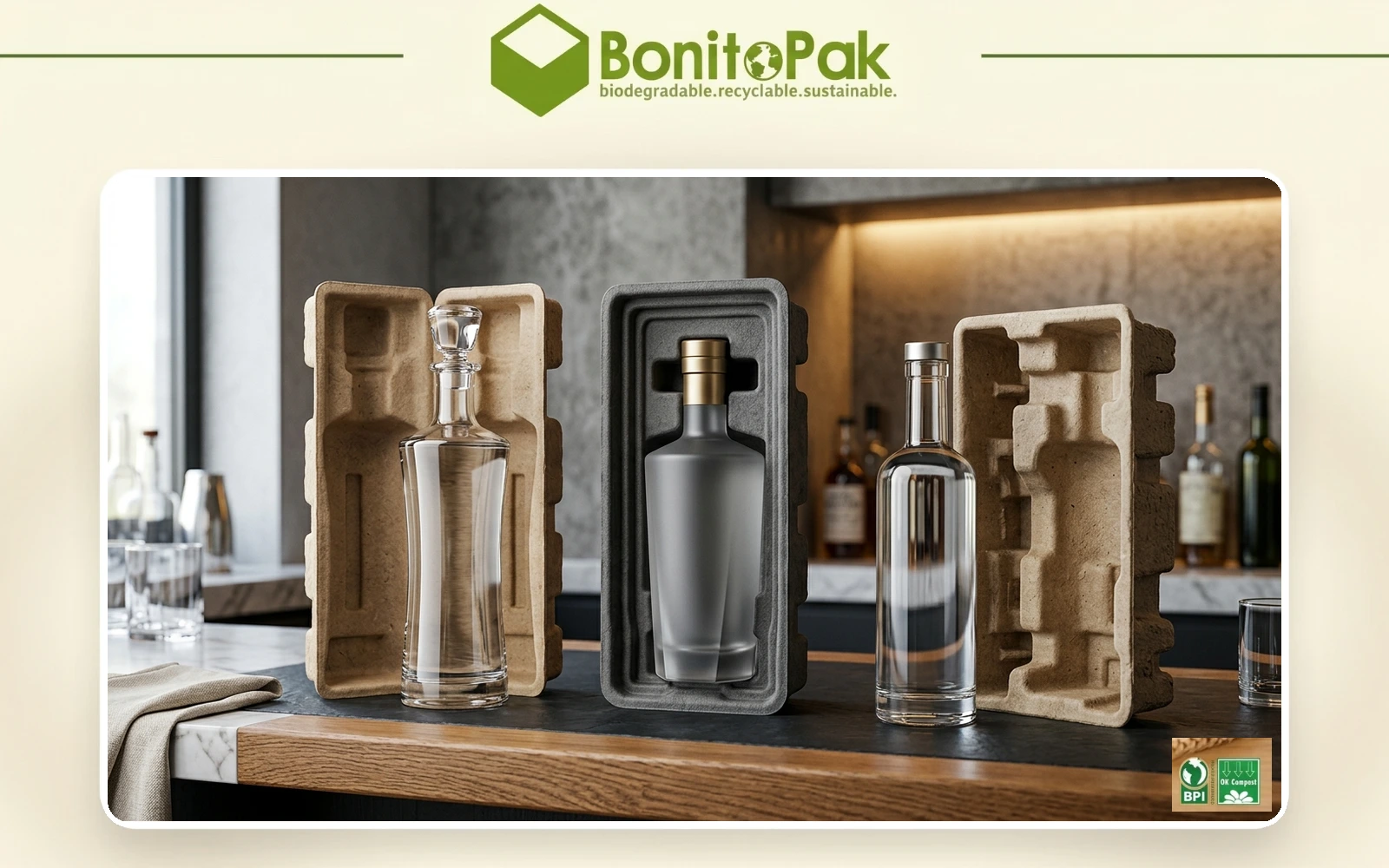
Вставки для упаковки вина из целлюлозы, изготовленные на заказ

Материал :

Тип материала
Упаковка :
Тип упаковки
Процесс
Список процессов
Цвет :
Цвет серый

Материал :

Тип материала
Упаковка :
Тип упаковки
Процесс
Список процессов
Цвет :
Цвет серый

Материал :

Тип материала
Упаковка :
Тип упаковки
Процесс
Список процессов
Цвет :
Цвет серый

Наши категории продуктов

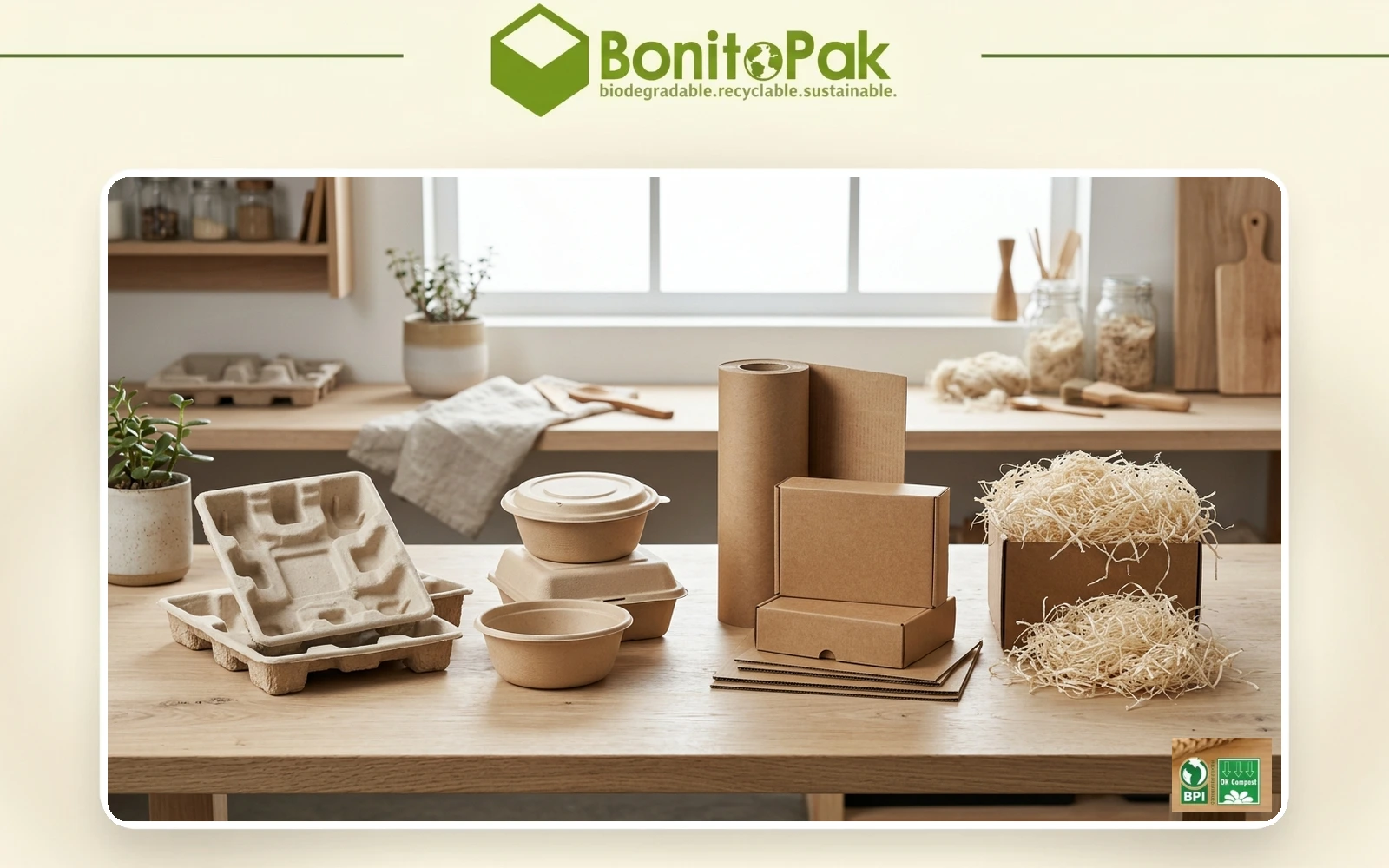
Откройте для себя разнообразный ассортимент упаковочных решений Bonitopak, включая формованные лотки для целлюлозы, упаковку для пищевых продуктов, индивидуальные конструкции и экологичные варианты. Каждая категория создана для обеспечения долговечности, функциональности и экологической ответственности, с учетом ваших конкретных потребностей.

Two ways to color a pulp carton, and only one of them lasts

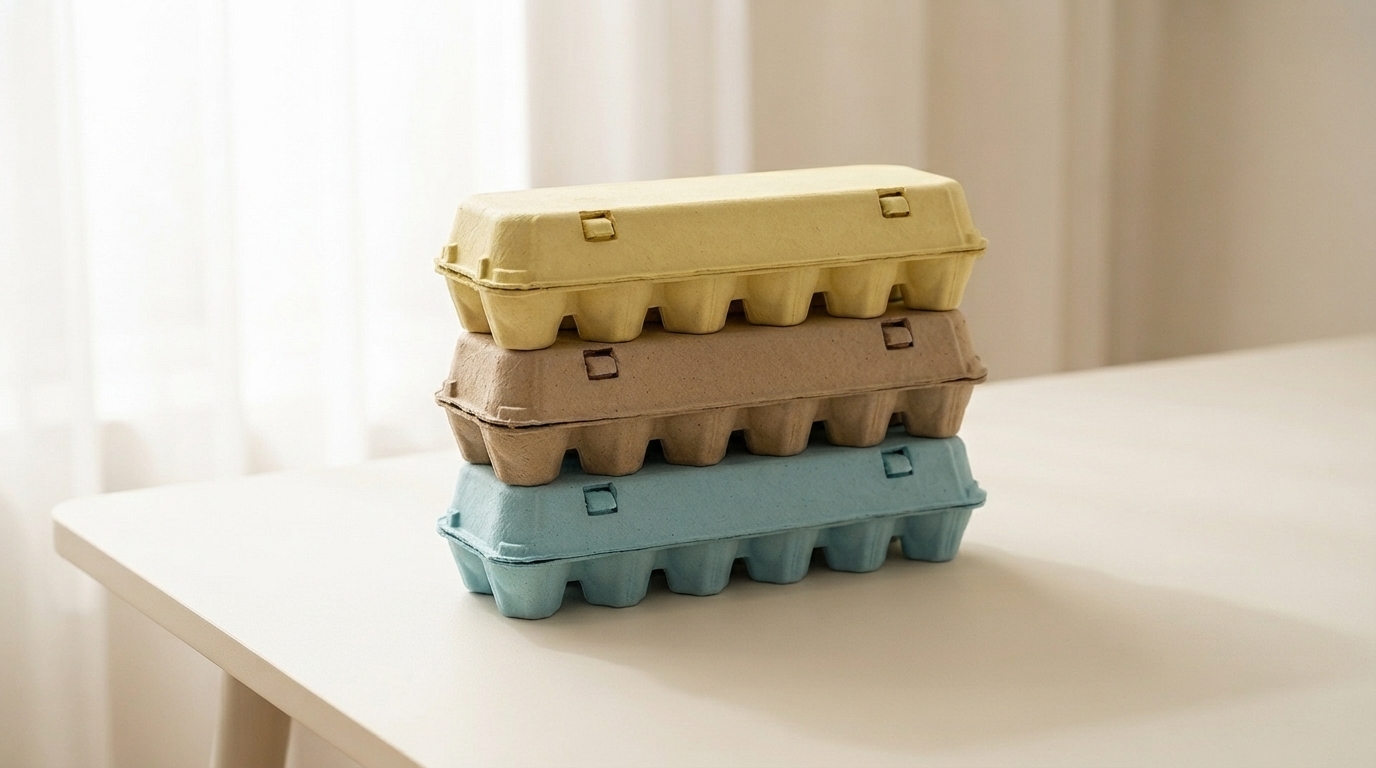
Colored egg cartons are produced by two very different methods, and the difference determines almost everything about how the finished carton performs.

Surface coating applies pigment after the carton is formed and dried, either by spray or by print. It is cheap, it allows fast color changes, and it produces bright results. It also sits on top of the fiber. Scuff a coated carton against a shelf edge and the natural pulp shows through. Coating also adds a layer that may not compost at the same rate as the fiber underneath, which undermines the reason most buyers chose pulp.

Wet end pigmentation blends the pigment into the pulp slurry before the mold ever touches it. The color is distributed through the fiber, so a torn edge shows the same shade as the face. Nothing can scuff off because there is no layer to remove.

Bonitopak colors at the wet end. That is why our colored cartons cost more than a coated equivalent and why they still look correct after a shipping cycle.

What pigment does to compostability

The concern buyers raise most often is whether color compromises the environmental claim. It is a fair question and the answer depends entirely on pigment selection.

Pigments intended for packaging that will compost have to break down without leaving heavy metals or persistent residue in the finished compost. That rules out several traditional colorant chemistries, particularly some historic reds and yellows. It leaves a narrower palette, which is one reason pulp color ranges are smaller than plastic ones.

Working inside that constraint, a pigmented pulp carton composts on essentially the same timeline as a natural one. The fiber is the same, the quantity of pigment is very small by mass, and there is no film or coating to interfere.

Buyers should ask any colored pulp supplier which pigment system they use and whether it is rated for compostable packaging. A supplier who cannot answer is probably surface coating.

Batch consistency is the real production challenge

Getting a color right once is straightforward. Getting the same color across a twelve month supply relationship is where suppliers separate.

Recycled pulp is not a consistent starting point. Incoming fiber varies in base color depending on the waste stream, seasonally and by supplier. A pigment dose that produces the target shade on a light batch will produce something darker on a gray one.

The control is measurement rather than recipe. Base pulp brightness is checked before dosing, the pigment quantity is adjusted against that reading, and formed samples are compared to a retained physical standard rather than to a color chip on a screen. Records for each batch let a repeat order be matched to the original rather than to the nominal specification.

Buyers running a branded line should request a retained sample at first production and reference it on every reorder. It is the only reliable way to hold a shade over time.

Where color earns its cost

Color adds cost. It is worth understanding where it pays that back.

At a farm stand or market table, a colored carton separates one producer from every other producer selling the same product in gray pulp. That visual difference does more work than any label, because it registers before the shopper is close enough to read anything.

In retail, color functions as a range signal. Producers commonly use different shades to distinguish free range from pasture raised, or standard from organic, which lets a shopper find their usual product without reading the pack.

In gift and seasonal channels, color is the product. Easter, holiday hampers, and branded corporate gifts are bought on appearance.

Where color rarely pays back is commodity commercial packing. If eggs are going through a grading station to a retailer who applies their own labeling, the carton is invisible and natural pulp is the right call.

Specifying color across a range

Buyers running several cell counts in one brand color need to plan for it, because each mold is a separate production run and shade drift between molds is a genuine risk.

The reliable approach is to run all molds in the same color from the same pigment batch where volumes allow, or to match every mold to one retained physical standard where they cannot. Ordering a коробка на двенадцать яиц and a 6 ячеек для яиц in the same shade six months apart without a retained standard will usually produce a visible difference.

Buyers focused on a single shade should see розовые коробки для яиц for the shade specific detail. Those pairing color with a distinctive shape should look at octagon egg cartons или старинные коробки для яиц.
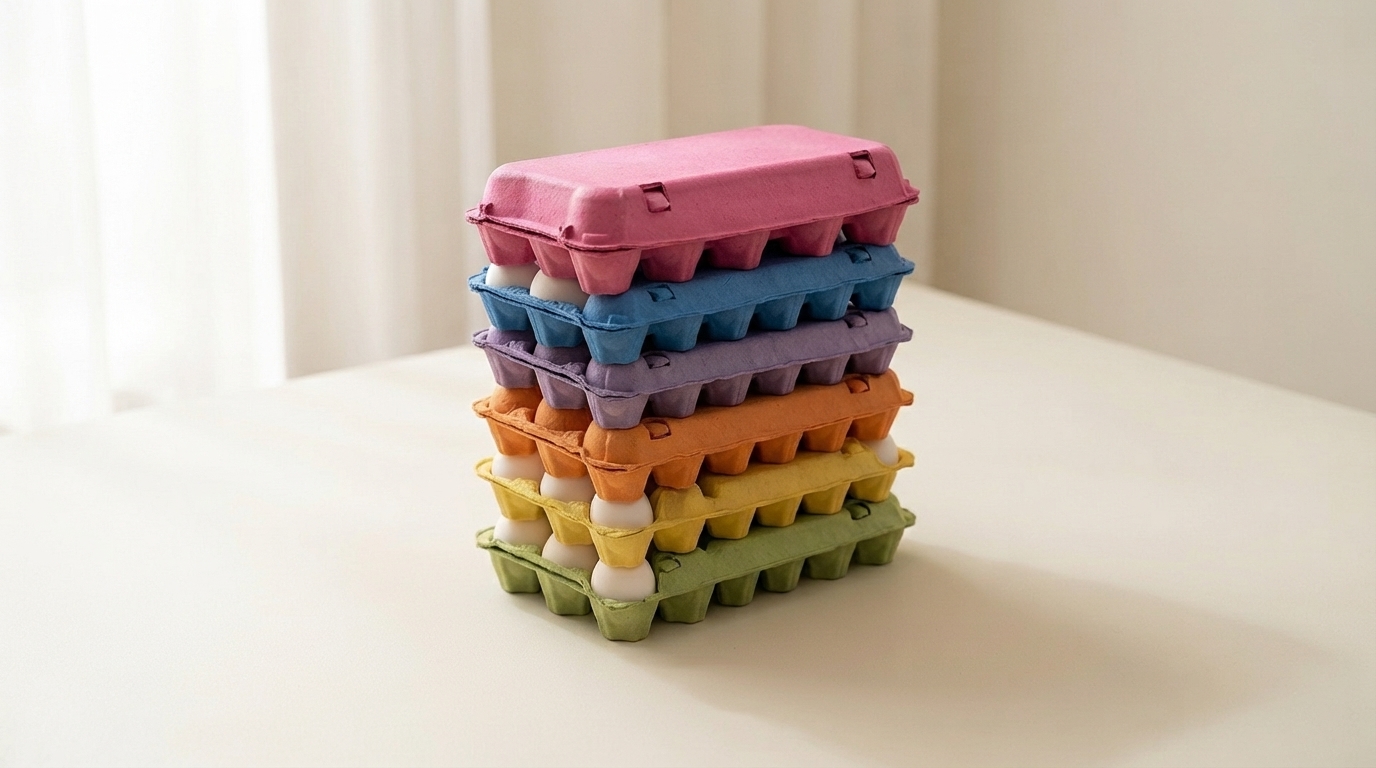
Colored egg cartons are produced by two very different methods, and the difference determines almost everything about how the finished carton performs.

Surface coating applies pigment after the carton is formed and dried, either by spray or by print. It is cheap, it allows fast color changes, and it produces bright results. It also sits on top of the fiber. Scuff a coated carton against a shelf edge and the natural pulp shows through. Coating also adds a layer that may not compost at the same rate as the fiber underneath, which undermines the reason most buyers chose pulp.

Wet end pigmentation blends the pigment into the pulp slurry before the mold ever touches it. The color is distributed through the fiber, so a torn edge shows the same shade as the face. Nothing can scuff off because there is no layer to remove.

Bonitopak colors at the wet end. That is why our colored cartons cost more than a coated equivalent and why they still look correct after a shipping cycle.

What pigment does to compostability

The concern buyers raise most often is whether color compromises the environmental claim. It is a fair question and the answer depends entirely on pigment selection.

Pigments intended for packaging that will compost have to break down without leaving heavy metals or persistent residue in the finished compost. That rules out several traditional colorant chemistries, particularly some historic reds and yellows. It leaves a narrower palette, which is one reason pulp color ranges are smaller than plastic ones.

Working inside that constraint, a pigmented pulp carton composts on essentially the same timeline as a natural one. The fiber is the same, the quantity of pigment is very small by mass, and there is no film or coating to interfere.

Buyers should ask any colored pulp supplier which pigment system they use and whether it is rated for compostable packaging. A supplier who cannot answer is probably surface coating.

Batch consistency is the real production challenge

Getting a color right once is straightforward. Getting the same color across a twelve month supply relationship is where suppliers separate.

Recycled pulp is not a consistent starting point. Incoming fiber varies in base color depending on the waste stream, seasonally and by supplier. A pigment dose that produces the target shade on a light batch will produce something darker on a gray one.

The control is measurement rather than recipe. Base pulp brightness is checked before dosing, the pigment quantity is adjusted against that reading, and formed samples are compared to a retained physical standard rather than to a color chip on a screen. Records for each batch let a repeat order be matched to the original rather than to the nominal specification.

Buyers running a branded line should request a retained sample at first production and reference it on every reorder. It is the only reliable way to hold a shade over time.

Where color earns its cost

Color adds cost. It is worth understanding where it pays that back.

At a farm stand or market table, a colored carton separates one producer from every other producer selling the same product in gray pulp. That visual difference does more work than any label, because it registers before the shopper is close enough to read anything.

In retail, color functions as a range signal. Producers commonly use different shades to distinguish free range from pasture raised, or standard from organic, which lets a shopper find their usual product without reading the pack.

In gift and seasonal channels, color is the product. Easter, holiday hampers, and branded corporate gifts are bought on appearance.

Where color rarely pays back is commodity commercial packing. If eggs are going through a grading station to a retailer who applies their own labeling, the carton is invisible and natural pulp is the right call.

Specifying color across a range

Buyers running several cell counts in one brand color need to plan for it, because each mold is a separate production run and shade drift between molds is a genuine risk.

The reliable approach is to run all molds in the same color from the same pigment batch where volumes allow, or to match every mold to one retained physical standard where they cannot. Ordering a коробка на двенадцать яиц and a 6 ячеек для яиц in the same shade six months apart without a retained standard will usually produce a visible difference.

Buyers focused on a single shade should see розовые коробки для яиц for the shade specific detail. Those pairing color with a distinctive shape should look at octagon egg cartons или старинные коробки для яиц.
Two ways to color a pulp carton, and only one of them lasts

Colored egg cartons are produced by two very different methods, and the difference determines almost everything about how the finished carton performs.

Surface coating applies pigment after the carton is formed and dried, either by spray or by print. It is cheap, it allows fast color changes, and it produces bright results. It also sits on top of the fiber. Scuff a coated carton against a shelf edge and the natural pulp shows through. Coating also adds a layer that may not compost at the same rate as the fiber underneath, which undermines the reason most buyers chose pulp.

Wet end pigmentation blends the pigment into the pulp slurry before the mold ever touches it. The color is distributed through the fiber, so a torn edge shows the same shade as the face. Nothing can scuff off because there is no layer to remove.

Bonitopak colors at the wet end. That is why our colored cartons cost more than a coated equivalent and why they still look correct after a shipping cycle.

What pigment does to compostability

The concern buyers raise most often is whether color compromises the environmental claim. It is a fair question and the answer depends entirely on pigment selection.

Pigments intended for packaging that will compost have to break down without leaving heavy metals or persistent residue in the finished compost. That rules out several traditional colorant chemistries, particularly some historic reds and yellows. It leaves a narrower palette, which is one reason pulp color ranges are smaller than plastic ones.

Working inside that constraint, a pigmented pulp carton composts on essentially the same timeline as a natural one. The fiber is the same, the quantity of pigment is very small by mass, and there is no film or coating to interfere.

Buyers should ask any colored pulp supplier which pigment system they use and whether it is rated for compostable packaging. A supplier who cannot answer is probably surface coating.

Batch consistency is the real production challenge

Getting a color right once is straightforward. Getting the same color across a twelve month supply relationship is where suppliers separate.

Recycled pulp is not a consistent starting point. Incoming fiber varies in base color depending on the waste stream, seasonally and by supplier. A pigment dose that produces the target shade on a light batch will produce something darker on a gray one.

The control is measurement rather than recipe. Base pulp brightness is checked before dosing, the pigment quantity is adjusted against that reading, and formed samples are compared to a retained physical standard rather than to a color chip on a screen. Records for each batch let a repeat order be matched to the original rather than to the nominal specification.

Buyers running a branded line should request a retained sample at first production and reference it on every reorder. It is the only reliable way to hold a shade over time.

Where color earns its cost

Color adds cost. It is worth understanding where it pays that back.

At a farm stand or market table, a colored carton separates one producer from every other producer selling the same product in gray pulp. That visual difference does more work than any label, because it registers before the shopper is close enough to read anything.

In retail, color functions as a range signal. Producers commonly use different shades to distinguish free range from pasture raised, or standard from organic, which lets a shopper find their usual product without reading the pack.

In gift and seasonal channels, color is the product. Easter, holiday hampers, and branded corporate gifts are bought on appearance.

Where color rarely pays back is commodity commercial packing. If eggs are going through a grading station to a retailer who applies their own labeling, the carton is invisible and natural pulp is the right call.

Specifying color across a range

Buyers running several cell counts in one brand color need to plan for it, because each mold is a separate production run and shade drift between molds is a genuine risk.

The reliable approach is to run all molds in the same color from the same pigment batch where volumes allow, or to match every mold to one retained physical standard where they cannot. Ordering a коробка на двенадцать яиц and a 6 ячеек для яиц in the same shade six months apart without a retained standard will usually produce a visible difference.

Buyers focused on a single shade should see розовые коробки для яиц for the shade specific detail. Those pairing color with a distinctive shape should look at octagon egg cartons или старинные коробки для яиц.
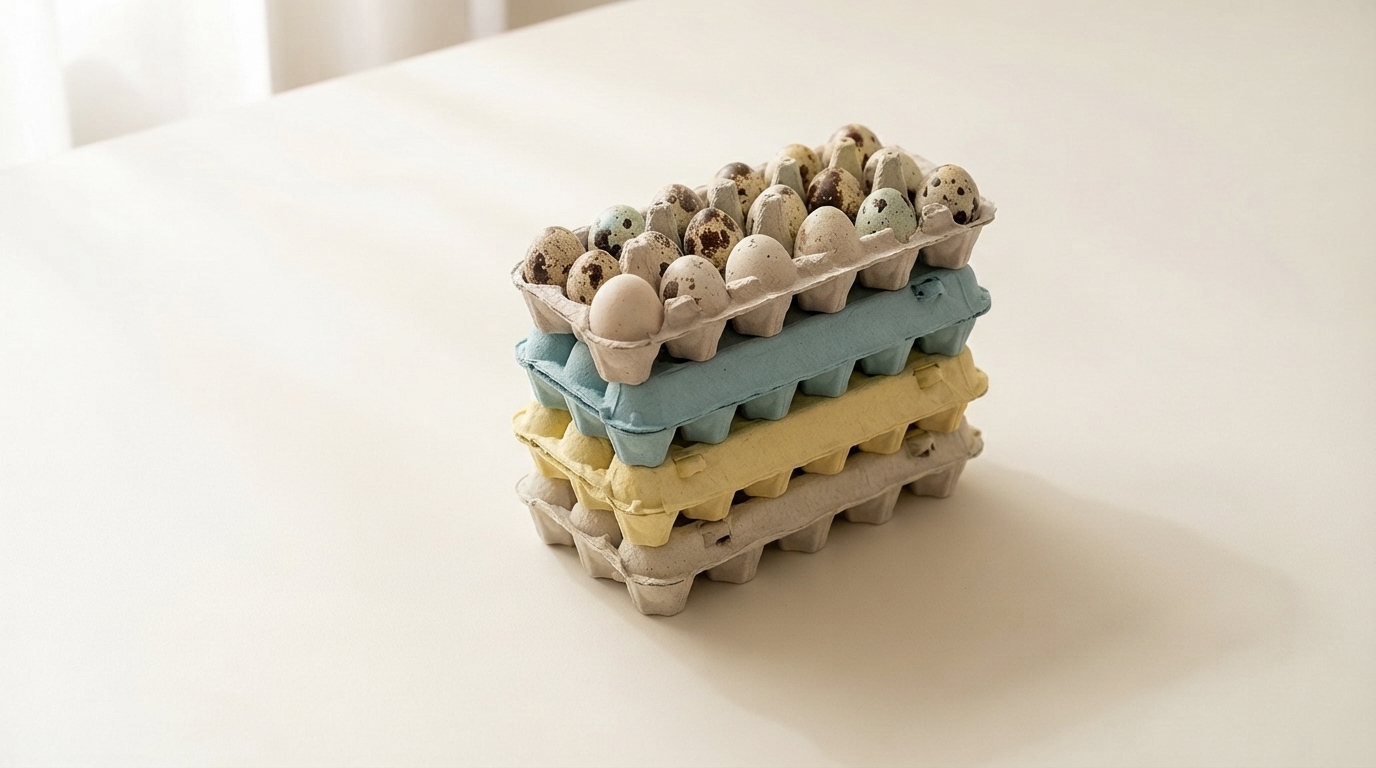
Colored egg cartons are produced by two very different methods, and the difference determines almost everything about how the finished carton performs.

Surface coating applies pigment after the carton is formed and dried, either by spray or by print. It is cheap, it allows fast color changes, and it produces bright results. It also sits on top of the fiber. Scuff a coated carton against a shelf edge and the natural pulp shows through. Coating also adds a layer that may not compost at the same rate as the fiber underneath, which undermines the reason most buyers chose pulp.

Wet end pigmentation blends the pigment into the pulp slurry before the mold ever touches it. The color is distributed through the fiber, so a torn edge shows the same shade as the face. Nothing can scuff off because there is no layer to remove.

Bonitopak colors at the wet end. That is why our colored cartons cost more than a coated equivalent and why they still look correct after a shipping cycle.

What pigment does to compostability

The concern buyers raise most often is whether color compromises the environmental claim. It is a fair question and the answer depends entirely on pigment selection.

Pigments intended for packaging that will compost have to break down without leaving heavy metals or persistent residue in the finished compost. That rules out several traditional colorant chemistries, particularly some historic reds and yellows. It leaves a narrower palette, which is one reason pulp color ranges are smaller than plastic ones.

Working inside that constraint, a pigmented pulp carton composts on essentially the same timeline as a natural one. The fiber is the same, the quantity of pigment is very small by mass, and there is no film or coating to interfere.

Buyers should ask any colored pulp supplier which pigment system they use and whether it is rated for compostable packaging. A supplier who cannot answer is probably surface coating.

Batch consistency is the real production challenge

Getting a color right once is straightforward. Getting the same color across a twelve month supply relationship is where suppliers separate.

Recycled pulp is not a consistent starting point. Incoming fiber varies in base color depending on the waste stream, seasonally and by supplier. A pigment dose that produces the target shade on a light batch will produce something darker on a gray one.

The control is measurement rather than recipe. Base pulp brightness is checked before dosing, the pigment quantity is adjusted against that reading, and formed samples are compared to a retained physical standard rather than to a color chip on a screen. Records for each batch let a repeat order be matched to the original rather than to the nominal specification.

Buyers running a branded line should request a retained sample at first production and reference it on every reorder. It is the only reliable way to hold a shade over time.

Where color earns its cost

Color adds cost. It is worth understanding where it pays that back.

At a farm stand or market table, a colored carton separates one producer from every other producer selling the same product in gray pulp. That visual difference does more work than any label, because it registers before the shopper is close enough to read anything.

In retail, color functions as a range signal. Producers commonly use different shades to distinguish free range from pasture raised, or standard from organic, which lets a shopper find their usual product without reading the pack.

In gift and seasonal channels, color is the product. Easter, holiday hampers, and branded corporate gifts are bought on appearance.

Where color rarely pays back is commodity commercial packing. If eggs are going through a grading station to a retailer who applies their own labeling, the carton is invisible and natural pulp is the right call.

Specifying color across a range

Buyers running several cell counts in one brand color need to plan for it, because each mold is a separate production run and shade drift between molds is a genuine risk.

The reliable approach is to run all molds in the same color from the same pigment batch where volumes allow, or to match every mold to one retained physical standard where they cannot. Ordering a коробка на двенадцать яиц and a 6 ячеек для яиц in the same shade six months apart without a retained standard will usually produce a visible difference.

Buyers focused on a single shade should see розовые коробки для яиц for the shade specific detail. Those pairing color with a distinctive shape should look at octagon egg cartons или старинные коробки для яиц.

Отраслевая экспертиза в BonitoPak

Произведя миллионы деталей, компания BonitoPak обладает глубокими знаниями в многочисленных областях применения. Мы особенно преуспели в отраслях, требующих точного и сложного изготовления деталей. Доверьтесь нам, мы обеспечим опыт и качество, независимо от сложности.
Готовы ли вы повысить уровень своего проекта?

Воплощайте свои проекты в жизнь с BonitoPak

Испытайте на себе прецизионное проектирование с BonitoPak. От детальных прототипов до крупносерийного производства - мы готовы воплотить ваши концепции в реальность. Свяжитесь с нами сегодня, чтобы обсудить потребности вашего проекта!

Почему стоит выбрать BonitoPak?

Компания Bonitopak предлагает индивидуальные, экологически чистые упаковочные решения с экспертной поддержкой, устойчивыми практиками и гарантированным качеством. Наши инновационные разработки и эффективное производство гарантируют, что ваша упаковка будет выделяться на фоне других, снижая при этом воздействие на окружающую среду.

Быстрые решения

Мы отвечаем на запросы в течение 24 часов, предлагая быструю и четкую связь, индивидуальные решения и эффективное обслуживание, позволяющее сэкономить время и средства.

Быстрая адаптация

Наши собственные дизайн, проектирование и производство обеспечивают быстрое изготовление оснастки: образцы готовы за 7 дней, а производственные формы - за 8 дней.

Эксперты-новаторы

Наши квалифицированные инженеры-исследователи занимаются проектированием, изготовлением прототипов и оснастки, предлагая комплексные решения по упаковке в блистеры, жестяные банки и печатные коробки.

Эффективная оптимизация

Обученный персонал проводит инспекции 100%, выборочные проверки и контроль качества, обеспечивая высокие стандарты, сокращая брак и снижая затраты.

Оперативная доставка

Мы предоставляем разумные сроки выполнения заказов и координируем работу с клиентами для оперативного решения вопросов, обеспечивая наилучшие решения.

Отличная поддержка

Наша опытная команда послепродажного обслуживания обеспечивает бесперебойную связь, решает проблемы с заменой, отправкой и доставкой, стремясь к отсутствию жалоб.

Похожие статьи и статьи

В нашем блоге вы найдете самые свежие новости о тенденциях в области экологичной упаковки, отраслевые идеи и советы экспертов. Изучайте инновационные идеи и решения, чтобы расширить свои знания об упаковке.

Автор: Лео Чан | Автор статей, BonitoPak | Более 20 лет опыта в сфере упаковки из формованной целлюлозы. Водка — это

Автор: Лео Чан | Автор статей, BonitoPak | Более 20 лет опыта в сфере упаковки из формованной целлюлозы. Практически каждый

Автор: Лео Чан | Автор статей, BonitoPak | Более 20 лет опыта в сфере упаковки из формованной целлюлозы. Поиск по этой теме

Часто задаваемые вопросы

Цветные ящики для яиц из формованной целлюлозы

  • Can I get a color card before ordering?

    Yes, and we recommend it. Screen renderings of pulp color are unreliable because fiber texture affects perceived shade. We send physical color chips of the six stock shades, and for custom work we produce a formed sample in the actual carton geometry, since a flat chip and a molded surface read differently.

  • Does the pigment transfer onto the eggshells?

    No. The pigment is bound within the fiber structure, not sitting loose on the surface, and dry pulp does not transfer color under normal handling. A carton that marks the eggs would indicate a surface coated product with poor adhesion, which is one of the practical arguments for wet end coloring.

  • Why do colored cartons cost more than natural?

    Three reasons. The pigment itself is an added material cost. Wet end color changes require the system to be flushed between shades, which is downtime. And colored runs cannot absorb variable incoming fiber the way natural production can, so more batches get rejected on shade. Stock colors cost less than custom because we run them continuously and avoid most of the changeover.

  • Can you match my exact brand color?

    We can get close, and we produce a physical match sample before any full run so you can approve or adjust. Exact matching to a printed Pantone reference is not achievable in pigmented fiber, because pulp scatters light differently than coated paper does. Brands with a strict color standard usually approve a designated pulp equivalent rather than insisting on the ink reference.

  • Will colored cartons fade in sunlight?

    Slowly, and mostly at a farm stand rather than in a cold case. Pulp pigments are less lightfast than printing inks because the palette is limited to compostable chemistries. Cartons held in direct sun for weeks will lighten, particularly in the blue and purple range. Retail cold cases and covered market stalls are not a problem.

Заполните эту подробную форму