 Ir al contenido

Introduction: Why Sustainable Manufacturing Is Reshaping Packaging
Across the global packaging industry, sustainability has moved from marketing language to a serious operational requirement. Governments are tightening regulations on plastic waste, large consumer brands are committing to ambitious environmental targets, and consumers increasingly prefer products packaged in materials that are recyclable or biodegradable. These changes are pushing manufacturers to rethink both the materials they use and the technologies they rely on to produce packaging.
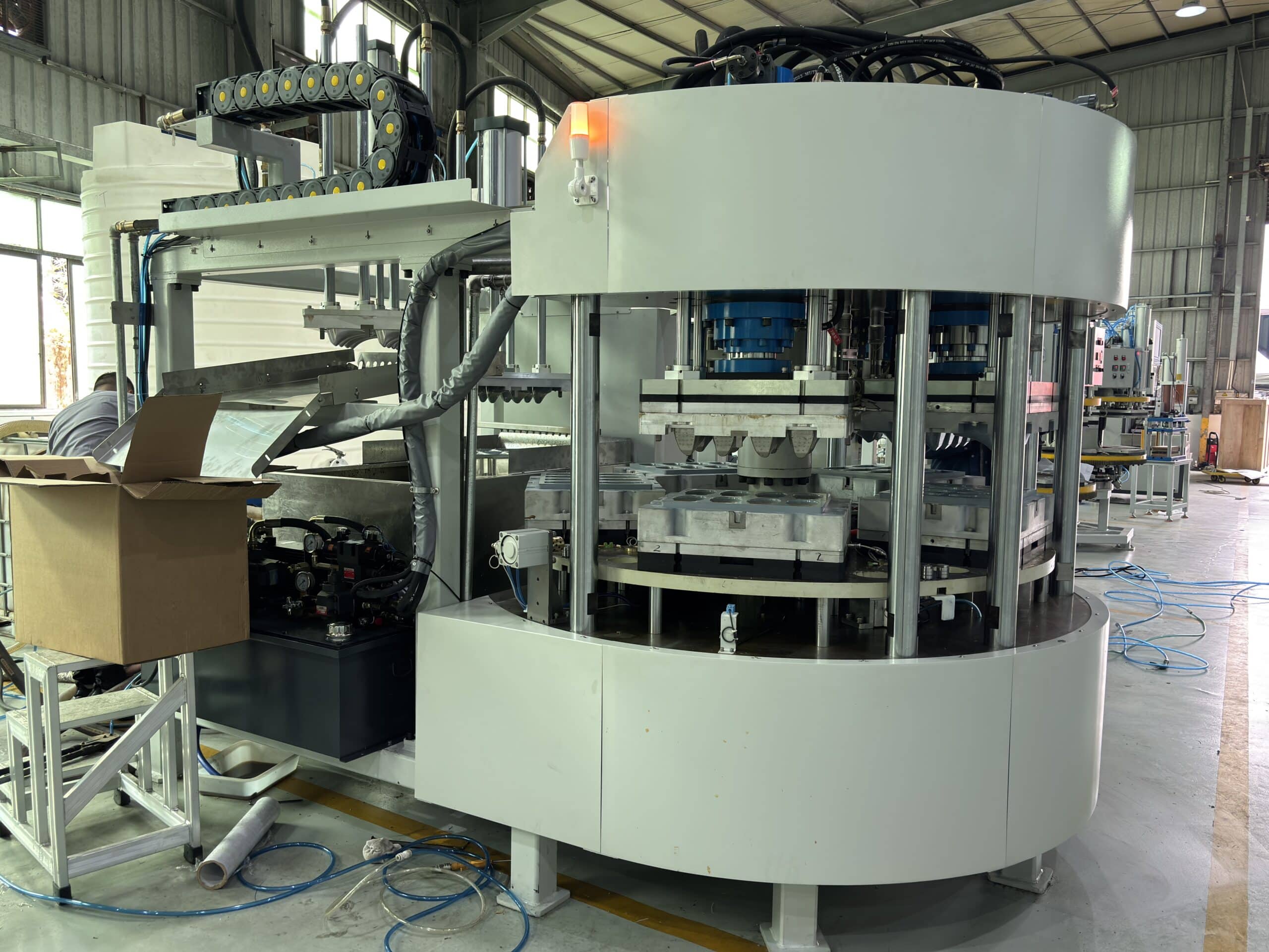
One of the most important developments supporting this shift is sustainable paper moulding machine producción. Paper moulding machines allow manufacturers to convert recycled paper, agricultural fibers, and other renewable raw materials into molded packaging products that can replace plastic trays, foam inserts, and disposable containers. Instead of relying on petroleum-based materials, molded fiber packaging uses plant-based fibers that can be recycled, composted, or biodegraded.
However, sustainability is not achieved simply by changing materials. It also requires efficient manufacturing processes that minimize energy consumption, reduce waste, and support large-scale production. Sustainable paper moulding machine production therefore focuses on designing machinery and production systems that balance environmental responsibility with industrial efficiency.
What Sustainable Paper Moulding Machine Production Means
Sustainable paper moulding machine production refers to the design and manufacturing of equipment used to produce molded fiber packaging in an environmentally responsible way. These machines are engineered to process renewable fiber materials such as recycled paper pulp, bamboo fiber, or sugarcane bagasse while minimizing energy use and raw material waste.
The production process typically begins with pulp preparation. Raw fiber materials are mixed with water to create a slurry. This slurry is then delivered to forming molds where vacuum suction removes water and allows fibers to accumulate on the mold surface. Once the initial shape is formed, the wet product moves to a pressing stage where heat and pressure increase structural strength and improve surface quality.
The final stage of the process involves drying, trimming, and finishing. Efficient drying technology plays a crucial role in sustainable manufacturing because it determines how much energy the production line consumes.
These forming and pressing principles are used in advanced molded fiber packaging systems, including production technologies used for products such as bandejas de pasta moldeada prensada en seco, where precision forming and pressure control help create durable fiber-based packaging.
How Sustainable Paper Moulding Machines Reduce Environmental Impact
The environmental benefits of molded fiber production come from both the materials used and the efficiency of the manufacturing process. Sustainable paper moulding machines help reduce environmental impact in several important ways.
First, they enable the use of recycled fiber materials that would otherwise become waste. By converting recycled paper and agricultural byproducts into new packaging products, manufacturers reduce landfill waste while conserving natural resources.
Second, modern molding systems are designed to optimize water usage. Many production lines recycle process water within the system, reducing the amount of fresh water required for pulp preparation.
Third, energy efficiency improvements in forming, pressing, and drying stages help lower overall production energy consumption. Advanced drying systems and heat recovery technologies reduce the amount of energy required to remove moisture from molded products.
Manufacturers that focus on integrated sustainability strategies — including equipment providers such as BonitoPak often combine efficient machinery design with renewable materials to create packaging solutions that meet both environmental and industrial requirements.
Energy Use in Paper Moulding Machine Production
Although molded fiber packaging is environmentally friendly compared with plastic alternatives, the production process still requires energy. Managing this energy efficiently is a key goal of sustainable paper moulding machine production.
Energy consumption in a typical molded fiber manufacturing system may be distributed as follows:
| Área del sistema | Tipo de energía primaria | Porcentaje aproximado de la energía total |
|---|---|---|
| Sección de secado | Térmico | 45-55% |
| Vacuum Forming | Electricidad | 20–25% |
| Pressing Systems | Electricidad | 10-15% |
| Auxiliary Equipment | Electricidad | 5-10% |
Because drying requires the most energy, many manufacturers focus on improving moisture removal earlier in the process. Efficient forming and pressing reduce the amount of water remaining in the product before drying begins, which lowers overall energy demand.
Standard Production Systems vs Sustainable Moulding Machines
Traditional molded fiber production systems were designed primarily for simple packaging products such as egg cartons and protective trays. While these systems can produce large volumes, they may not offer the efficiency or precision required for modern sustainable packaging applications.
| Métrica | Traditional Moulding System | Sustainable Moulding Machine |
|---|---|---|
| Eficiencia energética | Moderado | Alta |
| Water Recycling Capability | Limitado | Advanced |
| Product Surface Quality | Basic | Improved |
| Nivel de automatización | Bajo | Advanced |
| Production Stability | Moderado | Fuerte |
Sustainable paper moulding machines incorporate improved mold design, advanced automation, and optimized drying systems. These improvements reduce energy consumption while supporting higher-quality packaging products.
The Role of Customization in Sustainable Production
Customization is an important aspect of sustainable paper moulding machine production. Different fiber materials behave differently during forming and drying. For example, bagasse fiber has different drainage characteristics compared with recycled paper pulp, which means vacuum and pressing systems may need adjustment.
Customized production systems allow manufacturers to optimize machine settings for specific raw materials, production capacities, and product designs. This flexibility helps maintain stable production conditions while reducing waste and energy consumption.
Customization also supports packaging innovation. As molded fiber packaging becomes more common in consumer markets, companies are exploring ways to create more complex designs and branded packaging solutions. Discussions around design flexibility in molded fiber packaging, such as those explored in ¿Se puede personalizar la marca de las cajas de pasta moldeada?, highlight how manufacturing technology enables creative packaging solutions while maintaining sustainability.
Challenges in Sustainable Paper Moulding Machine Production
Despite the advantages of molded fiber technology, manufacturers still face several challenges when implementing sustainable production systems. Moisture control remains one of the most important factors affecting product quality and energy efficiency. If products enter the drying stage with excessive moisture, energy consumption increases significantly.
Another challenge is maintaining consistent fiber quality. Because molded fiber production relies heavily on recycled materials, variations in fiber composition can affect product strength and surface finish.
Production speed can also be lower compared with plastic injection molding systems. Manufacturers must carefully balance product quality with production efficiency to remain competitive in large-scale packaging markets.
Conclusion: Sustainable Moulding Machines Drive the Future of Packaging
Sustainable paper moulding machine production represents a major step forward in environmentally responsible manufacturing. By enabling the use of renewable fiber materials and improving production efficiency, these machines support the global transition away from single-use plastics.
As technology continues to advance, molded fiber production systems are becoming more efficient, more automated, and capable of producing increasingly sophisticated packaging designs. Companies investing in sustainable paper moulding machines are positioning themselves to meet the growing demand for eco-friendly packaging solutions.
In the years ahead, sustainable manufacturing will become a defining factor in the packaging industry. Paper moulding machines will play a central role in helping manufacturers meet environmental goals while maintaining efficient and scalable production.
Preguntas frecuentes
What is sustainable paper moulding machine production?
It refers to manufacturing equipment designed to produce molded fiber packaging using renewable materials while minimizing energy use and environmental impact.
What materials are used in molded fiber packaging?
Common materials include recycled paper pulp, bamboo fiber, and bagasse fiber.
Are molded fiber products environmentally friendly?
Yes. Molded fiber products are biodegradable, recyclable, and made from renewable or recycled materials.
Why is drying important in molded fiber production?
Drying removes moisture from molded products and stabilizes their structure, making them strong enough for packaging applications.
Can molded fiber machines produce custom packaging?
Yes. Custom molds allow manufacturers to create packaging designs tailored to specific products and branding requirements.




 Spanish
  English
  German
  French
  Russian
  Japanese
  Portuguese
  Arabic