 Ir al contenido
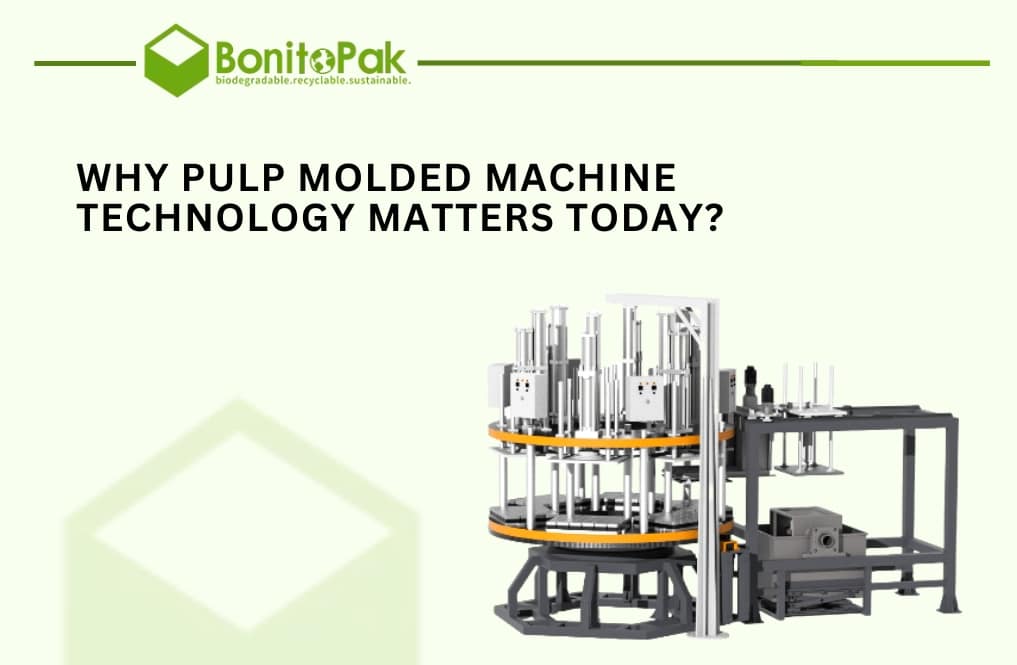
The packaging world changed dramatically in 2024. Businesses worldwide abandoned plastic for biodegradable alternatives. Pulp molded machine systems now lead this transformation.
Recent market data shows impressive growth. The global máquina de moldeo de pasta market reached USD 721.3 million in 2024. Experts predict it will hit USD 1,047.3 million by 2034. That represents a steady 3.8% annual growth rate.
What drives this surge? Environmental regulations got stricter. Consumers demand eco-friendly products. Companies need sustainable packaging fast. Pulp moulding machine technology delivers all three requirements.
How Pulp Forming or Molding Equipment Works?
Pulp molding equipment converts waste into valuable products. The process starts simple. Recycled paper, bagasse, or bamboo pulp mixes with water. This creates a slurry that flows into forming molds.
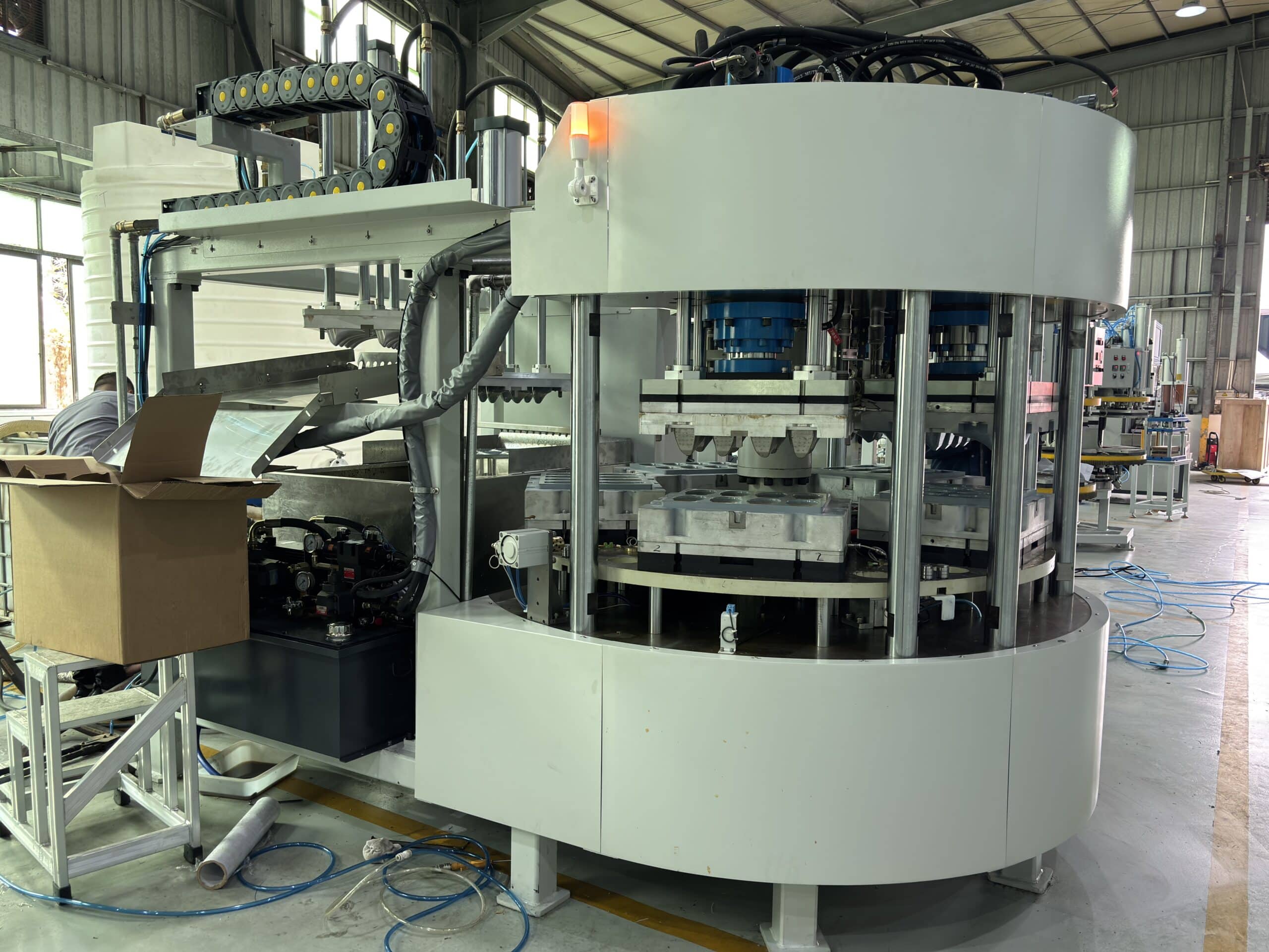
Vacuum suction pulls moisture through the mesh. The wet shape takes form instantly. Hot pressing removes remaining water while strengthening the product. Trimming gives clean edges. The entire cycle takes minutes.
Modern automatic pulp molding systems run continuously. Fully automatic machines captured 52.4% of the market in 2024. These systems need minimal human oversight. Production speeds reach 5,000 units per hour on advanced lines.
| Tipo de máquina | Velocidad de producción | Market Share 2024 |
| Fully Automatic | 4,000-6,000 units/hour | 52.4% |
| Semi-Automatic | 1,500-3,000 units/hour | 31.2% |
| Sistemas manuales | 500-1,200 units/hour | 16.4% |
Pulp Molding Machine Production Line Components
A complete pulp molding production line includes several stations. Each handles specific tasks efficiently.
The pulping system breaks down raw materials. Hydraulic pulpers process waste paper and natural fibers. The mixture flows into forming stations equipped with precision forming molds.
Hot pressing technology removes moisture quickly. Energy-saving dryers finish the job. Trimming equipment cuts excess material. Conveyor systems move products between stations automatically.
Advanced manufacturers offer complete production line including design and installation services. Modern systems handle bagasse pulp, wheat straw pulp, and reed pulp efficiently. Professional installation typically completes within weeks.
Tipos de productos de pasta moldeada
Molded pulp packaging serves countless applications. Egg tray machine output dominates agricultural markets. These systems produced 1.2 billion egg trays at a single Huhtamaki facility in South Africa during 2024.
Food service relies heavily on pulp tableware. Plates, bowls, and food packaging containers replace plastic disposables. These products withstand temperatures from -30°C to 120°C safely.
Electronics manufacturers use industrial packaging solutions. Custom inserts protect delicate components during shipping. The material absorbs shock better than foam alternatives.
Paper trays, fruit tray products, and coffee trays fill specific niches. Each design matches exact product dimensions. Customization options allow unlimited shape possibilities.
Market Leaders and Recent Developments
Pulp molding machine manufacturers compete globally. Top companies include Guangzhou Nanya, BeSure Technology, and EAMC. Together they control roughly 10% of worldwide sales.
Asia-Pacific dominates production. The region held 36.7% market share in 2024, valued at USD 264.72 million. China leads manufacturing capacity. India and Southeast Asian countries expand rapidly.
Satia Industries made headlines in September 2024. The company invested heavily in fully automatic intellifib pulp molding machinery. This move addressed domestic paper shortages while boosting capacity.
February 2025 brought exciting news. RX China Investment announced WEPACK 2025. This premier event runs April 6-13 in Shanghai. It connects global packaging machine manufacturers with buyers.
Advanced Pulp Moulding Technology Features
Leading manufacturers now offer six distinct pulp color systems. Options include white, natural, black, orange, gray, and blue finishes. Pantone color matching reaches 95% accuracy in premium equipment.
Wet pressing and dry pressing methods both create smooth surfaces. Wet pressing produces exceptionally refined finishes suitable for retail packaging. Dry pressing handles thicker, industrial-grade products efficiently.
Tableware machine systems meet strict food safety standards. BPI certification confirms product safety. All molded pulp products use food-grade plant fiber materials. These systems serve restaurants, catering companies, and food service distributors.
Egg carton production equipment delivers consistent quality. High output rates satisfy large-scale agricultural operations. Modern lines process multiple sizes simultaneously. Quick-change tooling reduces downtime between production runs.
Environmental Benefits Drive Adoption
Molded pulp products decompose naturally. Research shows 20% mass loss after just four weeks in soil. Complete biodegradation occurs within 90 days. Plastic takes hundreds of years by comparison.
Manufacturing uses renewable resources exclusively. Raw materials include agricultural waste and recycled paper. This circular approach reduces landfill burden significantly.
The Environmental Protection Agency tracks pulp manufacturing emissions. Their data confirms recycled pulp produces far less greenhouse gas than virgin production. Energy-saving designs further reduce environmental impact.
Businesses gain competitive advantages through sustainability. Over 83% of younger consumers pay more for eco-friendly packaging. Smart companies invest in pulp molding technology early.
Choosing the Right Equipment
Selecting proper pulp molding machine systems requires careful planning. Production volume determines machine capacity. Small operations start with semi-automatic units. Large manufacturers need fully automatic pulp molding lines.
Mold design flexibility matters significantly. Products evolve constantly. Quick-change tooling saves downtime. Advanced systems swap molds in minutes without specialized tools.
Energy-saving features reduce operating costs substantially. Low energy consumption pays back investment faster. Modern designs use 30-40% less power than older models. Some systems incorporate water recycling to minimize waste.
Reputable machine manufacturer companies provide comprehensive training. Technical support ensures smooth operations. Look for suppliers offering installation assistance, operator training, and ongoing maintenance support throughout equipment lifespan.
Conclusión
Pulp molded machine technology reshapes modern manufacturing. Market growth proves businesses trust these sustainable solutions. Equipment costs drop while capabilities expand. Environmental regulations will only get stricter. Consumer demand for biodegradable packaging products keeps rising. The transition from plastic happens faster every year.
¿Está listo para implantar soluciones de envasado sostenibles?BonitoPak suministra equipos completos de moldeo de pasta de papel con más de 12 años de experiencia en el sector y servicios de instalación rápida.
Preguntas frecuentes
¿Qué capacidad de producción ofrecen las modernas máquinas de moldeo de pasta de papel?
Los avanzados sistemas de moldeo de pasta totalmente automáticos producen de 4.000 a 6.000 unidades por hora. Los equipos semiautomáticos producen de 1.500 a 3.000 unidades por hora. La capacidad depende de la complejidad y el tamaño del producto.
¿Qué industrias se benefician más de los envases de pasta moldeada?
Los servicios de alimentación van en cabeza, con una cuota de mercado del 42,3%. Le siguen de cerca los envases electrónicos. La agricultura utiliza cantidades masivas para bandejas de huevos. La sanidad y los bienes de consumo crecen rápidamente.
¿Cuánto dura la instalación de los equipos?
La instalación de una línea de producción profesional de moldeo de pasta requiere de 2 a 4 semanas. La producción de muestras suele comenzar en 7-10 días. La producción completa comienza en un plazo de 30 días a partir de la realización del pedido.
¿Qué materias primas funcionan mejor para la producción?
La pulpa de bagazo de caña de azúcar ofrece una excelente resistencia. La pasta de bambú proporciona acabados suaves. La pasta de papel reciclado es más barata. La pasta de paja de trigo funciona bien para aplicaciones estándar. Muchos fabricantes mezclan materiales para obtener resultados óptimos.
¿Cumplen los productos de pasta moldeada las normas de seguridad alimentaria?
La vajilla de pulpa de calidad alimentaria supera estrictas pruebas de seguridad. La certificación BPI confirma la compostabilidad. Los productos resisten temperaturas de -30°C a 120°C con seguridad. Funcionan en microondas, hornos y congeladores sin problemas.




 Spanish
  English
  German
  French
  Russian
  Japanese
  Portuguese
  Arabic