 Ir al contenido

Introducción
Egg packaging is a critical aspect of the poultry industry. It not only ensures the safety of eggs during transportation but also plays a vital role in sustainability and cost efficiency. In recent years, the rise of máquinas para fabricar bandejas de huevos de pasta de papel has drastically transformed the packaging industry. These machines offer an eco‑friendly and cost‑effective solution for businesses looking to meet the growing demand for safe, sustainable, and affordable packaging.
If you’re in the poultry industry or any related field that requires the packaging of eggs, understanding the function, benefits, and operation of a paper pulp egg tray making machine is crucial. In this guide, we’ll explore everything you need to know about these machines, from their operation and benefits to their impact on the environment and the bottom line.
We’ll also reference real‑world applications of molded pulp products, including eco‑friendly molded fiber trays for food packaging y biodegradable molded pulp trays for electronics, so you see how these systems fit into broader packaging solutions.
Section 1: What is a Paper Pulp Egg Tray Making Machine?
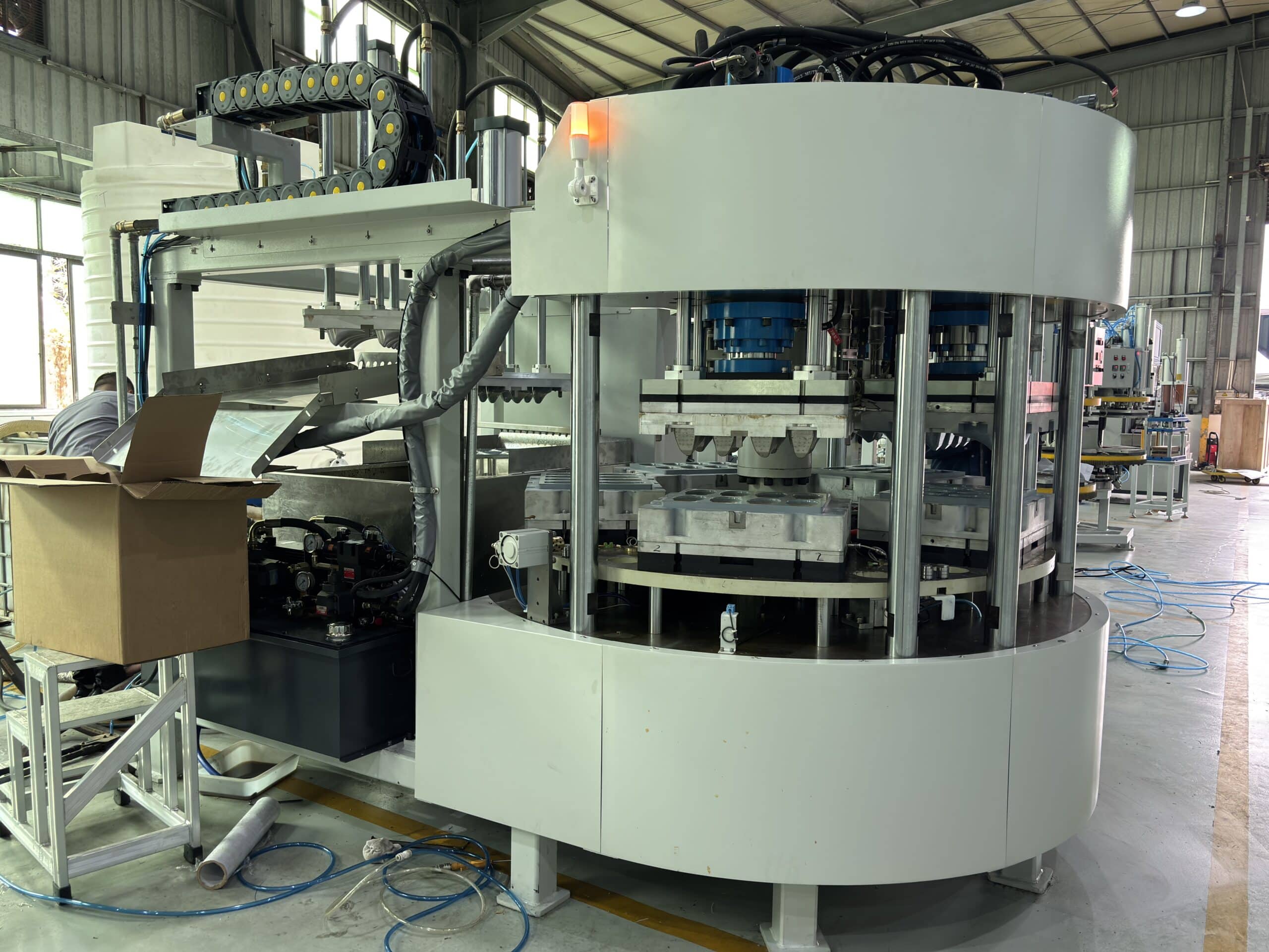
A paper pulp egg tray making machine is a specialized machine that converts waste paper into molded pulp products, specifically egg trays. These trays are used to safely and securely package eggs for transport to market. The machine uses a process of pulping waste paper, molding it into the desired shape, and then drying it to form sturdy, environmentally‑friendly trays.
Key Components of a Paper Pulp Egg Tray Making Machine:
- Pulping System: Shreds and processes paper waste into a slurry.
- Molding System: Molds the pulp slurry into trays or other packaging products.
- Drying System: Removes excess moisture to harden the trays and prepare them for use.
- Forming Dies: Shapes the trays into various designs based on egg size and packaging needs.
These machines vary in size and capacity, ranging from small‑scale manual operations to large automated production lines designed for mass production.
For businesses exploring broader molded pulp uses, check out these examples of fibra moldeada para envasado de alimentos that showcase how similar production technologies support sustainable supply chains.
Section 2: How Paper Pulp Egg Tray Making Machines Work
Understanding how a paper pulp egg tray making machine operates will give you a better insight into the entire process and its benefits.
Here’s a breakdown of how the machine works:
- Paper Pulping
- The process begins with the collection of waste paper. This can be old newspapers, books, cardboard, or other paper‑based material. The paper is shredded into smaller pieces and then mixed with water to create a slurry.
- Moldeo
- The slurry is then transferred to a molding system where it is poured into custom‑shaped molds. The molds are designed specifically for egg trays, with indentations that fit eggs securely.
- Secado
- After molding, the trays are removed from the molds and placed in a drying system. This can be done through natural drying or with an industrial drying oven, depending on the scale.
- Embalaje
- Once trays are dry and hardened, they are stacked and ready for use.
Larger machines automate these steps, increasing output and consistency. Similar technology is used to produce biodegradable molded pulp trays for electronics, which highlights how molded pulp production is versatile across industries.
Section 3: Key Benefits of Using a Paper Pulp Egg Tray Making Machine
1. Eco‑Friendly Solution
One of the primary advantages of using a paper pulp egg tray making machine is its eco‑friendliness. These machines recycle waste paper, turning it into useful packaging products. This significantly reduces landfill waste and promotes sustainability.
This same principle applies to other molded pulp solutions such as envases ecológicos de pulpa moldeada para productos electrónicos, demonstrating how molded pulp packaging helps reduce plastic waste in electronics and other sectors.
2. Cost‑Effectiveness
Compared to other forms of packaging, paper pulp egg trays are low cost. The raw materials (waste paper) are inexpensive — often free — and the manufacturing process consumes relatively low energy.
3. Customizable Design
Paper pulp egg trays can be customized to meet specific needs — shape, size, thickness, or branding. Advanced machines support diverse dies to adapt products without significant changeovers.
This capability echoes the broader molded pulp category, such as molded fiber trays in food packaging, reinforcing how tailored designs improve protection and customer satisfaction.
4. Protection and Durability
Eggs are fragile, and paper pulp trays cushion them during handling and transport. The molded pulp material is strong enough to protect against impact while remaining biodegradable.
5. Scalability
Whether running a small business or a large enterprise, a paper pulp egg tray making machine can be scaled to meet production needs — from hundreds to thousands of trays per hour.
If you’re curious about molded pulp used outside food and eggs, check out examples from Bonitopak’s international site, which shows how diverse molded pulp products are in today’s packaging landscape.
Section 4: Step‑by‑Step Guide to Setting Up Your Paper Pulp Egg Tray Making Machine
Here’s a practical guide to help you begin production:
- Select the Right Machine
- Evaluate capacity, automation level, and ease of maintenance.
- Gather Raw Materials
- Arrange a steady supply of waste paper or recycled board.
- Install the Machine
- Follow manufacturer instructions for setup, calibration, and safety.
- Start Production
- Begin pulping, mold the trays, and set drying cycles. Monitor each stage for quality.
- Monitor Production
- Inspect trays for uniformity and strength; adjust pulping consistency or drying time as needed.
- Packaging and Distribution
- Stack finished trays, ready for packing eggs or sale.
For expert reference, see Bonitopak’s portfolio of biodegradable molded pulp products to understand real industrial applications of this process.
Section 5: Troubleshooting Common Issues in Paper Pulp Egg Tray Production
Even with efficient machines, you may encounter production issues:
- Inconsistent Tray Shape
- Check molds for wear and debris. Ensure slurry consistency is correct.
- Poor Drying
- Adjust drying temperature and airflow. Wet trays are often due to inconsistent drying cycles.
- Weak Trays
- Weakness suggests improper pulp mixture — adjust water ratio or extend drying.
By referring to examples like molded pulp packaging for electronics, you can see how quality control is critical across molded fiber applications — whether for eggs, food, or tech products.
Section 6: Advanced Strategies for Optimizing Paper Pulp Egg Tray Production
Here are strategies to improve efficiency and product quality:
1. Automation Integration
Automate pulping, molding, and drying to reduce labor and increase throughput.
2. Enhance Drying Efficiency
Using industrial drying ovens or optimized airflow systems reduces production bottlenecks.
3. Sustainability Initiatives
Use 100% recycled paper, adopt energy‑efficient machinery, and promote eco credentials.
4. Diversify Your Product Line
Many machines handle multiple molds. Produce trays for fruit, cups, or protective packaging to maximize revenue.
Explore Bonitopak’s product range, including solutions for electronics packaging and food trays, as inspiration for expanding your offerings.
Sección FAQ
1. How much does a paper pulp egg tray making machine cost?
Costs vary by size and automation. Small manual units are affordable for startups. Large automated systems offer high throughput.
2. How long does it take to produce a batch of egg trays?
Production time depends on machine speed and drying method — typically 30–60 minutes per batch under standard conditions.
3. Can the paper pulp egg tray making machine be used for other products?
Yes! Many machines produce molded pulp trays for food packaging, electronics, and specialty products, similar to those found in global molded pulp product collections.
Conclusión
A paper pulp egg tray making machine offers an eco‑friendly, cost‑effective, and scalable solution for modern packaging needs. It not only supports sustainability goals but also enhances operational efficiency and product safety.
Whether you’re producing packaging for eggs, food items, or even protective materials for electronics, understanding and investing in molded pulp technologies is a smart business move.
Call to Action:
Ready to upgrade your operational workflow? Explore molded pulp solutions that align with your goals — from food packaging trays to biodegradable electronic inserts — and discover how these systems can elevate your business.




 Spanish
  English
  German
  French
  Russian
  Japanese
  Portuguese
  Arabic