 Ir al contenido

Introduction: Why Paper Machine Performance Determines Mill Profitability
In paper manufacturing, small improvements in machine performance can create enormous financial impact. A paper machine runs continuously for long periods, often producing thousands of tons of product each month. Even minor inefficiencies in speed, energy use, moisture control, or fiber formation can quickly translate into significant operational costs.
Achieving better paper machine performance is therefore one of the most important goals for modern paper mills. Manufacturers constantly look for ways to increase production stability, reduce downtime, improve product quality, and lower energy consumption. While new machinery can help, performance improvements are usually the result of optimizing multiple interconnected factors across the entire production system.
From pulp preparation to forming, pressing, drying, and automation, every stage of the paper machine process influences how efficiently the machine operates. Understanding these factors allows manufacturers to improve productivity while maintaining consistent product quality.
What Paper Machine Performance Actually Means
Paper machine performance refers to how efficiently a machine converts fiber pulp into finished paper products. Performance is typically evaluated using several key indicators, including production speed, machine uptime, product quality consistency, and energy consumption.
A high-performing paper machine produces uniform paper sheets at stable speeds while minimizing fiber waste and reducing operational interruptions. Achieving this level of performance requires careful coordination between machine components, process control systems, and raw material preparation.
If any stage of the process becomes unstable for example, uneven pulp consistency or poor moisture removal the entire production line can be affected. This is why improving machine performance requires a system-wide approach rather than focusing on a single piece of equipment.
The Role of Forming in Paper Machine Efficiency
The forming section is the stage where pulp slurry begins transforming into a paper sheet. During this phase, fibers distribute across the forming wire while water drains through vacuum systems. Proper fiber distribution at this stage is essential for achieving consistent paper thickness and strength.
If fiber dispersion is uneven, the final paper sheet may contain weak spots or inconsistent density. These issues can affect product quality and create difficulties during later stages such as pressing and drying.
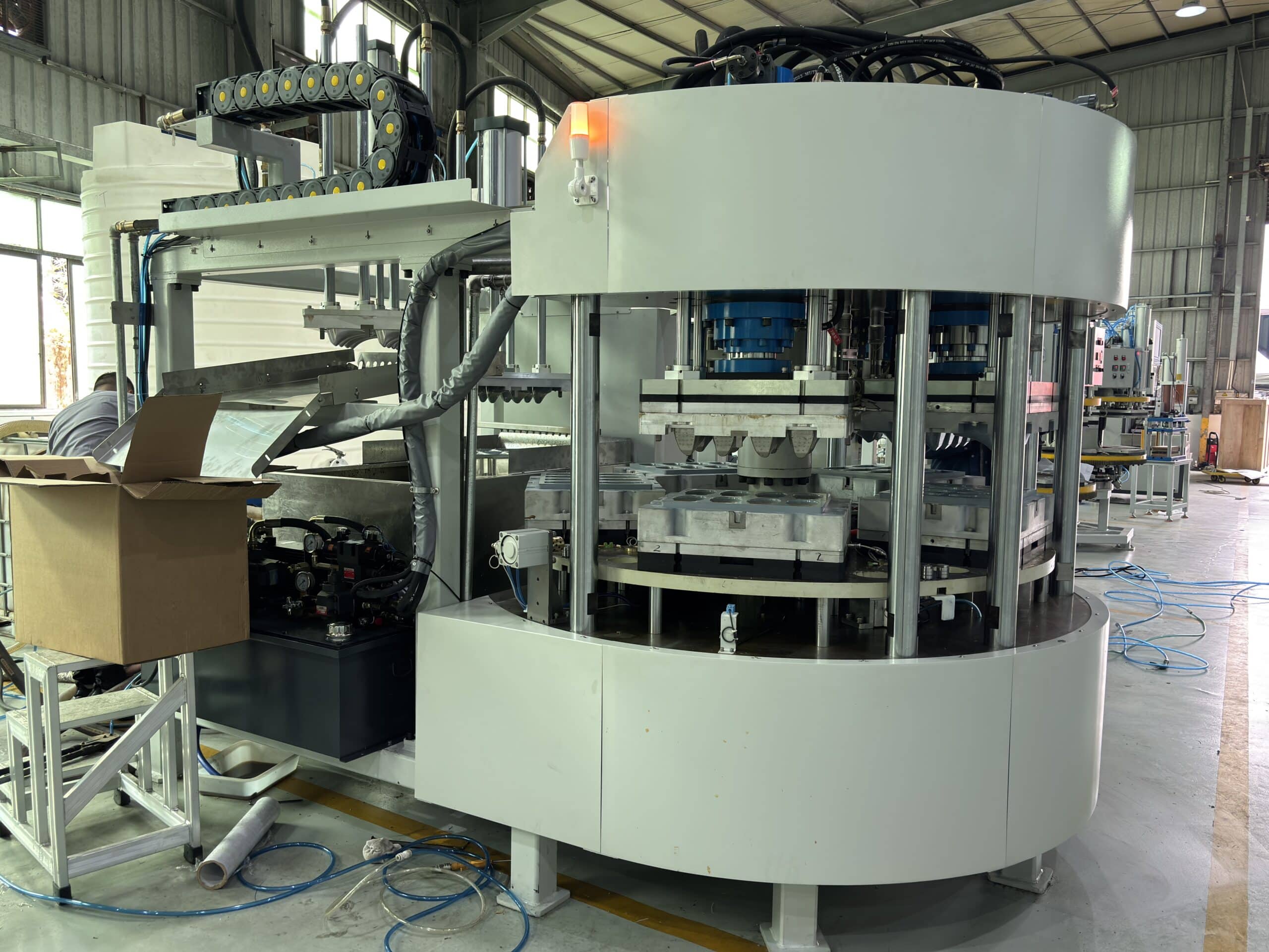
Modern paper machines often incorporate advanced forming technologies and optimized vacuum systems to improve water drainage and stabilize fiber formation. Similar forming principles are used in molded fiber packaging production systems, including technologies used to produce bandejas de pasta moldeada prensada en seco, where fiber distribution and moisture removal directly influence product strength.
Improving forming efficiency reduces moisture levels entering the press section, which in turn lowers energy demand during drying.
Press Section Optimization and Moisture Removal
After forming, the paper sheet moves into the press section, where mechanical pressure removes additional water. Efficient pressing is critical because it reduces the amount of moisture that must be evaporated in the drying stage.
Mechanical water removal is far more energy-efficient than thermal drying. Every percentage of moisture removed during pressing reduces the energy required later in the process.
Press configuration, roll alignment, and felt condition all influence pressing performance. If pressing efficiency declines, drying energy consumption increases and production speed may need to be reduced to maintain product quality.
Maintaining optimal press performance therefore contributes significantly to better paper machine performance overall.
Drying Efficiency and Energy Consumption
Drying is typically the most energy-intensive stage of paper production. The drying section uses heated cylinders or air systems to evaporate remaining moisture from the paper sheet.
Energy distribution in a typical paper manufacturing system may resemble the following:
| Área del sistema | Tipo de energía primaria | Porcentaje aproximado de la energía total |
|---|---|---|
| Sección de secado | Térmico | 50–60% |
| Forming & Vacuum Systems | Electricidad | 15-20% |
| Press Section | Electricidad | 10-15% |
| Auxiliary Equipment | Electricidad | 5-10% |
Because drying consumes the largest portion of energy, improving moisture removal earlier in the process can significantly reduce overall energy usage.
Advanced mills also optimize airflow, steam pressure, and heat recovery systems to improve drying efficiency.
Companies involved in sustainable fiber manufacturing systems, including integrated packaging production approaches used by BonitoPak, often focus on optimizing drying performance to reduce energy consumption while maintaining production stability.
Automation and Process Control
Modern paper machines rely heavily on automation systems to maintain consistent operating conditions. Sensors and control systems monitor variables such as pulp consistency, sheet moisture, machine speed, and temperature throughout the production line.
Automated control systems adjust machine settings in real time to maintain optimal conditions. For example, moisture sensors in the drying section can trigger adjustments in temperature or airflow to maintain consistent product quality.
Automation also improves machine uptime by identifying potential issues before they cause production interruptions. Predictive maintenance systems analyze equipment performance data to detect early signs of wear or malfunction.
These technologies allow manufacturers to maintain stable production speeds while minimizing downtime and material waste.
Standard Operations vs Optimized Paper Machine Performance
Manufacturers that actively optimize their paper machines often see significant improvements in production efficiency compared with standard operating conditions.
| Métrica | Standard Operation | Optimized Performance |
|---|---|---|
| Production Stability | Moderado | Alta |
| Consumo de energía | Más alto | Baja |
| Tiempo de inactividad de la máquina | Frequent | Reducido |
| Product Quality Consistency | Variable | Estable |
| Fiber Waste | Más alto | Baja |
Optimizing machine performance requires continuous monitoring and process improvement, but the long-term benefits often include lower production costs and higher product quality.
Maintenance and Long-Term Machine Reliability
Regular maintenance is essential for maintaining high paper machine performance. Components such as vacuum pumps, press rolls, and drying cylinders experience wear during extended production cycles.
Routine inspection helps detect early signs of wear before they affect machine performance. Cleaning and maintaining key components also ensures stable operation and prevents unexpected downtime.
Many manufacturers implement predictive maintenance programs that analyze equipment data to identify potential issues before they lead to failures. These programs allow mills to schedule maintenance proactively, minimizing production interruptions.
Conclusion: Better Paper Machine Performance Requires System Optimization
Improving paper machine performance involves much more than increasing machine speed. True performance improvements come from optimizing the entire production process, from pulp preparation and forming to pressing, drying, and automation control.
When these systems work together efficiently, manufacturers can achieve higher production stability, improved product quality, and reduced energy consumption. As sustainability and efficiency become increasingly important in modern manufacturing, optimizing paper machine performance will continue to play a central role in maintaining competitive paper production operations.
Preguntas frecuentes
What does paper machine performance mean?
Paper machine performance refers to how efficiently a paper machine produces consistent paper products while minimizing downtime, energy consumption, and material waste.
Why is drying the most energy-intensive stage?
Drying requires thermal energy to evaporate moisture from the paper sheet, which consumes more energy than mechanical water removal.
How can manufacturers improve paper machine performance?
Improving pulp consistency, optimizing pressing efficiency, enhancing drying control, and using automation systems can all help improve performance.
Does automation improve paper production?
Yes. Automation systems monitor machine conditions and adjust process variables in real time to maintain stable production.
Why is maintenance important for paper machines?
Regular maintenance prevents equipment wear from affecting production stability and helps reduce unexpected machine downtime.




 Spanish
  English
  German
  French
  Russian
  Japanese
  Portuguese
  Arabic