 تخطي إلى المحتوى
بقلم ليو تشان | كاتب، BonitoPak | أكثر من 20 عامًا في مجال التغليف المصنوع من اللب المقولب
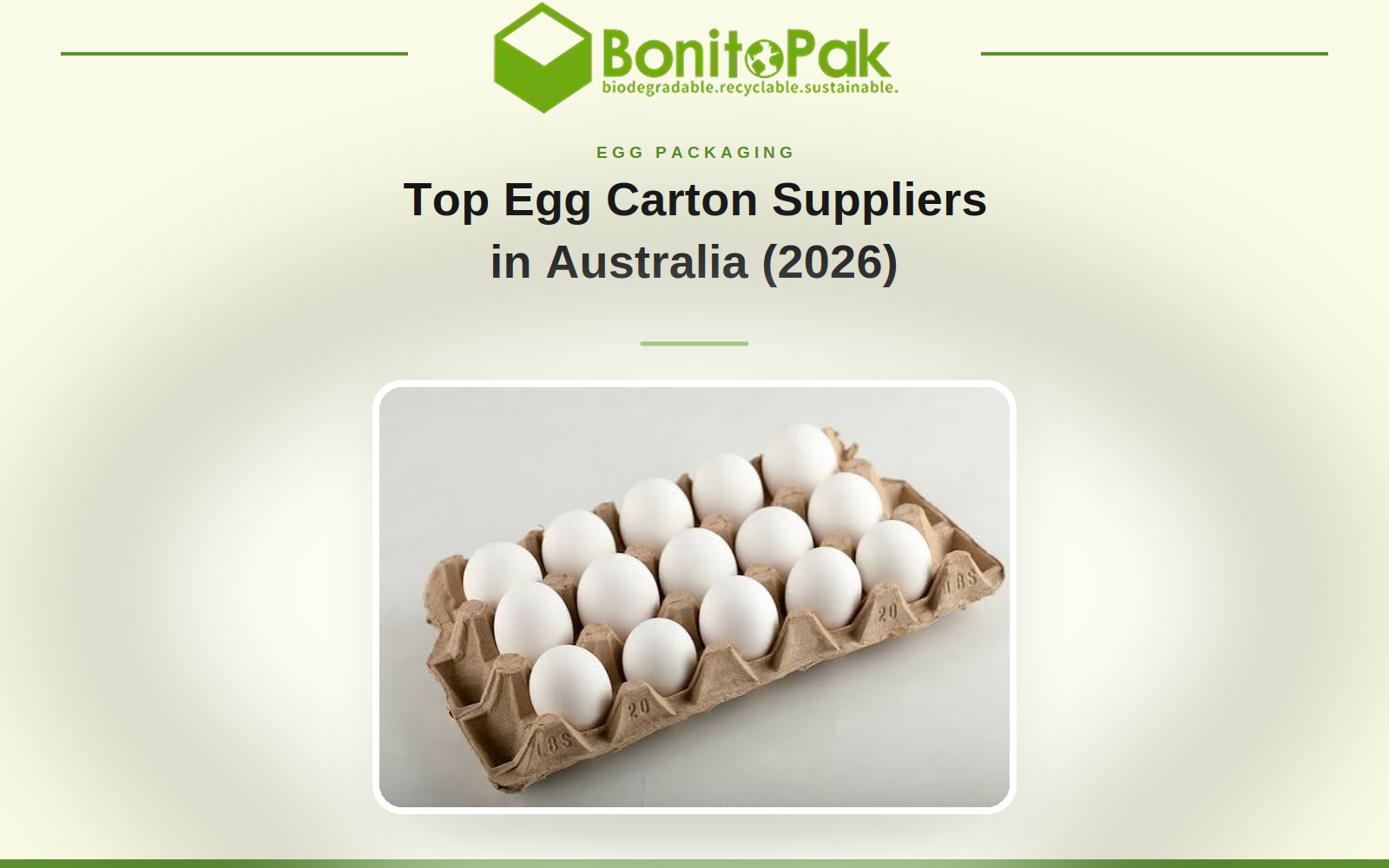
Australia has exactly one domestic molded fibre egg carton manufacturer, Huhtamaki’s Melbourne plant, which has produced locally for close to 70 years. Everything else in the market is distribution or import, and that structure determines price, lead time and what you can specify.
A disclosure that matters more here than in most of these guides. BonitoPak manufactures molded pulp egg packaging in China and exports internationally, which makes us one of the importers the domestic manufacturer publicly names as competition. We have written this accordingly, and where local supply is the better answer we say so.
Egg Carton Suppliers in Australia: The One Manufacturer
Huhtamaki Australia, Melbourne
The whole of Australian domestic production sits at one site. Huhtamaki has been manufacturing and supplying Australian made egg cartons from its Melbourne facility for close to 70 years and describes itself as the largest and only domestic manufacturer of egg cartons, egg trays and bottle dividers in the country.
| Detail | Huhtamaki Australia |
|---|---|
| Location | Melbourne, Victoria |
| Operating history | Close to 70 years of local manufacture |
| Employees | More than 100 at the Melbourne site |
| المواد الأولية | Over 10,000 tonnes of locally sourced recycled paper and cardboard per year |
| Range | Multiple carton and tray formats, sizes and colours, plus bottle dividers |
| Position | Products across all major supermarket shelves |
A detail worth noting because it is unusual for egg cartons in Australia or anywhere: the site reports second generation machine operators. That is a long lived manufacturing operation rather than a recent investment, and it explains the depth of format range available domestically.
The parent group operates twelve fibre plants across ten countries, with the Australian site part of the wider Huhtamaki Fiber Packaging business, turning recycled paper and virgin pulp into egg trays, egg cartons, fruit packaging, cup carriers and bottle dividers.
Egg Packaging Suppliers: Distributors and Regional Stockists
Because there is one factory, most buyers deal with egg packaging suppliers rather than the manufacturer. This is where small and mid sized producers should start.
Fresh Farm Eggs, based at Greystanes in western Sydney, operates as a Huhtamaki distributor covering egg packaging across New South Wales, supplying cartons and moulded fibre trays. Similar regional egg packaging suppliers serve other states, and rural supply and poultry equipment retailers carry cartons alongside feed and housing. For a smallholder, the nearest of these is usually the practical answer regardless of what the factory could theoretically supply.
The trade is the usual one. Stock ships in days, minimums are cases rather than thousands of pieces, and there is no tooling conversation at all. You pay a distribution margin and you choose from a catalogue rather than specifying a part.
The Import Question, Addressed Directly
Huhtamaki’s own Australian pages refer to fierce competition from cheap Chinese and European imports. We are one of those importers, so rather than talk around it, here is an honest account of when each makes sense.
| Situation | Better answer | Why |
|---|---|---|
| Standard formats, cases per month | Domestic distributor | Stock ships in days, no freight or customs |
| Retail scale, standard formats | Domestic manufacturer | Proximity, supply security, no shipping exposure |
| Australian made as a stated position | Domestic manufacturer | The claim is only available one way |
| Custom cell geometry | Import or domestic tooling | Requires a mould cut to specification either way |
| Specialty bird formats | Import likely | Standard chicken cells do not fit duck, goose or quail |
| Colour matched to a brand reference | Either, at volume | Pigment in the pulp is a manufacturing decision |
Two honest points are worth stating. Australian made is a genuine differentiator with retail buyers and with consumers, and it is not something an importer can offer at any price. And freight is a real cost on formed goods, because moulded parts ship at their finished volume rather than flat, so the landed cost gap is narrower than a factory quote suggests.
Where importing genuinely competes is on geometry that does not exist in a domestic catalogue, at volumes that justify tooling but sit below the scale a large manufacturer prioritises. That is a narrow window rather than a general advantage, and any importer telling you otherwise is selling rather than advising.
Buying Bulk Egg Cartons in Australia: What to Ask
- Cell size against your actual egg grade, since Australian grading differs from other markets and cartons are always cut to a specific grade.
- Whether flat areas for labels and date stamps are formed into the carton at the mould stage.
- Denesting performance, which determines how reliably the carton separates and runs on a filling line.
- Stock depth and replenishment lead time on bulk egg cartons, particularly through peak periods.
- Delivery cost to your location, which on formed goods routinely exceeds the unit price difference between competing suppliers.
- What happens when your requirement outgrows the catalogue range, since that transition is where producers most often get caught short.
Denesting deserves particular attention if you run any automation on your packing line. Cartons that separate cleanly from a stack keep a line running, and cartons that do not create stoppages that cost far more than the packaging. It is a design characteristic rather than a quality one, and it is worth testing before committing to volume.
What One Domestic Manufacturer Means in Practice
A single supplier market behaves differently from a competitive one, and it is worth understanding rather than resenting. Three consequences follow, and two of them work in the buyer’s favour.
On the positive side, concentration produces depth. Close to 70 years in one location, more than 100 people and over 10,000 tonnes of feedstock a year buys format range, consistency and the kind of process knowledge that only accumulates. Domestic buyers get access to a mature product range that a fragmented market of small converters would struggle to match.
The other side is that a single manufacturer sets the domestic price floor and prioritises the accounts that keep its lines full. That is rational rather than unfair, but it means small or unusual requirements can receive less attention than the headline capability implies, and it is why imports find a foothold at the edges despite the freight disadvantage.
For a buyer, the practical response is to be clear about which category you fall into before approaching anyone. Standard formats at commercial volume are well served locally. Anything unusual is worth pricing both ways rather than assuming either answer.
Where Australian Supply Gets Thin
Non standard bird sizes
Duck, goose, turkey and quail all need different cell geometry, and domestic range is built around chicken formats. Anything outside that becomes a tooling project regardless of where the supplier sits. We cover why standard cells fail on other birds in our guide to تحديد أحجام علب البطة والأوزة والديك الرومي.
Bespoke colour and print
Stock colour ranges exist domestically. Matching a specific brand reference means colouring the pulp itself, which is a manufacturing decision with minimums attached and is covered on our coloured molded pulp egg box الصفحة.
Very large or very small volumes
A single domestic manufacturer naturally prioritises the accounts that fill its lines. Producers at either extreme, very small or unusually specific, sometimes find domestic supply less responsive than the headline capability suggests. That is a structural consequence of one factory rather than a criticism of it.
What We See From the Import Side
We manufacture molded pulp egg packaging in Chashan Town, Dongguan, and Australian enquiries follow a recognisable pattern.
Most enquiries should stay domestic
If the requirement is standard chicken formats in commercial quantities, local supply wins on lead time, freight and supply security, and it is not a close call. We say so regularly, because a producer who needs cartons this month is not someone we can serve well from a container ship six weeks out.
Freight is the deciding number
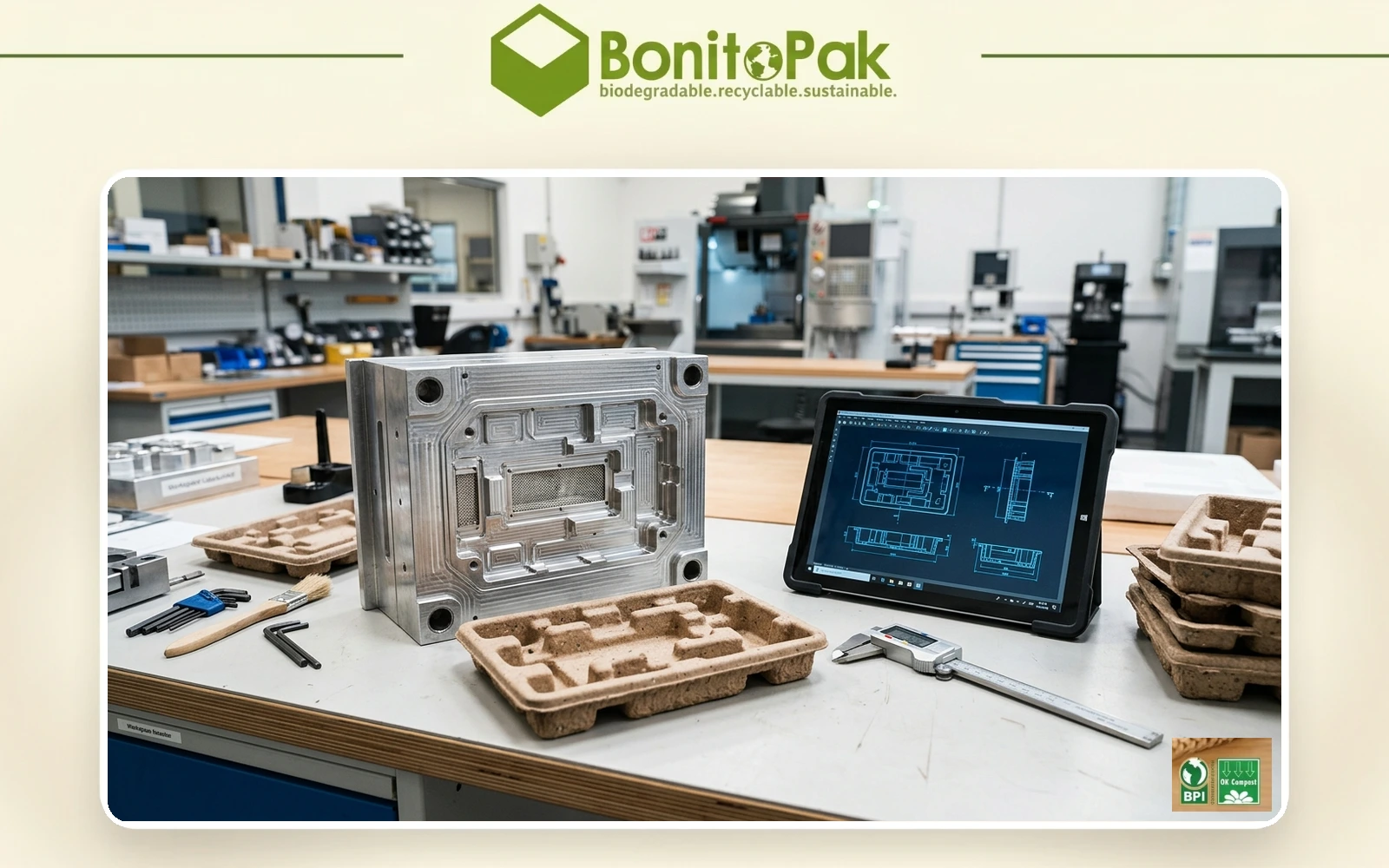
Moulded parts ship formed, occupying finished volume from the factory onward. Nesting recovers some of it, and nesting quality is set by draft angle at the tooling stage, but a container of egg cartons is mostly air. For Australia specifically that makes freight a large share of landed cost, which is why the honest comparison is landed cost against a local quote rather than factory price against factory price. Our صفحة صينية البيض المخصصة sets out what is decided at tooling.
Australian grading is its own question
Egg size classifications differ between markets, and cartons are cut to a grade rather than to a count. A carton specified against another country’s size bands will not necessarily suit Australian grading, which is a common source of fit problems on imported stock. Send actual eggs or actual weight ranges rather than a size name, and the problem disappears at sample stage rather than after tooling.
Where we genuinely fit
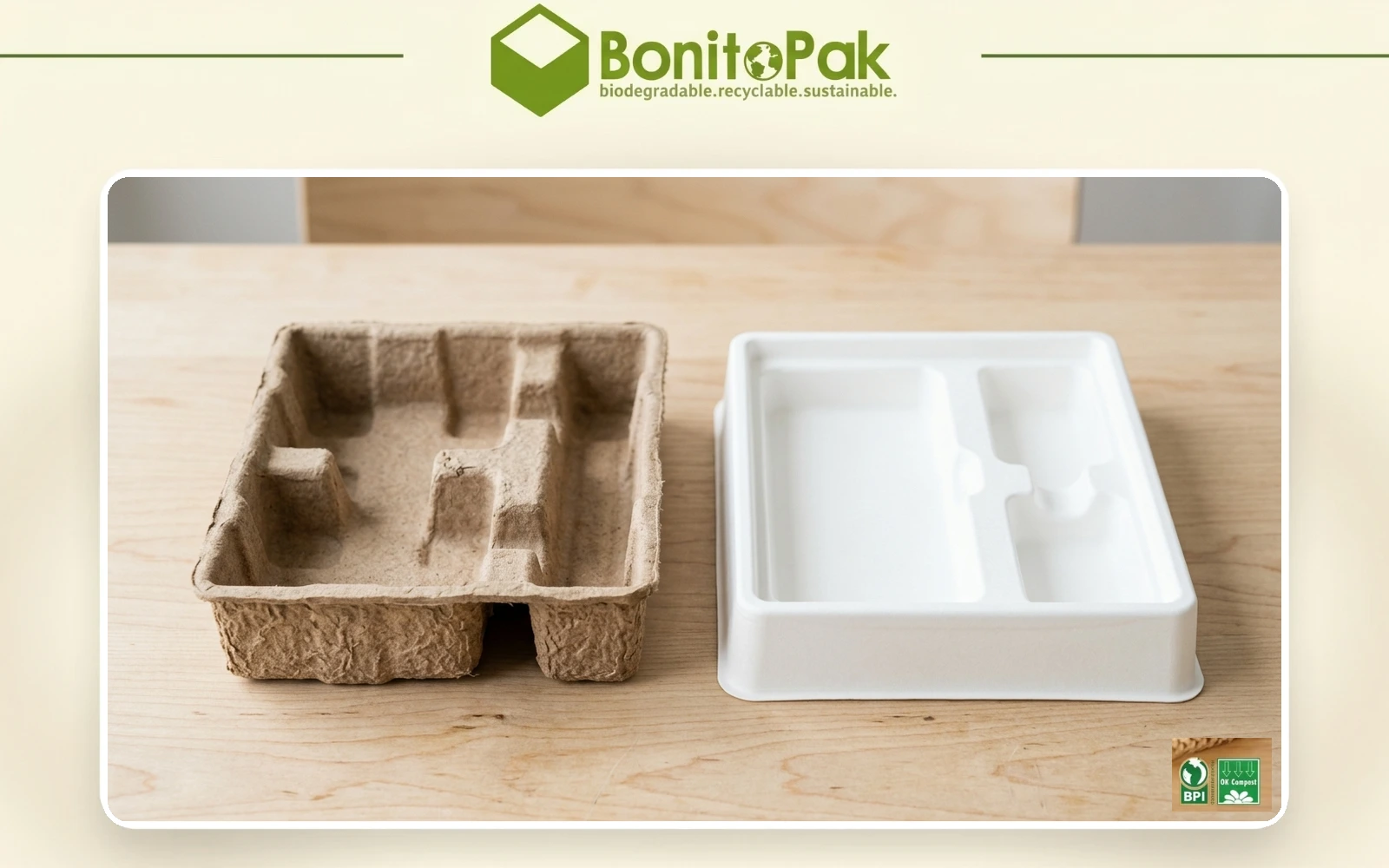
Specialty bird geometry, unusual counts, colour or print at volume, and private label programmes. Sample moulds run in about seven days and production moulds around eight days after geometry approval, with minimums from 1,000 pieces. The technical questions are the same either way: our علب كرتونية مضغوطة رطبة finish at roughly 0.7 to 1.2mm with a smooth face for print, while صواني الضغط الجاف finish at roughly 2.5 to 3.0mm for stacking strength.
تطبيق ذلك عمليًّا
Egg carton suppliers in Australia are the simplest of these markets to navigate, precisely because the market is the most concentrated. One domestic manufacturer, a layer of regional distributors, and imports competing at the edges.
If your formats are standard and your volumes are commercial, buy domestically, and the remaining decision is largely about which distributor serves your state and how quickly they replenish. If you need geometry, colour or specialty bird formats outside the catalogue, you are in tooling territory, and the comparison becomes landed cost including freight rather than unit price.
في بونيتوباك we are the wrong answer for most standard Australian requirements and a sensible one for a narrow set of custom ones. Details of what we run are on our عبوات اللب المصبوبة حسب الطلب page, and if a local supplier can serve you faster we would rather say so than waste your time.
الأسئلة الشائعة
Q: Are egg cartons in Australia made locally or imported?
A: Not for molded fibre. Huhtamaki describes its Melbourne site as the largest and only domestic manufacturer of egg cartons, egg trays and bottle dividers. Everything else in the market is distribution or import.
Q: Do Australian made egg cartons cost more than imports?
A: Per unit, usually. Once freight, customs and the working capital tied up in longer lead times are counted, the gap narrows considerably at small and moderate volumes.
Q: What lead time should I expect on imports?
A: Months rather than weeks for a first order, since tooling, production and sea freight all stack up. Repeat orders are faster but still require planning around shipping schedules.
Q: Can I get coloured cartons in Australia?
A: Yes. The domestic range includes multiple formats, sizes and colours. Matching a specific brand reference rather than choosing from a range is a manufacturing job with minimums attached.
Q: Where do I buy small quantities?
A: Through a regional distributor rather than the factory. Distributors hold stock and sell in case quantities, which suits smallholders and farm gate sellers.

 Arabic
  English
  German
  Spanish
  French
  Russian
  Japanese
  Portuguese