
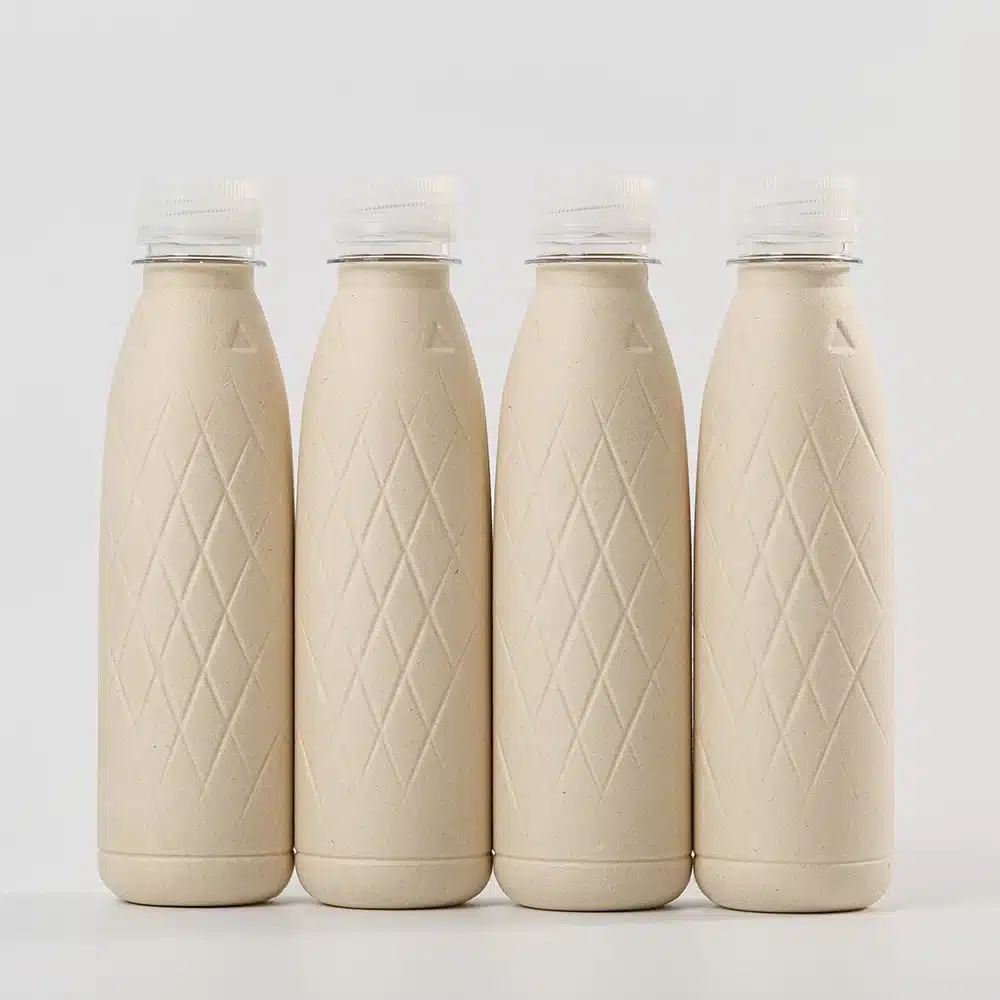
TL;DR: Paper pulp packaging is molded packaging made specifically from recycled paper and corrugated stock, rather than virgin fibers like sugarcane bagasse or bamboo, using a dry-pressing process. This guide covers how it’s made, what it’s suited for, and how it compares to virgin-fiber molded pulp, using Bonitopak’s dry-pressed product line as the working example.
“Molded pulp” and “paper pulp” get used interchangeably online, but they’re not quite the same thing. Molded pulp is the broader category — packaging formed from any plant fiber, including virgin sources like sugarcane bagasse and bamboo. Paper pulp packaging specifically refers to packaging made from recycled paper and corrugated stock, run through a dry-pressing process rather than wet pressing.
This distinction matters if you’re sourcing packaging and comparing quotes, because paper pulp and virgin-fiber molded pulp aren’t always interchangeable for a given product — they differ in surface finish, cost, and structural properties. This guide covers how paper pulp packaging is actually made, what it’s suited for, and where it differs from bagasse- or bamboo-based alternatives.
What Is Paper Pulp Packaging?
Paper pulp packaging is molded packaging made from recycled paper and corrugated stock rather than virgin plant fiber, formed through a dry-pressing process. Bonitopak’s dry-pressed line uses 100% recycled paper pulp and recycled corrugated pulp, pressed at a 2.5–3.0mm wall thickness engineered to pass standard drop testing.
The “recycled” part is the key differentiator from bagasse- or bamboo-based molded pulp, which typically start from virgin fiber sources (even though those sources are fast-renewing, like sugarcane byproduct or bamboo). Paper pulp packaging closes a different loop: it takes existing recycled paper and corrugated material and reforms it into new protective packaging, rather than drawing on a fresh fiber crop.
How Is Paper Pulp Packaging Made?
Paper pulp packaging is made through dry pressing: recycled paper and corrugated stock is pulped, formed in a mold, and pressed — a process built for structural performance and cost efficiency over surface finish. Bonitopak’s dry-pressed trays run at a 2.5–3.0mm wall thickness and are built to pass standard drop testing.
Dry pressing differs from wet pressing in both material and priority. Wet pressing forms fiber into a mold while it’s still saturated, producing a smoother, more finished surface — the process Bonitopak uses for trays where shelf appearance matters, like electronics and cosmetics packaging. Dry pressing works from a drier recycled stock and prioritizes function: a wall thickness and structure engineered specifically to survive drop testing and stacking, at a lower per-unit cost than wet-pressed alternatives.
That efficiency shows up in stacking, too — Bonitopak’s dry-pressed trays save up to 20% in stacking space compared to less space-efficient formats, which matters directly for shipping and warehousing cost at volume.
Where Paper Pulp Packaging Is Used
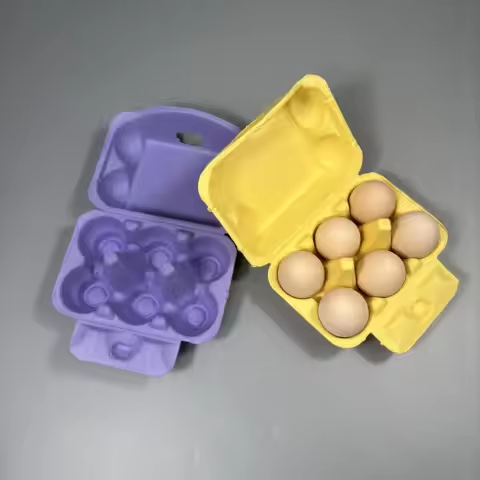
Paper pulp packaging is best suited for general protective and industrial packaging where structural performance matters more than surface finish — shipping inserts, industrial component protection, and high-volume applications like egg trays, where cost efficiency at scale outweighs the smoother finish of wet-pressed alternatives.
It’s a strong fit anywhere a product needs drop-test-rated protection without the added cost of a virgin-fiber, wet-pressed finish:
- General protective packaging — shipping and transit protection where the tray itself won’t be seen by an end consumer
- Industrial component packaging — parts and hardware that need structural protection more than presentation
- High-volume, cost-sensitive applications — egg trays and similar high-unit-count products where per-unit cost matters at scale
- Applications prioritizing recycled content messaging — brands specifically wanting to communicate “made from recycled material,” distinct from “made from renewable virgin fiber”
It’s a weaker fit where surface finish and shelf appearance matter most — premium cosmetics or retail packaging that a consumer will actually handle and see typically still calls for Bonitopak’s wet-pressed, virgin-fiber lines.
Paper Pulp vs. Virgin-Fiber Molded Pulp: How to Choose
The core tradeoff between paper pulp (dry-pressed, recycled) and virgin-fiber molded pulp (wet-pressed, bagasse/bamboo/wood) is finish versus cost and recycled-content messaging. Neither is universally better — the right choice depends on whether your product needs a smooth, presentation-ready surface or drop-tested structural protection at the lowest per-unit cost.
If your packaging is customer-facing — inside a retail box, visible at point of sale, or part of an unboxing experience — the smoother finish of wet-pressed virgin fiber usually wins. If your packaging is functional — protecting a product in transit, stacked in a warehouse, or produced at very high volume where unit cost compounds — paper pulp’s dry-pressing process and recycled-material cost advantage usually wins.
Color and customization are available either way: Bonitopak offers 6 color systems (white, natural, black, orange, gray, and Pantone-matched blue) with custom color accuracy close to 95%, applicable across both wet- and dry-pressed lines, though the surface each color renders on differs based on the underlying process.
Sustainability: How Paper Pulp Packaging Compares
Paper pulp packaging biodegrades within 90 days, the same figure as Bonitopak’s virgin-fiber molded pulp products, but it starts from post-consumer recycled material rather than a renewable virgin fiber crop — a meaningfully different sustainability story for brands that specifically want to communicate a closed-loop, recycled-content message rather than a renewable-resource message.
Both are legitimate sustainability angles, and they’re not competing claims — a brand messaging “made from recycled materials” and a brand messaging “made from a fast-renewing plant source” are both accurate, verifiable positions, just different ones. Paper pulp packaging is the more direct fit if your sustainability messaging specifically emphasizes recycled content or circular material use, since that’s literally what the material is.
Ordering Paper Pulp Packaging: MOQ, Lead Time, and What to Expect
Ordering paper pulp packaging starts with the same mold design process as any custom molded pulp product — a 3D drawing, a sample mold, then a production mold — because the dry-pressing process still requires a custom-cut mold to produce anything beyond a generic stock shape. At Bonitopak, that process runs a 2-day initial drawing, a 7-day physical sample, and an 8-day production mold once the design is locked, the same timeline whether the underlying material is dry-pressed paper pulp or wet-pressed virgin fiber.
Minimum order quantity for paper pulp packaging depends on the mold’s complexity and the size of the run, not a flat number that applies to every design — this is consistent across Bonitopak’s product lines, dry-pressed or wet-pressed. The practical approach is the same regardless of material: send a design or reference sample and request MOQ, unit pricing, and lead time together in one quote, rather than assuming a generic dry-pressed price point applies to your specific cell count or dimensions.
One place paper pulp packaging genuinely does simplify sourcing: because the material itself is a single recycled input rather than a choice between several virgin fiber sources, buyers comparing quotes across paper pulp suppliers are comparing mold complexity and wall thickness specs more directly, without also having to normalize for different fiber sourcing claims the way they might when comparing bagasse against bamboo against wood pulp on the wet-pressed side.
What to Ask a Manufacturer About Their Paper Pulp Process
A manufacturer that can specifically answer questions about wall thickness, drop-test performance, and recycled material sourcing is a stronger bet than one that only offers a general “eco-friendly paper packaging” pitch. Worth asking directly before you commit to an order:
- What recycled input goes into the pulp — post-consumer paper, post-industrial corrugated, or a mix? Bonitopak’s dry-pressed line uses recycled paper pulp and recycled corrugated pulp specifically, not a blend with virgin fiber.
- What wall thickness does the tray run, and is it rated for a specific drop-test standard? A vague “durable” answer is a weaker signal than a specific millimeter figure and a drop-test claim.
- Is the mold built in-house or outsourced? In-house tooling, which is how Bonitopak handles it, generally means faster iteration if your first sample needs adjustment.
- Does the stacking geometry actually save space, or is that just a general industry claim? Bonitopak’s dry-pressed trays are specifically engineered for up to 20% stacking space savings — ask for the equivalent figure from any manufacturer you’re comparing.
الخاتمة
Paper pulp packaging is dry-pressed, recycled-material molded packaging — a distinct choice from virgin-fiber wet-pressed alternatives like bagasse or bamboo, built for structural performance and cost efficiency at scale rather than premium surface finish. Bonitopak’s dry-pressed line runs at a 2.5–3.0mm wall thickness engineered to pass standard drop testing, biodegrades within 90 days, and saves up to 20% in stacking space.
If you’re weighing paper pulp against virgin-fiber molded pulp for a specific product, request a quote from Bonitopak’s packaging team with your use case, or read the broader picture in the complete guide to molded pulp packaging, including how it applies to a specific high-volume paper pulp application on the egg tray product page.
الأسئلة الشائعة
What’s the difference between paper pulp packaging and molded pulp packaging?
Molded pulp is the broader category, including virgin fiber sources like sugarcane bagasse and bamboo. Paper pulp packaging specifically refers to packaging made from recycled paper and corrugated stock through a dry-pressing process.
Is paper pulp packaging biodegradable?
Yes — Bonitopak’s paper pulp (dry-pressed) products biodegrade within 90 days, the same timeframe as its virgin-fiber wet-pressed products.
What’s paper pulp packaging best used for?
It’s best suited for general protective and industrial packaging where structural performance matters more than surface finish — shipping inserts, industrial component protection, and high-volume applications like egg trays.
How thick is dry-pressed paper pulp packaging?
Bonitopak’s dry-pressed trays run at a 2.5–3.0mm wall thickness, engineered to pass standard drop testing.
Does paper pulp packaging stack efficiently?
Yes — Bonitopak’s dry-pressed trays save up to 20% in stacking space compared to less space-efficient formats, which reduces shipping and warehousing cost at volume.
Can paper pulp packaging be custom colored?
Yes — the same 6 color systems (white, natural, black, orange, gray, and Pantone-matched blue) with close to 95% custom color accuracy apply across Bonitopak’s dry-pressed and wet-pressed lines.
Is paper pulp packaging cheaper than virgin-fiber molded pulp?
Generally yes, per unit at volume, since it starts from recycled stock rather than virgin fiber and is optimized for structural performance over surface finish — but exact pricing depends on your specific design and order volume.





 Arabic
  English
  German
  Spanish
  French
  Russian
  Japanese
  Portuguese