 تخطي إلى المحتوى

What Is a 30 Egg Tray and Why Does It Exist?
إن 30 egg tray is not a retail carton. Nobody at a grocery store picks one up. It is a distribution tool built to do one job: move eggs efficiently through a supply chain.
It holds 30 eggs in a 5-row by 6-row cell layout on an open flat tray with no lid. Eggs sit exposed on top. Multiple trays stack directly on each other in a case or on a pallet. The base of the upper tray nests into the cells of the lower tray, using the eggs as structural columns under stack load.
This is the format that moves eggs from the farm to the wholesale facility to the retailer. It is also used on-farm for moving eggs from the laying house to the grading and washing area without a lid getting in the way. The 30 egg tray is also called an egg flat, filler flat, or egg crate. All three names refer to the same product.
Standard 30 Egg Tray Dimensions
| البُعد | Standard 30 Egg Tray | الملاحظات |
| Overall footprint | Approx. 305 x 305mm (12 x 12 in) | Fits standard case and pallet dimensions |
| Cell layout | 5 rows x 6 rows | Standard for large chicken grade |
| Cell diameter at top | Approx. 47 to 48mm for large-grade | Custom per grade from Bonitopak |
| سماكة الجدار | 2.5 to 3.0mm (dry press) | Standard for distribution flats |
| نطاق درجات الحرارة | من -30 إلى 120 درجة مئوية | Covers cold chain through ambient |
| Approx. tray weight | 120 to 150g | Depends on fiber type and wall spec |
Why Cell Geometry Matters Even on a Lidless Flat
A cell too wide for the egg allows lateral movement during transport. The egg contacts the cell wall on one side repeatedly during vibration, and that repeated mechanical contact is what cracks shells. The cushioning effect of molded pulp works through controlled deformation of the cell wall. If the egg sits loose, the deformation pathway is wrong and protection fails.
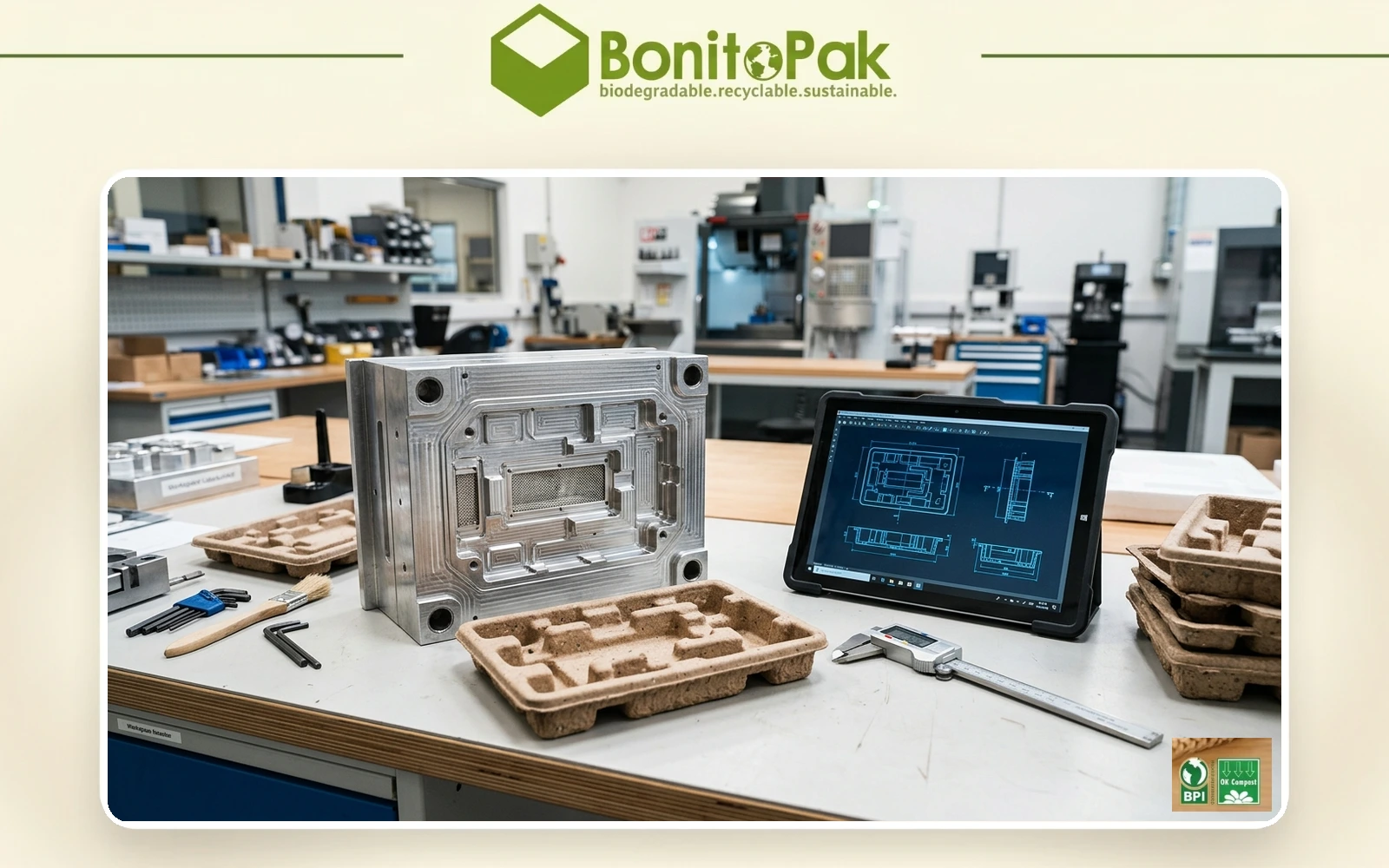
Bonitopak cuts cell geometry per project rather than from a fixed catalog. Cell diameter, depth, and taper are all set for your egg grade and bird type, not a generic large-grade profile.
Dry Press vs Wet Press for 30 Egg Flats
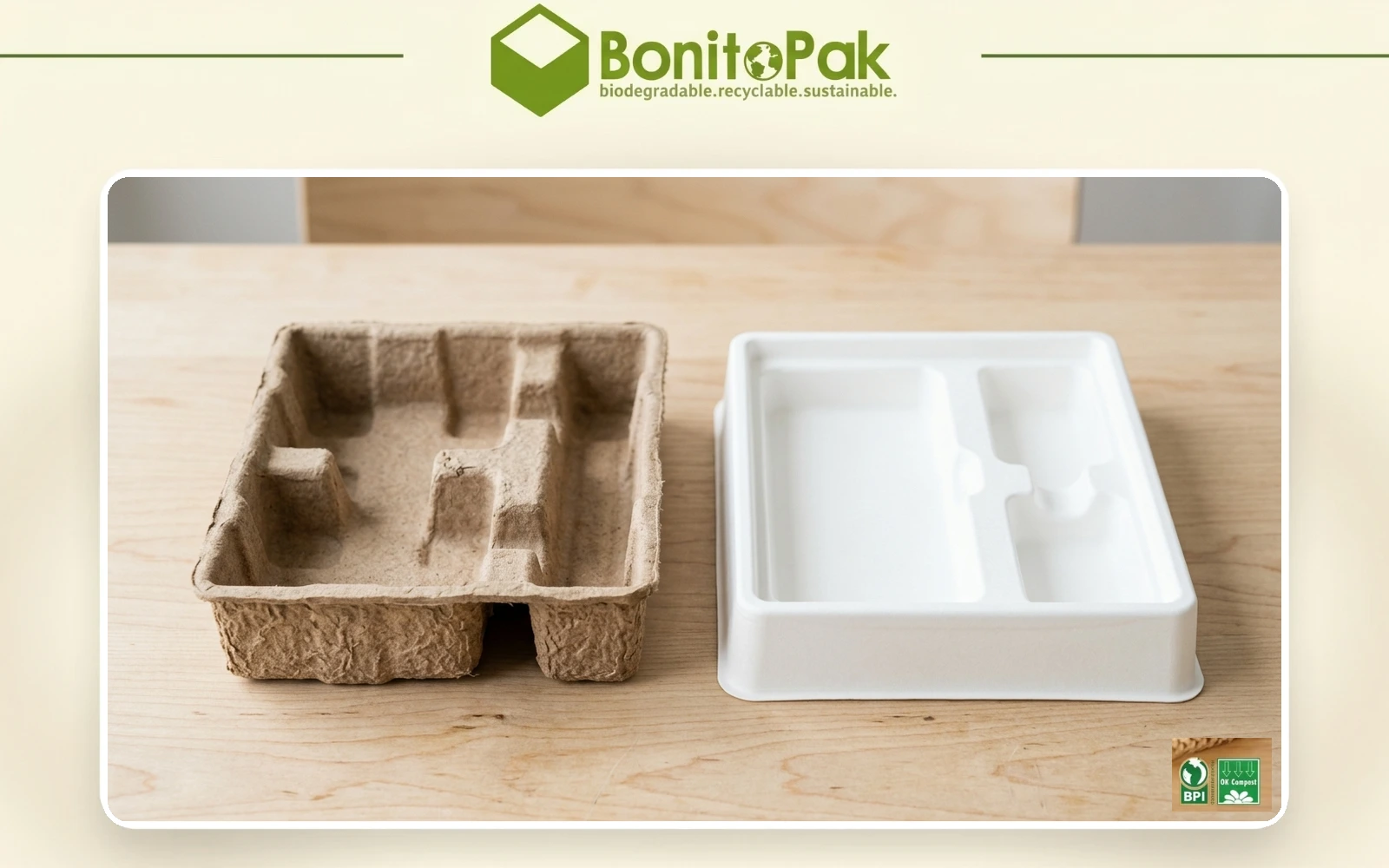
Dry press is the correct specification. Full stop. Dry press produces a wall of 2.5 to 3.0mm that handles stack load, transit impact, and temperature extremes from -30 to 120 degrees C. Wet press compresses the wall to 0.7 to 1.2mm and produces a smooth face suited to retail cartons where the consumer handles the packaging. On a distribution flat discarded at the packing station, wet press adds cost with no practical benefit. Dry press is also cheaper per unit, which matters at the volume a 30 egg flat is used.
Fiber Options for 30 Egg Trays
| الألياف | تشطيب السطح | Cost Level | Food Contact | أفضل تطبيق |
| لب الورق المعاد تدويره | Gray, standard distribution look | الأدنى | نعم | High-volume commodity distribution flats |
| تفل قصب السكر | Warm natural tone, cleaner finish | Mid | نعم | Natural fiber spec, sustainability branding |
| ألياف الخيزران | Clean, consistent finish | Mid | نعم | Higher structural performance requirement |
How 30 Egg Trays Stack and Why It Matters
Empty trays nest for return freight and warehouse storage. Bonitopak’s dry press design saves up to 20% storage space on nested empty stacks compared to non-nesting alternatives. Over a large operation buying trays in pallet quantities, that storage saving is measurable in real terms.
Filled trays stack with the base of the upper tray resting on the top of the eggs below. The eggs become load-bearing columns. This is why cell geometry matters even in this stacked configuration: the upper tray’s base must align correctly with the egg positions below. Incorrectly sized cells contact the shell at the wrong point and cracks occur under stack load.
When to Use 30 Egg Trays vs Retail Cartons
| Use 30 Egg Tray When | Use Retail Carton (6, 12, 18 count) When |
| Eggs move from farm to packing station for repackaging | End consumer handles the carton directly at point of sale |
| Eggs go to wholesale buyer who repacks or sells to food service | Carton carries brand at farmers market or retail shelf |
| Moving eggs on-farm from laying house to grading area | You need color, emboss branding, or premium presentation |
| Volume is high and per-unit cost governs over presentation | Direct-to-consumer or subscription delivery format |
30 Egg Trays for Non-Standard Bird Types
Duck egg distribution flats need wider and deeper cells than standard large-grade chicken flats. A standard 30 cell chicken tray leaves duck eggs loose, allowing movement that causes cracking in transit. Turkey eggs need even larger cells. Quail eggs in a standard chicken flat rattle dramatically.
Bonitopak cuts tooling per project for any bird type given physical egg samples or measurements. The 30 cell layout can be designed for any egg grade.
الأسئلة الشائعة
A 30 egg tray, also called an egg flat or filler flat, is an open molded pulp tray with 30 individual cells arranged in a 5×6 layout. It has no lid. Eggs sit exposed on top and multiple trays stack directly on each other, with the base of the upper tray nesting into the cells of the lower tray. It is the standard format for bulk egg distribution, on-farm handling, and wholesale operations. The consumer never sees or handles this format, it is a logistics tool rather than a retail product.
What are the dimensions of a standard 30 egg tray?
A standard 30 egg tray runs approximately 12 by 12 inches (around 305 by 305mm) with a 5×6 cell layout. Cell interior diameter and depth vary by manufacturer and intended egg grade. For standard large-grade chicken eggs, cell interior diameter at the top runs approximately 47 to 48mm. Bonitopak cuts cell dimensions per project to match your egg grade and bird type rather than a generic standard that may not fit your actual eggs.
Should a 30 egg flat be wet press or dry press?
Dry press is the correct specification for 30 egg distribution flats. Dry press produces a 2.5 to 3.0mm wall that handles stack load, temperature extremes from -30 to 120 degrees C, and transit impact. Wet press compresses the wall to 0.7 to 1.2mm and produces a smooth face suited to retail cartons where the consumer handles the packaging. On a distribution flat that nobody consumer-facing handles, wet press adds per-unit cost with zero practical benefit and is the wrong process for the application.
Can 30 egg trays be composted?
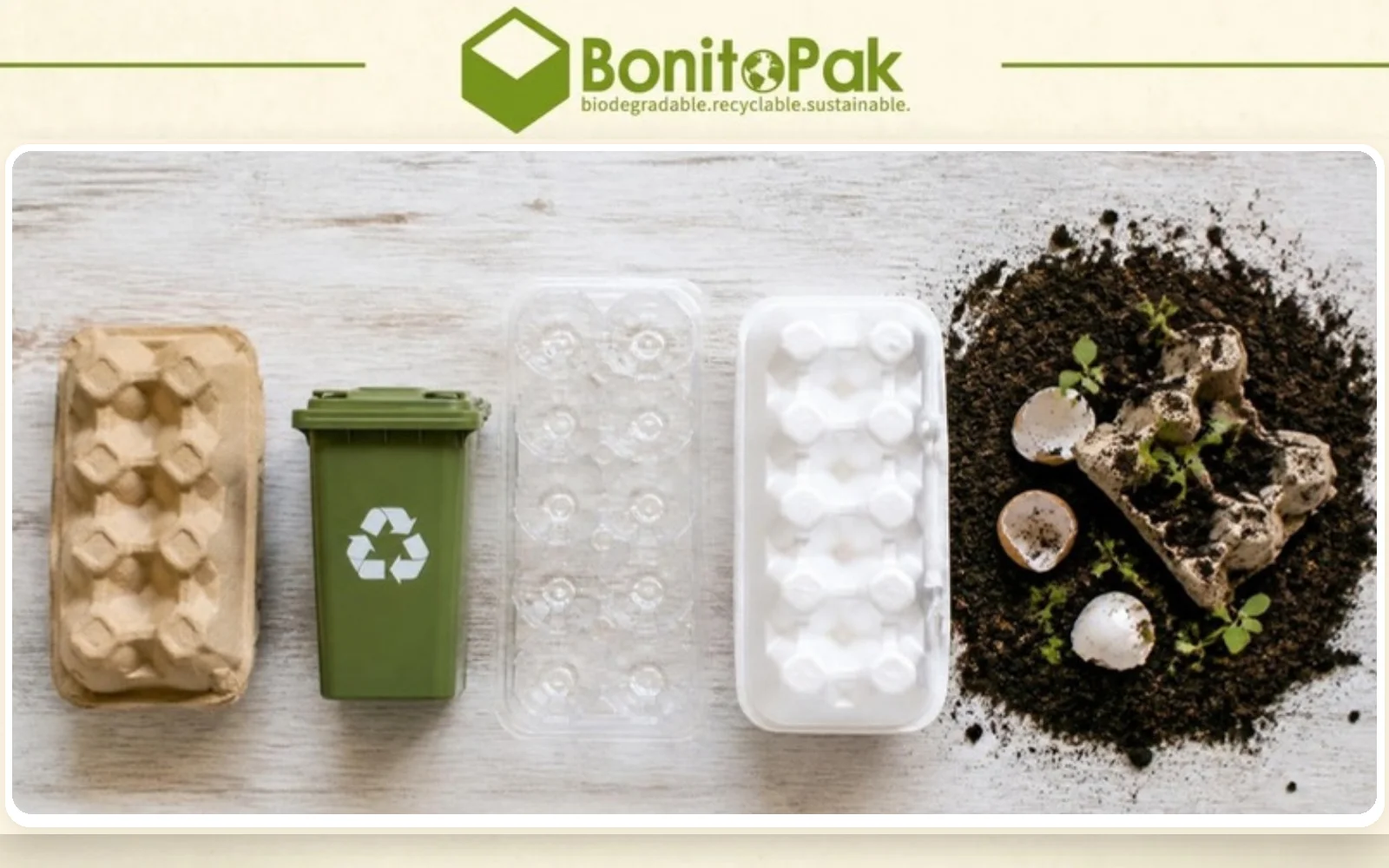
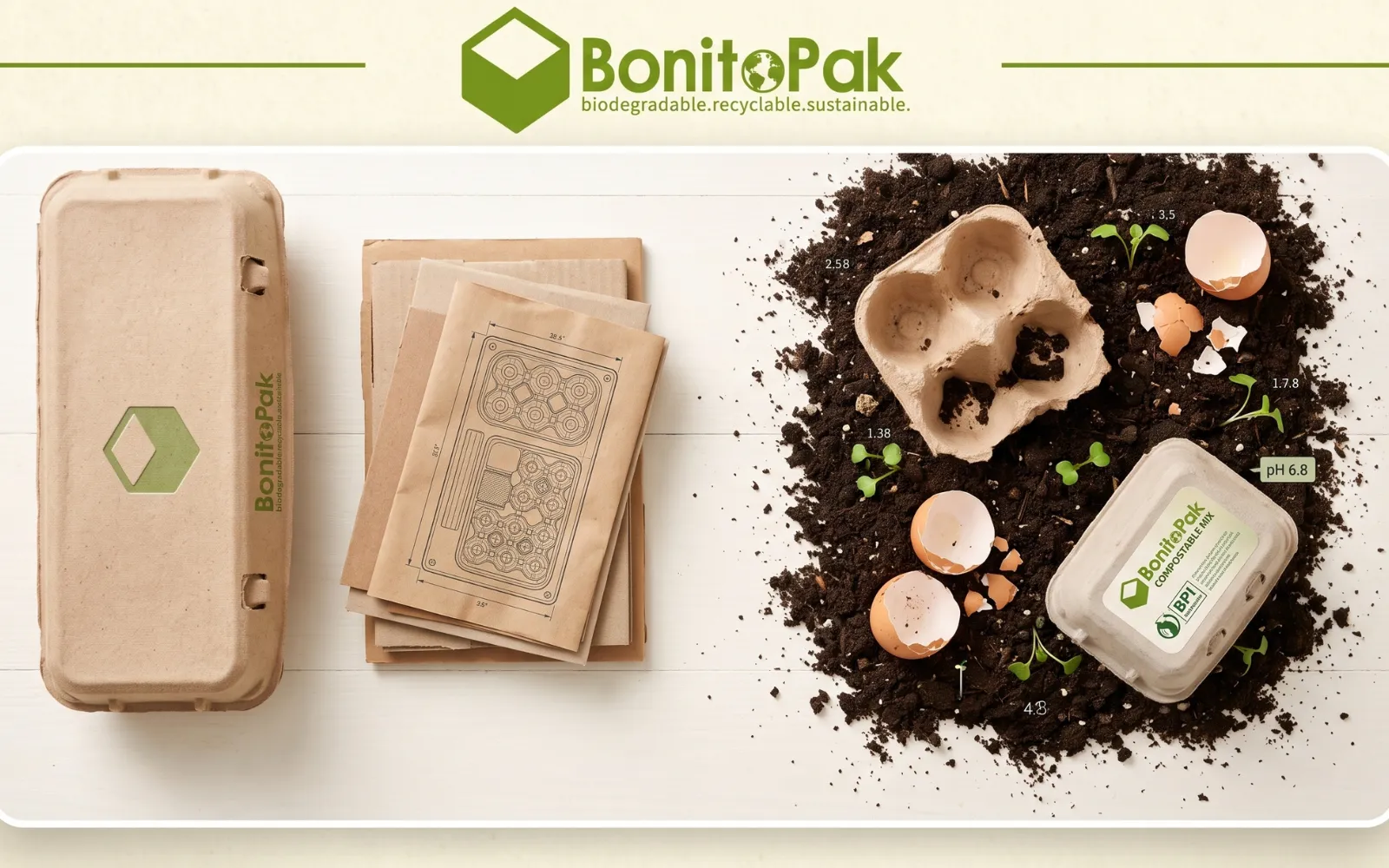
Yes. Molded pulp 30 egg trays from Bonitopak are certified compostable. The food grade line holds BPI certification under ASTM D6400 and OK Compost certification under EN 13432. The certified line biodegrades within 90 days under industrial composting conditions. Clean dry trays also go into standard paper recycling streams. Recycled paper pulp, bagasse, and bamboo fiber inputs all compost cleanly without leaving synthetic residue, and the dual disposal route means no Bonitopak 30 egg tray needs to go to landfill.
What is the difference between a 30 egg tray and an egg carton?
An egg carton has a lid, holds a smaller count such as 6, 12, or 18 eggs, and is designed for retail sale where the consumer handles and opens the packaging. It carries branding visible to the buyer and protects eggs during consumer transport. A 30 egg tray has no lid, holds 30 eggs in an open flat format, and is used for bulk distribution, on-farm handling, and wholesale supply chains. The consumer never sees or handles the flat. It is a logistics and distribution tool, not a retail product.
Do 30 egg trays work for duck or turkey eggs?
Not if they are standard-geometry chicken trays. Standard 30 egg tray cells are sized for large-grade chicken eggs with approximately 47 to 48mm interior diameter. Duck eggs from most common laying breeds run 60 to 72mm in diameter. Turkey eggs are even larger. A standard chicken cell leaves these eggs loose, allowing lateral movement that cracks shells in transit. Custom cell geometry matched to your bird type and egg grade is the correct solution. Bonitopak cuts tooling per project for any bird type given physical egg samples or measurements.
Ready to Order 30 Egg Trays?
Send your egg grade, bird type, annual volume, fiber preference, and destination market. 3D drawings in 2 days. Sample mold in 7 days. Bonitopak responds to all inquiries within 24 hours.
See the full egg tray range at egg-tray or contact Bonitopak to start your 30 egg tray specification.

 Arabic
  English
  German
  Spanish
  French
  Russian
  Japanese
  Portuguese