 Перейти к содержимому
Introduction: When Standard Machines Stop Making Sense
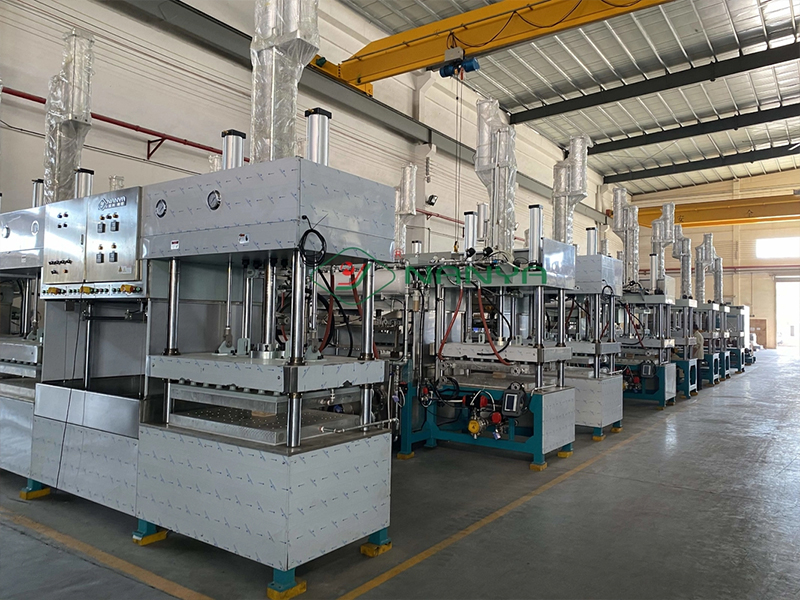
A customized commercial pulp board machine usually becomes a serious consideration when something in the factory stops aligning. Production may be running, but not efficiently. Board density might fluctuate. Moisture levels may vary from batch to batch. Energy consumption might be creeping upward without clear explanation. Or downstream molded fiber production may be struggling because the board feeding into the process lacks consistency. At that point, many manufacturers start searching for a larger or newer machine, assuming scale will solve the problem. In reality, the issue is often not size but fit.
Standard pulp board machines are designed around generalized operating assumptions. They assume predictable fiber composition, stable furnish quality, and average production requirements. However, commercial pulp board manufacturing rarely operates under average conditions. Recycled fiber streams vary. Moisture content changes with climate. Board specifications differ depending on whether the final application is structural packaging, protective inserts, or premium molded fiber products. When machine design does not align with real production variables, inefficiencies accumulate quietly. That is where a customized commercial pulp board machine shifts from being an option to becoming a strategic advantage.
What Customization Really Means in Commercial Pulp Board Production
Customization is often misunderstood as a cosmetic adjustment. In reality, it is structural engineering. A customized commercial pulp board machine is designed around specific production targets, fiber blends, density requirements, and energy constraints. The forming width, press pressure, vacuum configuration, and drying capacity are not chosen generically but calculated based on measurable production realities. When the forming section is engineered to match the exact drainage characteristics of your fiber mix, mechanical water removal becomes more efficient. When press loading is calibrated to your board thickness target, moisture levels entering the drying stage become more stable. These adjustments may seem subtle, but they directly influence energy consumption, output consistency, and long-term maintenance costs.
In operations where pulp board feeds directly into molded fiber production lines such as dry pressing systems, integration becomes even more critical. For example, in the production of molded fiber packaging like Лотки для формованной целлюлозы сухого прессования, board density and uniformity determine forming precision and structural strength. If board quality fluctuates, downstream forming machines compensate, often increasing reject rates and operational stress. A customized commercial pulp board machine eliminates that instability at the source.
The Energy Reality Behind Pulp Board Manufacturing
Energy consumption in commercial pulp board production is frequently underestimated. While tissue production is dominated by steam usage at the drying stage, pulp board manufacturing relies heavily on efficient mechanical dewatering before drying. However, the drying section still represents the single largest thermal load in most installations. When the forming and pressing stages fail to remove sufficient moisture, the drying system compensates with higher thermal input, increasing operating costs over time.
In a typical mid-scale pulp board facility, energy distribution follows a predictable pattern:
| Системная область | Основной вид энергоносителя | Приблизительная доля в общем объеме энергии |
| Сушильная секция | Термический | 40–50% |
| Forming & Press Section | Электроэнергия | 15–20% |
| Vacuum System | Электроэнергия | 10–15% |
| Stock Preparation | Электроэнергия | 10–15% |
| Conveying & Auxiliary | Электроэнергия | 5–10% |
This breakdown makes one fact clear: improvements in pre-dryer dryness directly reduce thermal energy demand. A customized commercial pulp board machine addresses this at the design phase by optimizing drainage geometry, vacuum balance, and press configuration to suit the actual fiber blend being processed. When dryness entering the dryer improves even marginally, energy consumption per ton drops in measurable ways.
Standard vs Customized: A Long-Term Performance Comparison
Manufacturers often hesitate at the additional engineering investment required for customization, but lifecycle analysis tells a different story. Consider a 30 TPD pulp board operation running 330 days per year. The difference between a standard configuration and a customized commercial pulp board machine becomes evident when performance metrics are compared over time.
| Метрическая система | Standard Machine | Customized Machine |
| Average kWh per Ton | 820 | 700 |
| Board Thickness Tolerance | ±0.4 mm | ±0.2 mm |
| Fiber Waste Rate | 5–7% | 2–3% |
| Downstream Rejection Rate | Умеренный | Нижний |
| Annual Energy Cost (30 TPD) | Выше | Сниженная |
The reduction in energy per ton alone can generate substantial annual savings. When combined with lower waste rates and improved downstream forming efficiency, the financial advantage becomes even more significant. Over a ten-year operating horizon, the cumulative difference often exceeds the initial cost premium of customization. What appears more expensive upfront frequently proves less expensive over time.
Integration: The Factor Most Factories Overlook
One of the most common operational inefficiencies in pulp board manufacturing comes from fragmented procurement. Stock preparation systems are sourced separately from forming machines. Drying tunnels are installed without full integration with moisture control systems. Automation is layered on top rather than engineered into the system. These disconnected decisions create misalignment in flow rates, vacuum loads, and drying capacity.
A full-system approach, such as the integrated manufacturing philosophy behind BonitoPak, treats pulp board production as a cohesive process rather than a collection of independent components. When forming width matches pump capacity, when vacuum performance is calibrated to drainage characteristics, and when drying throughput aligns with board thickness, the system stabilizes. Stability reduces variability. Reduced variability lowers energy waste and material loss. Customization, in this context, becomes a discipline rather than a feature.
Market Demands and the Push Toward Precision
Commercial pulp board today serves increasingly demanding markets. Sustainable packaging, protective inserts, and branded molded fiber products require tighter tolerances and stronger structural performance than ever before. Industry conversations around customization and product differentiation, such as those explored in discussions like Можно ли использовать литые целлюлозные коробки для брендирования?, reflect a broader trend toward higher expectations in fiber-based manufacturing.
A customized commercial pulp board machine allows manufacturers to respond to these market pressures with confidence. When density, thickness, and moisture content are controlled precisely, board performance becomes predictable. Predictability strengthens customer trust. Customer trust strengthens long-term contracts.
Long-Term Investment Perspective
Capital investment decisions in pulp board manufacturing should never be evaluated solely on acquisition cost. Energy volatility, environmental regulations, and raw material variability all influence long-term profitability. A customized commercial pulp board machine mitigates these risks by aligning mechanical performance with operational realities. Reduced energy consumption lowers exposure to energy price fluctuations. Improved moisture control reduces reprocessing costs. Lower waste rates protect margins in competitive markets.
When evaluated across a decade of operation, customization consistently proves to be a financial stabilizer rather than an expense. The manufacturers who treat pulp board production as a strategic core capability rather than a commodity process tend to outperform their competitors over time.
Conclusion: Customization Is Strategic Control
A customized commercial pulp board machine is not about complexity for its own sake. It is about control. Control over fiber behavior, control over moisture levels, control over energy consumption, and control over final product quality. Standard equipment assumes average conditions, but manufacturing is rarely average. When machine design aligns precisely with production requirements, efficiency improves naturally and operational stress declines.
If your pulp board operation is feeding high-value molded fiber production or scaling toward more demanding markets, customization is not optional. It is the foundation of sustainable growth and operational intelligence.
Часто задаваемые вопросы
What is a customized commercial pulp board machine?
A customized commercial pulp board machine is engineered specifically for a manufacturer’s raw material mix, board specifications, and production targets, ensuring better alignment between machine design and operational requirements.
How much energy improvement can customization deliver?
Depending on baseline efficiency and fiber characteristics, energy reductions of 10 to 20 percent per ton are achievable through optimized forming, vacuum calibration, and drying integration.
Is customization only beneficial for large factories?
No. Mid-sized facilities often benefit significantly, especially when fiber variability or product quality standards demand tighter process control.
Does customization improve board consistency?
Yes. Customized systems reduce thickness deviation, stabilize density, and improve moisture uniformity, which directly enhances downstream forming performance.
Why integrate pulp board production with molded fiber systems?
Because board consistency determines molded product quality. Stable input material reduces rejects, improves strength, and supports sustainable packaging goals.

 Russian
  English
  German
  Spanish
  French
  Japanese
  Portuguese
  Arabic