 تخطي إلى المحتوى
Introduction: Why Tooling Defines Molded Fiber Manufacturing
In molded fiber manufacturing, most people focus on the production machines forming systems, hot presses, drying tunnels, and automation lines. While these machines are important, the real backbone of molded fiber production is something less visible but far more critical: the tooling. A molded pulp tooling manufacturer plays a central role in determining whether a packaging production line runs efficiently or struggles with inconsistent output.
Every molded fiber product, whether it is a food container, protective insert, electronics tray, or eco-friendly clamshell box, begins with the mold design. The mold determines the product’s shape, thickness, structural strength, and surface finish. If the tooling is poorly designed, the production line may suffer from uneven fiber distribution, excessive drying times, and higher rejection rates.
On the other hand, precision-engineered tooling stabilizes the entire manufacturing process. A skilled molded pulp tooling manufacturer ensures that molds support efficient water drainage, uniform fiber formation, and long-term durability during repeated production cycles.
As the demand for sustainable packaging continues to grow globally, the importance of high-quality molded fiber tooling has never been greater.
What a Molded Pulp Tooling Manufacturer Actually Produces
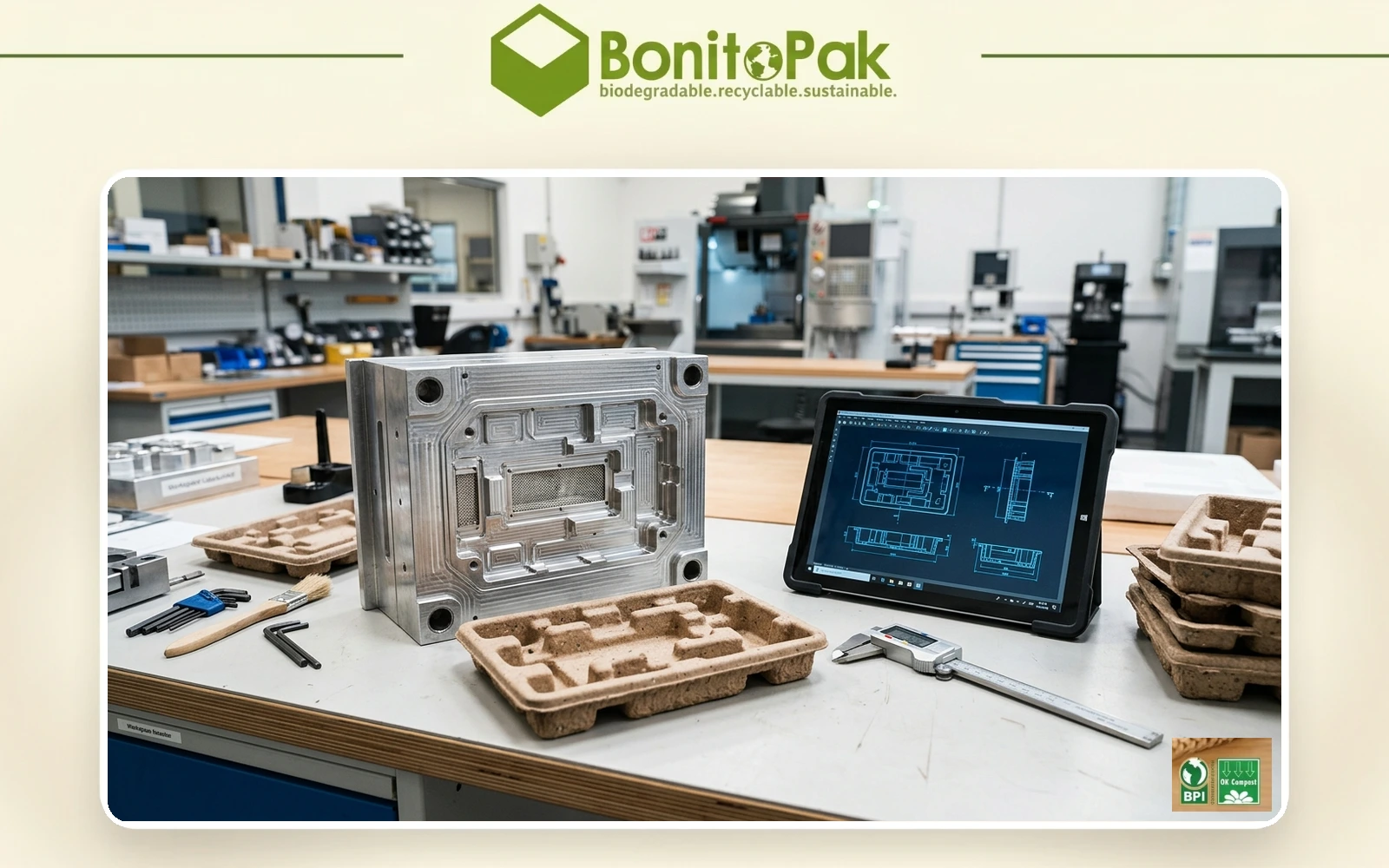
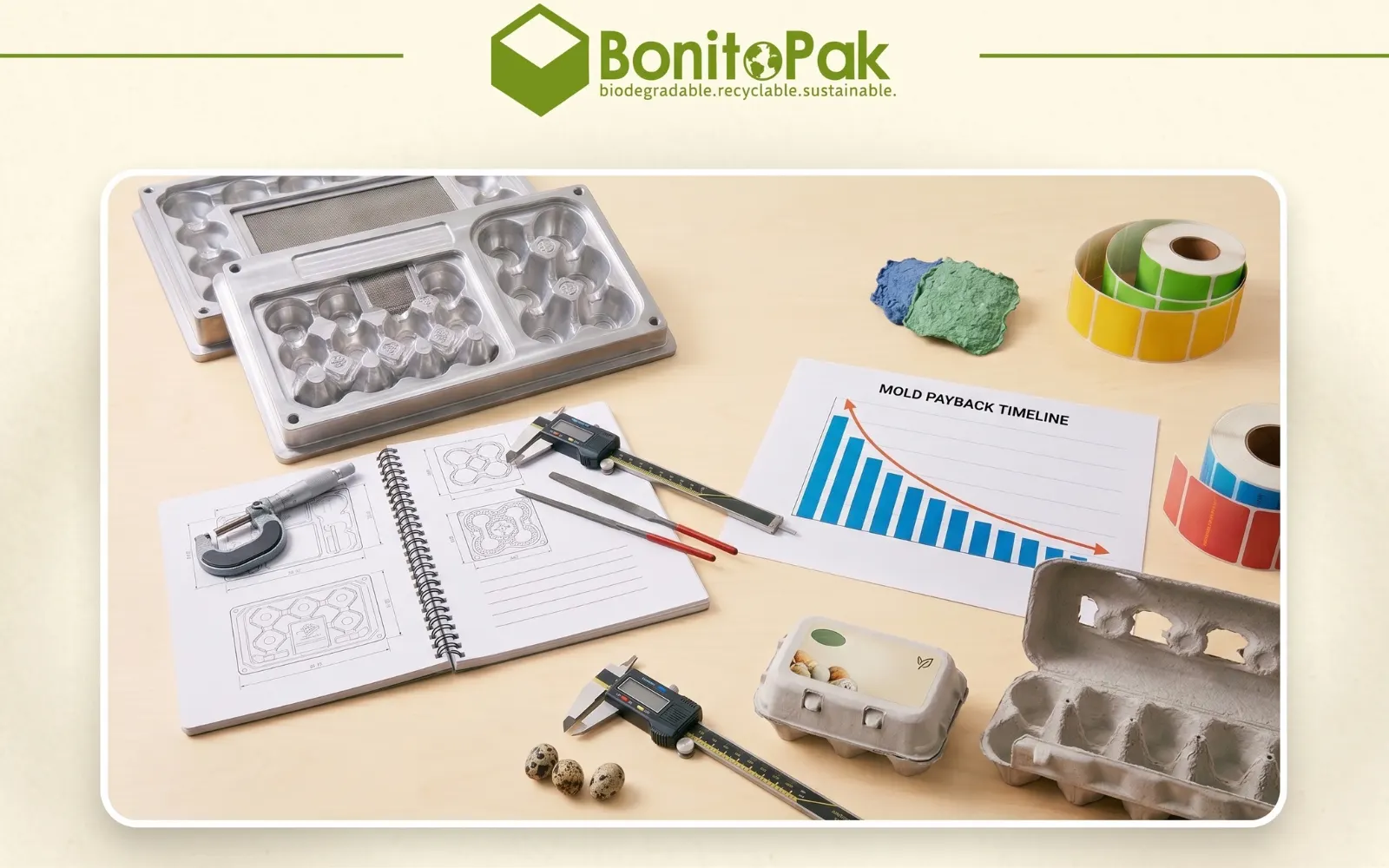
A molded pulp tooling manufacturer specializes in designing and producing molds used in molded fiber production lines. These molds are typically made from materials such as aluminum, brass, or stainless steel and are engineered to withstand thousands of forming cycles while maintaining precise dimensional accuracy.
During molded pulp production, pulp slurry is deposited onto the forming mold using vacuum suction. Tiny vent holes across the mold surface allow water to escape while fibers remain on the cavity surface, gradually forming the shape of the product. Once the wet preform is formed, it is transferred to a pressing mold where heat and pressure strengthen the product and improve its surface finish.
The mold therefore serves two functions simultaneously. It defines the physical shape of the packaging and controls how water drains during the forming process. Because fiber distribution depends on how efficiently water is removed, mold design directly influences product consistency and production efficiency.
Advanced molded fiber systems, including technologies used to produce products such as صواني اللب المصبوبة بالكبس الجاف, rely heavily on precision tooling to maintain stable wall thickness and high-quality surface finishes.
Without properly engineered molds, even advanced machinery cannot deliver consistent results.
Key Technologies Used by Molded Pulp Tooling Manufacturers
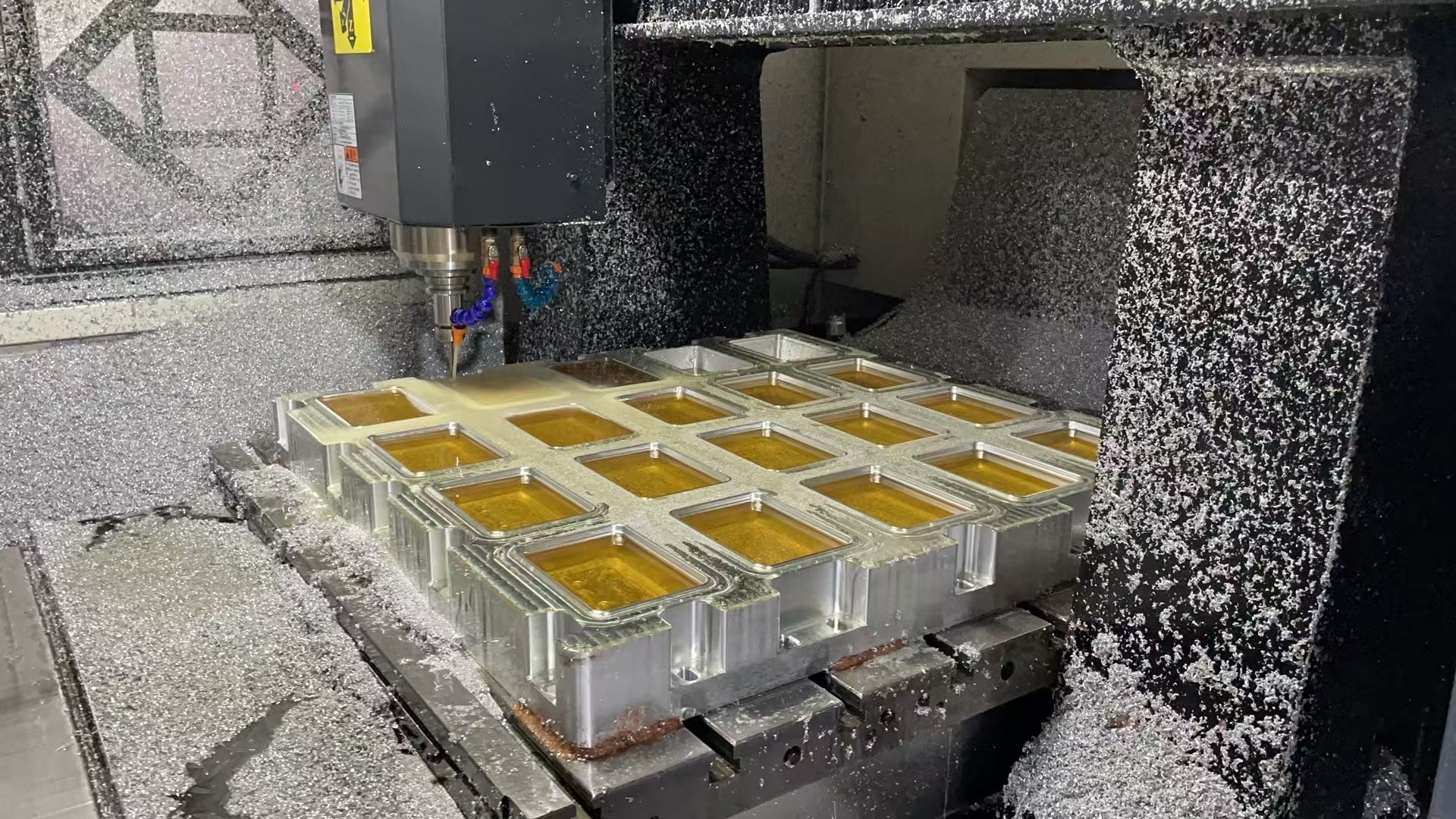
Modern molded pulp tooling manufacturers use advanced machining technologies to produce highly precise molds. CNC machining centers are used to shape mold cavities with tight dimensional tolerances. Electrical discharge machining (EDM) may be used to create intricate venting patterns or fine internal details that are difficult to achieve using traditional cutting methods.
Surface finishing processes such as grinding and polishing help achieve smooth cavity surfaces, which improves product appearance and prevents fiber sticking during production. High-precision drilling equipment is used to create thousands of micro-vent holes across mold surfaces to support efficient water drainage.
These technologies allow tooling manufacturers to produce molds capable of supporting complex packaging geometries and high-speed production environments. The combination of engineering expertise and precision machining ensures that molds perform reliably even under demanding production conditions.
Manufacturers that integrate tooling design with packaging engineering such as the production-focused approach adopted by بونيتوباك are often able to optimize both product performance and manufacturing efficiency simultaneously.
How Mold Design Affects Energy Efficiency
Although molds themselves do not consume energy, their design has a major influence on how much energy the overall production process requires. Molded fiber products begin as wet pulp, which means a significant amount of energy is required to remove moisture during drying.
When mold venting and drainage are properly designed, water is removed more efficiently during the forming stage. This reduces the moisture content of the wet preform before it enters the drying phase, lowering the thermal energy required to complete the process.
In a typical molded fiber production line, energy consumption may be distributed as follows:
| منطقة النظام | نوع الطاقة الأساسية | الحصة التقريبية من إجمالي الطاقة |
|---|---|---|
| قسم التجفيف | الحراري | 45-55% |
| Vacuum Forming | الكهرباء | 20–25% |
| Pressing System | الكهرباء | 10-15% |
| المعدات المساعدة | الكهرباء | 5–10% |
Well-designed molds reduce drying load and help maintain consistent cycle times. Poorly designed molds, however, may trap moisture and increase energy consumption across the entire production process.
For manufacturers focused on sustainable packaging, tooling design therefore becomes an important factor in reducing operational energy usage.
Standard Tooling vs Custom Mold Development
Some manufacturers initially choose standard molds because they are less expensive and faster to produce. While this approach can work for simple packaging products, it often creates limitations when production scales or when packaging designs become more complex.
| متري | الأدوات القياسية | Custom Molded Pulp Tooling |
|---|---|---|
| Fiber Distribution Consistency | معتدل | عالية |
| Surface Finish Quality | متغير | Consistent |
| استقرار الإنتاج | معتدل | قوي |
| Rejection Rate | أعلى | أقل |
| عمر الأداة | أقصر | أطول |
A custom mold produced by an experienced molded pulp tooling manufacturer is designed specifically for the product geometry, fiber blend, and production conditions. This improves product quality while reducing waste and downtime.
Customization also supports branding and design flexibility. As molded fiber packaging evolves beyond simple protective inserts into branded consumer packaging, tooling precision becomes essential. Industry discussions around packaging customization — such as insights shared in articles like هل علب اللب المقولبة قابلة للتخصيص للعلامة التجارية؟ — highlight how tooling design enables detailed shapes, embossed logos, and improved surface aesthetics.
The Importance of Tooling Maintenance
Even the best molds require proper maintenance to maintain performance over time. Fiber residue may accumulate inside vent holes during extended production cycles, reducing drainage efficiency. Regular cleaning helps maintain proper airflow and vacuum performance.
Over time, molds may also experience surface wear or mechanical stress from repeated pressing cycles. Periodic inspection allows manufacturers to detect early signs of wear before they affect product quality.
A proactive maintenance strategy extends tooling lifespan and protects production stability. For large-scale molded fiber packaging operations, maintaining mold performance is essential for keeping production lines running efficiently.
Conclusion: Tooling Expertise Drives Molded Fiber Innovation
A molded pulp tooling manufacturer does far more than produce metal molds. These manufacturers provide the engineering foundation that allows molded fiber production systems to operate efficiently and consistently. Precision tooling supports reliable fiber distribution, faster moisture removal, and higher-quality packaging products.
As global demand for sustainable packaging continues to rise, molded fiber manufacturing will expand rapidly. Companies that invest in advanced tooling design and experienced tooling partners will be better positioned to meet growing production demands while maintaining high product standards.
In molded fiber manufacturing, innovation does not begin on the production line. It begins with the mold.
الأسئلة الشائعة
What does a molded pulp tooling manufacturer do?
A molded pulp tooling manufacturer designs and produces molds used in molded fiber packaging production systems.
Why is tooling important in molded pulp manufacturing?
Tooling controls fiber distribution, product shape, and moisture drainage, directly affecting product quality and production efficiency.
What materials are used for molded pulp molds?
Common materials include aluminum, brass, and stainless steel because they provide durability and effective heat transfer.
Can molded pulp tooling be customized?
Yes. Custom molds are designed to match specific product shapes, fiber blends, and production requirements.
How long does molded pulp tooling last?
With proper maintenance, high-quality molds can last through thousands of production cycles before needing replacement or refurbishment.

 Arabic
  English
  German
  Spanish
  French
  Russian
  Japanese
  Portuguese