 تخطي إلى المحتوى
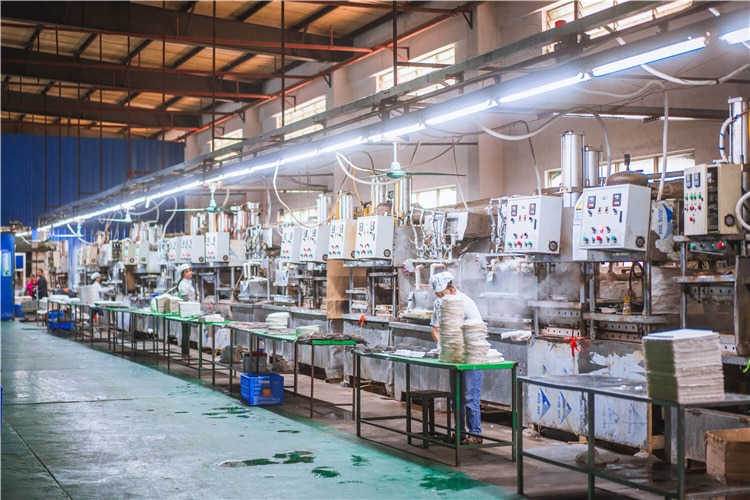
Industrial packaging is in the middle of a quiet revolution. A few years ago, protective packaging decisions were mostly about cost and shipping damage. Today, buyers are dealing with something bigger: sustainability mandates from brand customers, packaging restrictions in key markets, and rising pressure to replace foam and plastics with biodegradable alternatives.
That’s why molded fiber is no longer “just egg trays.” It’s becoming a serious industrial packaging material used for electronics, appliances, automotive parts, and export shipping inserts. And as demand rises, so does one high-intent search:
industrial packaging pulp molding machine supplier
If you searched that keyword, you’re probably not casually browsing. You’re likely trying to source equipment for a production line either to start molded pulp manufacturing, expand capacity, or upgrade from inconsistent machinery that can’t hold tolerances.
This article will help you choose a supplier with confidence by showing what actually matters at industrial scale: machine configuration, mold capability, drying design, after-sales support, and how to verify that a supplier is a real manufacturer (not just a reseller).
1) Why Molded Pulp Is Becoming an Industrial Packaging Standard
Industrial molded pulp succeeds because it solves three problems at once: protection, sustainability, and customization.
In industrial shipping, packaging fails in predictable ways—corners crush, vibration causes abrasion, inserts deform in heat, stacking loads distort trays. Molded fiber packaging can be engineered to handle those stress points because it supports structural ribs, reinforced corners, and custom contact points that cradle products more intelligently than generic foam blocks.
At the same time, molded pulp aligns with sustainability requirements because it’s typically produced from recycled paper or other fiber sources, and it is widely recyclable where paper recycling exists. For brands shipping globally, using fiber packaging can reduce plastic-related friction with customers and compliance teams.
But here’s the part most people miss: industrial molded pulp is a manufacturing process, not a product category. The same phrase—“pulp molding machine”—can refer to a basic tray machine or a sophisticated industrial line. That’s why selecting the right industrial packaging pulp molding machine supplier is not a simple “pick the cheapest quote” decision.
2) What a Real Industrial Pulp Molding Machine Supplier Should Deliver
A supplier isn’t just selling you a forming machine. Industrial buyers need a system that produces consistent packaging at target output with manageable labor and predictable running costs.
In practical terms, a capable supplier should be able to support you across five areas:
Production engineering (not just equipment sales)
Industrial packaging requires consistency in wall thickness, weight, and fit. A good supplier can talk about cycle time, vacuum stability, moisture control, and how they prevent common defects like warping, edge collapse, and uneven thickness. If a supplier only talks about “machine size” and “capacity” in vague terms, that’s a red flag.
Mold engineering (the “real product” you’re buying)
Mold design determines shape accuracy, drainage, dewatering speed, surface finish, and tool longevity. Industrial packaging molds need to survive long runs without losing alignment. If a supplier outsources molds to unknown workshops, you’re taking a risk—because mold issues don’t show up on day one; they show up after weeks of production.
Drying system design (where output is won or lost)
Drying is often the bottleneck. I’ve seen buyers plan a line based on forming speed, only to discover drying time cuts real output in half. A supplier with industrial experience will treat drying as a core part of the proposal, not an optional add-on.
Installation + ramp-up support
Industrial lines rarely hit “nameplate output” immediately. You need commissioning support: machine calibration, pulp recipe tuning, mold alignment checks, operator training, and process stabilization. If the supplier sells equipment but can’t support ramp-up, your timeline becomes guesswork.
After-sales service and spare parts
This is where trust is tested. A reliable supplier should have clear service SLAs (response time), spare parts lists, and remote troubleshooting routines. Industrial operations can’t wait weeks for a part that should be stocked.
3) The Industrial Buyer’s Checklist: How to Evaluate Suppliers
When you compare suppliers, don’t start with the catalog. Start with your production reality.
First, define what “success” looks like for your packaging line. Is your goal to produce high volume at low cost, or premium-quality fiber packaging that replaces plastic trays? Those require different machine types and different mold strategies.
Next, evaluate suppliers in layers:
Layer 1: Proof of industrial installations
Ask for evidence that they’ve delivered industrial packaging lines—not just food trays. You’re looking for customer references, production videos, or factory walkthroughs that match your product class (electronics inserts, appliance cushions, automotive dunnage, export protective trays).
Layer 2: How they estimate capacity
A trustworthy supplier will break capacity down into assumptions: number of cavities, cycle time, drying method, shift hours, reject rate, and operator count. If capacity is presented as a single magical number, treat it as marketing.
Layer 3: Mold design capability
Ask how they design molds (in-house or outsourced), what material options they provide, and what their tolerances are. Also ask how they handle mold maintenance and whether they provide spare mold components for high-wear areas.
Layer 4: Drying and energy strategy
Drying cost can dominate operating costs. A good supplier will talk about heat source options, airflow control, product moisture targets, and throughput matching between forming and drying.
Layer 5: Service maturity
Ask about spare part stock, response time, and escalation steps. The best suppliers treat after-sales support as part of the product.
If you want to keep this process simple internally, treat it like scoring vendors. A supplier that’s “cheap” but weak on molds and support is often the most expensive option after downtime and defects show up.
4) Machine Types for Industrial Packaging (and Where Each Fits)
Industrial molded pulp packaging can be made with different machine architectures. The “right” one depends on your output target, strength requirements, and desired surface finish.
Transfer molding systems for protective industrial packaging
These are often favored for industrial protective products because they can support thicker structures and stronger parts. If you’re producing appliance corner protectors or heavy-duty inserts, you typically care about compression strength and repeatable fit. Transfer systems often perform well here—assuming mold engineering and drying are correctly matched.
Rotary-style systems for high-volume trays
For lighter packaging trays where volume is king, rotary systems may be used to increase throughput. If your product is more like a tray or insert with moderate strength requirements, this category might fit—especially if you have consistent product specs and your market values output.
Thermoformed fiber systems for premium finish
If you’re trying to replace plastic trays in premium electronics or consumer goods, surface finish matters. Thermoformed fiber can produce smoother results and a more “retail-ready” look. The tradeoff is typically higher investment and higher process sensitivity—meaning supplier expertise becomes even more important.
A real industrial packaging pulp molding machine supplier should recommend a machine based on your product and market, not based on what they want to sell.
5) Comparison Table: What to Look for in a Supplier
Here’s a practical comparison table you can use during sourcing:
| Evaluation Factor | Basic/Generic Supplier | Industrial-Grade Supplier (What You Want) |
|---|---|---|
| Industrial packaging experience | Mostly food trays/egg trays | Proven protective packaging installations |
| Capacity explanation | “High output” (no assumptions) | Capacity model with cycle time + cavities + drying match |
| Mold engineering | Outsourced, limited detail | In-house design or fully traceable mold manufacturing |
| Drying system | Optional add-on | Integrated drying proposal with throughput planning |
| الأتمتة | Manual/semi-auto emphasis | Automated forming + transfer + stacking options |
| Quality control | الحد الأدنى | Process targets: thickness, moisture, weight control |
| Commissioning | Basic delivery | Installation, training, ramp-up support plan |
| Spare parts | “Available” | Parts list + recommended stock + lead times |
| الدعم | Sales-only contact | Technical team access + remote troubleshooting routine |
| Contract clarity | Vague inclusions | Clear scope: molds, utilities, training, acceptance testing |
6) Hidden Costs and Common Mistakes Buyers Make
Industrial pulp molding projects don’t fail because people don’t “try hard.” They fail because expectations weren’t engineered.
One common mistake is treating molds like a small accessory. In industrial packaging, molds are not a side item. They influence speed, quality, and defect rate. A cheap mold that clogs or wears quickly will quietly destroy output.
Another mistake is underestimating drying and utilities. Even if your forming cycle looks fast, your line is only as fast as your drying throughput. Many buyer frustrations come from this mismatch: the forming station can produce more than the drying can handle, causing backups, moisture variability, and warping.
The third mistake is buying from a reseller disguised as a manufacturer. Resellers often have great marketing and fast quoting, but weak engineering support. If something fails, they may not be able to diagnose it quickly or supply parts.
Finally, buyers sometimes skip acceptance criteria. Industrial equipment should be purchased with clear acceptance tests: output range, defect rate, power requirements, mold performance, and training deliverables. This protects both sides and reduces conflict later.
7) Questions to Ask Before You Sign Anything
When you’re close to choosing a supplier, these questions will reveal who’s real:
Ask them to define:
- How they calculate output (assumptions included)
- What defect rate they assume and how they reduce it
- What moisture targets they recommend post-drying
- What mold material and maintenance schedule they recommend
- What spare parts they expect you to keep in-house
- What their commissioning timeline looks like from delivery to stable production
Then ask for documentation:
- A full line layout and utility requirements
- A list of included components (and excluded items)
- Warranty terms and support response expectations
- Clear scope for molds (how many, what cavities, what revisions)
Suppliers who can answer clearly tend to be the suppliers who can support you after you pay.
8) FAQ
What is an industrial packaging pulp molding machine supplier?
It’s a supplier that provides machinery (and typically molds, drying solutions, and technical support) to manufacture molded fiber packaging at industrial scale—especially protective packaging used for shipping and export.
How much does an industrial pulp molding machine line cost?
Cost varies widely depending on automation level, mold complexity, and drying approach. In practice, industrial setups often range from tens of thousands to several hundred thousand USD (and higher for premium thermoforming lines). Exact pricing depends on output targets and product design.
How do I verify a supplier is a real manufacturer?
Ask for factory videos, manufacturing workshop proof, installed customer references, and clarity around mold production (in-house vs outsourced). Also evaluate whether the technical team can answer detailed process questions.
What matters more: the machine or the mold?
For industrial packaging, molds often determine performance and efficiency. A good machine with weak molds can still produce inconsistent output, high scrap, and slow cycles.
9) Conclusion: Your Supplier Choice Determines Your Production Reality
Choosing an industrial packaging pulp molding machine supplier is not just a procurement task. It’s a production strategy decision.
The right supplier helps you produce stable output with predictable cost and consistent quality. The wrong supplier gives you “equipment”—and leaves you to solve process problems alone.
If you use the evaluation framework in this guide, you’ll avoid the most expensive mistakes: vague capacity promises, weak molds, drying bottlenecks, and poor after-sales support.
Next step: shortlist suppliers, request full-line proposals (including molds and drying), and evaluate them using the comparison table and questions above.






 Arabic
  English
  German
  Spanish
  French
  Russian
  Japanese
  Portuguese